
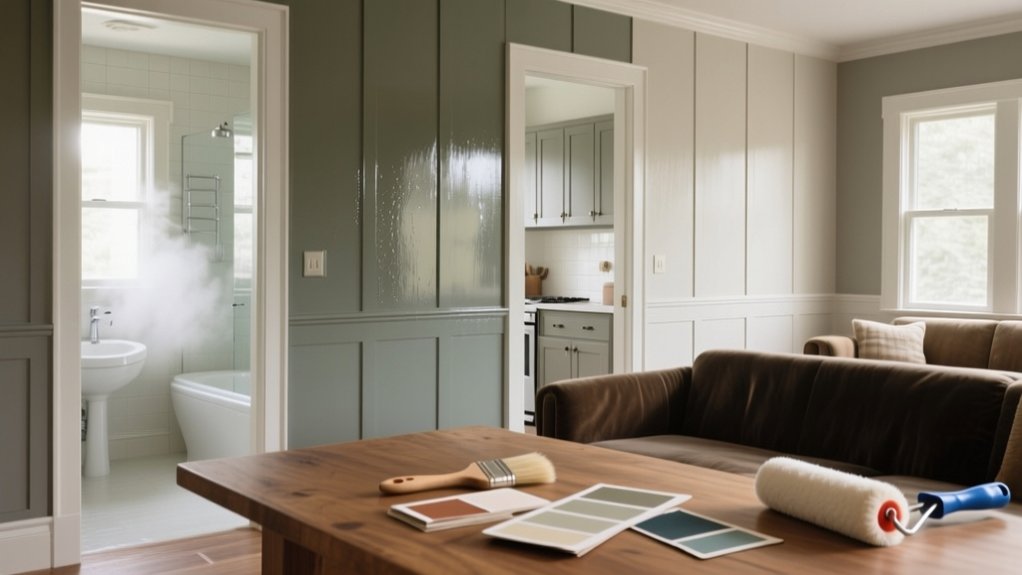
Choose paint finish by wear, moisture, and light. You’ll get the best ceilings with flat or dead matt to hide flaws and cut glare. Use matte or soft matt on lounge and bedroom walls for a calm look, then step up to eggshell in hallways, stairs, and kids’ rooms for easier cleaning. In kitchens and bathrooms, pick a moisture-resistant satin or soft sheen. Paint trim in durable satinwood or semi-gloss. Keep going to see how lighting and touch-ups change your choice.
Paint Finish Cheat Sheet by Room
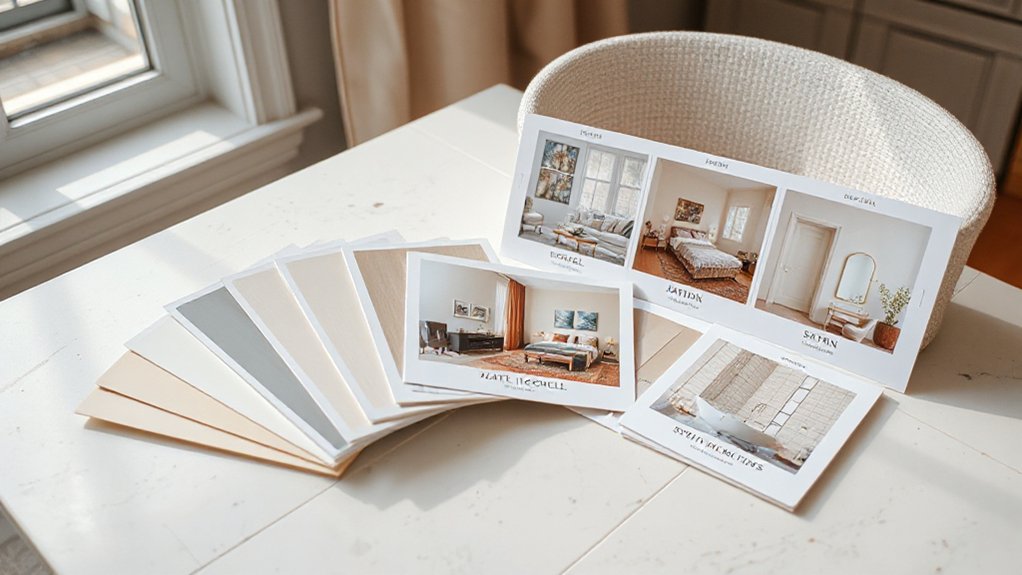
Whether you’re invigorating one room or redecorating the whole house, choosing the right paint finish comes down to how much wear, moisture and cleaning each space will face.
For ceilings and low-touch areas, you’ll usually want a dead matt to hide surface flaws under UK lighting.
In lounges and bedrooms, pick a matt or soft matt for a calm look that nods to historical paint trends like chalky, heritage palettes.
In hallways, stairs, and kids’ rooms, choose an eggshell for a tougher skin without looking glossy.
In kitchens and bathrooms, use a moisture-resistant, wipeable finish such as satin, and check it’s mould-inhibiting.
On woodwork and skirting, go for a hardwearing trim paint.
Prioritise eco-friendly paint options with low-VOC ratings and UK compliance.
Sheen Basics: Durability, Cleaning, and Shine
Because sheen changes how paint behaves as much as how it looks, you need to balance three things: durability, cleanability, and shine. Higher sheens form a tighter film, so they resist scuffs, moisture, and frequent wiping. Flatter finishes mark more easily but hide bumps and roller lines.
Use sheen psychology: gloss reads crisp and hygienic, while matt feels calm and forgiving. Shine also highlights prep—every dent and brush mark shows more as sheen rises, so you’ll spend longer filling and sanding. Think about lighting, too; in bright UK daylight, extra sheen can glare.
Paint sheen history matters: modern acrylics give you washable matt options that older paints couldn’t, so you’re not forced into shiny just to get durability.
Choose a Finish by Surface: Walls, Trim, Ceilings
Choose your finish by surface, because walls, trim, and ceilings take different wear in a typical UK home.
Use a wall sheen guide to balance washability with how much light you want bouncing around.
Then pick a tougher finish for skirting boards, architraves, and doors to handle knocks and frequent cleaning.
For ceilings, prioritise a flat, low-sheen finish that hides imperfections and cuts glare, especially under strong downlights.
Wall Finish Sheen Guide
- Matt/flat: Best for uneven walls and cosy spaces; softens imperfections.
- Eggshell: A practical middle ground for hallways and family rooms; gentle glow.
- Silk/satin: Suits kitchens and utility areas; reflects light and cleans easily.
Trim Finish Durability
While wall paints can prioritise a softer look, trim needs a tougher finish that won’t scuff or mark every time you brush past it. Choose satinwood or semi-gloss for skirting boards, architraves, doors, and banisters; they resist knocks, wipe clean, and stand up to busy hallways and family rooms.
If you’ve got pets or kids, go for a durable water-based trim paint with good block resistance so doors don’t stick.
For paint application, sand lightly, de-grease, then use an adhesion primer on glossy or previously oil-painted wood. Apply two thin coats for a hard, even film.
For colour coordination, keep trim a shade lighter than the wall for definition, or match it for a modern, seamless edge.
Ceiling Finish Considerations
How should you finish a ceiling for the cleanest, most forgiving result? Choose a flat or matt emulsion; it hides roller marks and uneven plaster, and it won’t spotlight raking light from UK bay windows or downlights. If you’ve got stains from leaks or nicotine, spot-prime first, then use a stain-blocking ceiling paint.
Use these checks before you buy:
- Ceiling texture: Heavy artex or repaired areas look best in matt; avoid sheen that highlights lumps.
- Acoustic properties: In bedrooms or flats, a softer matt finish helps reduce sound reflections; glossier films bounce noise.
- Moisture risk: In kitchens and bathrooms, pick a washable matt designed for humidity, not standard vinyl silk.
Flat vs. Matte: Best for Hiding Wall Flaws
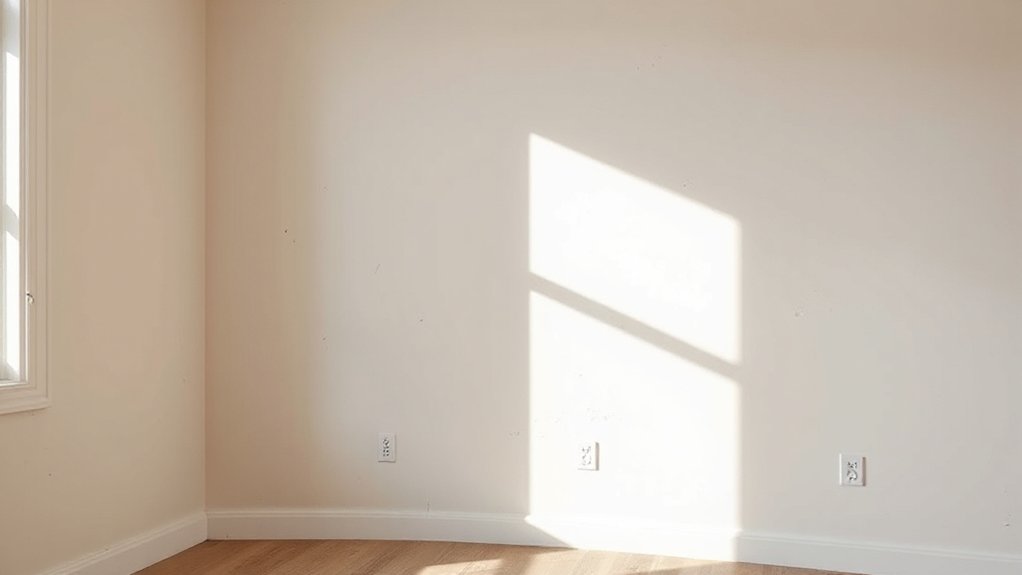
Because wall imperfections catch light long before they catch your eye, the finish you choose matters as much as the colour. If you’re hiding dents, hairline cracks, or patchy plaster, flat paint (often called “dead flat” in the UK) diffuses light hardest, so flaws recede. The trade-off is durability: it marks easily and can burnish when you wipe it.
Matte gives you a similar low-sheen look but usually copes better with day-to-day scuffs, making it a safer choice for busy hallways and family rooms where you still want concealment.
For really uneven walls, consider Textured finishes to disguise bumps without endless filling. You can also get Eco friendly paints in both flat and matte—check scrub ratings before you buy.
Eggshell: The Easiest “Works Almost Anywhere” Finish
Where do you start if you want a finish that looks smart, stands up to everyday life, and still hides minor bumps? Choose eggshell. It sits between matt and shinier finishes, so you get a soft sheen that lifts a room without shouting.
One of the key Eggshell advantages is that it wipes cleaner than matt while keeping surface texture forgiving, ideal for UK living rooms, bedrooms, hallways, and even woodwork in calm spaces. You’ll also find plenty of Eggshell color options, from heritage neutrals to modern greiges, and deeper tones that keep their richness.
For best results:
- Prep and fill, then sand smooth.
- Use a quality roller for even sheen.
- Keep a wet edge to avoid lap marks.
Satin: The Go-To for High-Traffic Walls
Choose satin when your walls take daily knocks in busy spots like hallways, stairwells, and kids’ rooms, because it stands up to wear better than flatter finishes.
You’ll wipe off scuffs and fingerprints with less fuss, making it a practical choice for most UK homes.
When you need to freshen a patch, satin generally blends well, so touch-ups don’t shout out.
Durability For Busy Areas
When your hallway, stairwell, or family living space takes daily knocks and scuffs, satin paint is usually the most durable, sensible finish for the walls. It gives you a resilient film that stands up to constant movement without highlighting every bump like full gloss, and it hides minor surface flaws better than matt.
Use satin where you need performance but still want a smart, modern look that suits typical UK homes.
- Choose the right sheen: satin balances toughness with a subtle light bounce.
- Match colour to use: apply Color psychology—calmer mid-tones reduce the “busy” feel of tight corridors.
- Specify better formulations: pick eco friendly options with low VOCs and strong binders for hard-wearing results.
Easy Cleaning And Touch-Ups
How do you keep high-traffic walls looking fresh without repainting every few months? Choose satin. Its mid-sheen surface resists scuffs, fingerprints, and grubby marks far better than matt, and it wipes clean with a damp microfibre cloth and mild detergent—ideal for hallways, stairs, and kids’ rooms in UK homes.
You’ll also spot-treat marks without leaving obvious “patch” halos.
For easy touch-ups, focus on Color coordination: keep the same tin, batch number, and mixing method, and store leftovers airtight.
Use consistent paint application techniques—cut in with a quality synthetic brush, then roll with a medium-pile sleeve, feathering edges while wet.
Work in good daylight, and blend repairs into a full section for best results.
Semi-Gloss vs. Gloss: Trim, Doors, and Cabinets
Although semi-gloss and gloss can look similar at a glance, they behave very differently on trim, doors, and cabinets, where scuffs, fingerprints, and frequent cleaning are part of daily life. Semi-gloss is the safer all-rounder: it hides minor flaws, levels well, and still wipes clean with a damp microfibre cloth.
Gloss gives the crispest, most reflective look, but it highlights every sanding mark and brush line, so your prep must be spot-on.
- Choose semi-gloss for skirting boards and architraves in busy hallways; it’s durable without shouting.
- Use gloss on panelled doors when you want a sharp, heritage-style pop—apply with a foam roller, then lay off.
- For cabinets, avoid Textured finishes and Metallic sheens; they telegraph wear and complicate touch-ups.
Best Paint Finish for Living Rooms (Low Wear)
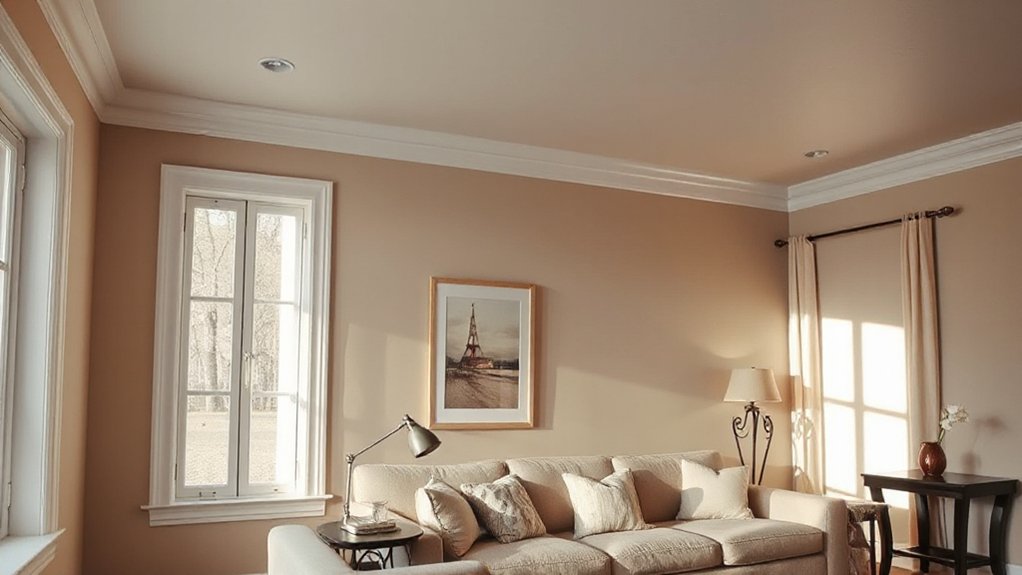
For a low-wear living room, you’ll get the most comfort from lower sheen levels that soften light and hide minor wall flaws. Choose matte if you want a calm, velvety look.
But go eggshell if you need a bit more wipeability for everyday UK family life. Your decision comes down to the balance you want between a flat finish and practical durability.
Sheen Levels For Comfort
When you’re choosing a paint finish for a low-wear living room, the sheen level matters as much as the colour because it controls how much light bounces around the space and how forgiving the walls look day to day.
In UK homes, you’re often balancing grey skies with warm lamps, so use sheen psychology and paint sheen symbolism to steer the mood: more shine feels crisper and more formal; less shine reads calmer and softer.
- North-facing rooms: keep sheen restrained to avoid a cold, glittery cast under daylight.
- South-facing rooms: you can nudge sheen up slightly to lift brightness without glare.
- Lamplit evenings: pick a sheen that spreads light evenly, so walls look cosy, not patchy.
Always test on a large card at different times.
Matte Vs Eggshell Options
Sheen sets the mood, but in a low-wear living room your real choice usually comes down to matte versus eggshell.
Matte texture gives you a calm, modern look and hides minor wall ripples, filler patches, and roller marks better than anything shinier. It also mutes glare from UK daylight and lamps, so colours read richer and more even.
The trade-off is durability: scuffs can burnish, and cleaning needs a light touch with a damp microfibre cloth.
Choose an Eggshell appearance if you want a little more resilience without a glossy feel. It handles the odd fingerprint, sofa rub, and spot-cleaning better, and it’s ideal for busy family rooms.
Pair it with washable acrylic for best results.
Best Paint Finish for Bedrooms (Calm, Low Glare)
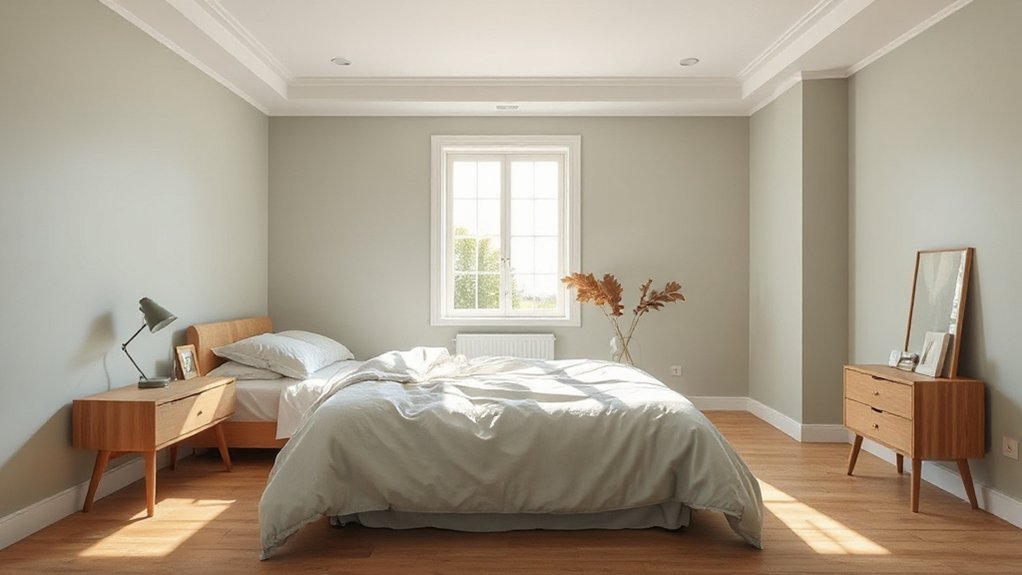
Although bedrooms don’t face the same scuffs and splashes as hallways or kitchens, the wrong finish can still make the space feel harsh under lamps and morning light.
For a calm, low-glare look, you’ll usually get the best result with matte or a true flat finish, especially on ceilings and large walls where raking light shows every sheen change.
If you want a touch more durability without shine, choose eggshell in a premium formulation.
- Pick matte for maximum softness and to hide minor plaster imperfections.
- Use eggshell on feature walls if you’ll wipe marks occasionally.
- Match finish to colour psychology: muted blues, warm greys, and soft greens read quieter in low sheen.
Look for eco friendly paints with low VOCs to keep bedroom air fresher.
Best Paint Finish for Kitchens and Bathrooms
Because kitchens and bathrooms deal with steam, grease, splashes, and frequent wiping, you’ll get the most reliable results from a moisture- and stain-resistant finish such as satin or soft sheen on walls. A specialist kitchen/bathroom paint that includes mould inhibitors is recommended for areas prone to condensation.
Choose durable semi-gloss for skirting, architraves, and cabinetry, where knocks and cleaning are constant. Use washable matt only on ceilings.
For tiles and splashbacks, don’t risk standard emulsion—use a dedicated tile paint or a two-part system. Apply a stain-blocking primer over nicotine, cooking marks, or old water staining.
Follow paint application techniques: de-grease with sugar soap, rinse, fully dry, then cut in and roll two thin coats.
Use color psychology: cooler greens/blue-greys feel clean; warm neutrals soften.
How Lighting Changes Sheen (and Shows Imperfections)
How can the same paint look dead flat in the morning and almost glossy at night? It’s down to lighting effects: direction, colour temperature, and intensity change how sheen reflects.
In UK homes, low winter sun and strong ceiling spots exaggerate shine, while overcast daylight softens it.
Use this quick check before you commit:
- View sample boards on the wall at three times: morning, afternoon, after dark with lamps.
- Stand at an angle to the light; raking light will spotlight surface imperfections like filler edges and roller marks.
- Match finish to exposure: matt for uneven plaster, eggshell for moderate wear, satin for areas with lots of artificial light.
Don’t judge in the shop—judge where it’ll live.
How to Clean and Touch Up Each Finish
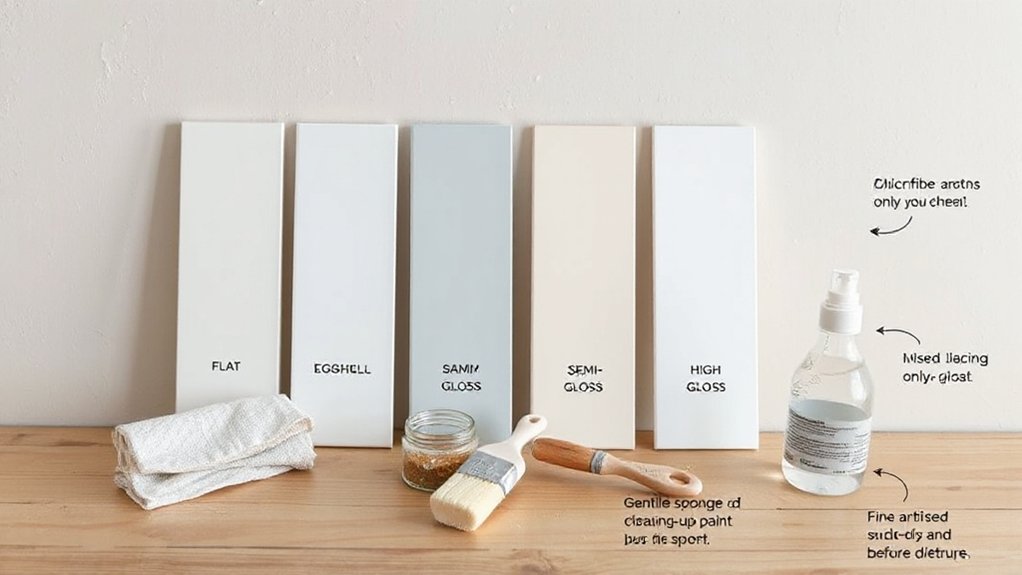
When you’ve picked a finish, you also choose how forgiving it’ll be when life leaves marks. For matt, dust first, then wipe with a barely damp microfibre and mild washing-up liquid; don’t scrub or you’ll burnish. Touch-ups show, so keep a labelled tin and feather edges with a small roller.
With eggshell and satin, you can wash more firmly using a soft sponge; rinse and dry to avoid tide marks. Blend repairs by repainting to a natural break, like a corner.
Silk and gloss resist stains: use diluted sugar soap for greasy splashes, then buff dry. For chips, sand smooth, spot-prime, and repaint.
If you’re using eco friendly paints, let them cure fully. Remember Color psychology: clean walls keep tones consistent.
Frequently Asked Questions
Should I Use the Same Sheen for Primer and Topcoat?
No, you shouldn’t match sheen for primer and topcoat. You’ll prioritise Primer compatibility with your topcoat, then choose the finish for Sheen durability and cleaning. In the UK, use matt primer, then desired sheen.
Can I Mix Different Sheens of the Same Color in One Room?
Yes—you can. In a London flat, you’d paint walls eggshell and skirting satin for sheen contrast while keeping tight color coordination. You’ll highlight trim, hide scuffs, and avoid patchiness by using one brand’s tint.
How Long Should Paint Cure Before Placing Furniture Back?
Wait 24 hours before moving light items back; give heavy furniture 48–72 hours. Full cure takes about 14 days. Use Painting techniques like gentle handling, and Furniture preservation with felt pads and airflow.
Does Paint Sheen Affect Indoor Air Quality or Odor Levels?
Yes—sheen can affect odour and air quality: studies show 50–70% of paint smell comes from VOC emissions in the first 24 hours. You’ll often notice greater odor persistence with high-sheen, solvent-heavy products.
Will Higher-Sheen Paint Increase My Total Project Cost Significantly?
No, higher-sheen paint won’t substantially raise your total project cost; you’ll usually pay a modest premium per litre. Cost implications ease because sheen durability cuts touch-ups, needs fewer coats, and stands up better.
Conclusion
You’d think picking paint is just choosing a colour, then you watch every wall flaw glow under a ceiling light. Luckily, you’ve now got the finish sorted: flat or matte to hide bumps, eggshell when you want a safe all‑rounder, and satin or semi‑gloss where steam, splashes, and scrubbing are guaranteed. Match sheen to surface, mind your lighting, and cleaning’s easy. Do that, and your rooms look effortless—because you did the work.