
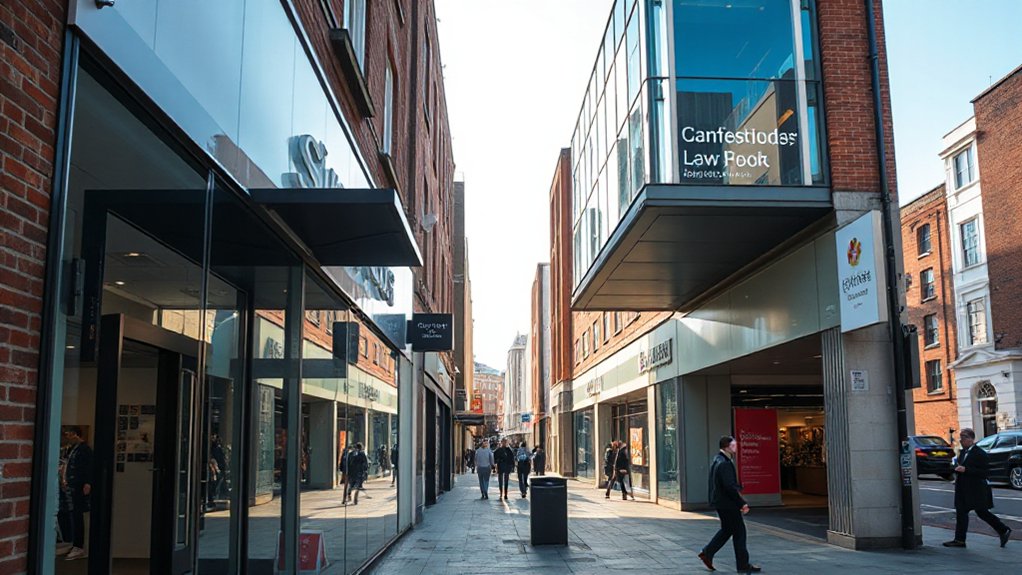
In 2026, you’ll weigh Shoreditch’s creative-technologist density, Canary Wharf’s premium, highly connected spaces, and Croydon’s lower rents with scalable leases, all against evolving transport links and occupancy costs. The question isn’t just where to locate, but how space quality, flexibility, and future-proofing fit your hybrid work model amid resilient demand and new infrastructure. With new data on rents, absorption, and planning permissions, you’ll want a clear framework before you choose your next move.
Why 2026 Matters for London Office Leasing

The year 2026 matters for London office leasing because it marks a pivotal point where demand, supply dynamics, and policy shifts intersect to shape rental trajectories and vacancy risk.
You’ll see demand disciplined by evolving occupier needs, with flexible spaces and amenity-rich blocks driving tenancy tenure. Supply dynamics hinge on completed schemes, conversion activity, and delivery lags, creating a segmented market between prime cores and fringe estates.
Policy shifts around planning, post-pandemic work patterns, and sustainability commitments influence capex timing and lease incentives. Urban renewal programs and transport-linked developments will reshape catchment valuations, while cultural vibrancy anchors location desirability and retention.
Net-net, you should monitor vacancy risk signals, rent revisions, and pipeline quality to identify resilient, forward-looking leasing opportunities.
Shoreditch: What Drives Demand in 2026
Shoreditch is set to ride a wave of demand driven by tech and creative occupiers seeking high-caliber space, tight access to talent pools, and vibrant amenity ecosystems that reinforce productivity.
You’ll notice occupancy tightness converging with quality, as firms prioritize flexible layouts and collaboration zones that support hybrid models.
The district benefits from rapid urban redevelopment that *liberates* modern floorplates, scalable space, and faster leasing cycles, aligning supply with evolving demand.
Data shows elevated absorption in mid-sized offices, reflecting scrappy growth among startups and Mid-Tier tech firms.
Cultural hotspots continue to attract talent traction, boosting retention and reducing vacancy risk.
For forward-looking occupiers, Shoreditch remains a price-sensitive but high-conviction market with resilient leasing metrics and ongoing value creation.
Canary Wharf: Prestige, Connectivity, and Leasing Resilience
Canary Wharf’s prestige drives tenant preference, with high-caliber occupiers signaling value through occupancy and renewal trends.
Its connectivity edge translates to faster lease-up and resilient demand, even as markets shift.
Expect leasing metrics to reflect ongoing reliability, underpinned by premier infrastructure and sustained investor confidence.
Prestige-Driven Demand
High-quality tenants prize Canary Wharf for its prestige, connectivity, and leasing resilience, making it a focal point for 2026 demand. You’ll notice demand concentrates among occupiers seeking brand-enhancing addresses and predictable returns.
Data shows rental growth outpacing many peers, underpinned by a premium market position and active redevelopment. Leasing velocity remains robust despite macro headwinds, supported by long-term leases and high occupancy in core buildings.
Prestige drives premium pricing, with tenants willing to pay for visibility and association with financial services, media, and professional services ecosystems.
Luxury amenities and Cultural hotspots act as value multipliers, extending dwell-time and improving tenant retention.
Forward-look: Canary Wharf remains a pipeline favorite for flagship portfolios seeking resilient, forward-looking, quality-led occupancy.
Connectivity Advantage Leases
Connectivity is the edge that sustains Canary Wharf’s leasing resilience, with tenants prioritizing robust transit links, 5G readiness, and seamless intermodal access to global markets. You’ll see a clear correlation between transit connectivity upgrades and occupancy stability, supported by data on dwell times, lease durations, and turnover costs.
Canary Wharf’s ongoing urban renewal programs unleash modular space and faster onboarding for firms scaling operations, while dedicated digital infrastructure reduces latency for enterprise applications.
Green spaces adjacent to offices drive health and productivity metrics, translating into higher rent per square foot and longer lease terms.
In a forward-looking view, occupancy resilience strengthens as mobility strategies align with investor demand, project yields, and cross-border activity, cementing Canary Wharf as a trusted hub for adaptive, growth-oriented tenants.
Leasing Resilience Factors
Prestige, connectivity, and leasing resilience define Canary Wharf’s value proposition for 2026. You’ll see a tight covariance between premium space, transport access, and predictable occupancy.
Historical trends show demand holding steady despite cycles, underpinned by weightier weightings toward financial services, media, and tech tenants.
Market volatility remains a consideration, yet Canary Wharf’s diversified tenant mix and long-term lease structures dampen downside risk.
You benefit from superior connectivity—Crossrail, Jubilee, and Circle lines—which sustains vacancy absorption during downturns and accelerates re-leasing when markets recover.
Leasing resilience is reinforced by product integrity: high-spec fit-outs, flexible tenancy terms, and scalable floorplates.
Croydon: Affordable Innovation Hubs and Value Growth
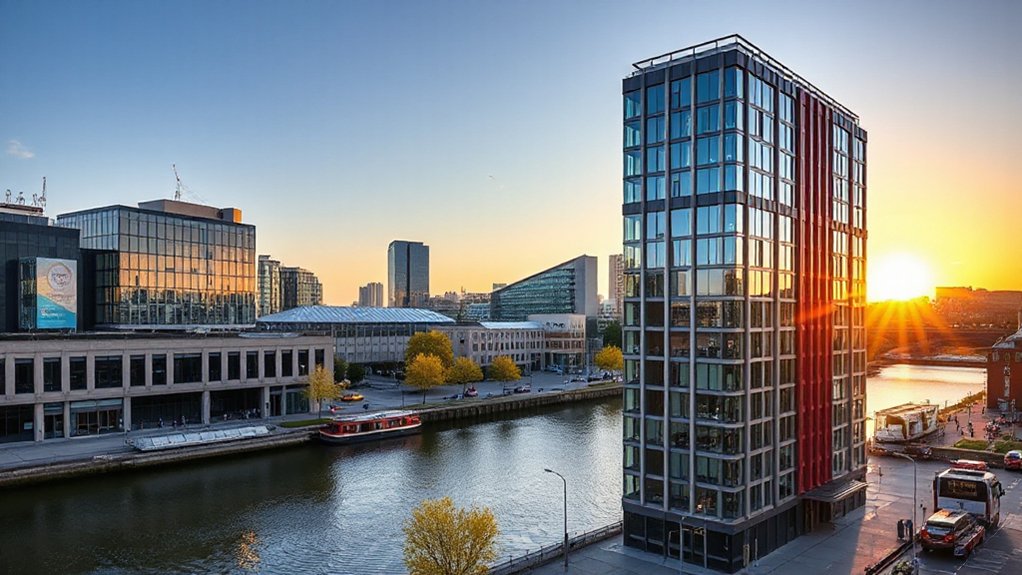
Croydon is emerging as an affordable powerhouse for innovation, combining cost efficiency with practical access to talent and transit. You’ll notice rents per square foot sit well below central London averages, boosting unit economics for startups and scale-ups alike.
Vacancy is steady, with a pipeline of flexible workspaces that support short-term leases and rapid expansion. Population density and university ties fuel a steady talent stream, while Crossrail and local transport upgrades shorten commutes, increasing day-one productivity.
Data show rising deal velocity in mixed-use campuses that blend offices with research labs and maker spaces, reinforcing value growth over a five-year horizon.
For enterprises pursuing creative collaboration and community engagement, Croydon offers scalable, performance-driven options aligned with prudent risk.
The Decision Framework: Criteria to Compare Boroughs
To compare boroughs effectively, start with a clear, data-driven framework that weighs cost, talent, accessibility, and demand signals. You’ll align vacancy trends, rent trajectories, and capex needs with growth forecasts, so decisions aren’t driven by hype.
Score boroughs on total occupancy costs, expected time to lease, and talent pipeline quality, then adjust for commute patterns and transit upgrades. Factor urban regeneration momentum and cultural appeal as multipliers, not afterthoughts, because they influence tenant retention and brand perception.
Weight accessibility by ride-time reliability and multimodal options, then cross-check with commercial demand signals from inquiries, pipeline projects, and parkable space.
Use scenario planning to compare downside risks and upside opportunities, ensuring your choice balances immediate occupancy flexibility with long-term value.
Space Quality and Flexibility for Hybrid Work
You’ll want spaces that adapt quickly, with configurable layouts that support split-team and hybrid routines.
Data show demand shifting toward scalable floorplates and modular zones, paired with reliable, future-ready tech infrastructure.
As occupier preferences evolve, you’ll benefit from spaces that blend high-quality environments with seamless connectivity and expansion potential.
Flexible Space Configurations
Market data indicates owners who offer flexible zones—hotel-style breakout spaces, quiet pods, and movable furniture—capture higher effective rents and faster tenant retention. In London boroughs favored for 2026, submarkets with scalable common areas and daylight-rich layouts outperform rigid, fixed-density spaces.
Office design and workspace aesthetics matter as much as location, underpinning productivity and talent attraction. Investors should value asset plans that certify flexible configurations, measurable utilization, and rapid reconfiguration cycles to align with evolving hybrid work preferences.
Tech-Ready Infrastructure
In London’s competitive market, landlords who pre-certify fiber diversity, 5G backhaul, and low-latency cloud access will capture demand from tech tenants and professional services alike. Data-driven performance metrics—uptime, power usage effectiveness, and seat-occupancy analytics—inform leasing decisions and future-proof portfolios.
Beyond tech, integration with green spaces and proximity to cultural venues enhances attractiveness, supporting employee well-being and retention. The strongest submarkets will blend robust infrastructure with experiential amenities, delivering space that scales as hybrid workflows evolve.
Transport Links, Talent Access, and Occupancy Costs in Balance
Transport links, talent access, and occupancy costs must be weighed together to identify value-centric locations for 2026. You’ll assess station turns, rail connectivity, and bus network coverage alongside office occupancy trends to estimate tiered rent trajectories.
Market data indicates that boroughs with rapid transit upgrades, dense urban cores, and flexible workspace supply attract quicker tenant absorption and sustainable capex returns. Consider talent pools anchored by nearby universities, tech hubs, and creative clusters that elevate productivity and reduce relocation risk.
Urban renewal initiatives and proximity to cultural hotspots correlate with higher NOI and longer lease tenure. The best markets balance affordable occupancy costs with scalable space options, ensuring resilience amid shifting demand.
Informed choices today position you to capitalize on next‑gen demand cycles.
Development Plans and Future-Proofing Your Lease

Development plans should align lease terms with anticipated market shifts, ensuring your space remains viable as demand, pricing, and technology needs evolve. You’ll want contracts that embed flexibility for space reconfiguration, exit options, and scalable lease sizes to capture future growth without penalty.
Ground your approach in data: track occupancy trends, churn rates, and submarket vacancy forecasts to set realistic rent steps and renewal windows. Tie obligations to performance benchmarks, such as energy efficiency milestones and facility upgrades, reducing risk if standards tighten.
Urban regeneration considerations can drive value through enhanced amenity access and transport linkage improvements, while Sustainability initiatives bolster energy cost containment and branding appeal.
Align planning with governance timelines and infrastructure commitments to future-proof your tenancy posture.
How to Choose: A Practical Borough-by-Borough Decision Guide
To choose a borough wisely, start with a data-driven, market-forward framework that blends demand signals, pricing trends, and growth prospects. You’ll compare submarket performance, footfall, and vacancy dynamics across boroughs to identify where demand is consolidating.
Map local market trends against your use-case—retail, office, or industrial—to set realistic occupancy timelines and rent expectations. Prioritize areas showing resilient rent growth, diversified tenant bases, and infrastructure momentum.
Use a formal checklist: availability, capex plans, and regulatory climate. Apply lease negotiation strategies that reflect each borough’s pricing cadence, break clauses, and renewal offers.
Document scenarios, sensitivities, and exit options to avoid overcommitment. This disciplined approach minimizes risk and aligns space decisions with long-term value creation.
Frequently Asked Questions
What Are Hidden Costs in 2026 Office Leases?
Hidden costs in 2026 office leases include service charges, insurance, renewal fees, and dilapidations. You should factor in capex for office design and ongoing maintenance, and plan for lease negotiation contingencies to protect your budget and timelines.
How Do Submarket Vacancy Trends Affect Rents?
Like a thermometer in volatility, you see submarket vacancy trends pressuring rents: market saturation tempers pricing, while you navigate tenant negotiations to secure favorable terms as vacancy ticks up and rent growth slows.
Which Borough Offers the Best Hybrid-Lease Terms?
You’ll find Westminster offers the best hybrid-lease terms, with Hybrid agreements and Lease flexibility driving ideal space use. You, as a tenant, benefit from scalable options, data-driven renegotiation points, and forward-looking cost clarity in a dynamic market.
What Incentives Come With Longer Lease Commitments?
Longer lease commitments often open rent reductions and favorable renewal terms. In Lease negotiations, you’ll see more tenant-favorable caps and stepped rent benefits, while Property management gains include prioritized maintenance and budgeting predictability for your expanding operations.
How Will Post-Pandemic Demand Shift by Year-End 2026?
Demand will shift upward by year-end 2026, driven by urban regeneration and better transportation infrastructure. You’ll see stronger rents, resilient occupancy, and smarter locations, despite objections about cost—data-backed momentum supports market-favorable, forward-looking decisions.
Conclusion
So you compare Shoreditch’s vibrant talent pool against Canary Wharf’s steel-and-glass prestige, and Croydon’s cost-conscious momentum against the scalable, future-proofed leases. In 2026, demand tilts toward flexibility, connectivity, and value: you gain creative energy and fast access to talent, plus resilient infrastructure, all while guarding occupancy costs. The visual trade-off: high-throughput innovation hubs vs. premium certainty vs. affordable growth lanes. Choose the mix that aligns with your growth curve, hybrid needs, and long-term resilience.