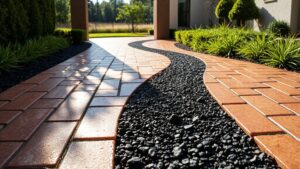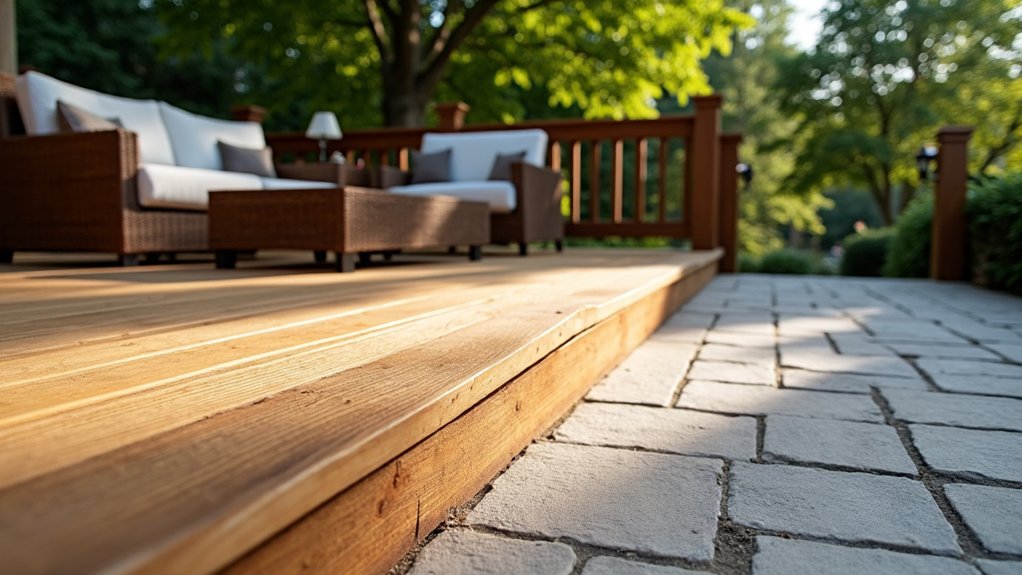
Like a map waiting for its key, your outdoor space holds potential you can *access* with a deck or a patio. You’ll weigh priorities, budgets, and maintenance needs, then consider climate and materials to match your usage. A thoughtful layout, drainage, and access plan keeps flow smooth and private. The choice shapes every season’s experience, from hosting to retreat. We’ll break down criteria and options next, so you can align design with how you live outside.
Decide Your Outdoor Living Priority: Deck vs Patio
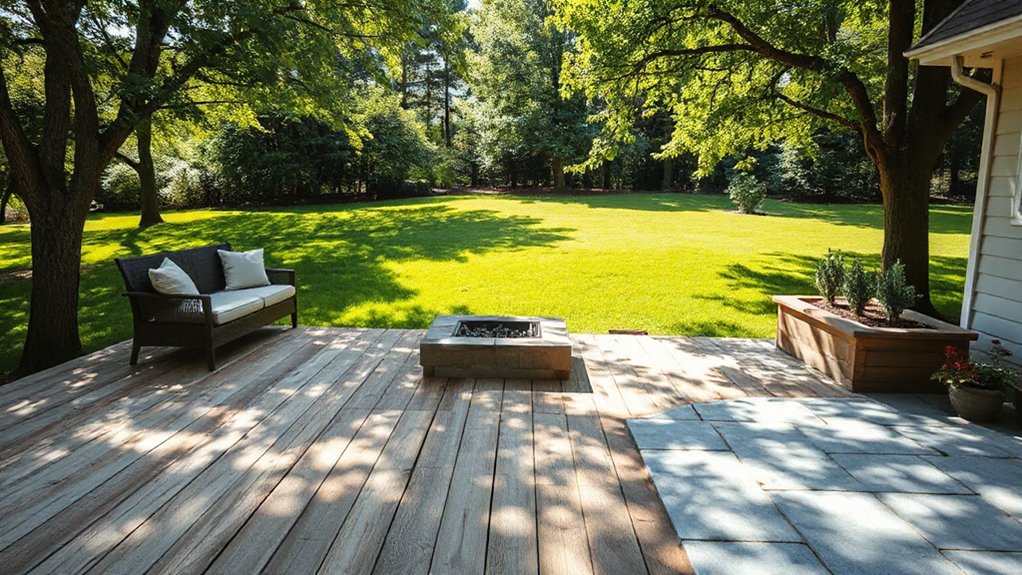
Choosing between a deck and a patio hinges on your outdoor living priorities. You assess how you’ll use the space, the level of maintenance you tolerate, and the integration with indoor flow.
If hosting frequent gatherings and elevated access matter, you prioritize a deck’s vertical connection and views.
If you aim for ground-level accessibility and simpler maintenance, you prioritize a patio’s practicality and flat surface.
Consider furniture styles that fit your traffic patterns and storage needs, ensuring surfaces support heavier uses or frequent rearrangement.
Lighting options influence safety and ambiance; plan for layered lighting, including task, ambient, and accent layers, to extend usability.
In short, establish your primary function, then align construction, finishes, and furniture to that function.
Compare by Criteria: Budget, Maintenance, and Climate
When evaluating budget, maintenance, and climate, a deck typically demands higher upfront costs and ongoing upkeep but offers faster return through elevated views and long-term durability.
In contrast, a patio usually presents a lower initial outlay and simpler upkeep with versatile material options.
Budget guidance focuses on total ownership, not just purchase price; anticipate installation, permits, and potential revisions for terrain.
Maintenance messaging highlights longevity, stain/seal cycles, and cleaning requirements that affect year-round usability.
Climate factors consider moisture, heat, and freeze–thaw impacts on materials, structure, and drainage, guiding choices that minimize warping or corrosion.
Landscaping options and privacy considerations influence layout, screening, and sightlines, shaping long-term satisfaction.
Choose a solution aligned with budget, maintenance tolerance, climate resilience, and site-specific privacy needs.
Material Dossier: Wood, Composite, Stone, and Concrete
Material options for decks and patios fall into four main families—wood, composite, stone, and concrete—each with distinct performance profiles, installation considerations, and lifecycle costs.
You evaluate wood for natural aesthetics and variable maintenance, balancing color options and potential environmental impact.
Composite offers low maintenance and consistent color options but at higher upfront cost, with environmental impact tied to recycled content and manufacturing.
Stone delivers timeless durability and natural texture, yet installation complexity increases material waste and long-term care.
Concrete provides versatility, rapid installation, and broad color options through stains or pigments, while showcasing minimal maintenance and notable environmental impact during production.
Consider climate, load, and slip resistance alongside lifecycle costs.
Your choice should align performance needs, aesthetics, and sustainability goals for longevity and value.
Layout, Access, and Drainage: Designing for Flow
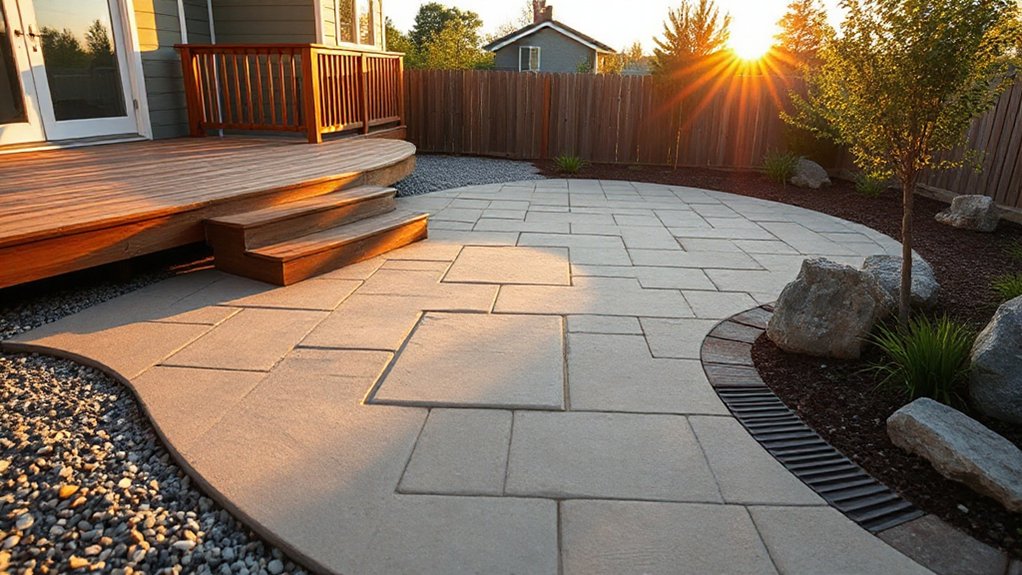
Designing for flow requires applying the material decisions from your deck or patio to how people move through the space. Layout guides pedestrian patterns by aligning entry points, sight lines, and seating zones with traffic demand. Access should minimize interruptions, using logical progressions: from indoors, to transitional thresholds, to outdoor rooms.
Drainage planning must prevent puddling near doors and under seating, with graded slopes and discrete collectors that preserve aesthetics. Consider landscaping integration to soften edges, route paths to natural focal points, and keep functional zones accessible for all users.
Privacy considerations influence perceived flow; screens, screens with planting, and elevational changes can route circulation while reducing visual encumbrance. Ensure drainage, access, and planting choices reinforce a coherent, intuitive sequence rather than cluttering movement.
Quick Decision Checklist: Pick Your Outdoor Space
Choosing between a deck and a patio hinges on your site, climate, and how you expect to use outdoor time. This quick decision checklist helps you decide efficiently.
Assess footprint and elevation: a deck suits multi-level access and view, while a patio favors ground-level, low-profile use.
Consider surface durability, maintenance, and drainage compatibility with your soil.
Evaluate landscape integration to ensure the space blends with existing features and vegetation.
Privacy considerations matter: arrange screening, fencing, or planting to control sightlines without compromising light.
Weather exposure informs material choice and fastener systems for long-term performance.
Access from indoors, traffic patterns, and furniture layout guide your orientation.
Finally, budget accuracy and access to professional installation determine feasibility and timing for a reliable outcome.
Frequently Asked Questions
How Does Noise Tolerance Influence Deck Vs Patio Choice?
Noise tolerance heavily guides your choice: a deck often amplifies airborne sounds, while a patio exposed to ambient noise can feel more intrusive.
You should prioritize sound insulation where you want quiet evenings, and consider privacy enhancement to block sightlines and sound leaks.
For higher noise tolerance, a patio with dense landscaping may suffice; for stricter limits, build a solid, insulated deck with privacy screens.
Sound insulation and privacy enhancement influence the decision more than aesthetics.
What Resale Value Differences Should I Expect?
Resale value hinges on timing and quality: expect decks to edge patio upgrades in neighborhoods valuing outdoor living, and upgrades to landscaping integration can push appraisal higher.
You’ll gain more if you match materials to your home and maintain dimensions that feel integrated.
Privacy considerations matter, as fenced or screened spaces often translate to higher offers.
Invest in durable finishes, smart layout, and cohesive landscaping to maximize appeal and curb trust from buyers.
Which Option Handles Harsh Winters Better?
A deck handles harsh winters better, especially if you choose treated wood or composite with freeze-thaw resistance. Proper sealing and snow removal prevent warping, cracking, and moisture damage.
Consider color options that resist fading and design flexibility to adapt to framing upgrades. Metal railings and higher-grade fasteners reduce corrosion.
Make certain of proper drainage and ventilation beneath the deck to minimize ice buildup. For patios, implement pavers with gaps and robust base; still, decks typically endure severe cold more reliably.
Can Pets Affect Material Selection and Safety?
Yes, pets can affect material selection and safety. You should prioritize Pet safety and Material durability when choosing surfaces.
Opt non-slip, weather-resistant materials, like composite or sealed natural stone, to prevent slips and reduce toxic exposure.
Avoid pressure-treated wood finishes with harmful chemicals.
Guarantee smooth shifts, sturdy railings, and gaps large enough to prevent entrapment.
Regularly inspect for cracks, splinters, and chew marks, and choose finishes that resist pet wear and easy cleaning.
How Long Is Typical Installation Downtime for Each?
Downtime tends to be modest and predictable: decks typically require 1–3 days of access disruption, patios usually 0–1 day, depending on square footage and finishes.
You’ll plan around material durability and installation scope, not just aesthetics. Factor cure times and sealing windows into your schedule.
This matters for material durability and cost efficiency, since longer downtime can raise labor costs and project risk, while quicker turnarounds optimize long-term performance and value.
Conclusion
You’re balancing preferences and pragmatics, and a careful choice won’t derail your plans. If you’re leaning toward elevation and views, a deck softly nudges you toward memorable moments; if practicality and budget lean, a patio quietly delivers. Weigh maintenance demands, climate quirks, and material behavior with equal seriousness, but don’t overlook flow, drainage, and privacy. In short, pick the option that respects your site’s rhythm, sustains daily use, and quietly elevates your outdoor experience.