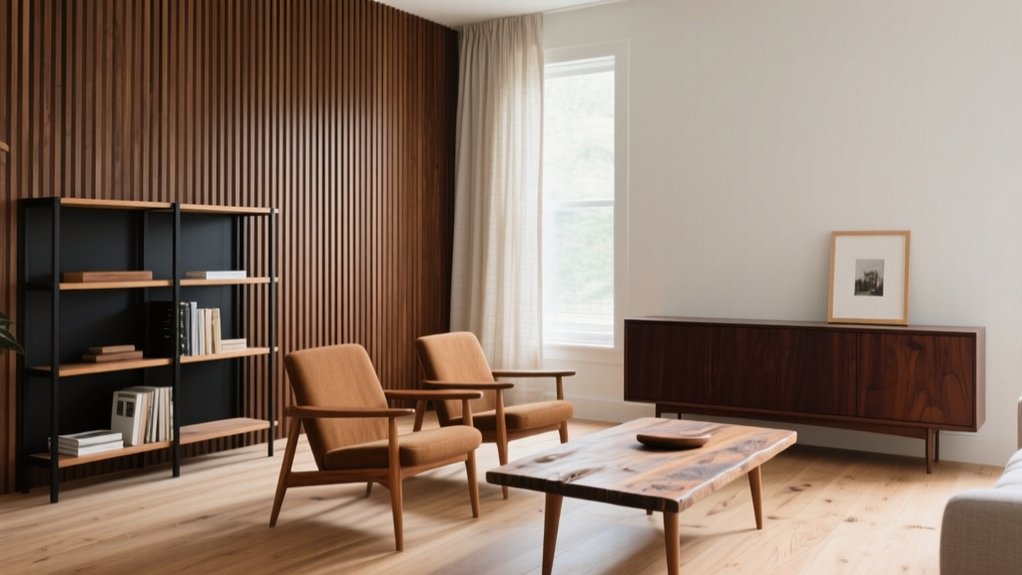
Start by choosing an “anchor” wood from your biggest, permanent piece (floors, built-ins, or a large table), then repeat it in a few smaller details to lock in cohesion. Keep the mix to three tones max (60–30–10), and match undertones—warm with warm, cool with cool—unless you’re adding one intentional contrast. Balance grain (busy with calm) and keep sheen consistent, using gloss only as a small accent. Next, you’ll see how to make every mix look effortless.
Pick Your “Anchor” Wood Tone First
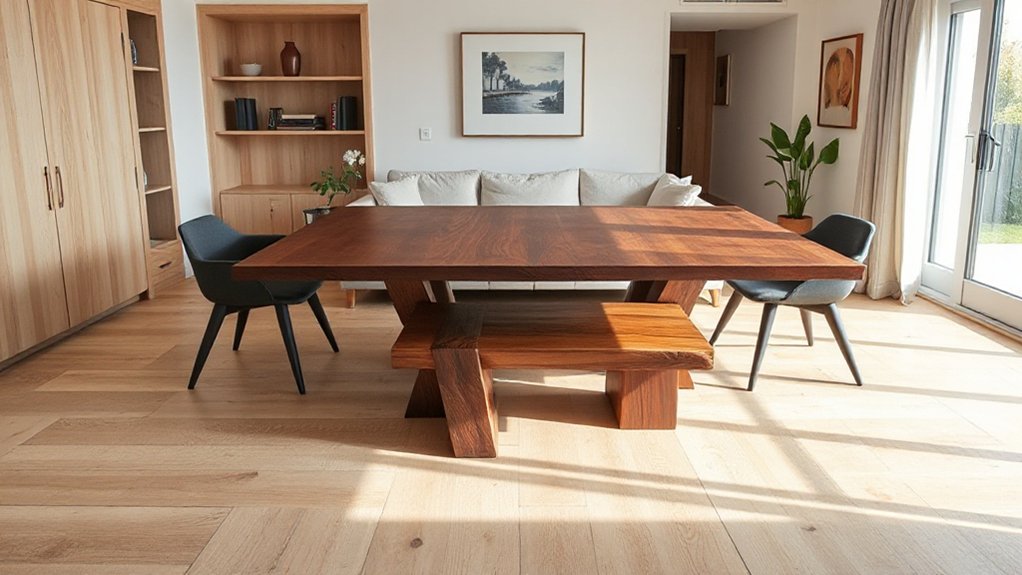
Before you start layering different wood finishes, choose one “anchor” wood tone that will lead the room. Pick the biggest, most permanent element first—floors, built-ins, or a large dining table—because it sets the visual baseline. Aim for a tone you can repeat in small ways: picture frames, shelves, or a mirror frame.
Next, evaluate Wood grain variations within that anchor. Strong cathedral grain reads busier than tight, straight grain, so keep surrounding pieces simpler if your anchor is dramatic.
Then lock in Finish consistency: decide if your anchor skews matte, satin, or glossy, and keep that sheen family across the space. You’ll still mix woods, but the room stays intentional, not chaotic.
Match Undertones (Warm, Cool, Neutral)
Even if two woods look similar at a glance, their undertones can clash fast, so check whether each piece reads warm (yellow, red, golden), cool (gray, ashy, slightly green), or neutral (balanced, “true” brown).
Start by viewing samples in your room’s daylight and evening light, next to your anchor wood and your largest upholstery.
For Matching undertones, keep warmth with warmth for a seamless, elevated look, or pair a neutral wood with either side for flexibility.
If you want contrast, do it intentionally: choose cool oak against warm walnut, then unify them with consistent hardware or a shared stain family.
Use contrasting finishes (matte vs. satin) to separate similar undertones without fighting, and avoid orange next to pink-red.
How Many Wood Tones Should You Use? (60–30–10)
Once your woods share compatible undertones (or you’ve chosen a deliberate warm–cool contrast), the next step is controlling how many finishes compete for attention. Aim for three tones max in one sightline, then use the 60–30–10 rule to keep wood tone variety intentional and readable.
Let 60% be your dominant wood (floors or large casework), 30% your secondary wood (table, doors, or shelving), and 10% your accent wood (frames, stools, small decor). This ratio protects color harmony because your eye registers a clear hierarchy instead of equal “votes” from every surface.
If your space is open plan, treat connected areas as one composition and repeat the dominant tone to anchor it. Edit extras before adding a fourth.
Build Contrast: Light, Medium, and Dark Woods
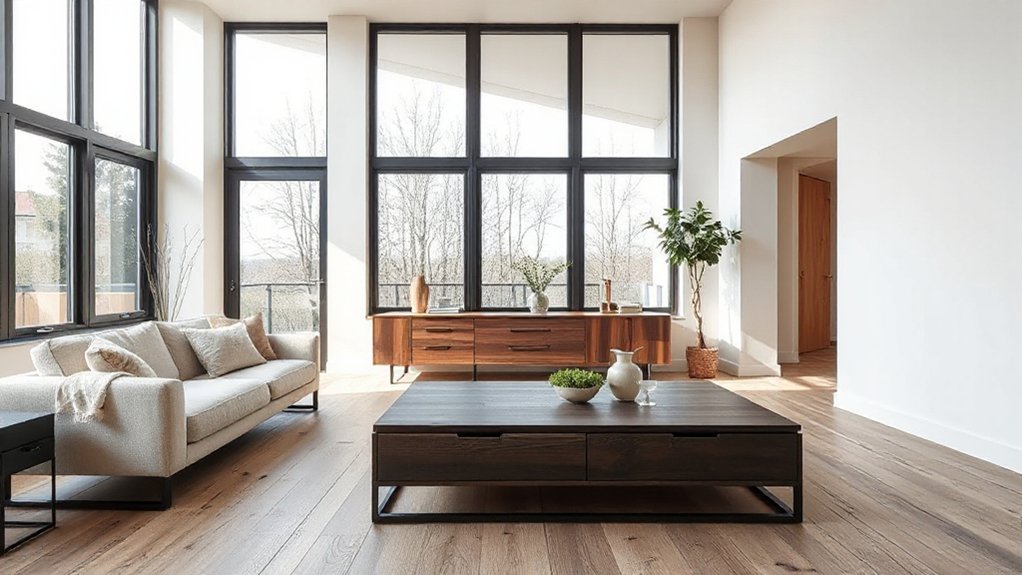
Build contrast by pairing light, medium, and dark woods, but keep their undertones aligned so the mix reads intentional. If you’re combining warm oak with walnut, make sure any lighter pieces skew warm too—or match cool ash with deeper, cooler stains.
Then anchor the room with dark accents (like a coffee table, beams, or frames) to ground the palette and add that current, layered look.
Balance Undertones Across Woods
While mixing wood tones can look effortless in photos, it only feels cohesive in real life when you balance undertones and create clear contrast between light, medium, and dark woods.
Start by identifying each wood’s temperature: warm (golden, red, honey) or cool (gray, ashy, taupe). Then keep at least two of your woods in the same undertone family for color harmony, and use the third as intentional contrast, not an accident.
Test samples under your actual lighting and next to key materials—stone, tile, metals, and upholstery—to confirm material compatibility.
If your floors run warm, choose a similarly warm mid-tone table and a lighter, neutral-leaning wood for open shelving. If your cabinetry is cool, repeat that cool note in another piece and avoid orange-stained outliers.
Anchor With Dark Accents
If your space feels flat even with “matching” undertones, you’re probably missing a dark anchor to sharpen the mix. Dark accents create instant depth, making light and medium woods look intentional instead of washed out.
Use them as anchor points: a walnut coffee table, espresso-stained island, blackened oak beams, or a deep-toned frame on a gallery wall.
Keep the ratio controlled. Aim for one to two dark statements per room, then repeat that tone in small hits—hardware, lamp bases, or a thin picture frame—to stitch the palette together.
Place the darkest piece low (rug edge, table, credenza) to visually ground the layout.
Skip heavy matching sets; contrast reads current and curated.
Balance Finishes: Matte vs Satin vs Glossy
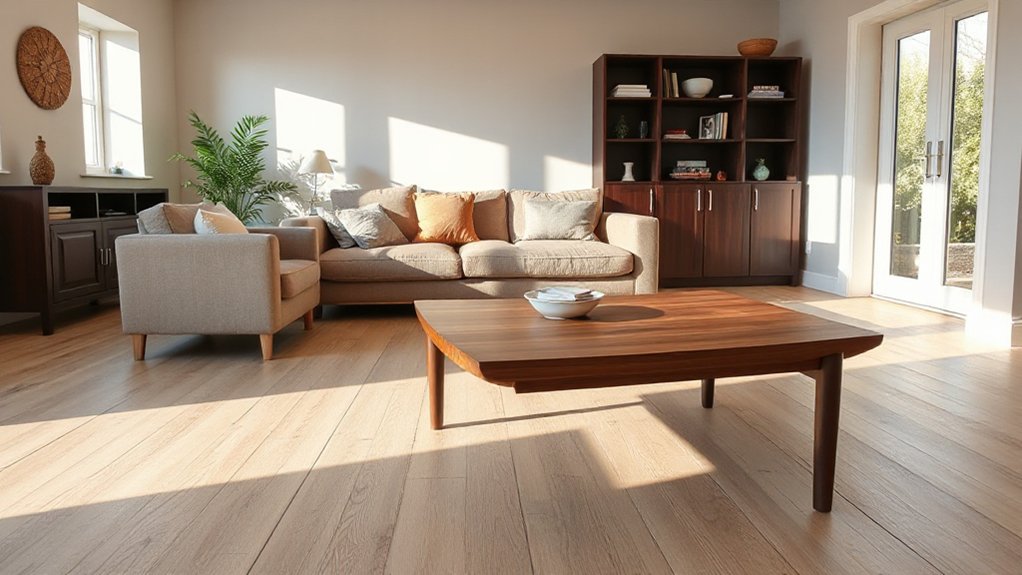
Because finish controls how wood reflects light, it often matters as much as the species or stain when you’re mixing tones. Start by deciding the room’s sheen “baseline,” then let one finish lead and the others support.
The Matte vs Satin question is about glare, durability, and vibe: matte feels modern and calm, while satin reads tailored and livable. Use Glossy vs Matte contrast sparingly—high gloss can look luxe, but too much turns busy fast, especially near windows.
Keep your mix intentional with these checks:
- Use matte on large planes (floors, big tables) to quiet the room
- Choose satin for high-touch pieces that need wipeability
- Reserve gloss for small accents or detail-rich wood
Test sheens in daytime and lamplight before committing
Repeat Wood Tones to Make It Feel Cohesive
To make mixed woods feel intentional, you’ve got to repeat key wood finishes across the room—think the same oak tone showing up in a table, frame, and shelf. Keep undertones consistent, too, by echoing warm, neutral, or cool notes in multiple spots so nothing feels random.
When you repeat both finish and undertone roomwide, the mix reads cohesive and current rather than cluttered.
Echo Key Wood Finishes
While you can mix multiple wood species in one space, repeating one or two key wood finishes is what makes the look feel intentional rather than accidental. Echo key wood finishes by choosing a “lead” sheen and tone—like matte oiled oak or a warm walnut stain—and then reintroducing it in smaller hits across the room. This keeps the palette modern and curated, not busy.
Prioritize enhancing natural textures: let grain, knots, and saw marks do the work instead of piling on heavy gloss or contrast.
- Match sheen levels (matte with matte, satin with satin)
- Repeat the finish on 2–3 secondary pieces, not everything
- Balance large wood planes with lighter, textural woods
- Use consistent hardware finishes to frame the wood cleanly
Repeat Undertones Roomwide
How do you make mixed woods feel cohesive instead of chaotic? You repeat undertones roomwide. Identify whether your dominant wood reads warm (gold, red, honey) or cool (gray, ash, espresso) under daylight, then let that undertone show up at least three times across the space—floors, a large casegood, and a smaller accent like frames or stools. This creates Color harmony even when the grains and species differ.
Keep contrast intentional: pair one light, one mid, and one dark, but anchor them with the same undertone. Use textiles and metals to reinforce it—brass boosts warmth, nickel supports coolness.
Finally, prioritize Material durability where hands and feet hit: sealed oak, maple, or engineered wood wear better than delicate veneers.
Mix Wood Grains and Textures Intentionally
Even if you stick to a tight color palette, mixing wood grains and textures can make a room feel layered instead of busy. Aim for grain variety with a clear pecking order: one dominant grain, one supporting, and one subtle accent.
Then build texture layering so the room reads intentional, not random—think smooth, wire-brushed, and open-pore finishes working together. Keep the scale of grain consistent within a zone, and use contrast to highlight focal pieces without visual noise.
- Pair tight, linear grain with wider cathedral grain for balance
- Mix matte and satin sheens to add depth without adding color
- Use carved, fluted, or slatted details as controlled texture
- Repeat one texture twice to signal a deliberate pattern
Mix Wood Floors and Furniture (No Clashing)
To mix wood floors and furniture without clashing, you’ve got to match undertones first, then align finishes so the sheen reads intentional.
If you want contrast, keep it controlled by repeating one wood tone (or finish) in a few key pieces, like a coffee table, frame, or shelving. That repetition balances the room and makes mixed woods look current, not chaotic.
Match Undertones And Finish
Before you start pairing wood floors with furniture, lock in the undertone and finish so the room reads intentional, not accidental. Identify whether your floor leans warm (gold/red), cool (gray/ash), or neutral, then choose furniture that lives in the same temperature zone. This is how you get Color harmony even with Material variety.
Next, match sheen: a high-gloss table can fight a matte floor, while similar lusters feel modern and cohesive. Use daylight to judge; store lighting lies, and stains shift fast across species.
- Pull the warm/cool cue from the floor’s dominant grain
- Keep stain depth within one to two steps of the floor
- Align finishes: matte with matte, satin with satin
- Test samples against floor at morning and evening
Balance Contrast With Repeats
Once you’ve matched undertones and sheen, you can introduce contrast without clashing by repeating one or two wood cues across the room. Pick a “lead” wood for the largest surface—usually the floor—then echo it in smaller doses: a picture frame, shelf brackets, or a side table.
Next, layer a contrasting wood for depth, but repeat it at least twice so it feels intentional. If you bring in walnut furniture over oak floors, add walnut again in a mirror frame or lamp base.
Watch grain patterns: pair busy cathedral grain with quieter, straighter grain to avoid visual noise. Maintain finish consistency across pieces (all matte, all satin) even when tones differ.
This repetition reads curated, not accidental, and keeps the mix cohesive.
Make Cabinets, Trim, and Doors Work Together
Although cabinets, trim, and doors often come in different woods and finishes, you can make them feel intentionally coordinated by choosing a clear “lead” wood and then controlling the contrast everywhere else. Pick the dominant plane (usually cabinets), then let trim and doors either echo its undertone or sit one step lighter/darker for a tailored, current look.
Use Wood stain techniques to align warmth and sheen, even when species differ, and choose Decorative hardware that bridges tones across zones.
- Match undertones (warm, neutral, cool) before matching color
- Keep sheen consistent: matte-to-satin reads modern and calm
- Repeat the lead wood at least twice (island, pantry door, casing)
- Use hardware finishes to “connect the dots” between elements
Wood-Mixing Mistakes That Instantly Look “Off”
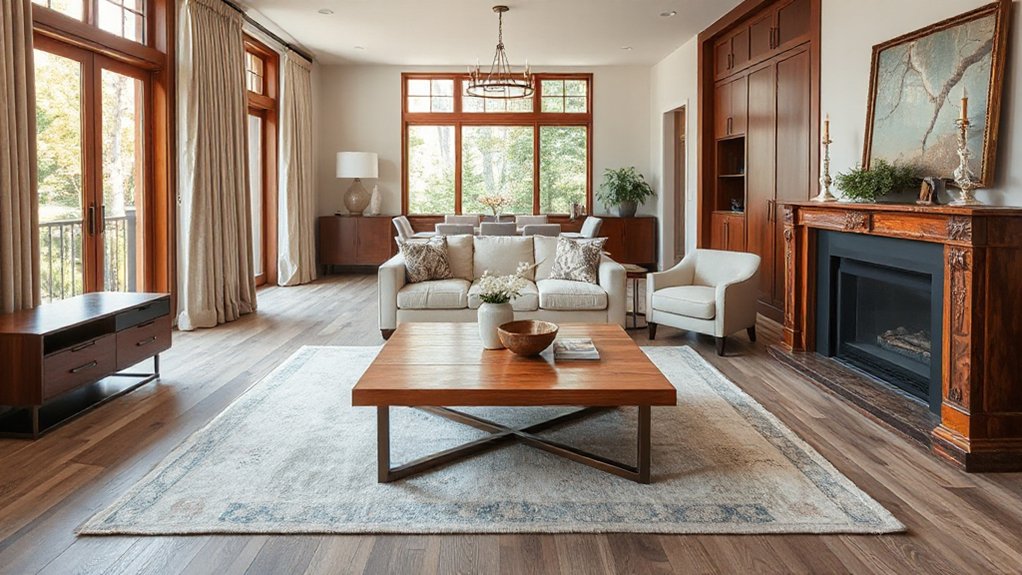
When you mix wood without a clear plan, the room reads “accidental” fast—usually because the tones fight, the undertones clash, or the finishes look unrelated. Don’t pair a cool gray oak floor with warm honey cabinetry unless you bridge them with a middle-tone piece, like a walnut table or tan rug.
Another mistake: matching everything too closely. If woods look “almost the same,” they’ll highlight differences. Either match intentionally or separate with contrast.
Watch sheen, too—mixing high-gloss with dead-matte can feel cheap unless it’s repeated.
Ignore wood grain variation and you’ll create visual noise; balance busy grains with calmer ones.
Finally, get furniture scale right: tiny, spindly legs against heavy slab pieces makes the mix feel unplanned.
Frequently Asked Questions
Can You Mix Wood With Painted Furniture or Metal Accents?
Yes—you can mix wood with painted furniture and metal accents. You’ll get balance by repeating tones, matching undertones, and varying finishes. Keep one dominant material, and use the others as intentional, contemporary contrasts.
How Do You Mix Reclaimed Wood With New Wood Pieces?
You mix reclaimed and new wood by matching undertones, echoing grain direction, and balancing scales. Use a consistent finish sheen for seamless blending, then let rustic contrast shine through one standout piece. Add neutral textiles.
What Wood Tones Look Best in Small Rooms?
In small rooms, choose light-to-medium woods; they reflect up to 40% more light than dark tones. Add subtle wood tone contrast with warm accents, and keep natural wood textures matte to avoid visual heaviness.
Do Wood Tones Need to Match Across Open-Concept Spaces?
No, you don’t need perfect matches across open-concept spaces; you need consistency. Use wood tone contrast deliberately, repeat one dominant undertone, and balance finishes to maintain visual harmony while keeping the look current.
How Do You Protect Mixed Wood Surfaces From Fading in Sunlight?
Like armor against a relentless sun, you’ll block fading by adding UV protection: apply quality Wood sealants or UV-filtering finishes, hang sheer shades, rotate rugs, and pull furniture off hot spots for even aging.
Conclusion
Mixing woods looks intentional when you lead with one anchor tone, match undertones, and stick to a 60–30–10 balance across light, mid, and dark pieces. You’ll keep things modern by varying grain and finish—matte calms, satin blends, gloss spotlights. Here’s the kicker: studies show up to 90% of first impressions** come from visual cues**, so your wood mix instantly signals “designed” or “accidental.” Test samples in your lighting, then commit.