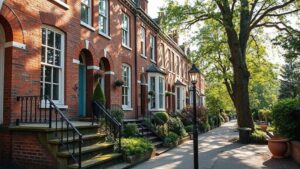
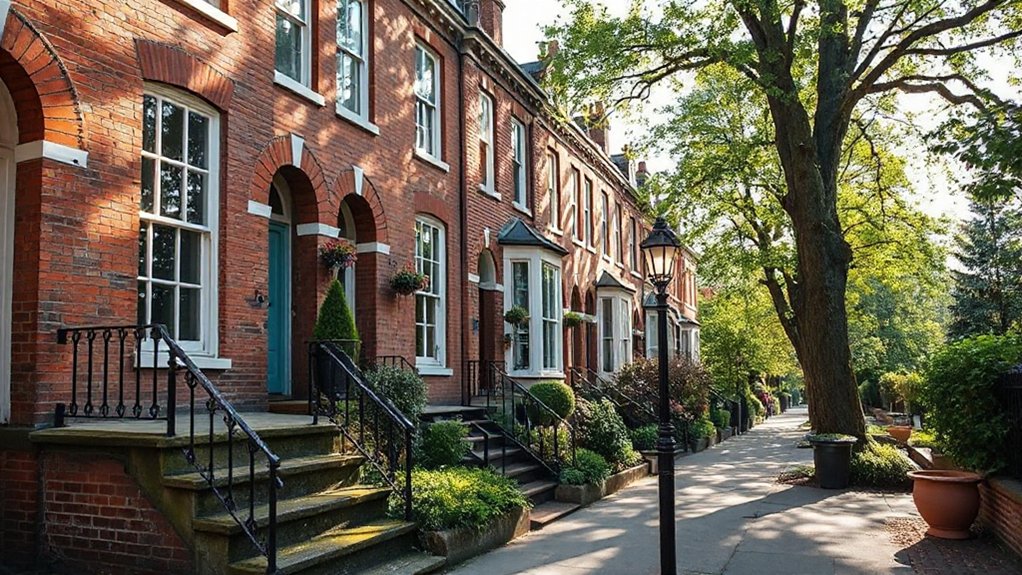
Transform your Bristol Victorian terrace by prioritizing heritage-first curb appeal. Choose period-accurate colors that read well across brick, stucco, and stone, and use restrained Victorian palettes with accents on doors and trim. Restore façades with heritage-friendly restraint, matching repairs to patina and scale. Add low-maintenance greenery, warm, glare-free lighting, and clearly staged entrances to boost visibility. Keep a simple maintenance cadence for ongoing charm. If you keep exploring, you’ll uncover more practical, cost-conscious steps.
Heritage-First Kerb Appeal for Bristol Terraces
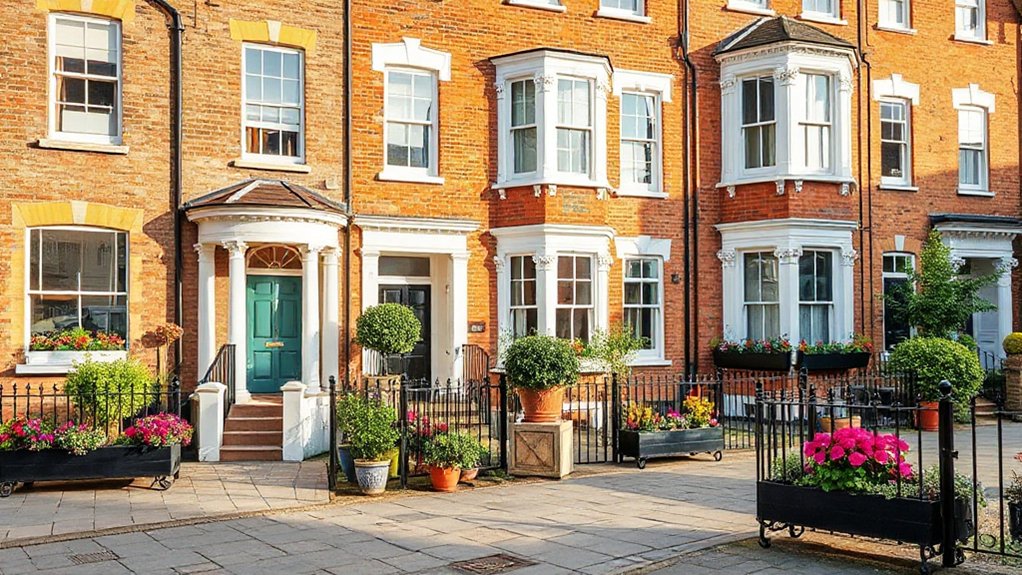
Bringing heritage to the curb isn’t about nostalgia alone—it’s about creating a coherent, legible street identity that anchors Bristol terraces in their history while boosting curb appeal today. You approach each parcel as a story with practical, measurable impact.
Prioritize Historical preservation by safeguarding original façades, materials, and alignments you can see from the pavement. That emphasis on Architectural authenticity ensures renovations respect proportion, rhythm, and detailing, so new elements feel like part of the existing fabric.
You’ll assess visibility, choose repairs that minimize change, and document decisions for future care. This isn’t retrofitting; it’s responsible stewardship that communicates care to neighbors.
Your goal: a thriving streetscape where heritage informs choice, and every improvement reinforces belonging, clarity, and timeless character.
Choose Period-Accurate Colors for Bristol Terraces
Choosing period-accurate colors for Bristol terraces isn’t about chasing a museum look; it’s about aligning the palette with a building’s age, material, and urban rhythm. You’ll map Historical color palettes to brick, stucco, and stone, then test how adjacent façades read together.
Start with restrained Victorian color schemes—subtle grays, umbers, and muted greens—so you honor archetypes without shouting. Consider window frames, door canopies, and railings as color accents that tie the row into a cohesive narrative.
Light reflects differently across times of day; choose hues that maintain legibility from the street and at dusk. Document your choices for future repairs, preserve the terrace’s continuity, and invite neighbor feedback to strengthen belonging.
Restore Façades With Heritage-Friendly Restraint
When restoring façades in Bristol’s Victorian streets, prioritize heritage-friendly restraint over showy restoration. You’ll act with care, balancing visible history with modern life, so your upgrade feels welcoming and enduring.
Begin by evaluating original materials and detailing, then choose conservative repairs that emphasize texture, line, and rhythm rather than over-polished surfaces. Your aim is historic preservation that respects era-specific features—cornices, sash windows, brickwork, and decorative tiling—without erasing them.
Use repairs that match patina and scale, avoiding bold, novel interventions. This disciplined approach enhances architectural authenticity, letting passersby sense continuity with the past.
Coordinate with local guidelines and craftsmen who value restraint, so the result invites community pride, belonging, and confidence in Bristol’s timeless streets.
Low-Maintenance Greenery for Victorian Terraces
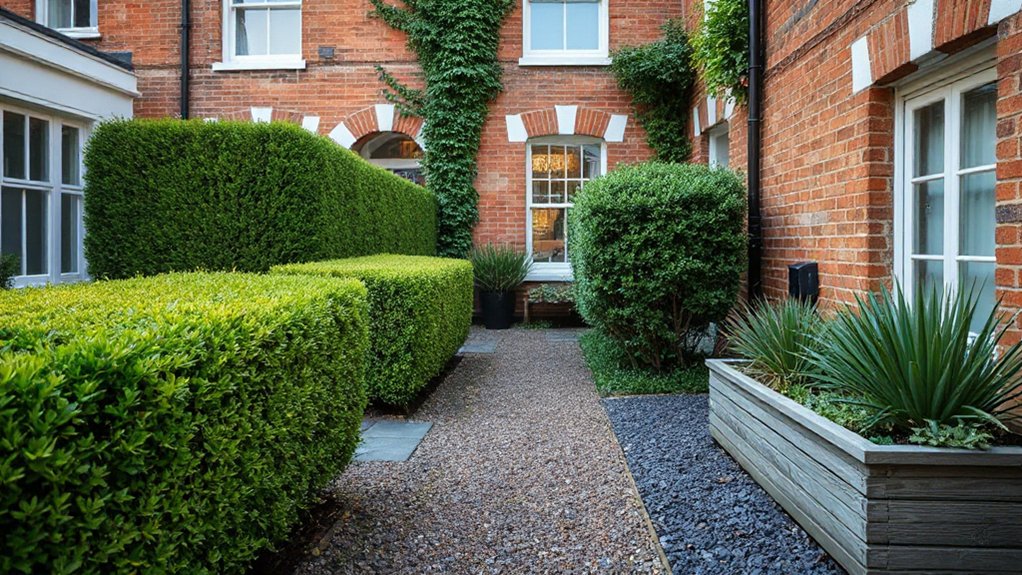
Focus on low-maintenance planting that still packs curb appeal, choosing species that thrive in brick-and-stone terraces with minimal care.
We’ll weigh options for Minimalist Vertical Gardens and Low-Muss Maintenance Planting to maximize surface interest without overhauling layouts.
The goal is clear: build a verdant, easy-to-tair landscape that complements Victorian textures while keeping upkeep to a minimum.
Low-Muss Maintenance Planting
Ever thought you could boost kerb appeal with minimal fuss? You can, with low-muss maintenance planting that survives Bristol’s seasons while still feeling curated.
Start by selecting structure-friendly shrubs and evergreen perennials arranged in small, repeatable blocks to create rhythm along the terrace. Use compact, drought tolerant plant selections and mix textures to hide gaps between pots or troughs.
Succulent container gardening adds visual focal points with minimal watering—place them where sun hits most. Pair hardy grasses with low-growing groundcovers to reduce soil exposure and weed-jump.
Choose native-inspired foliage for a familiar, inviting feel, then maintain with a simple monthly check: prune lightly, refresh mulch, and replace any stressed specimens.
The result is a cohesive, welcoming frontage you’ll enjoy and neighbors will notice.
Minimalist Vertical Gardens
Vertical gardens can transform a Victorian terrace without crowding its footprint. You’ll gain green presence without sacrificing space, delivering a clean, contemporary silhouette that still respects architectural details.
Minimalist vertical gardens rely on compact planters, modular mounts, and slim irrigation, so upkeep stays low and predictable. Choose a restrained palette—greens, charcoals, and natural wood—to blend with brickwork and sash windows, reinforcing a sense of belonging rather than novelty.
For urban sustainability, select drought-tolerant species and rain-fed irrigation to reduce water use while boosting air quality.
In regards to modern interior design, let the greenery echo indoors with a coordinated potline or wall art; this cohesion strengthens flow between portal and lounge.
The result: effortless curb appeal that feels intentional, welcoming, and enduring.
Outdoor Lighting to Welcome Guests After Dark
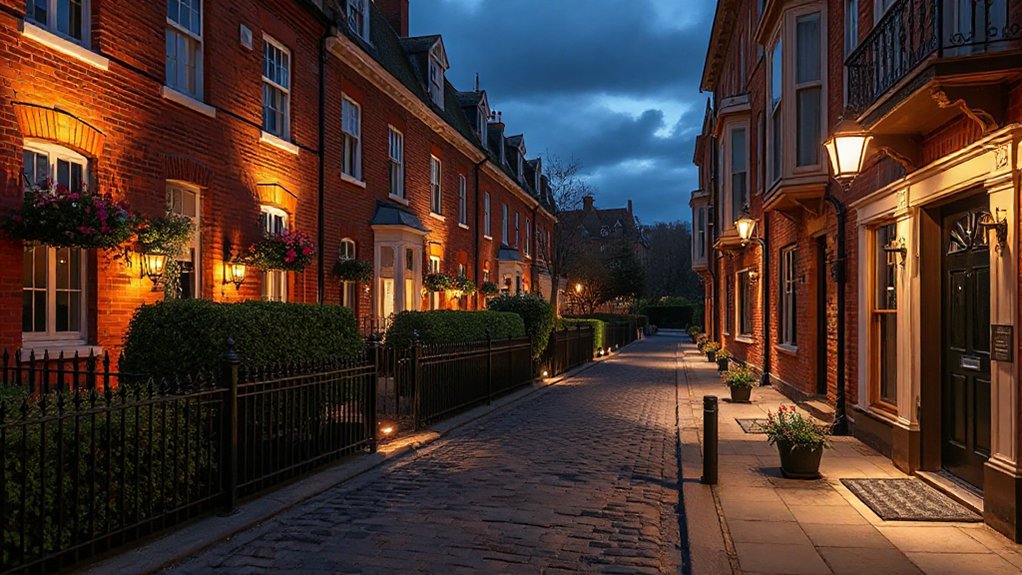
Outdoor lighting isn’t just about visibility; it’s about inviting people in with warmth and confidence. You want a glow that guides guests gently, not a glare that jars them awake. Begin with solar powered lanterns along your path to create a welcoming rhythm after dusk, drawing eyes to the entrance without wiring fuss.
Pair this with subtle pathway accent lighting to emphasize edges, define steps, and prevent missteps on damp Victorian brick. Choose color temperature in the warm to soft white range for coziness and approachability.
Use timers or smart controls to dusk-tide adapt, ensuring consistency. Aim for layered lighting: porch flare, door highlight, and ground washes that feel balanced.
Thoughtful illumination communicates belonging before you speak, inviting conversation and connection.
Stage the Entrance for Curb-Appeal Impact
Start with an inviting entrance that signals curb-appeal from the moment you arrive, guiding visitors’ eyes toward your home’s best features.
Refresh your doors and hardware to refresh the first impression without a full overhaul, then pair that with purposeful greenery and lighting to frame the entry at any hour.
Think of these elements as a cohesive package that boosts safety, flow, and mood, inviting guests to step inside.
Stage an Inviting Entrance
A welcoming entrance instantly sets the tone for curb appeal, so stage yours to greet visitors before they even step onto the path. You’ll optimize sightlines by keeping the approach clean and unobstructed, guiding the eye toward the doorway with simple lighting and clear landscaping.
Use entrance illumination strategically: warm LEDs near the door, low-level path lights, and a subtle glow that draws visitors in without overpowering the street. Choose a welcoming pathway that invites pause—gentle curves, crisp edging, and textured surfaces that feel tactile underfoot.
Add a focal element, like a seasonal planter or a tasteful plaque, to create familiarity. Maintain it regularly; consistency signals care, belonging, and stability in your Victorian streetscape.
Refresh Doors and Hardware
Because the door is the focal point of your entry, update both its condition and style to boost curb appeal fast. You refresh the surface with a clean finish, repair any dents, and consider a bold yet respectful door color that nods to Victorian charm.
Then optimize door hardware: replace worn hinges, install a sturdy knocker, and add a complementary handle set that matches metalwork on nearby railings. A modern lock enhances security without sacrificing period accuracy.
Choose door color that contrasts with brickwork for visibility, or harmonizes with trim for a cohesive look. Rethink sidelights and numeric address plates to read clearly from the curb.
Quick, thoughtful updates create a welcoming, cohesive entrance that invites neighbours and visitors alike.
Add Greenery and Lighting
Greenery and lighting are the quick wins that pull a Victorian entry from dated to deliberate. You stage the street view by combining plant life with purposeful illumination, so your doorstep feels inviting at any hour.
Start with garden lighting that guides the eye to architectural details, not glare, using warm LEDs and shielded fixtures to avoid light trespass.
For plant selection, choose compact, low-maintenance varieties that seasonally frame the door without overpowering it; evergreen structure plus seasonal colour creates depth year-round.
Place pots at varying heights to add rhythm and avoid symmetry fatigue.
Keep pathways clear and well-edged, letting light highlight textures like brickwork and ironwork.
This approach signals belonging, care, and a thoughtful, enduring curb appeal.
Budget-Friendly Tweaks and a Maintenance Cadence
Small changes can deliver big curb-appeal payoffs without blowing your budget, starting with a simple maintenance cadence that fits Bristol’s Victorian streetscapes. You’ll identify a monthly rhythm: quick weeding of cracks, pruning for airflow, and a clean sweep of gutters. This cadence preserves historic charm while preventing expensive repairs later.
Lean into budget-friendly tweaks like repainting only the most worn trim using exterior painting techniques, coordinating colors with neighboring homes for cohesion, and revitalizing doors with bold but period-appropriate hues.
Integrate landscaping tips that emphasize low-water, high-impact plantings, so every season reads as deliberate care. You’ll feel a sense of belonging by neighbors who notice thoughtful upkeep, not flashy excess.
Precision in routine equals lasting curb appeal and confidence.
Frequently Asked Questions
How Can I Avoid Overloading Period Features in a Restoration?
You avoid overloading period features by balancing Historic detailing with Modern integrations, selecting essential elements only. You’ll test scales and textures, prune excess ornament, and interweave contemporary materials, ensuring cohesion while you feel you belong in a thoughtfully restored home.
Which Local Permissions Affect Exterior Changes in Bristol Terraces?
Most Bristol terraces require listed-building consent or planning permission for exterior changes, often with advisory historic signage guidelines and garden fencing standards. You’ll need to check your local authority, conservation area rules, and potential permitted development limits.
What Budget Ranges Are Typical for Heritage-Compliant Updates?
Atypical budgets vary, but you’ll find typical ranges: small updates around a few thousand, mid-range improvements up to tens of thousands, and larger heritage-compliant projects near six figures. Opt for cost effective upgrades and historic preservation tips. You belong here.
How Often Should Periodic Maintenance Be Scheduled on Victorian Fronts?
You should schedule periodic maintenance every 12–24 months to guarantee long-term durability. Prioritize Historical preservation and Material selection, choosing low-impact, compatible materials while you plan, inspect, and adjust your routines to feel grounded and truly belonging.
Are There Any Seasonal Considerations for Exterior Painting in Bristol?
Seasonal weather heavily influences exterior painting here: pick milder periods, avoid rain, and watch temperatures. You’ll notice faster paint drying in dry spells, slower when humid. Plan ahead, because timing saves coats and creates lasting belonging.
Conclusion
In Bristol’s Victorian neighborhoods, heritage-first curb appeal and budget-smarter tweaks sit side by side. You weigh period-accurate hues against low-maintenance greens, like a curator and a hobbyist sharing the same toolkit. Practical steps—lighting, staged entrances, restrained façades—contrast with bold, creative touches that still honor history. The result isn’t nostalgia alone, but a livable, maintenance-savvy charm that eyes can admire and renters can access without debt. Juxtaposition makes elegance practical, and practical elegance feels timeless.