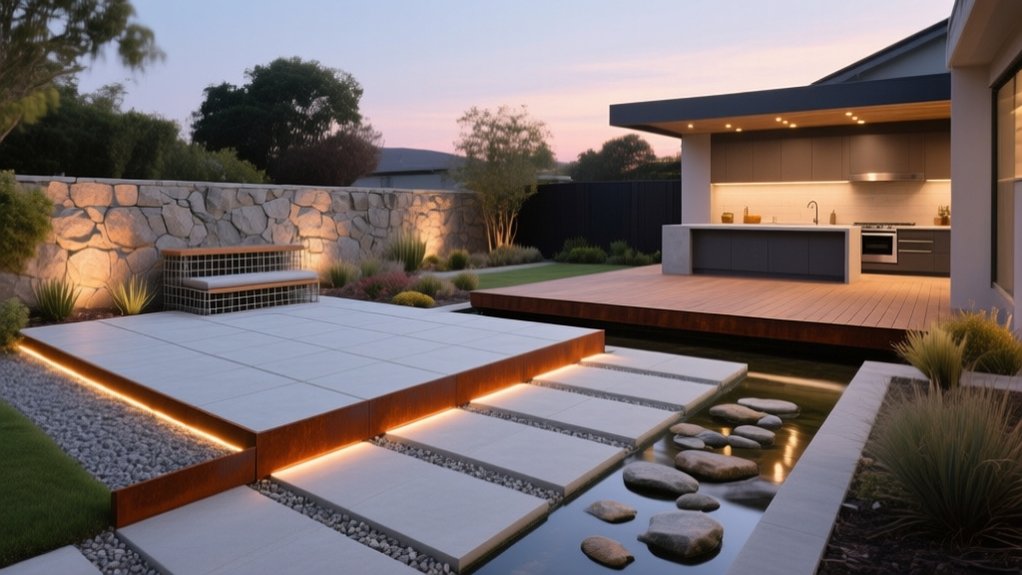
You’ll see modern UK hardscaping shifting to large-format porcelain/concrete pavers with tight joints, crisp metal edging, and restrained greys. You’ll mix honed/flamed stone, timber accents, and Corten for controlled texture. You’ll specify permeable paving, resin-bound gravel, soakaways, and SuDS-ready sub-bases to beat runoff. You’ll add outdoor kitchens, flush fire tables, retaining walls with 450mm seating, and low-glare smart LEDs. Keep it frost-rated, R11, and properly drained—there’s more ahead.
Large-Format Hardscape Pavers for Modern Lines
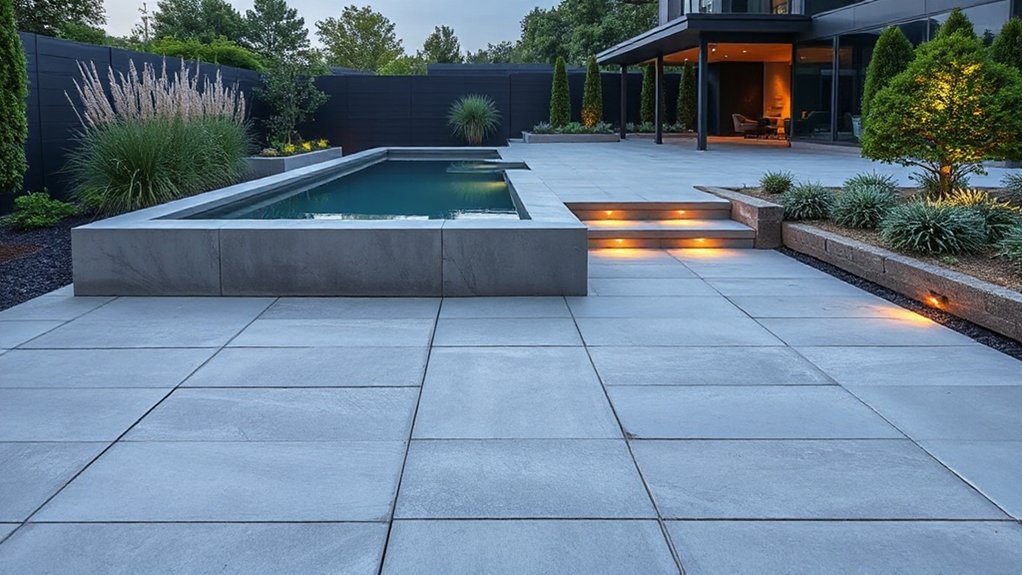
If you’re aiming for crisp, contemporary geometry in a UK garden, large-format hardscape pavers deliver it fast. You minimise joint density, so patios read calmer and bigger—ideal for tight terraces and new-build plots.
Choose Large format paving in porcelain or concrete for consistent calibres and tight tolerances, then set it on a full mortar bed with primed backs to control rocking and reduce hollow spots.
Keep Modern lines by using 3–5mm joints, laser-straight string lines, and a restrained colour palette such as mid-greys or off-black.
Specify R11 slip resistance for year-round use, and build in a 1:80 fall to shed rain.
Finish with flush edging to lock courses and protect corners.
Mixed Hardscape Materials for Depth and Texture
To add depth and tactile interest, you’re layering stone paving with timber detailing and metal edging to create crisp junctions and clean sightlines.
You’ll heighten contrast by pairing honed and flamed finishes, then balancing warm and cool tones to define zones without extra planting.
In UK gardens, this mixed-material approach also lets you tune slip resistance, drainage performance, and weathering for year-round use.
Layering Stone, Wood, Metal
As British gardens shift towards more architectural, low-maintenance layouts, layering stone, timber, and metal has become a go-to hardscaping trend for adding depth and texture without clutter.
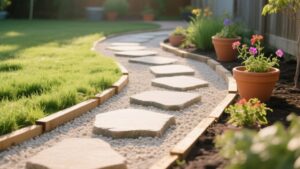
You’ll get stronger spatial definition by combining paving, raised planters, and edging in a deliberate sequence rather than mixing randomly. Start with stone as the load-bearing plane: calibrated sandstone, granite setts, or porcelain on a stable sub-base.
Introduce timber as a tactile break—bench tops, sleeper steps, or slatted screens—kept off wet ground with stainless brackets.
Finish with metal to sharpen lines: powder-coated steel edging, corten retaining strips, or aluminium trims.
Layering stone, wood, metal creates controlled textural contrast, improves wayfinding, and keeps planting zones crisp year-round.
Contrasting Finishes And Colors
Although a restrained palette still suits most UK gardens, designers now build depth by specifying contrasting finishes and colours across hardscape materials rather than adding more features. You can pair honed limestone paving with riven slate copings, then offset both with powder-coated aluminium edging to sharpen lines and improve durability.
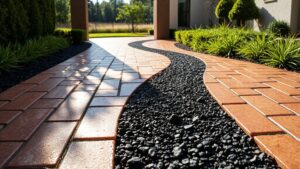
Specify Contrasting finishes deliberately: brushed concrete against flamed granite gives slip resistance underfoot while catching different light levels in winter sun. Push Color combinations through tone, not ornament—warm Yorkstone beside cool charcoal porcelain, or Corten planters against pale aggregate resin gravel.
Keep joints tight and consistent, and match grout to the dominant surface to avoid visual noise. You’ll achieve texture-led zoning without clutter. It reads premium and modern.
Permeable Hardscaping for Drainage and Runoff Control
With heavier downpours and tighter planning expectations on surface-water management, permeable hardscaping has become a go-to trend for UK gardens that need drainage without sacrificing a crisp, architectural finish.
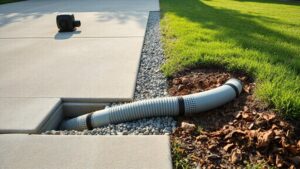
You’ll specify permeable block paving, resin-bound gravel, or porous concrete so rainfall infiltrates through joints into a graded sub-base, rather than sheet-flowing to gullies.
For stormwater management, you can pair this build-up with geotextiles, attenuation crates, or a soakaway sized to BRE Digest 365, helping you meet SuDS guidance and reduce flood risk.
You’ll also cut ponding on patios and paths, keep thresholds drier, and protect planting beds from washout.
Choose eco-friendly surfaces with recycled aggregates and low-cement mixes, and you’ll still deliver clean lines and reliable performance year-round.
Composite Decking and Outdoor Hardscape Tiles
You’re seeing UK gardens shift towards low-maintenance composite decking that won’t warp, rot, or need annual staining, even in persistent damp conditions.
You can also specify modular outdoor hardscape tile systems that click together for fast installs on balconies, patios, and roof terraces, with easy access for services below.
To meet safety expectations year-round, you’ll want slip-resistant surface finishes rated for wet performance, especially on shaded or north-facing plots.
Low-Maintenance Composite Decking
As UK gardens shift toward year-round, low-input outdoor living, composite decking and outdoor hardscape tiles have become the go-to hardscape upgrade for clean lines without constant upkeep. You’ll get consistent colour, reduced algae grip, and no annual staining, which suits damp British microclimates and shaded plots.
Choose capped composite boards with UV inhibitors and anti-slip embossing to hit Part M-friendly traction targets on steps and thresholds. Specify a ventilated subframe with correct joist centres to limit bounce and speed drainage; you’ll cut mould risk and freeze-thaw stress.
Look for sustainable materials such as recycled HDPE and FSC-certified fillers, plus eco friendly finishes that avoid solvent-heavy coatings. Detail hidden fixings and perimeter edging and you’ll keep fasteners out of sight and maintenance down to a wash.
Modular Outdoor Tile Systems
While traditional paving locks you into wet-lay disruption, modular outdoor tile systems let you upgrade a terrace or balcony fast using click-fit composite decking tiles or pedestal-supported hardscape slabs.
You’ll get dry installation, minimal mess, and access to services below for future maintenance—ideal for UK retrofit projects and rooftop gardens.
Choose UV-stable composite, porcelain, or concrete-look pavers with factory-calibrated tolerances so joints stay consistent and levels remain true.
Pedestal systems help you correct falls for drainage without screed, and you can run lighting or irrigation neatly in the void.
If you’re planning phased landscaping, you can lift, reconfigure, and expand the layout, delivering genuinely customizable outdoor flooring that adapts as your garden evolves.
Slip-Resistant Surface Finishes
Modular tiles and pedestal slabs make upgrades quick, but UK weather still tests the surface underfoot, so slip-resistant finishes have become a standout hardscaping trend.
When you specify composite decking, pick grooved or embossed boards with tested wet pendulum values; you’ll reduce algae-driven slickness without over-relying on cleaning.
For porcelain and concrete hardscape tiles, you should target R11–R12 slip ratings and micro-aggregate textured finishes that keep drainage channels open.
Slip resistant coatings add another layer of control on existing slabs, especially around hot tubs, steps, and shaded north-facing patios.
You can also combine anti-slip tapes with edge profiles to meet Part M expectations for safer routes, even in winter freeze-thaw cycles.
Maintenance stays simple: brush, biocide, rinse.
Seamless Indoor-Outdoor Hardscape Flow
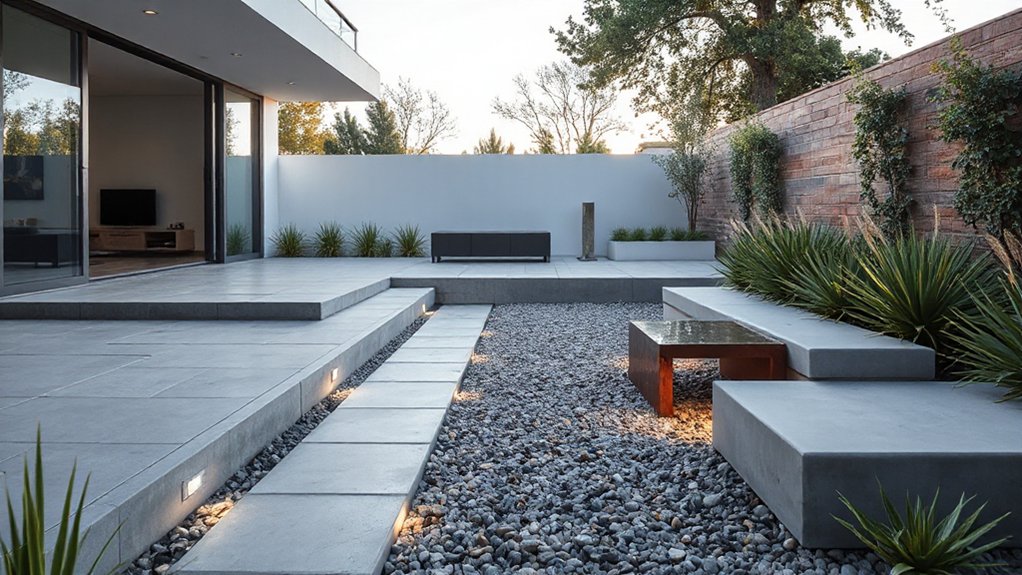
If you want your garden to feel like a true extension of the house, seamless indoor-outdoor hardscape flow starts with aligning levels, thresholds, and surface materials so movement stays uninterrupted. Specify flush sill details, linear slot drainage, and thermal breaks so UK rain and freeze-thaw don’t cause pooling or cracking.
Continue your internal floor module outdoors using matching porcelain, honed limestone, or resin-bound gravel, then keep joint widths and laying patterns consistent to avoid visual “steps”. Use frameless sliders and recessed track systems to maintain a clean datum line, and integrate subtle indoor landscaping at the threshold with trough planters or green walls.
Finish sightlines with a focal garden sculpture and coordinated lighting, so the view reads as one connected, contemporary room year-round.
Built-In Outdoor Kitchens and Hardscape Prep Zones
As outdoor entertaining becomes a year-round priority in the UK, built-in outdoor kitchens and hardscape prep zones now get specified like compact wet rooms: a durable, non-slip paving datum underfoot, dedicated drainage falls, and service corridors for power, gas, and water.
You’ll detail the slab build-up for load and heat: 150mm Type 1, geotextile, reinforced concrete, then porcelain or sawn sandstone with resin or epoxy grout to resist staining.
Keep outdoor grilling safe by setting appliance plinths on level pads, separating combustibles, and using wind-braked screens.
You’ll zone prep zones with integrated worktops, splashbacks, and bin niches, plus IP-rated sockets and task lighting.
Finish with a hose point, shut-off valves, and winterisation access panels for maintenance.
Fire Features as Hardscape Focal Points
You’re seeing fire features take centre stage in UK hardscaping, with sleek built-in fire pits specified as flush-set focal points in porcelain or sawn sandstone paving.
You’ll also notice linear fire tables trending for their clean geometry, consistent flame line, and easy integration with bench seating and retaining walls.
If you’re planning one, you’ll want to engineer clearances, ventilation, and fuel routing early so the unit reads as a seamless part of the hardscape package.
Sleek Built-In Fire Pits
While traditional chimineas still have their place, sleek built-in fire pits have become the go-to hardscape focal point in UK gardens because they integrate cleanly with paving and retaining work.
You’ll see Modern fire pit designs specified as recessed bowls set flush to porcelain patios, or raised masonry rings that match coping and setts.
You can run gas for predictable output, or choose a dedicated wood-burn zone with a proper ash base and drainage sump to protect sub-layers in wet climates.
Plan clearances to fences and overhanging planting, and set a non-combustible surround to prevent heat damage.
For Fire pit safety tips, you should add a spark guard, include shut-off access, and site it away from prevailing winds.
Linear Fire Tables Design
Linear fire tables take the clean integration of built-in fire pits and stretch it into a long, architectural flame line that reads like outdoor furniture and hardscape in one. You use them to zone patios, align with porcelain paving joints, and frame sectional seating without bulky masonry.
For Linear fire tables design, specify powder-coated aluminium or sintered stone tops, with a stainless linear burner, wind guards, and CE/UKCA-certified controls. You’ll get best performance on mains gas, but bottled propane suits retrofits in London terraces.
Plan a modern fire feature installation with hidden services: vented bottle storage, isolation valve access, and non-combustible clearances from timber screens. Pair the table with low retaining walls or corten edging so the flame becomes the focal axis, even in compact gardens.
Retaining Walls With Built-In Seating
As garden levels get tighter on UK plots, retaining walls with built-in seating are emerging as a high-performance way to stabilise soil and add usable outdoor space in one move. You’ll get integrated seating without sacrificing planting or circulation, especially on split-level terraces and narrow town gardens.
Specify engineering-grade blockwork, stone, or gabions with proper drainage: a free-draining backfill, perforated pipe, and weep holes stop hydrostatic pressure. Keep wall heights within permitted development where possible, and treat anything near boundaries as a design-and-build job with clear loading assumptions.
For comfort, set seat height around 450mm and add timber or stone caps with eased edges. Use decorative retaining finishes—porcelain slips, sawn sandstone, or textured concrete—to tie into modern paving schemes. Add planted copings for softness.
Smart Hardscape Lighting for Paths and Ambiance
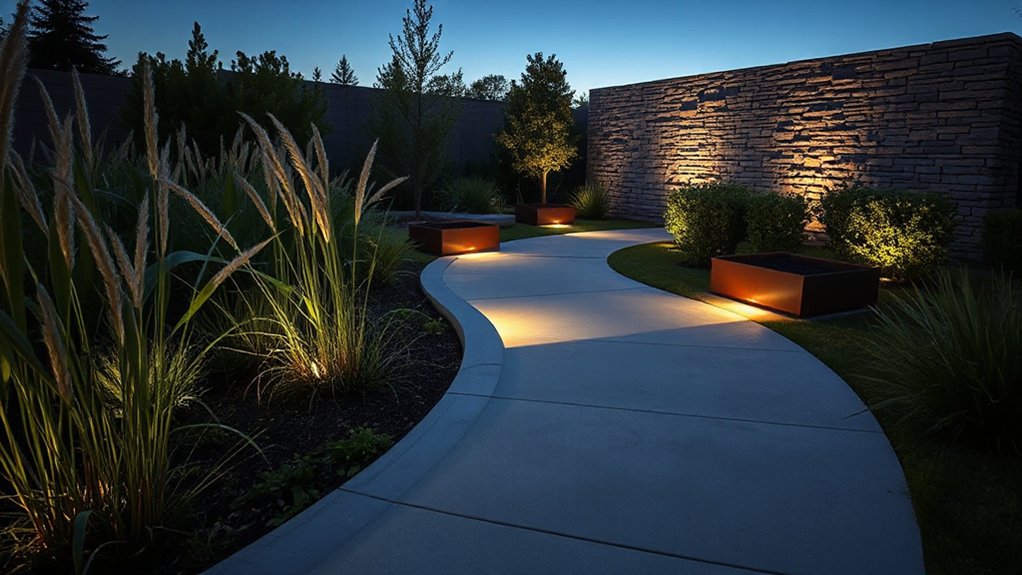
Retaining walls with built-in seating extend your usable levels; smart hardscape lighting makes those levels work after dark, guiding movement and setting atmosphere without cluttering borders. Specify low-glare, shielded LED step lights and recessed pavers for clean lines, then add bollards only where sightlines need reinforcing.
For garden pathway illumination, integrate luminaires into coping, risers, and kerb edges, keeping cable runs hidden in conduit beneath the sub-base. You’ll get tighter beam control and fewer trip hazards than with freestanding fittings.
Run everything on a UK-smart system (Zigbee, Matter, or DALI) with astronomical timers, PIR occupancy, and zoning by terrace, path, and seating. Tunable white and dim-to-warm deliver ambient landscape lighting that shifts from task to mood instantly.
Hardscaping That Holds Up Year-Round
Even if your layout looks sharp in July, UK freeze–thaw cycles, waterlogging, algae, and salt air will punish hardscaping that isn’t specified for year-round exposure. You’ll get better Seasonal durability by choosing porcelain or low-porosity granite, then bedding on a full mortar base with primer for proper bond.
Specify permeable sub-bases and falls to drains so standing water can’t heave slabs or stain joints.
For Weather resistance, you should favour resin-bound gravel or frost-rated block paving with polymeric jointing, not loose sand that washes out.
Add anti-slip R11 finishes for shaded terraces, and select stainless fixings for coastal gardens.
You’ll extend lifespan by sealing only where needed and planning easy-clean edges for pressure washing.
Frequently Asked Questions
How Much Should I Budget for Hardscaping a Medium-Sized Backyard?
You should budget £10,000–£25,000 for hardscaping a medium-sized UK backyard, depending on landscaping costs, access, and drainage. Optimise material selection—porcelain, resin-bound gravel, or permeable block paving—to match low-maintenance, climate-resilient trends.
Do I Need Permits or HOA Approval for Patios, Walls, or Outdoor Kitchens?
Yes—you’ll often need approval: about 1 in 5 UK planning applications get refused. Check zoning regulations and HOA guidelines; patios and low walls may be permitted, but outdoor kitchens and taller walls usually trigger consents.
What’s the Typical Timeline for a Hardscape Project From Design to Completion?
You’ll typically need 6–12 weeks: 1–2 for surveys and design, 1–3 for approvals, 2–6 for build, plus 1 for snagging. Add time for Landscape lighting and Sustainable materials lead times.
How Do I Choose a Reliable Hardscape Contractor and Compare Quotes?
Choose a reliable hardscape contractor by vetting Contractor reputation via UK reviews, accreditations, and recent installs. Compare quotes line-by-line: Material selection specs, sub-base build-ups, drainage, warranties, lead times, and itemised labour rates.
What Maintenance Schedule Keeps Hardscapes Looking New Over the Years?
Like clockwork, you’ll keep hardscapes new by sweeping weekly, rinsing monthly, spot-weeding fortnightly, pressure-washing each spring, checking joints and drainage twice yearly, sealing stone every 2–3 years—boosting landscape durability through disciplined material maintenance.
Conclusion
With these hardscaping trends, you’ll make your garden feel outrageously engineered for modern UK living. You’re laying large-format pavers for razor-straight lines, mixing stone, metal, and timber for serious depth, and choosing permeable systems that laugh at stormy run-off. You’ll blur indoors and out with composite decking and outdoor tiles, then ignite drama with fire features, seating walls, and smart lighting. Build it tough, and it’ll shrug off frost, rain, and mud.