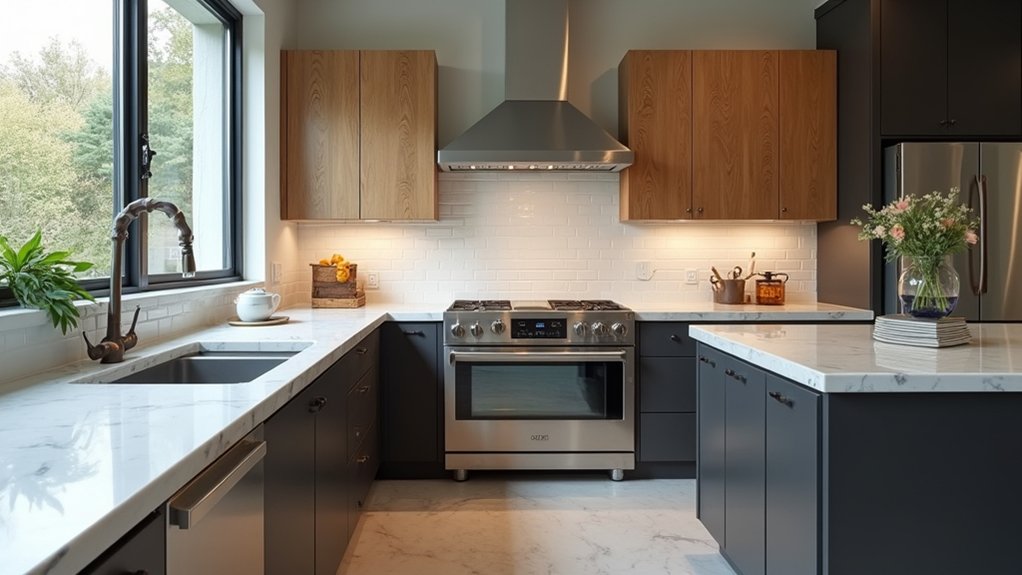
When you choose finishes for your kitchen, balance durability with maintenance, aesthetics with cost, and performance in high-traffic zones. You’ll want coatings that resist scratches, stains, and heat, while staying easy to clean and repair. Consider how cabinet and countertop finishes differ in life cycle cost, warranty, and environmental impact, then test samples to verify compatibility. The right combination sets a resilient, cohesive space—but the best path becomes clear only after you compare options against real-world use.
Kitchen Finishes: A Practical Decision Framework
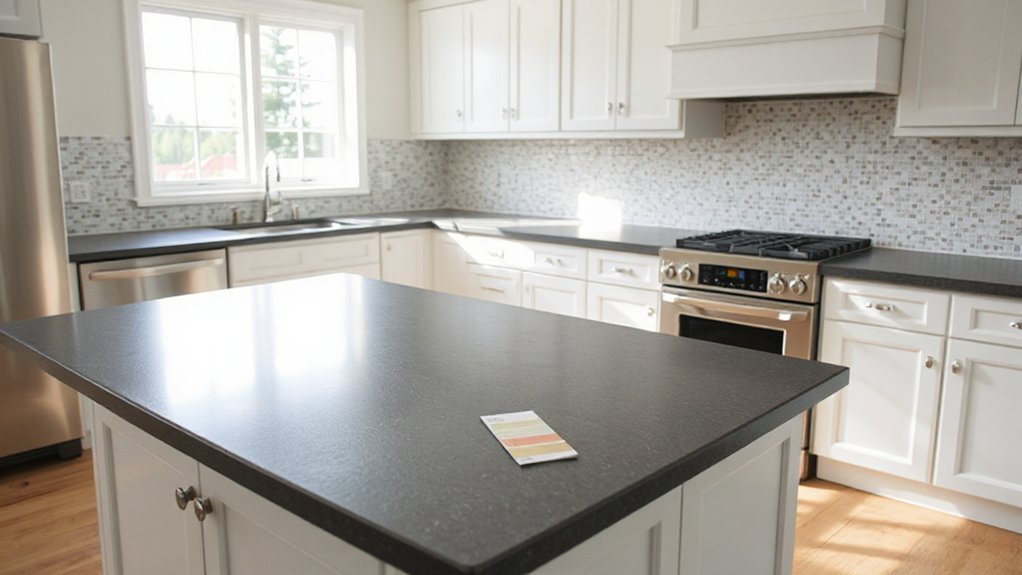
Choosing the right kitchen finishes starts with a clear decision framework. You establish criteria first: durability, maintenance, aesthetics, and cost.
Then you map options to performance requirements, ensuring each finish aligns with usage patterns and environmental goals. Your framework prioritizes quantified metrics—scratch resistance, stain resistance, washability, and color retention—so selections withstand daily wear.
You compare brands and finishes by life-cycle impacts, sourcing, and off-gassing, focusing on long-term value.
You’ll consider Personalized finishes that reflect your style while maintaining consistency with cabinetry and hardware.
Eco friendly options are weighed for VOC levels, recyclability, and manufacturing footprint.
Document trade-offs clearly, then test samples under typical kitchen conditions.
Finally, you validate selections against warranty terms and maintenance routines to sustain appeal and function over time.
Moisture and Heat Effects on Kitchen Finishes
Moisture and heat pose steady challenges to kitchen finishes, demanding a practical link from your decision framework to real-world performance. In this scenario, you assess how finishes respond to routine exposure—spills, steam, and high-heat surfaces—without assuming perfection.
Humidity resistance matters most where condensation and humid air persist, influencing swelling, delamination risk, and surface gloss changes. Heat tolerance matters where appliances, stovetops, and ovens emit sustained or intermittent heat; you’ll prioritize coatings and films that resist blistering, discoloration, and crack formation.
Consider substrate compatibility, cure conditions, and maintenance cycles that sustain protective properties over time. Balance aesthetics with durability by selecting formulations that demonstrate proven performance under typical kitchen operating conditions, then verify with manufacturer data and independent tests.
Cabinet vs Countertop Finishes: Durability and Care
Cabinet and countertop finishes endure different exposure patterns, demanding distinct durability and care strategies. Cabinets face frequent hand contact, cleaning residues, and humidity swings, so choose finishes with good chemical resistance and abrasion tolerance.
Countertops endure heavier impact, heat, and spills; select formulations that resist scratching, knife marks, and staining, and seal edges to prevent moisture intrusion.
Durability hinges on proper surface preparation, compatible primers, and correct curing conditions, followed by routine inspection for wear spots and microcracks.
For upkeep, use nonabrasive cleaners and soft cloths, and reapply protective coatings as needed to maintain barrier integrity.
Eco-friendly options reduce environmental impact without compromising performance, while DIY finishing techniques can be effective when matched to material type and tool quality.
Proper maintenance guarantees long-term coherence between cabinets and counters.
Color, Sheen, and Texture: Styling Without Sacrificing Practicality
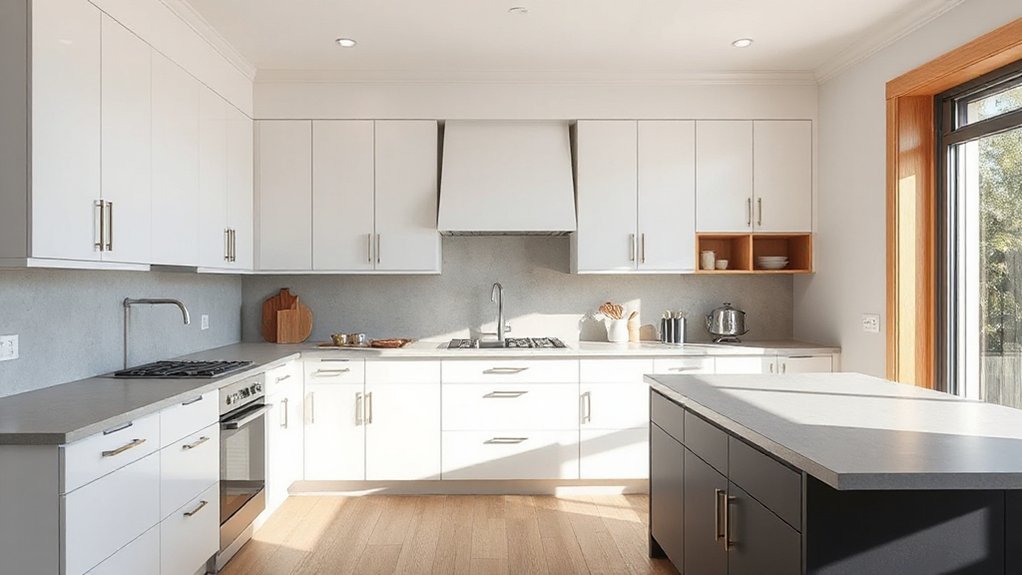
Color, sheen, and texture aren’t just about looks—they determine how a kitchen reads in real life and how it ages over time. You’ll balance visual impact with durability by selecting finishes that pair with your lighting, cabinetry, and hardware.
In practice, choose cohesive color palettes that support functional zones and ease of maintenance, while avoiding high-contrast clashes that complicate cleaning. Sheen levels influence glare, fingerprint visibility, and wipe-down effort, so pick a finish aligned with your expected use and traffic.
Consider personalized color palettes to express identity without sacrificing practicality, and evaluate innovative texture options that add depth without inviting grime in tight grooves.
Document choices, test samples, and verify compatibility with surfaces to guarantee consistent performance over years of daily use.
Maintenance and Budget Alignment for Longevity
- Eco friendly options that don’t compromise durability
- Clear warranty terms and serviceability
- Lifecycle cost analysis prioritizing longevity over novelty
Frequently Asked Questions
How Long Does a Finish Typically Last Before Refinishing Is Needed?
A finish typically lasts 3 to 7 years before refinishing is needed, depending on usage and care. Finish durability hinges on environment, abrasion, and cleaning habits, so expect more frequent refreshment in high-traffic kitchens.
You’ll want to monitor for scratches, dulling, or water marks. Plan refinishing frequency accordingly, using durable coatings and proper surface prep.
With proactive maintenance, you minimize surprises and preserve color, sheen, and protection on your cabinetry over time.
Are There Eco-Friendly Finish Options for Kitchens?
Yes, there are eco-friendly finish options for kitchens. You can choose eco friendly materials and non toxic sealants to reduce indoor pollutants while preserving durability.
You’ll appreciate formaldehyde-free, low-VOC coatings that resist wear with proper application. You’ll secure long-lasting protection without off-gassing.
You’ll also verify certifications like GreenGuard or EPA SaferProduct labeling.
You’ll benefit from a finish that performs technically, supports healthier air quality, and aligns with responsible remodeling practices.
Do Different Countertop Edges Affect Finish Durability?
Yes, countertop edge styles can influence finish durability, though the impact varies by material. You’ll want to take into account how edge profiles alter stress concentration, cleaning ease, and chip resistance.
Higher-radii or eased edges typically reduce vulnerability, while sharp bevels may show wear sooner.
When selecting, weigh Finish durability factors like impact resistance, sealant performance, and maintenance needs alongside aesthetic goals, ensuring your edge style aligns with long-term durability judgments.
Can Finishes Influence Resale Value and Home Insurance?
Yes, finishes can influence resale value and home insurance. You’ll want durable, compliant options, because insurers consider material risk and maintenance needs. Finishing techniques and material selections affect wear life, depreciation, and claim eligibility.
You may gain value from low-maintenance coatings and properly documented fire- and moisture-rated finishes. You should communicate product specs, installation methods, and warranties to buyers and insurers.
This technical approach helps optimize perceived durability and insurance underwriting.
What About Odors From Finishes During Installation?
Odors during installation can linger briefly, but you’ll manage them with proper ventilation. I’ve seen a contractor compare it to opening a window on a rainy day—air moves in, humidity drops, comfort returns quickly.
Use ventilation tips like exhaust fans, temporary airflow, and purge cycles. Choose odor neutralizing finishes when possible, and schedule installations to avoid occupied spaces.
Stay vigilant for fumes, and ventilate until scents dissipate for a safer, cleaner kitchen.
Conclusion
You’ve mapped a durable, low-maintenance path for your kitchen by weighing finishes against moisture, heat, and wear. Think of coatings as armor for daily life—scratches and stains become mere speed bumps, easy to clean and nearly invisible with smart color and sheen choices. Align maintenance with budget, verify warranties, and test samples like field trials. With disciplined selection and informed testing, your space emerges as a refined, resilient centerpiece—technically sound, stylish, and built to endure.