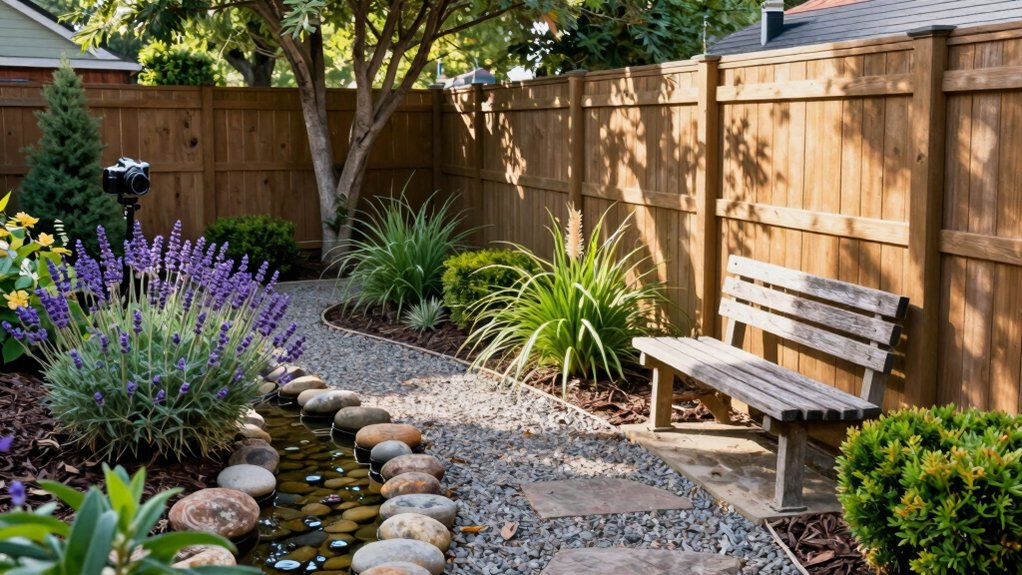
Turn your fence line into a cohesive, low‑maintenance landscape by selecting fence-friendly plants, using vertical gardening for narrow spaces, and adding discreet hardscapes that heighten privacy and accessibility. Pair drought-tolerant species with layered screening for depth, and integrate modular planters, trellises, and smart irrigation to minimize upkeep. Use lighting to extend usability after dark and emphasize focal plantings without crowding views. If you want more, you’ll uncover additional layout, maintenance, and seasonal strategies next.
Choosing the Right Fence-Friendly Plants
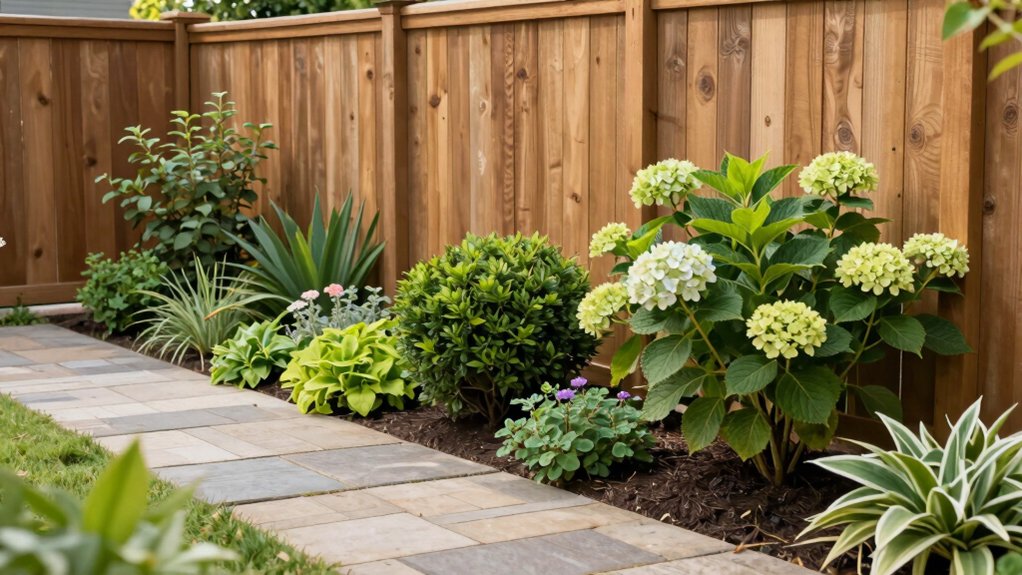
Choosing the right fence-friendly plants starts with understanding light, soil, and climate conditions along your boundary. You assess sun exposure, wind patterns, and microclimates to select species that perform under those specifics.
Prioritize fence material compatibility, ensuring stems, roots, and growth habit won’t abrade or trap moisture against panels, posts, or caps. Evaluate plant form, rooting depth, and maintenance needs to avoid subsequent repairs or dislodgement.
Implement a precise soil plan using soil preparation techniques: amend with compost, adjust pH if needed, and ensure drainage aligns with plant tolerance. Choose low-viscosity irrigation options to minimize runoff while sustaining root zones.
Favor native or well-adapted cultivars that resist local pests. Document spacing, growth rate, and pruning requirements for long-term structural harmony with the fence enclosure.
Vertical Gardening Ideas for Narrow Spaces
Vertical plant options maximize vertical real estate without widening footprint. So you’ll select compact climbers, wall-mounted pots, and stacked planters that tolerate shade or sun as needed.
Narrow space staging uses staggered heights, slim profiles, and integrated irrigation to keep maintenance minimal while preserving sightlines.
Trellis and planters tips focus on modular, rail- or wall-mounted systems that support airflow, drainage, and easy reconfiguration.
Vertical Plant Options
For narrow spaces, vertical plant options maximize growing area without widening the footprint, using structured structures like trellises, wall-mounted planters, and freestanding towers to support climbing, trailing, and stacked species.
You select materials compatible with weather and fence aesthetics, prioritizing corrosion resistance and low-maintenance finishes.
Install a modular grid to align plant spacing with light exposure, ensuring even canopy development.
Climbing vines orient horizontally and vertically along supports, while wall-mounted planters enable targeted foliage and seasonal color without ground footprint intrusion.
Choose planting densities that optimize air circulation and reduce disease risk, employing root barriers where necessary.
Integrate automated irrigation zones to sustain consistent hydration, and schedule pruning to maintain form and airflow.
This approach delivers dense vertical interest, precise composition, and durable performance.
Narrow Space Staging
Despite limited footprint, narrow-space staging leverages vertical real estate to create deliberate visual hierarchy and functional zones. You implement a stepped layering system: ground plane, mid-height foliage, and high-contrast accents that guide movement along the fence line.
Select compact, modular garden furniture that stacks or folds, preserving circulation and sightlines while offering seating or work surfaces where needed. Integrate planters in alternating depths to establish rhythm without crowding; use vertical trellises or wall-mounted pots to extend green density upward.
Employ outdoor lighting selectively to emphasize edges, define zones at dusk, and reduce glare. Choose weather-resistant fixtures with warm color temperatures to maintain ambiance while preserving plant health.
Finalize with clean, mechanical cable management and discrete irrigation so the sequence remains legible and low-maintenance.
Trellis & Planters Tips
Trellises and planters are your most scalable tools in narrow spaces, enabling vertical density without compromising sightlines or circulation. You’ll optimize load paths by selecting modular trellis grids that align with fence planes, reducing visual clutter while maximizing plant reach.
Use tensioned wires or slim stainless steel rods to support climbing varieties, pairing them with lightweight, root-friendly planters placed on staggered shelves to maintain access for trimming and water delivery.
Consider garden lighting integrated into the trellis fascia to emphasize vertical layers after dusk, ensuring safety along walkways.
Choose fencing materials that tolerate moisture and sun exposure, enabling long-term support for plant weight.
Implement drip irrigation to minimize footprint, and document growth data to refine future configurations.
Privacy-Boosting Screening Strategies
You can begin by pairing greenery with fences to establish a solid base layer that improves perimeter privacy without sacrificing airflow.
Layered privacy screens should be deployed in varying heights and textures to create depth, reduce sightlines, and adapt to site constraints.
This approach emphasizes design-forward material choices and precise spacing to balance visual screening with light and shade dynamics.
Greenery With Fences
Fences form a core framework for privacy, but strategic greenery can heighten screening effectiveness without compromising daylight or airflow. You select species and configurations based on growth rate, fullness, and seasonal behavior, prioritizing evergreen forms for year-round opacity and deciduous accents for winter sun.
Implement a layered approach: a sturdy base of tall, dense shrubs or trained hedges, mid-canopy accents, and low groundcover to minimize gaps. Use vertical elements sparingly to avoid visual tension and to maintain airflow.
Schedule fence maintenance to prevent overgrowth that radiates into the boundary. Plan garden lighting to illuminate planting edges, distribute shadow patterns, and enhance perceived density after dusk.
Document irrigation compatibility, root spread, and pruning intervals to sustain predictable screening without compromising perched light.
Layered Privacy Screens
Layered privacy screens optimize screening by stacking vertical and horizontal elements to create adjustable opacity and airflow. You implement a tiered system that uses trellises, lattices, and solid panels, calibrated for sun exposure and wind patterns.
Begin with a tall, permeable primary screen; back it with a mid-height solid or latticed layer to control sightlines without trapping heat. Add a lower, decorative layer to soften edges and provide footholds for climbers.
Materials should be durable outdoors, low maintenance, and compatible with existing garden lighting to highlight textures at night. Consider how outdoor furniture placement interacts with sightlines, seating heights, and screens’ thickness.
Ensure fasteners are corrosion-resistant, joints are reinforced, and drainage remains unobstructed for long-term stability. Finally, synchronize plant choices with the screens for year-round privacy.
Color-Pop Plant Pairings Along the Boundary
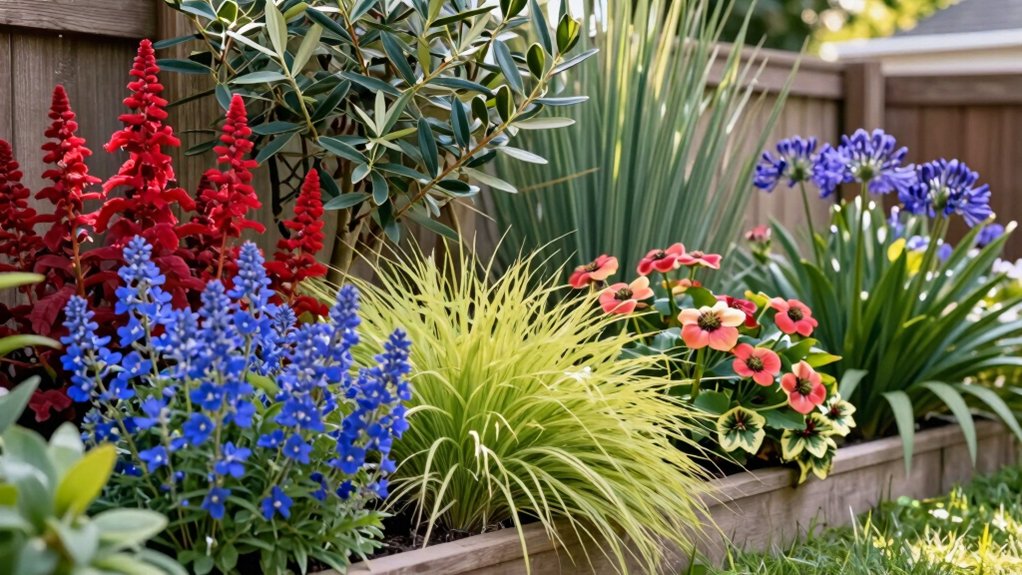
To create a color-pop boundary, pair high-contrast foliage with vivid blooms that repeat along the edge for visual continuity. You select foliage with strong texture and color—deep greens, purples, or chartreuse—and align blooms in a repeating rhythm to reinforce the line.
Maintain proportional scale so plants along the boundary alternate tall and low specimens, preserving sightlines toward the garden path beyond. Use complementary color temperature: cool-toned foliage with warm flowers, or vice versa, to maximize perceived brightness without crowding.
Prune to maintain a crisp edge, and place flowering accents at 18–24 inch intervals for steady cadence. This strategy supports outdoor seating zones by guiding flow and creating defined pockets of color while keeping maintenance predictable.
Low-M Maintenance Hardscapes and Edging
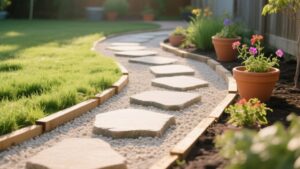
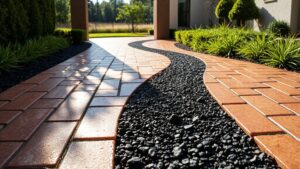
Low-maintenance hardscapes and edging prioritize durable materials, clean lines, and minimal upkeep while defining usable spaces. You select materials that resist weathering and staining, such as poured concrete, compacted aggregates, or permeable pavers, ensuring longevity with minimal maintenance.
Edging should be tight, modular, and seamless to reduce weed intrusion and trip hazards, using steel, aluminum, or concrete curbs that hold soil and mulch in place without sharp gradients. Install profiles that shed water efficiently and minimize staining potential near fence lines.
Consider integrated drainage and compacted base for stability. Pair with garden furniture placed on level, non-slip surfaces and low-contrast tones. Plan discreet outdoor lighting to highlight pathing and edges, enhancing safety and usability after dark.
Decor and Art for a Fence-Integrated Look
Decor and art on a fence-integrated backdrop should complement, not compete with, the surrounding landscape—emphasizing scale, proportion, and a cohesive color palette.
You approach decor and art as integral components of the boundary, not afterthought embellishments. Establish focal points with intentional placement, ensuring visual weight aligns with fence height and nearby plant mass.
Select materials and textures that respond to the project’s climate and maintenance tolerance, prioritizing durable finishes and minimal patina drift.
Integrate fence lighting to enhance contours and nighttime depth without glare, using low-profile fixtures that wash or graze surfaces.
Employ decorative fence panels strategically to texture the backdrop, creating rhythm and interest while preserving openness.
Maintain restraint to preserve viewlines and allow primary landscape features to read clearly.
Seasonal Transitions: From Spring to Fall Along the Fence
Seasonal progressions along the fence should be planned as a continuous sequence, weaving spring growth, summer texture, and fall color into a coherent backdrop. You implement a transition strategy that foregrounds function and appeal, aligning plant phenology with in-place hardscape.
Begin with spring backbone—low-maintenance perennials, slim grasses, and fresh foliage that silently frame fence lines.
As temps rise, introduce midsize shrubs for structure and garden lighting to accent silhouettes without glare.
In summer, emphasize texture: clustering leaf forms, contrasts in leaf color, and irrigation that preserves health with minimal run-off.
By late summer to autumn, curate fall color shifts through deciduous accents and evergreen anchors.
Integrate outdoor furniture as a scaffold for circulation and sensory cues, ensuring sightlines remain uncluttered.
Maintain accessibility, durability, and effortless maintenance throughout the sequence.
Conclusion
Your fence defines the backbone of a cohesive backyard. By choosing fence-friendly plants, you compress maintenance without sacrificing impact, and vertical ideas turn tight spaces into thriving layers. Privacy strategies, color pairings, and durable edges keep the zone legible through seasons. Add art and subtle decor to anchor the composition. As seasons shift, the boundary remains a curated stage—shaped, not hidden—like a living mural that quietly grows with your design goals.