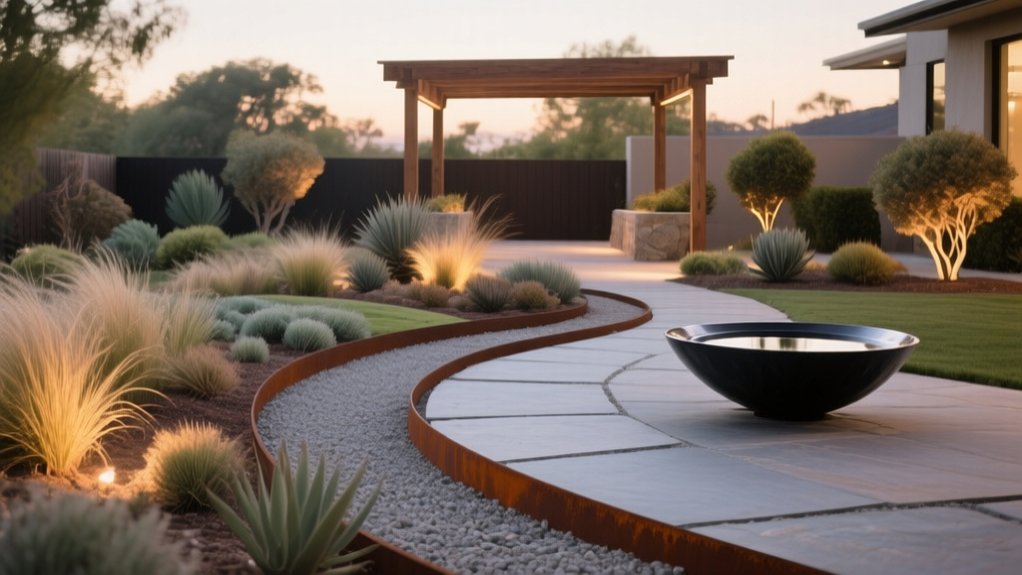
In 2026, you’re shaping UK gardens into resilient outdoor rooms with clear zones for dining, lounging, and play, tied together by flowing, naturalistic curves. You’ll swap thirsty lawns for microclover, thyme, or carex, then plant native, pollinator-rich drifts that suit your soil—chalk, clay, coastal, or city heat. You’ll lay permeable gravel-and-slab paths and recycled materials, add rain gardens for downpours, and run smart, sensor-led irrigation for hosepipe-ban summers—next up, how to choose what fits you.
2026 Landscaping Trends: The Quick Shortlist
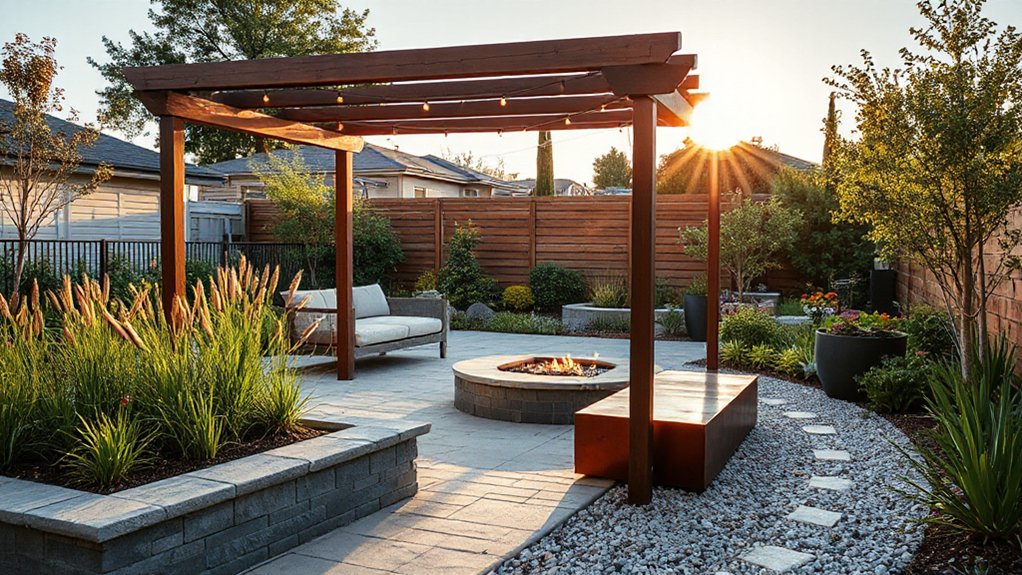
Whether you’re revitalizing a small London courtyard or reworking a family garden in the suburbs, the biggest landscaping trends in the UK right now share one goal: make outdoor space work harder with less upkeep. Your quick shortlist starts with permeable paving and resin-bound gravel to handle downpours.
Choose drought-tolerant, pollinator-friendly palettes—lavender, salvia, nepeta—backed by smart irrigation. Go for clipped structure with evergreen domes and pleached trees to keep winter interest.
Add Garden art that’s weatherproof and sculptural: corten screens, stone spheres, or bold ceramic pots.
Lean into seasonal planting by rotating spring bulbs, summer prairie-style perennials, and autumn grasses for reliable colour.
Finally, light it properly with low-glare LEDs on steps, paths, and feature trunks.
Use Zones: Dining, Lounging, Play, Pets
As gardens shrink and schedules fill up, zoning your outdoor space has become one of the most practical UK landscaping trends for 2026. You’ll get more use from every square metre when each area has a clear job and a tidy edge—think gravel bands, slim sleepers, or porcelain setts to separate functions without fencing.
- Dining: Place a bistro set by the kitchen door, add a wind-buffer screen, and anchor it with durable Garden art that won’t mind drizzle.
- Lounging: Create a softer nook with a low deck, deep cushions, and seasonal planting in tall pots for quick refreshes.
- Play & pets: Keep a resilient lawn strip, add a paw-friendly path, and stash toys in a bench seat so it stays calm.
Choose Trends by Climate, Budget, and Time
You’ll get better results if you pick landscaping trends that suit your local UK climate first, from drought-tolerant Mediterranean planting for hotter summers to rain-ready mixes for wetter regions.
You can keep it current on a tight budget by prioritising high-impact swaps like gravel grids, reclaimed edging, and modular planters that scale as funds allow.
If time’s your constraint, you’ll want low-maintenance winners—mulch-heavy beds, slow-growing evergreens, and smart irrigation—so your garden looks sharp without weekend graft.
Climate-Smart Plant Choices
How do you keep a garden looking current without wasting water, money, or weekends? You start with climate-smart planting that suits the UK’s warmer summers, flash floods, and milder winters. Prioritise native species for resilience and pollinator value, then add proven performers that handle drought and deluge for real climate adaptation.
Aim for layered planting that shades soil, reduces evaporation, and still looks дизайнерly through every season.
- Pick plants for your postcode: coastal, clay, chalk, or city heat.
- Mix deep-rooted perennials with tough grasses for structure and wind tolerance.
- Choose trees and shrubs with smaller leaves or silvery foliage to limit water loss.
Finish with mulch and drip lines so your planting stays sharp, even in hosepipe bans.
Budget-Friendly Design Trends
Climate-smart plants set the backbone; now keep the look current by choosing budget-friendly design trends that fit your local weather, your wallet, and the time you’ve actually got.
Go modular with reclaimed brick edging, timber sleepers, or Corten-look steel strips to sharpen borders without pricey hardscaping. Swap full paving for a gravel-and-slab “path ribbon” that drains well in UK downpours and stretches materials further.
For Budget friendly design, repeat one finish—Yorkstone-effect porcelain, riven concrete, or Scottish pebbles—across zones so the garden feels intentional, not patchy.
Add vertical interest cheaply with wire trellis panels, painted black for a contemporary frame.
Choose cost effective solutions like solar bollards, upcycled planters, and bulk-buy mulch to unify colour and cut spend.
Low-Maintenance Time Savers
Because UK gardens swing from soggy winters to hosepipe bans, low-maintenance trends now prioritise “set-and-forget” structure over fuss: swap thirsty lawns for drought-tough meadow mixes or clover, lay weed-suppressing membranes beneath gravel and bark, and plant in bold drifts so you can mulch once and prune less. You’ll save weekends by designing for lazy care: automate, simplify, and stack uses.
- Install drip irrigation with a timer and water butt link, then group plants by thirst in sunny, sheltered borders.
- Go vertical: Vertical gardens with pocket planters keep patios green, cut weeding, and add insulation.
- Build edible landscapes that look ornamental—evergreen herbs, dwarf fruit, and cut-and-come-again leaves—so every trim becomes dinner.
Finish with easy-clean edging and permeable paving to stop mud.
Low-Maintenance Trends: Mulch, Edging, Fewer Fussy Plants
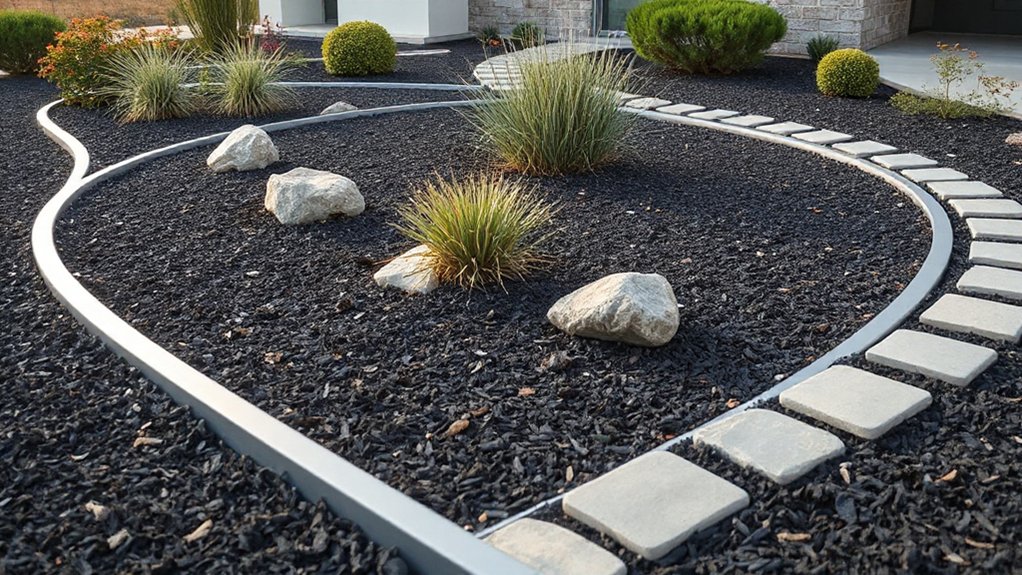
As busy UK gardeners look for plots that stay sharp with less weekend graft, low-maintenance landscaping is trending hard—think generous mulch to lock in moisture and suppress weeds, crisp edging to stop beds bleeding into lawns and paths, and a shift towards fewer, tougher plants that don’t need constant deadheading, staking, or watering.
You’ll see bark, composted green waste, or gravel laid 5–7cm deep, topped up in spring for a tidy, weed-light finish. Steel or aluminium edging gives modern lines, while brick-on-edge suits period terraces and keeps mower wheels honest.
Planting-wise, you’ll swap fussy borders for minimalist planting: repeats of shrubs, grasses, and evergreen structure, plus container-friendly succulent arrangements for clean, architectural impact. Choose slow-growing varieties and you’ll prune less, too.
Drought-Tolerant Design That Still Looks Lush
Even if hosepipe bans feel like a summer fixture, you can still build a garden that reads green and full without guzzling water. Start with xeriscaping principles: right plant, right place, and a soil profile that holds moisture.
Go for layered, glossy textures—think grasses, silver foliage, and tight planting that shades the ground.
- Swap thirsty borders for drought resistant shrubs such as lavender, cistus, and rosemary, then underplant with salvias for long colour.
- Add gravel or mulch to cut evaporation, and edge paths crisply for that contemporary UK show-garden finish.
- Water smart: install a butt, drip lines, and deep-soak in the evening so roots chase moisture, not surface splash.
You’ll keep a lush look, even through heatwaves.
Native Plant Landscaping Trends (And Why They Win)
While “rewilding” headlines grab attention, the smarter UK trend is designing with native plants on purpose—think hawthorn, field maple, dogwood and guelder rose for structure, then knit in primrose, foxglove, knapweed and selfheal for long-season colour. You get a garden that feels local, settles in fast, and looks intentional rather than untamed.
Choose Native plantings that suit your soil: chalky? Add cowslip and scabious; heavy clay? Go for meadowsweet and red campion.
Replace high-maintenance borders with clipped native hedging, gravel paths, and understorey drifts that self-seed lightly. Even Wildflower meadows are shifting: smaller, mown-edge “meadow panels” that stay tidy, fit terraces, and cut mowing time.
You’ll also spend less on feeds, watering, and replacements each year.
Pollinator Gardens: Blooms That Support Bees and Butterflies
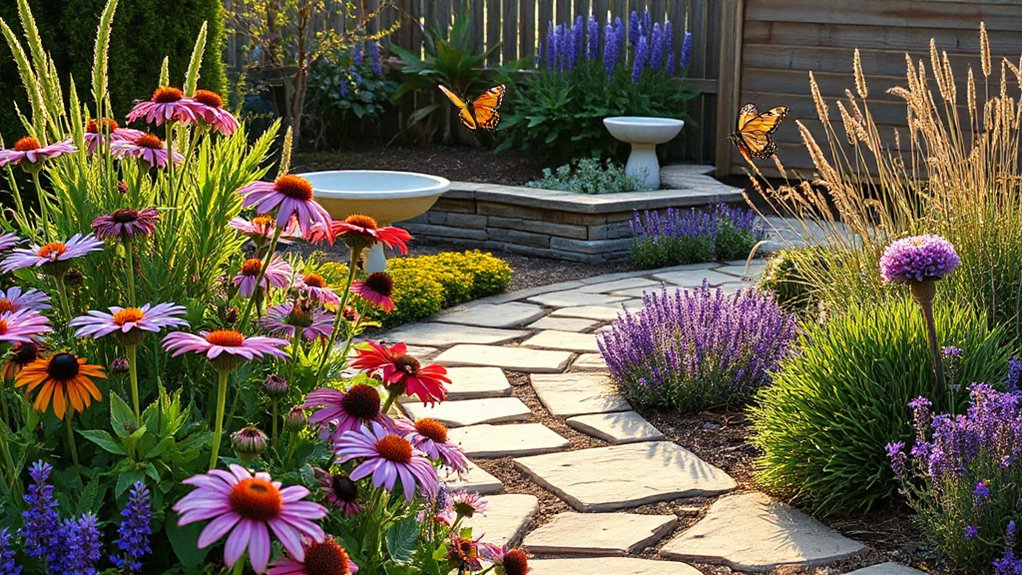
Because UK summers now swing from sudden heat to soggy spells, pollinator gardens are trending toward “succession planting” — a deliberate run of nectar and pollen from early spring to late autumn. You plan flowering like a timetable, so bees never hit a “hungry gap” and butterflies keep breeding.
Lean into native plant benefits: UK species cope with local soils, support specialist insects, and usually need less fussing in drought or deluge.
- Start early with crocus, pulmonaria, and willow catkins for queen bumblebees.
- Bridge summer with lavender, knapweed, salvia, and open single dahlias (skip doubles).
- Finish strong with sedum, ivy flowers, and late scabious, plus a shallow water dish with pebbles.
Keep chemicals out, and you’ll notice more hoverflies too.
Naturalistic Garden Trends: Curves, Layers, Meadow Vibes
You’re seeing UK gardens shift towards a softer, naturalistic look, so you’ll swap straight edges for flowing curves and paths that meander through the space.
You’ll build layered meadow planting—grasses, airy perennials, and longer-season structure—so borders read like drifts rather than blocks.
With that meadow vibe, you’ll get movement, texture, and a more relaxed layout that still feels intentional.
Flowing Curves And Paths
As straight lines fall out of favour, flowing curves and meandering paths are taking over UK gardens, echoing natural landforms and softening hard boundaries. You’ll notice designers in London terraces and Yorkshire plots using arcs to make small spaces feel larger and to guide you between zones without harsh edges.
- Choose self-binding gravel or clay pavers set on a gentle radius; you’ll get grip in wet weather and a relaxed, contemporary look.
- Bend borders around focal points like Garden art, so sightlines reveal surprises gradually rather than all at once.
- Let Water features sit on the inside of a curve; you’ll hear trickling earlier, and reflections pull you forward.
Keep turns wide enough for wheelbarrows, and light the route with low, warm LEDs.
Layered Meadow Planting
Flowing curves feel even more natural when you back them with layered meadow planting—taller drifts at the rear, mid-height colour through the middle, and low, airy grasses at the path edge to blur boundaries.
In UK gardens, you’ll get the look by mixing structural perennials with resilient grasses: think Calamagrostis ‘Karl Foerster’, Deschampsia, and Stipa, then thread in Achillea, Verbena bonariensis, and Salvia for long-season fizz.
Keep your palette tight, repeat plants in generous clumps, and let gaps read as “intentional” rather than messy.
For a layered garden that still feels polished, mow crisp edging lines, add gravel or steel borders, and cut back in late winter to feed wildlife and show seedheads.
It’s modern, relaxed, and drought-smart.
Lawn Alternatives: Gravel, Groundcovers, Clover, Sedge
While a perfectly striped lawn still has its fans, UK gardens are rapidly shifting towards lower-input, climate-smart alternatives that look intentional rather than improvised. You can swap thirsty turf for textures that handle hosepipe bans, heavy rain, and patchy shade, and still read as “designed”.
Anchor the look with Gravel pathways, then stitch planting right up to the edges for a crisp finish.
- Gravel: Choose angular Cotswold or granite chippings, add a stabilising grid, and keep it sharp with steel edging.
- Groundcovers: Your Groundcover options include thyme for sun, ajuga for shade, and creeping chamomile for scent.
- Clover + sedge: Microclover stays green with less feeding; Carex forms soft, mow-free swathes under trees.
Outdoor Living Trends: Kitchens, Fire Pits, Built-In Seating
If you’ve started treating the garden as an extra room, you’re in step with one of the biggest UK landscaping trends right now: properly planned outdoor living zones. You’ll see patios zoned like open-plan interiors, with cooking, lounging, and dining clearly defined for compact plots and long, narrow terraces.
Outdoor kitchens are going modular: built-in barbecues, pizza ovens, and under-counter fridges in weatherproof cabinetry, often tucked against a brick wall to cut wind and keep services tidy.
Pair them with porcelain paving for easy cleaning and a neat, contemporary look.
Fire pit designs are shifting from flimsy bowls to sunken circles, gas-fed tables, or sculptural corten features. Built-in seating in matching brick or rendered blocks, topped with timber or composite, makes the space feel permanent.
Landscape Lighting Trends for Safer, Usable Nights
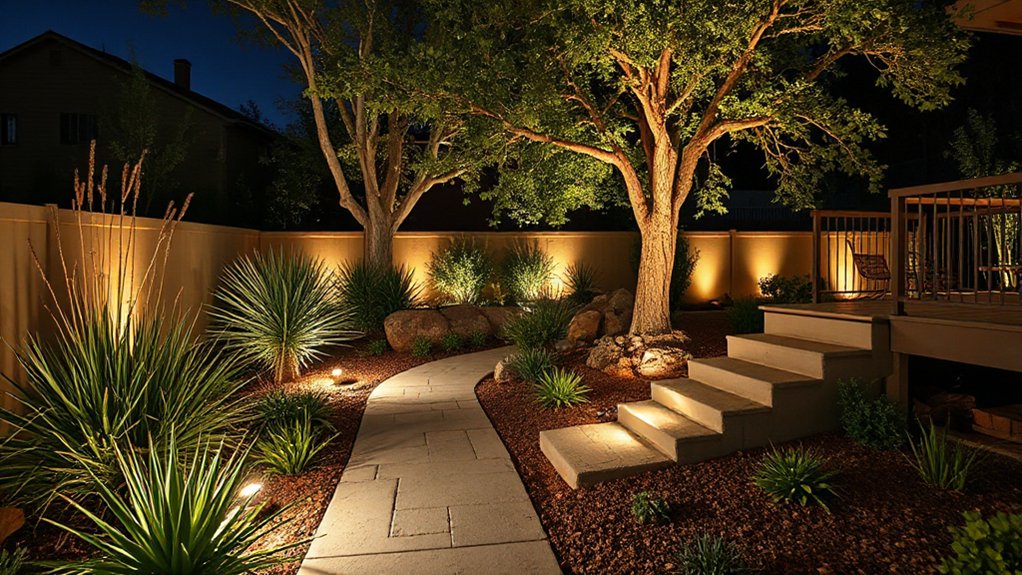
As the evenings stretch out but the light drops fast, smart landscape lighting lets you keep using the patio without turning the garden into a floodlit car park. You’ll see UK gardens shifting to warm 2700K LEDs, shielded fittings, and low-glare beams that frame planting, not blind you or the neighbours.
Layer your lighting so paths feel safe and seating feels inviting, with controls that match real life.
- Downlights in eaves/pergolas: soft pools for Nighttime ambiance over dining and built-in benches.
- Bollards or spike spots on paths: guide steps, highlight edges, and reduce trips in wet weather.
- Discreet PIR uplights at gates: targeted security lighting that triggers only when needed.
Choose smart dimmers, timers, and app scenes for effortless evenings.
Rain Gardens and Swales: The Water-Wise Upgrade
Good lighting makes the garden usable after dark, but the next big UK upgrade tackles what happens when the rain hits: rain gardens and swales that catch, slow, and soak up runoff before it sheets across paving or overloads drains.
You’ll see Rain garden design shifting to shallow, planted basins fed by downpipes, with clean gravel inlets and a subtle berm to hold water for 24–48 hours.
Choose tough, UK-ready plants—iris, sedges, red valerian, and moisture-loving grasses—so it looks styled, not soggy.
Add a swale along a boundary to guide stormwater to the basin, keeping paths drier.
Swale maintenance stays simple: keep inlets clear, top up mulch, remove silt after big storms, and cut back growth in late winter.
Greener Hardscapes: Permeable Pavers, Recycled Materials
You’re seeing greener hardscapes take off across the UK as permeable pavers let rain soak through, cut surface run-off, and help you stay SuDS-friendly on driveways and patios.
You can also spec recycled options—reclaimed setts, crushed concrete sub-bases, or plastic-grid systems filled with gravel—to lower carbon without losing a crisp finish.
Get the install right with a free-draining sub-base, clean jointing grit, and regular sweeping plus occasional jet-washing, and you’ll keep infiltration rates strong year-round.
Permeable Paver Benefits
While traditional paving still dominates many UK driveways and patios, permeable pavers are quickly becoming the go-to choice for greener hardscapes. You get a sleek, contemporary finish while improving stormwater management, letting rain soak through joints into a sub-base rather than rushing to drains—ideal for sudden downpours and SuDS-friendly upgrades.
- Flood-resilient surfaces: You cut puddling and runoff, helping protect front gardens and nearby kerbs.
- Low-maintenance performance: You reduce algae-prone standing water and keep joints stable with the right aggregate.
- Planning-friendly appeal: You support sustainable paving goals and may simplify approvals where permeable surfacing is expected.
Choose colours that match modern UK brick tones, and you’ll keep kerb appeal high without sacrificing eco credentials.
Recycled Material Options
Permeable pavers sort the drainage side of sustainable paving, but the materials you specify matter just as much for a genuinely greener hardscape. You’ll see UK designers swapping virgin stone for Recycled materials that still look sharp: reclaimed Yorkstone flags, brick pavers salvaged from local demolitions, and granite setts lifted and relaid for heritage character.
For a contemporary edge, you can specify recycled glass or porcelain aggregates in resin-bound finishes, or choose concrete units with high recycled content and lower-cement binders.
Timber details matter too: opt for reclaimed sleepers or FSC-certified, heat-treated boards instead of tropical hardwood.
If you want a softer, coastal feel, consider locally sourced shingle over imported gravel. These eco friendly options cut embodied carbon without sacrificing style.
Installation And Maintenance Tips
Because even the best low-carbon pavers can fail on a poor base, get the installation details right: specify a fully permeable build-up (Type 3 open-graded sub-base over a geotextile, with clean 2–6mm bedding grit rather than sand) and set falls only where you need them for overflow to a rain garden or soakaway.
Then lock in performance with smart UK maintenance: you’ll keep infiltration rates high and stop weed seed getting a foothold.
- Brush kiln-dried? Skip it: use 2–4mm jointing grit, top up after the first heavy rain, and compact with a neoprene mat.
- Vacuum-sweep twice yearly; avoid pressure-washing that strips fines and destabilises recycled aggregates.
- Edge with steel or recycled plastic restraints, and leave pockets for seasonal planting and Garden art lighting runs.
Privacy Landscaping Trends: Hedges, Screens, Layered Planting
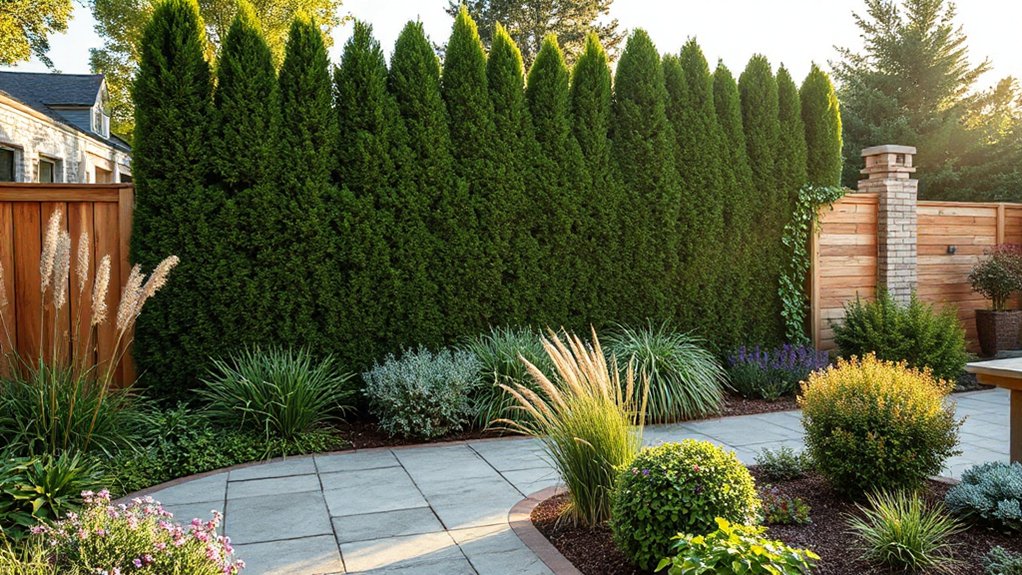
As gardens get smaller and neighbours feel closer, privacy landscaping has shifted from solid fencing to greener, more design-led solutions that suit UK plots. You’ll see clipped evergreen structure paired with softer, wildlife-friendly layers, giving you seclusion without a harsh boundary.
Go modern with slim pleached hornbeam or Portuguese laurel, lifted on clear stems to keep light moving. For tighter terraces, mix bamboo (clumping types) with vertical slatted timber, Corten panels, or woven willow privacy screens that double as a backdrop for climbers.
Layering’s the key trend: a hedge line, then mid-height grasses, then scented shrubs like Philadelphus. Keep it looking sharp with simple hedge maintenance—two tidy cuts a year, plus clean edging and mulch.
Smart Irrigation and Controls for Modern Landscapes
You’re seeing a clear UK shift towards smart irrigation that responds to local forecasts, so you can schedule watering around rain, wind, and hosepipe restrictions rather than set timers.
With weather-based scheduling, you cut waste and keep borders and lawns consistent through changeable seasons.
Pair it with an app-controlled system and you’ll tweak zones, run times, and soak cycles from your phone, whether you’re at home or away.
Weather-Based Irrigation Scheduling
While summers keep swinging between hosepipe bans and sudden downpours across the UK, weather-based irrigation scheduling has become the go-to upgrade for modern landscapes. You set your system to respond to rainfall, temperature, wind, and evapotranspiration, so beds get what they need, not what a timer assumes. That’s Climate adaptation in practice, and it drives real Water conservation without stressing lawns, borders, or newly planted hedging.
- Use local weather data to pause watering after rain, ideal for clay-heavy Midlands soils and coastal gardens alike.
- Adjust seasonal runtimes automatically, keeping spring bulbs drier and summer containers topped up.
- Add rain and soil-moisture sensors, so drip lines run only when root zones actually dry out.
It’s a sleek, low-fuss upgrade that keeps planting resilient year-round.
App-Controlled Irrigation Systems
Ever wished you could tweak your watering from the sofa when the Met Office flips the forecast again? App-controlled irrigation makes it standard. You set schedules on your phone, pause during sudden showers, or boost beds ahead of a hot spell—no trudging outside in slippers.
The latest Smart controllers link to local weather feeds and soil sensors, so you’re not paying to water soggy borders.
Design-wise, it’s all about precision. Split your plot into watering zones: lawn, new planting, pots on the patio, and that thirsty south-facing bed. Then tailor run times and flow rates per zone, even if you’ve got mixed drip lines and sprinklers.
Handy alerts flag leaks, low pressure, or a stuck valve, keeping bills and plants in check.
Frequently Asked Questions
Do I Need Permits or HOA Approval for Major Landscaping Changes?
Yes—you’ll often need Permit requirements or HOA approval for major landscaping changes. Check your council’s planning portal, especially for driveways, walls, and trees. Review your HOA covenant, submit drawings, and confirm drainage compliance.
How Do I Create a Cohesive Design Between Front and Backyard?
Stitch your spaces like a tailored suit: repeat materials, shapes, and planting palettes front-to-back. Use Color coordination in paving and blooms, keep Theme consistency in furniture and lighting, and echo feature plants for a unified, UK-ready look.
What Is the Best Season to Start a Full Garden Redesign?
Start a full garden redesign in early spring or early autumn in the UK. You’ll get workable soil, milder weather, and smoother season planning. Align hardscaping first, then follow planting schedules for ideal establishment.
How Can I Increase Home Value With Landscaping Upgrades?
Boost home value by sharpening Curb appeal—think a front path that invites, not ignores. Add layered planting, neat edging, outdoor lighting, and low-maintenance evergreens. You’ll lift property value fast, UK buyers notice year-round polish.
Which Plants Are Safest for Children and Curious Pets?
Choose child safe plants like sunflowers, calendula, nasturtiums, and rosemary; for pet friendly landscaping, add spider plants, Boston ferns, and bamboo palms. In UK gardens, avoid foxgloves, yew, daffodils, and lilies.
Conclusion
You’re not just updating a garden—you’re future-proofing it. You’ll zone for dining, zone for lounging, zone for pets; you’ll cut upkeep with crisp edging, deep mulch, and fewer divas; you’ll go lush with drought-tough planting, rain gardens, and swales. You’ll choose permeable paving, recycled aggregates, and layered screening for privacy. Then you’ll run it all on smart irrigation that suits UK weather—so it looks sharp in July and resilient in February.