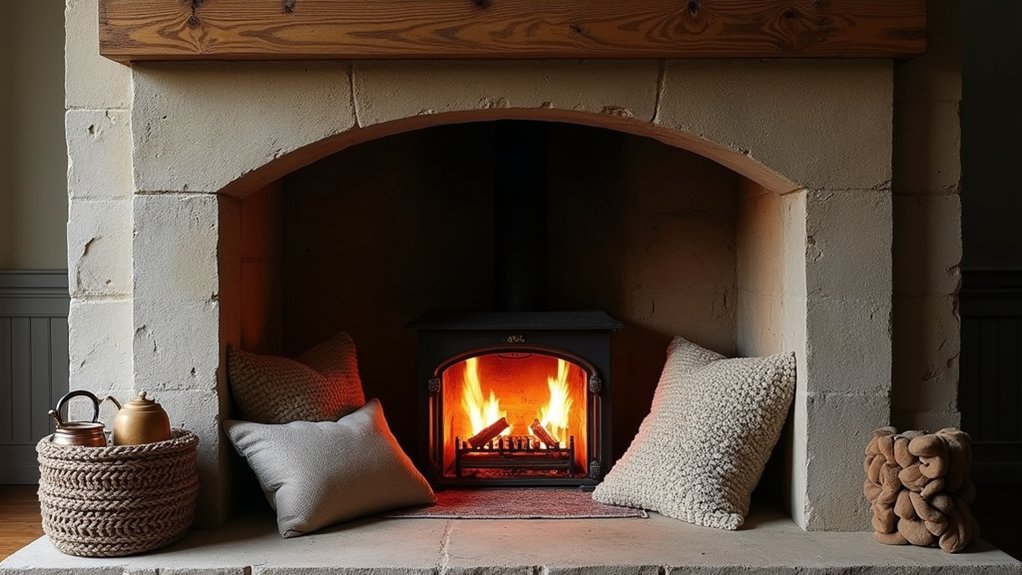
You’ve heard them mentioned on the TV property shows, but what is an Inglenook fireplace and what is the allure? Does the idea of an inglenook fireplace truly change how a room feels, or is it just a nostalgic flourish? You’ll find that a true inglenook concentrates heat, concentrates seating, and centers a hearth within a purposeful alcove. The setup blends craft with function, shaping flow and social focus. If you want to know whether your space can accommodate it and what to look for in authentic design, keep going.
Is an Inglenook Right for Your Space?
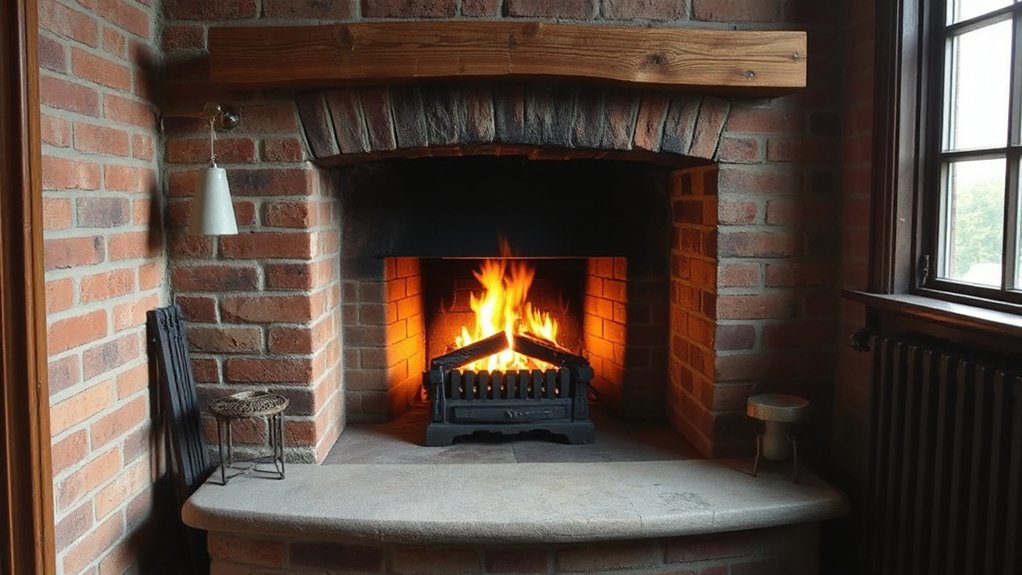
Consider whether an inglenook fits your space, goals, and budget before deciding. You evaluate site constraints, load-bearing capacity, and finishing options to determine feasibility.
An inglenook typically requires alcove or recess space, clearances around the hearth, and proper ventilation; mis-sizing undermines performance and safety.
Assess installation complexity, cost, and long-term maintenance to forecast return on investment.
Historical origins inform design intent, influencing dimensions, materials, and proportions that suit your architecture.
Cultural significance guides stylistic choices, ensuring the feature resonates with your home’s narrative rather than feeling gimmicky.
If you value authenticity, verify supplier certifications and regional building codes.
What Defines a True Inglenook Fireplace
A true inglenook is defined by a carefully proportioned, enclosed seating recess that centers around a functional fireplace.
Its key characteristics include a masonry hearth, a surrounding pass-through or alcove, and integrated seating that promotes warming and social gathering.
You should look for clear elements of definition and purpose, ensuring the space meets both functional and aesthetic criteria.
Definition Of A True Inglenook
A true inglenook is defined by a specific arrangement: a recessed, usually brick fireplace alcove paired with a wide, surrounding seating area that forms a cozy, enclosed niche. You assess this layout as a distinct architectural unit, not merely a fireplace plus chairs.
The alcove concentrates heat, reduces drafts, and creates a defined conversational zone. The seating forms a barrier against the room’s open perimeter, shaping a microclimate of thermal comfort and social focus.
This configuration carries historical significance, reflecting domestic priorities of insulation and hearth-centered gatherings. Its design also embodies cultural symbolism, signaling hospitality and respite within a private, intimate space.
Precision in dimensions, materials, and alignment with the hearth guarantees functional efficiency and enduring stylistic clarity.
Key Characteristics And Elements
Key characteristics of a true inglenook center on a recessed fireplace alcove paired with a surrounding seating enclosure that creates a defined microclimate. You should note that the configuration governs heat retention, airflow, and social focus, delivering a practical, enduring hearth layout.
The alcove’s dimensions typically constrain the firebox for efficiency, while the seating nook defines posture, sightlines, and conversation zones. Materials and proportions establish structural harmony and acoustic damping, minimizing drafts.
Key elements include enclosure masonry, a clear fire opening, and an integrated chimney or flu routing that optimizes draw. Historical significance informs design choices, while cultural symbolism prioritizes inclusivity and ritual gathering.
Precision in alignment, finish, and scale guarantees durability, ease of maintenance, and accurate representation of a true inglenook.
Key Features to Look For in an Inglenook
When selecting an inglenook, prioritize structural integrity, proper clearances, and efficient heat flow, since these factors determine performance and safety. You’ll assess the enclosure’s load paths, brick bonding, and chimney connection for long-term stability, plus ensure clearances meet code.
Purposeful heat distribution boosts comfort and efficiency, so evaluate flue size, throat, and damper operation before committing.
- Structural resilience and deed-of-record support
- Correct clearances from combustibles and occupancy zones
- Efficient flue, damper, and heat-collection performance
- Finishing materials and aesthetic integration with minimal heat loss
Historical origins and cultural significance influence design choices, so note authentic detailing, proportions, and traditional craftsmanship.
Prioritize authentic spacing, airway continuity, and future accessibility for maintenance, while preserving historical character within modern safety standards.
How Inglenooks Shape Room Layout and Flow
Inglenooks guide room layout by defining focal points, traffic patterns, and zoning cues that influence furniture placement and circulation. You learn how their presence creates clear zones: seating around the hearth, pathways that avoid obstruction, and visual anchors that orient the space.
Their form subtly dictates scale and alignment, preserving balance without crowding. You consider historical origins to understand evolved proportions and sightlines, ensuring authentic integration with existing architecture.
Cultural significance informs stylistic choices, guiding material contrasts and finishes to respect heritage without stiffness. This approach yields efficient circulation: you minimize cross-traffic through nuanced separations while preserving openness.
You align lighting, acoustics, and textiles to reinforce the hearth as a central node. In short, Inglenooks shape layout by harmonizing function, history, and ambiance.
Variations: Corner Nook, Arched Alcove, and Beyond
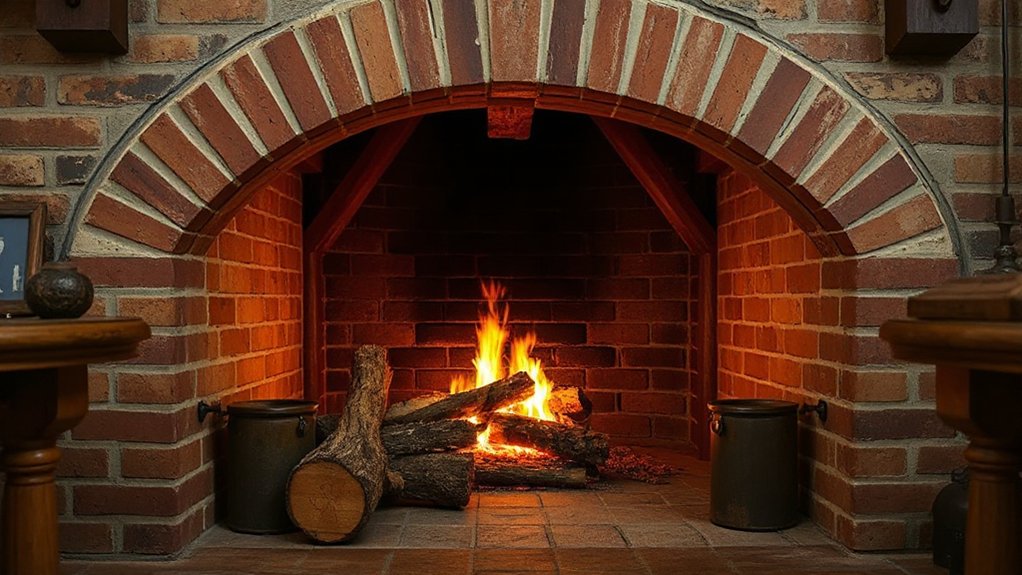
Corner Nook, Arched Alcove, and beyond offer distinct ways to integrate a hearth into a room’s geometry. You’ll evaluate layouts by spatial rhythm, clearance, and sightlines, then select details that enhance function without clutter. Use precise junctions between wall planes and the hearth mass to maintain balance.
The following variations illustrate deliberate differentiation:
- Corner Nook: compact footprint, angular continuity, decorative mantel as focal anchor.
- Arched Alcove: soft framing, vault-like emphasis, fireplace accessories positioned for accessibility.
- Inset Recess: flush installation, minimized profile, mantel complement with linear accents.
- Gallery Niche: extended display zone, integrated shelving, decorative mantel ties media and warmth.
Choose options that harmonize structural geometry with decorative mantel and compatible fireplace accessories.
Practical Benefits: Heating, Comfort, and Ambience
A properly designed inglenook delivers tangible benefits in heating efficiency, occupant comfort, and ambient quality. You’ll feel targeted warmth from the compact firebox, with radiant heat directed toward seating, reducing overall furnace duty.
The enclosure creates a thermal mass that stabilizes room temperatures during fluctuating exterior conditions, improving comfort without added energy. Beyond heat, the space defines microclimate—reducing drafts and delivering a calmer, more even air distribution.
Ambience arises from a well-proportioned opening and proper smoke clearance, enhancing visual focus and acoustic quiet. Implementing correct fireplace accessories ensures efficient operation and safety.
Historical origins inform practical layout choices, guiding flue height, mantel height, and seating orientation for ideal performance. This approach yields predictable, efficient, and pleasant heating, without extraneous complexity.
Materials and Finishes That Suit Your Home
Consider timeless stone choices, finish materials, and color coordination as the core trio shaping your inglenook’s character. You’ll evaluate textures, hues, and compatibility with existing architectural details to guarantee cohesive harmony.
This discussion starts with selecting durable stone, pairing finishes, and aligning color schemes for a balanced, enduring look.
Timeless Stone Choices
When choosing stone for an inglenook, you should prioritize durability, maintenance, and aesthetic harmony with the surrounding architecture. You select materials that balance performance with firebox heat exposure, while preserving the fireplace aesthetics and historical significance.
Consider these timeless options:
1) Limestone with a soft patina for traditional rooms
2) Sandstone for warm undertones and sturdiness
3) Fieldstone for rustic texture and structural presence
4) Granite for high durability and low maintenance
Stone finishes influence upkeep and ambient tone. Choose honed or tumbled surfaces to modulate glare and soot visibility, ensuring consistent color over time.
Ensure matching mortar color and profile to maintain period accuracy. Confirm local availability to minimize transport impact.
Pair with appropriate sealers to stabilize porosity. Prioritize stones that endure heat cycles without cracking.
Finish Material Harmony
You assess finishes for consistency across the fireplace zone, matching textures, tones, and grain patterns to architectural cues. Prioritize materials that age evenly and weather gracefully, supporting both durability and a restrained aesthetic.
Fireplace accessories should reinforce the chosen finish—think burnished metals with similar patinas or matte stone details that echo plaster warmth.
Favor traditional craftsmanship cues, such as mortise-and-tenon joins or hand-applied textures, to maintain architectural integrity.
Avoid contrasting finishes that distract from the inglenook’s unity. The result is a seamless, human-scale focal point that respects both historic character and modern performance.
Color Coordination Tips
Color coordination starts with your home’s overall palette and architecture, then aligns fireplace materials to read as a single, cohesive system. You’ll choose complementary finishes that reinforce the room’s rhythm, not clash with it.
- Match the dominant color in your color palette options to the mantel and surround for visual continuity.
- Use contrasting textures (matte, gloss, or honed) sparingly to highlight architectural features without breaking harmony.
- Integrate fireplace accessories in the same family of tones to maintain a unified look.
- Consider metal accents that echo fixtures, corner brackets, or hardware to anchor the space.
This approach yields a precise, technically sound result, ensuring durability and aesthetic coherence.
Maintenance and Care for Lasting Charm
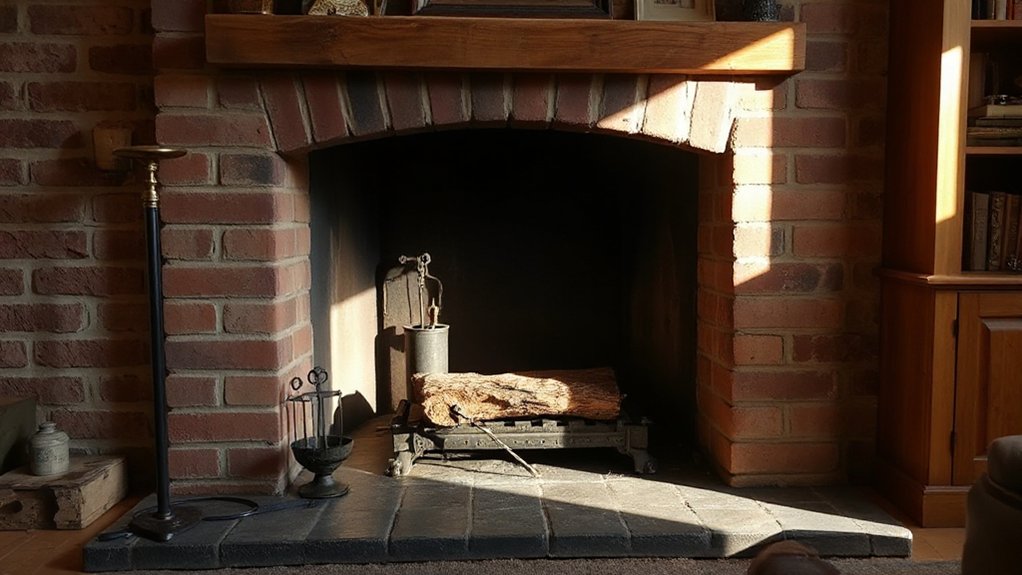
To maintain the lasting charm of an inglenook fireplace, establish a routine that combines regular cleaning, inspection, and timely repairs. You’ll perform seasonal sweepings to remove ash and creosote buildup, preventing chimney fires and ensuring efficient drafting.
Inspect mortar joints, lintels, and surrounding woodwork for cracks, spalling, or moisture intrusion; address issues promptly to avoid structural deterioration. Check damper operation, grate condition, and firebox lining, replacing damaged components as needed to maintain safe, consistent heat output.
Track fading or efflorescence on brickwork, using appropriate cleaners and sealants sparingly to preserve historic character. Keep fireplace accessories organized, storing tools, screens, and hearth pads to minimize wear.
For longevity, integrate maintenance with historic preservation goals, documenting interventions and using period-appropriate materials when repairs are required.
Modern Adaptations: Small Spaces and Contemporary Homes
Modern adaptations in small spaces and contemporary homes leverage compact design, modular components, and efficient heat management to preserve the inglenook’s character while meeting modern living needs. You implement integrated shelving, concealed wiring, and modular hearth modules to maintain authenticity without bulk. The focus remains on performance, safety, and usability, ensuring the inglenook serves as a functional focal point.
Key considerations include airflow, insulation, and proportional scale to room geometry.
- Use space-saving fireplace accessories that don’t crowd sightlines
- Select modular surrounds for flexible configuration
- Optimize heat output with controlled vents and insulation
- Preserve historical significance through authentic detailing and finish
This approach balances style with practicality, delivering a historically informed, contemporary centerpiece.
Frequently Asked Questions
How Does an Inglenook Influence Acoustic Comfort in a Room?
An inglenook influences acoustic comfort by shaping room reverberation and diffusion. You’ll notice reduced flutter echoes and localized warmthy reflections around the hearth, improving speech intelligibility.
Fireplaces act as partial absorbers and diffusers, slightly lowering room noise levels when you focus heat and mass toward adjacent zones. For better performance, consider fireplace acoustics as part of room soundproofing: seal gaps, use absorptive surfaces nearby, and balance hard and soft materials to control reflections.
Can Inglenooks Accommodate Modern Wood Stoves or Heaters?
Yes, inglenooks can accommodate modern wood stoves or heaters, provided you follow clear safety and installation guidelines. You’ll need proper clearances, a noncombustible hearth, and an appropriate flue liner to meet code.
Guarantee structural support for added weight and heat. Prioritize professional venting and combustion-air provisions.
This setup preserves historical accuracy and aesthetic appeal while delivering efficient radiant heat. You’ll benefit from documented performance, reliable clearances, and compliant, durable integration designed for contemporary heating needs.
Are Inglenooks Ethically Sourced or Sustainable Materials?
You’ll find inglenooks can be sustainably sourced if you choose materials with verified certifications. While some builders rely on reclaimed timber, verify responsible mills and certified adhesives.
Historical significance and cultural symbolism underscore quality choices, not gimmicks. If you’re concerned about ethics, ask for chain-of-custody and life-cycle data.
You’ll want durable, low-emission options that meet local standards. In practice, sustainable sourcing supports preservation without compromising performance or timeless appeal.
What Is the Typical Installation Timeline for a New Inglenook?
A typical installation timeline for a new inglenook spans 2 to 5 days, depending on existing structure and permits. You’ll plan site prep, masonry layout, and chimney connections first.
Then, install the niche, hearth, and lintel, followed by a smoke test. Expect curing time for mortar between steps.
You’ll consider fireplace design implications and historical significance, ensuring alignment with code authorities.
Final commissioning confirms performance, safety, and long-term durability.
Do Inglenooks Require Special Building Permits or Codes?
Yes, inglenooks typically require permits and must comply with local codes, including fire safety, ventilation, and structural integrity. You should consult your building department early to confirm requirements and plan reviews.
The project’s historical significance may influence allowances or exemptions, while design variations can affect permitting scope.
Guarantee proper clearances, noncombustible hearth materials, and proper chimney connections. Obtain approved plans, inspections, and a final certificate of occupancy where applicable.
Conclusion
A true inglenook blends heat, seating, and focal drama into a single, efficient unit. When you evaluate space, heighten comfort, and guarantee proper clearance, you create a cohesive hearth that concentrates warmth and invites conversation. Think of the inglenook as a compass for room flow—structuring seating, sightlines, and traffic. With precise dimensions, durable finishes, and mindful ventilation, you get lasting charm. It’s not just a feature; it’s the heart of your home, guiding everyday warmth like a beacon.