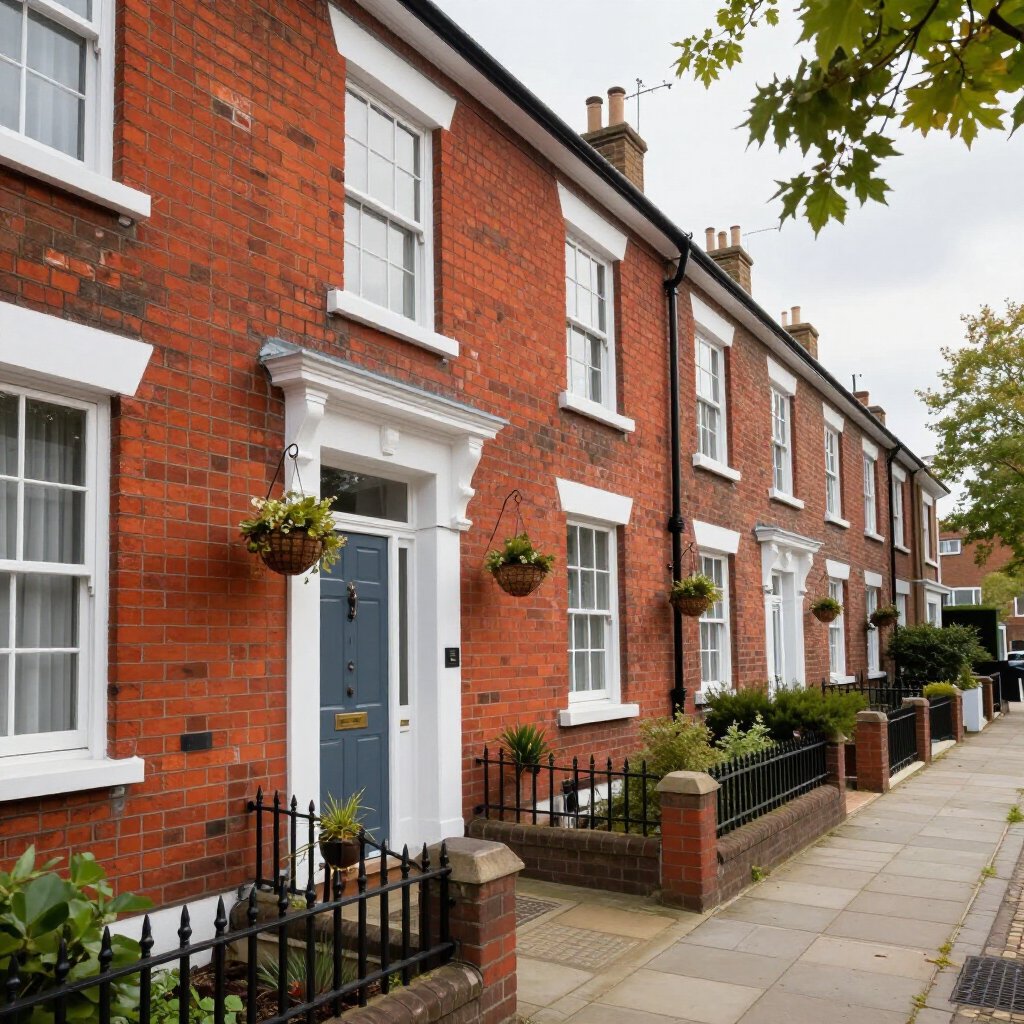
Buying property in London is one of the most significant financial decisions most people will ever make — and one of the most competitive markets in the world in which to make it. Properties in desirable areas regularly receive multiple offers within days of listing. Gazumping remains a genuine risk. And the gap between what a listing presents and what a property actually is can be considerable.
In this environment, the questions you ask the estate agent aren’t a formality — they’re one of your most important tools. Estate agents in London are legally obligated to answer questions honestly, but they are not obligated to volunteer information you don’t ask for. The buyer who asks nothing beyond “when can I move in?” is working with a fraction of the information they need.
This guide covers the essential questions every buyer should ask an estate agent in London, across every stage of the process — from the first viewing through to the final negotiation.
Questions to Ask at the Viewing
The viewing is your first and sometimes only opportunity to assess both the property and the agent’s knowledge of it. Don’t waste it on surface-level observations you can make yourself. Use it to extract information. If you’re interested in a property in Sydenham, then estate agents in Sydenham have a better knowledge of the area than a company based in a different city or county.
How Long Has the Property Been on the Market?
This is the single most revealing question you can ask at a viewing. A property that has been listed for more than six to eight weeks in London — where well-priced stock in good condition typically moves within two to three weeks — warrants explanation. It may simply have been overpriced initially. Or there may be a more substantive reason: a problematic lease, a difficult vendor, a survey issue that scared off a previous buyer, or a structural problem that’s visible to anyone who looks closely.
Ask the agent directly. If they’re evasive, that’s information in itself. If the property has been relisted under a different agent or with a different listing description, the current agent may not volunteer that — but you can check the property’s history on Rightmove and Zoopla yourself before the viewing.
Has the Property Had Any Previous Offers Fall Through?
A sale falling through in London is not unusual — chains collapse, surveys throw up problems, buyers get cold feet. But a property where two or three offers have fallen through deserves scrutiny. Ask the agent what happened. Was it a survey issue? A lease problem? A buyer who got gazumped on another property and pulled out? Some explanations are benign; others point to a property-specific problem that hasn’t been resolved.
Why Is the Vendor Selling?
You won’t always get a candid answer to this, but it’s worth asking. A vendor who has already purchased elsewhere and is under financial pressure to complete quickly is a very different negotiating counterpart from one who is testing the market without urgency. Understanding the vendor’s motivation — relocation, upsizing, estate sale, financial pressure — informs both your offer strategy and your timeline expectations.
What Is Included in the Sale?
In London flats particularly, what’s included in the sale is not always obvious. Ask specifically about fitted appliances (fridge, dishwasher, washing machine), light fittings, integrated storage, and any fixtures or furniture shown during the viewing. Get the answer in writing before exchange, as verbal agreements made at viewings are not legally binding.
Has the Property Had Any Structural or Damp Issues?
Estate agents are obliged not to misrepresent a property’s condition, but there’s a difference between active deception and simply not raising topics the buyer hasn’t asked about. Ask directly about damp, subsidence, previous structural movement, and any significant works carried out in the last ten years. If works were done, ask whether they were done with Building Regulations approval and whether completion certificates are available — this matters particularly for loft conversions, extensions, and electrical works.
Questions About the Lease (For Flats and Leasehold Properties)
The majority of London properties are leasehold, and the lease is often where the most significant complications arise. Many first-time buyers focus almost entirely on the physical property and pay insufficient attention to the lease terms — sometimes catastrophically so.
How Many Years Are Left on the Lease?
This is non-negotiable to ask, and the answer matters enormously. Most mortgage lenders require a minimum of 70–85 years remaining on the lease at the point of application (the exact requirement varies by lender). Once a lease drops below 80 years, a lease extension becomes significantly more expensive due to the inclusion of marriage value in the calculation. A lease with fewer than 70 years remaining may make the property unmortgageable for many buyers and very difficult to resell.
If the lease is below 90 years, ask the agent whether the vendor intends to extend it prior to sale, or whether a lease extension is being offered as part of the transaction. If neither, factor the cost of a lease extension into your offer — and get a solicitor to estimate that cost before proceeding.
What Are the Service Charges and Ground Rent?
Service charges on London flats vary enormously — from £1,000 per year on a small conversion to £15,000+ per year on a managed new-build development. Ask for the last three years’ service charge accounts, not just the current year’s estimate. Escalating service charges or large recent major works bills can be a red flag for an underfunded building that is catching up on deferred maintenance.
Ground rent matters too. Following the Leasehold Reform (Ground Rent) Act 2022, ground rents on new leases in England are now restricted to a peppercorn (zero), but older leases can contain doubling ground rent clauses — where the ground rent doubles every 10–25 years — that can make a property difficult to mortgage or sell. Ask the agent to confirm the current ground rent and whether it escalates, and have your solicitor review the relevant lease clauses carefully.
Are There Any Planned Major Works to the Building?
Freeholders and managing agents can issue a Section 20 notice requiring leaseholders to contribute to major works (roof replacement, lift refurbishment, external redecoration) with sometimes very little warning. Ask the agent whether any major works are planned or have been discussed at recent residents’ meetings. Request copies of recent AGM minutes if available. A planned major works programme costing £20,000 per flat is a material factor in your offer calculation.
Who Is the Freeholder and How Is the Building Managed?
A well-managed building with a responsive managing agent is a very different ownership experience from one with an absentee freeholder and a neglected communal area. Ask who manages the building, whether there is a residents’ management company, and whether the current leaseholders have the Right to Manage. Check Companies House for the managing company’s filing history if you want to go deeper.
Questions About the Local Area and Market
What Have Similar Properties in the Street Sold For Recently?
This is a legitimate question and any competent agent should be able to answer it. Cross-reference their answer with the Land Registry sold prices data available on Rightmove and Zoopla — both show sold prices for any address in the UK. If the asking price is significantly above recent comparables without a clear justification (substantially better condition, larger floor area, additional features), that’s a data point for your negotiation.
What Are the Transport Links and Planned Developments Nearby?
London’s property values are acutely sensitive to transport access. A flat within five minutes’ walk of a Tube or Elizabeth line station commands a meaningful premium over an equivalent property a 15-minute walk away. Ask the agent which stations are within walking distance and how long the commute takes to key destinations in practice — not just what the map suggests.
Also ask about planned local developments. Large residential or commercial schemes nearby can be positive (regeneration, new amenities) or negative (construction noise for years, increased density, loss of views or light). Check the local authority’s planning portal for any major applications in the vicinity.
What Is the Parking Situation?
In inner London boroughs, parking is often a significant issue. Ask whether the property comes with a parking space or permit, whether the street is permit-controlled (and whether new residents qualify for a permit — some Controlled Parking Zones restrict permits for new-build properties), and what the practical reality of parking near the property is. If you own or plan to own a vehicle, this is a quality-of-life issue that can be very difficult to resolve after purchase.
Questions About the Offer and Negotiation Process
Is the Vendor in a Chain?
Chain-free transactions complete faster and carry less risk of collapse. A vendor who has already found onward accommodation, or who is downsizing or moving abroad, is a more straightforward counterparty than one who is mid-search for their next property. Ask specifically: is the vendor chain-free? If there is a chain, how many parties does it involve and what stage is it at?
What Is the Vendor’s Preferred Completion Timeline?
Understanding the vendor’s timeline helps you frame a more attractive offer. A vendor who needs to complete within eight weeks for financial or logistical reasons will value a buyer who can move quickly — and may accept a slightly lower offer from a cash buyer or someone with a mortgage in principle from a fast-processing lender over a higher offer from someone in a complex chain. If speed matters to them and you can deliver it, say so explicitly.
Are There Other Interested Parties or Offers?
Estate agents are legally required not to lie about the existence of other offers — but they are permitted to decline to share details. Ask directly whether there are other interested parties and whether any offers have been made. If the agent says yes, it’s reasonable to ask whether the vendor will consider best-and-final offers or whether they are proceeding in the order offers are received. This affects your strategy significantly.
What Is the Agent’s Relationship With Preferred Solicitors or Mortgage Advisors?
Many London estate agents have referral arrangements with solicitors, mortgage brokers, and surveyors — and may push these services on buyers. These are not necessarily poor services, but you have no obligation to use them and the referral fee the agent receives is a conflict of interest. You are always entitled to appoint your own solicitor and mortgage broker. In most cases, independently sourced professionals who specialise in your type of transaction will serve you better.
Questions to Ask Before Making an Offer
Has the Property Been Surveyed Before?
Ask whether any surveys have been carried out on the property previously, and whether any survey reports are available. Vendors are not legally obligated to share these, but many will — and a previous survey that identified defects can inform your own survey instructions and your negotiation position. If a previous buyer commissioned a survey and walked away, it’s highly relevant to know why.
What Is the Seller’s Solicitor’s Track Record on Completions?
This sounds like a question for your own solicitor, but it’s worth raising with the agent. Experienced London agents know which solicitors are efficient and which are known for delays. A slow solicitor on the vendor’s side can add weeks or months to a transaction and is a factor in deals collapsing. Ask the agent whether the vendor’s solicitor has handled other sales in the building or area recently and how they found them.
What Should I Know About This Property That I Haven’t Asked?
Ask this question at the end of every viewing and every substantive conversation with the agent. It sounds simple, but it puts the agent in the position of having to consider whether there is material information they haven’t yet disclosed. Most reputable agents will take it seriously. The answers aren’t always dramatic — sometimes it’s simply “the upstairs neighbour has a piano” or “the boiler was just replaced.” But occasionally it surfaces something important that direct questioning didn’t reach.
Final Checklist: Questions to Ask Your London Estate Agent
At the viewing:
- How long has this property been on the market?
- Have any previous offers fallen through, and why?
- Why is the vendor selling?
- What is included in the sale?
- Have there been any structural, damp, or significant works issues?
For leasehold properties:
- How many years remain on the lease?
- What are the current service charges and ground rent — and how do they escalate?
- Are any major works planned or anticipated for the building?
- Who is the freeholder and managing agent?
About the area:
- What have comparable properties sold for recently?
- Are there any significant developments planned nearby?
- What is the parking situation?
Before and during the offer:
- Is the vendor chain-free, and what is their preferred timeline?
- Are there other offers or interested parties?
- Does the agent have referral arrangements with solicitors or mortgage advisors?
- Has the property been surveyed before, and are any reports available?
- What should I know about this property that I haven’t asked?
The Bottom Line
London’s property market rewards prepared buyers and is unforgiving of uninformed ones. The questions in this guide won’t just help you assess a property more accurately — they’ll signal to the agent and vendor that you are a serious, informed buyer who is harder to mislead and more likely to complete. In a market where vendor confidence in the buyer matters as much as the offer price, that positioning has real value.
Ask everything. Get the important answers in writing. And never assume that silence from the agent means there’s nothing worth knowing.