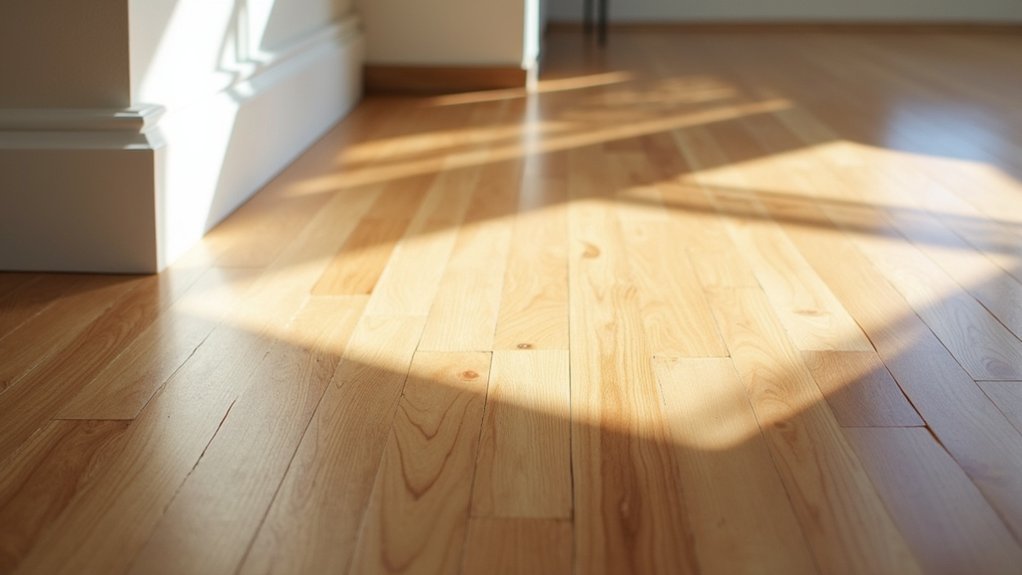
When you choose hardwood flooring, you’ll weigh solid versus engineered by considering moisture tolerance, refinishing potential, and climate impact. Solid wood delivers timeless appeal and easy refinishing but is vulnerable to humidity and temperature shifts. Engineered wood offers enhanced stability and moisture resistance, yet it can limit how often you can refinish. Each path carries trade-offs that hinge on your space, installation method, and maintenance plan, leaving you with practical questions to guide your next step.
What to Consider Before You Buy Hardwood Flooring
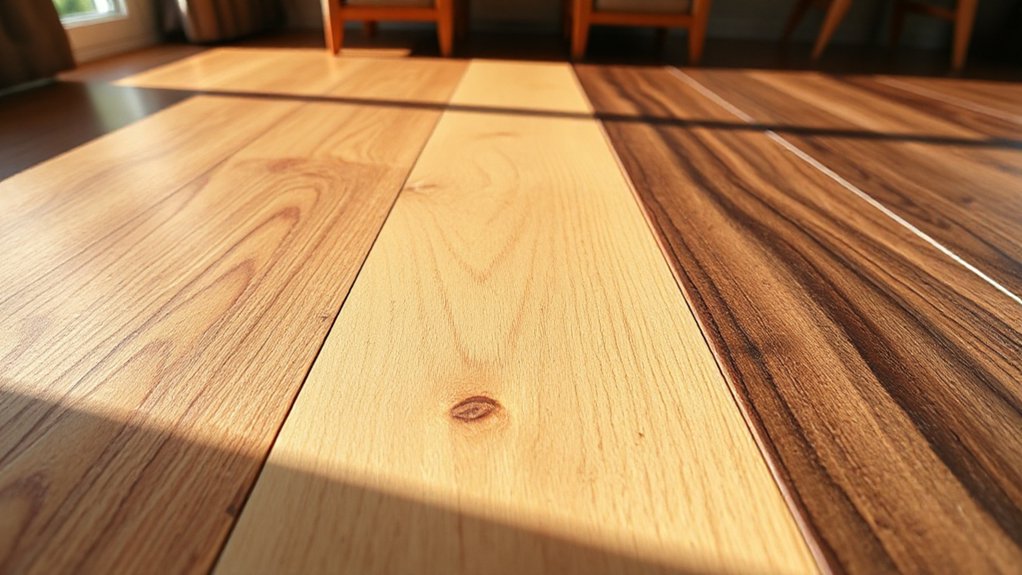
When you’re buying hardwood flooring, start with the basics: identify the room’s wear, moisture conditions, and traffic levels, then match species, grade, and finish accordingly.
You assess subfloor suitability, acclimation needs, and climate impact, since these determine long-term performance.
Consider color options early to align with interior design and lighting, guaranteeing consistency across adjacent spaces.
Evaluate installation methods compatible with your space, budget, and desired result, noting that some methods require specific subfloor preparations and transition details.
Confirm acoustic and thermal performance requirements, particularly in multiroom projects.
Review warranty terms and maintenance requirements for the chosen finish.
Finally, verify supplier reliability, available stock, and lead times to avoid delays.
Make your selections based on measurable criteria, not aesthetics alone, to guarantee durability and predictable upkeep over time.
Solid vs Engineered: Core Differences You Should Know
Solid and engineered hardwood differ in composition and structure, which directly affects performance, installation, and durability. You’ll notice that solid boards are single-piece lumber with uniform thickness, whereas engineered plies stack under a stable substrate, typically plywood or high-density fiberboard, with a top veneer.
This core distinction governs expansion behavior, moisture tolerance, and acclimation requirements. You’ll encounter different wood grain patterns preserved by varying veneer thickness and processing.
When installing, fastening methods and underlayment choices vary: solid often requires nail or staple down to a rigid substrate, while engineered can be floated or glued down, expanding your installation flexibility.
Finishing options differ too; engineered veneers may limit some edge repairs, influencing long-term aesthetics and preservation strategies. Consider moisture exposure, substrate, and desired look to select the most appropriate option.
Pros of Solid Hardwood
Solid hardwood offers unmatched durability and timeless aesthetics, delivering long-term value through wear resistance and repairability. You benefit from straightforward refinishing cycles that restore surface integrity without structural compromise, preserving core performance over decades.
The material’s hardness provides consistent dent and scratch resistance under typical residential loads, while the presence of solid plies supports stable aging in appropriately heated environments.
Color options remain inherently rich, with finishes that deepen rather than obscure natural tones, enabling you to tailor ambience to space without sacrificing authenticity.
Installation methods favor precise, methodical laying and secure, long-lasting joints, contributing to dimensional stability when acclimation and substrate preparation are properly executed.
You’ll appreciate minimal acclimation variance with compatible subfloors, reducing capture time and aligning with professional standards for durable, enduring floors.
Cons of Solid Hardwood
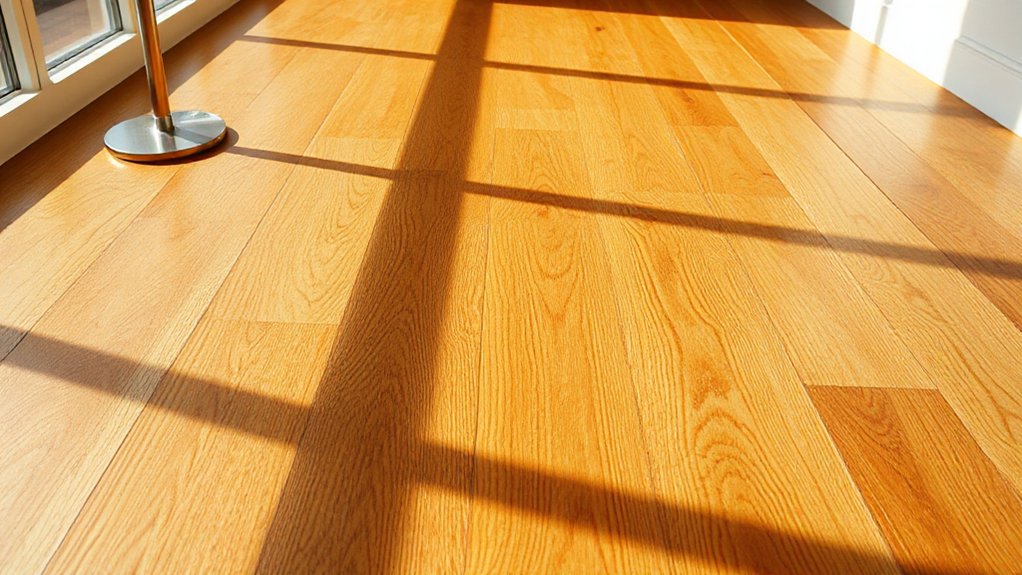
Solid hardwood is limited by its moisture tolerance, making room conditions a critical factor in performance. You’ll need to manage humidity and spills carefully to prevent damage such as expansion, shrinkage, or gaps.
It’s also susceptible to warping if exposed to sustained moisture, poorly sealed subfloors, or improper acclimation.
Limited Moisture Tolerance
Moisture sensitivity is a key drawback of solid hardwood; exposure to even modest moisture can cause swelling, warping, or cupping as wood fibers absorb water. You must acknowledge that limited moisture tolerance translates to stricter installation envelopes and ongoing maintenance.
In practical terms, surface moisture events, spills, or humidity fluctuations can alter dimensions and create finish imperfections. To mitigate risk, rely on moisture resistant finishes that form a protective barrier and reduce water ingress at the veneer perimeters.
Pair finishes with proactive humidity control techniques, such as stable climate management, dehumidification in damp environments, and consistent room targeting.
Select engineered substrates where feasible for superior moisture resilience. Implement double-check checks of subfloor dryness before installation to maintain dimensional stability and long-term performance.
Susceptible to Warping
Warping risk is a fundamental drawback of solid hardwood, closely tied to its response to moisture and temperature changes. You’ll notice warping when moisture fluctuations and uneven drying cause boards to bow, crown, or gap.
Humidity sensitivity drives dimensional shifts across grain patterns, especially in environments lacking consistent climate control. Temperature effects compound these movements, as heat accelerates moisture migration and wood fibers relax or contract unevenly.
In practice, ambient swings—seasonal humidity highs or indoor humidity spikes from cooking or showers—trigger unchecked expansion in some boards and relative contraction in others. This differential movement can produce visible seams, cupping, or twisting, undermining flatness and installation integrity.
To mitigate, maintain stable RH (roughly 30–50%) and temperature, and allow acclimation before installation. Avoid relying on solid wood in high-variance spaces.
Pros of Engineered Wood Flooring
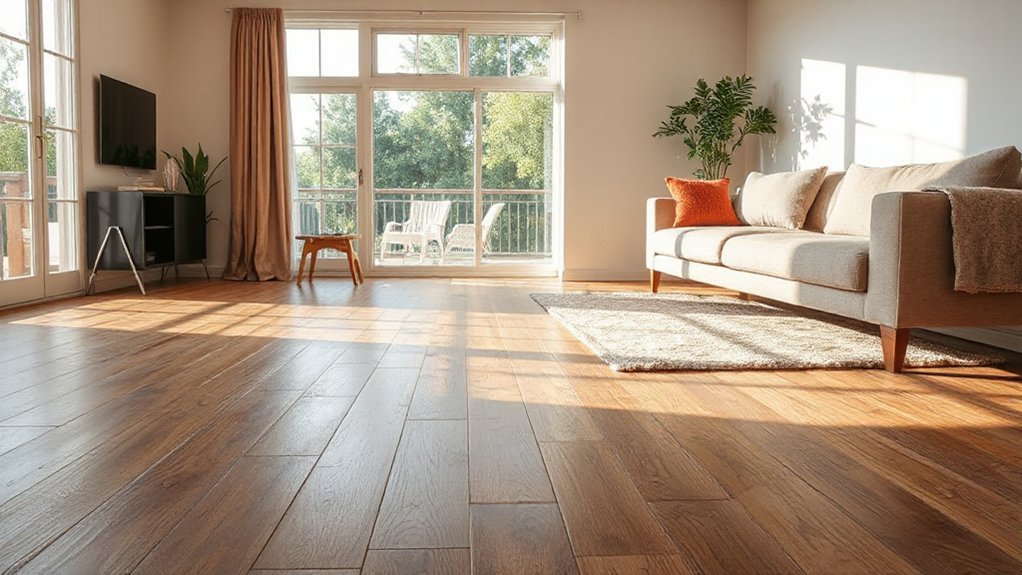
Engineered wood flooring offers notable durability gains and sound performance under daily use, thanks to its layered construction that resists scratching and denting more than solid wood in similar conditions.
Its engineered composition also enhances dimensional stability, helping it better withstand humidity fluctuations without excessive expansion or contraction.
You’ll appreciate these attributes as you weigh installation environments and long-term maintenance for your space.
Engineered Durability Benefits
Engineered wood flooring offers notable durability benefits, thanks to its layered construction that enhances stability and resists expansion and shrinkage under varying conditions. You’ll experience consistent performance across temperature and humidity shifts because the plywood or high-density fiber core minimizes warping risks compared with solid boards.
Engineered durability arises from the thick top veneer and robust core, which absorb and distribute stresses more evenly, reducing surface wear and denting from daily use. Moisture resistance is improved relative to solid wood, as the core layer slows moisture ingress and minimizes swelling.
Proper subfloor preparation and acclimation maximize this advantage. Nonetheless, you should still follow manufacturer guidelines for moisture limits, installation methods, and protective finishes, ensuring long-term beauty and structural integrity in residential and light-commercial environments.
Stability Under Humidity
Under engineered construction, the layered core—typically plywood or high-density fiberboard—provides a stable foundation that resists dimensional changes caused by humidity. You benefit from predictable performance as moisture levels fluctuate, because the veneers and core respond more consistently than solid wood.
This stability minimizes gaps, warping, and cupping, reducing maintenance needs and guiding precise installation. Humidity effects are mitigated by the core’s engineered geometry, while the top veneer preserves aesthetics without surrendering structural integrity.
Temperature impact remains manageable, as engineered boards tolerate short-term heat or cold without rapid expansion or contraction. In humidity-prone environments, this performance translates to steadier gaps and alignment, better long-term wear, and fewer seasonal adjustments required.
- Consistent dimensional stability
- Reduced gap formation and cupping
- More predictable installation tolerances
Cons of Engineered Wood Flooring
Although engineered wood flooring offers stability and cost benefits, it has notable drawbacks. You encounter limitations rooted in construction and performance. The core veneer is thin, so surface damage or sanding is restricted, reducing refinishing options compared to solid wood. You may face edge-illusion wear, where top wear layers show uneven color or sheen after use.
Humidit and moisture exposure can still affect performance, despite core layers designed for resilience. You must consider installation challenges, including substrate flatness, acclimation, and precise underlayment requirements that influence long-term stability.
Expansion gaps and floating installations demand careful layout to avoid movement that creates creaks or gaps. Recoating options are limited, and mismatched finishes can complicate repairs.
Cost, Durability, and Maintenance by Hardwood Type
When evaluating cost, durability, and maintenance by hardwood type, it’s essential to compare upfront price, long-term performance, and care requirements across species. You’ll find tradeoffs between initial investment and lifespan, with durability driven by hardness, wear layer, and finish resilience.
Maintenance varies by species and finish, influencing ongoing cleaning, refinishing frequency, and moisture control. Eco-friendly options often price slightly higher but reduce environmental impact over time, while installation challenges can affect total project cost and downtime.
1) Species with high Janka hardness resist denting but may require stricter acclimation and precise installation.
2) Domestic softwoods install easily and cost less upfront, yet wear faster and demand more frequent refinishing.
3) Engineered options balance stability with cost, offering practical durability for varying climates and subfloor conditions.
How to Choose the Right Hardwood for Your Space
Choosing the right hardwood for your space starts with aligning performance needs, aesthetic goals, and budget with the properties of available species and constructions.
Start by evaluating traffic, moisture exposure, and wear patterns to select species with appropriate hardness ratings and dimensional stability.
Consider plank dimensions, including width, thickness, and finish layer, to balance look and durability.
Select construction (solid vs engineered) based on subfloor conditions, climate, and installation method, noting impact on stability and repairability.
Assess color, grain, and pattern options, including decorative patterns, to achieve the desired visual rhythm without compromising performance.
Prioritize sustainable sourcing and Eco friendly options when possible, ensuring certifications and lifecycle implications align with long‑term value.
Conclude by validating warranty terms and available refinishing opportunities before finalizing the choice.
Frequently Asked Questions
How Do Finishes Affect Durability and Upkeep Long-Term?
Finish choices directly impact durability and upkeep: tougher polyurethane finishes resist scratches and moisture better, while water-based options cure quicker and reveal wood grain more clearly.
In the long term, select a durable topcoat and reapply as signs of wear appear.
Maintain with regular dusting and prompt spill cleanup.
Use wood finish options that suit traffic and humidity, and follow maintenance routines precisely to extend life and preserve appearance.
Is Hardwood Flooring Suitable for Radiant Heat Systems?
Yes, hardwood can be used with radiant heat if you choose wisely. For example, a retrofit cabin shows stable performance with engineered planks.
Radiant heat compatibility hinges on acclimation, species, and installation method. You must allow for controlled temps and proper underlayment.
You’ll monitor hardwood expansion, use wider joints, and avoid rapid cycling. Maintain moisture balance and select compatible finishes.
This approach minimizes expansion risks while delivering efficient heat.
Can Hardwood Floors Be Repaired After Water Damage?
Water damage to hardwood floors can often be repaired, but outcomes hinge on severity. If cupping or swelling is mild, you may dry promptly and sand/refinish small affected areas.
For extensive damage, replacement boards or sections might be required. Use dehumidification during drying and monitor moisture levels to avoid recurrence.
Repair methods include planing, reglazing, and reseaming where needed. If boards are warped beyond repair, full-or partial-board replacement is recommended for long-term stability.
What Seasonality Issues Affect Expansion and Contraction?
Seasonality affects expansion and contraction: when humidity rises, wood expands; when it drops, it contracts. Like a breathing pattern, seasonal humidity drives wood movement.
You’ll see seasonal humidity shifts cause gaps or tightened floors, especially in regions with hot summers and cold winters, or dry indoor air from heating.
Wood expansion and contraction respond to moisture content fluctuations, so maintain stable humidity, use proper acclimation, and allow expansion gaps during installation.
Are There Environmental Certifications to Look For?
Yes, there are environmental certifications to look for. You should prioritize Eco friendly materials and verify Certification standards from recognized programs.
Look for floor products bearing labels such as FSC or PEFC for responsibly sourced wood, GREENGUARD for low emissions, and Cradle to Cradle where applicable.
Also confirm lifecycle assessment data, supply chain transparency, and adherence to regional environmental regulations.
These certifications help guarantee material sustainability, reduced indoor pollutants, and verifiable responsible manufacturing practices.
Conclusion
Conclusion: When you choose between solid and engineered hardwood, you’re weighing refinishing potential against dimensional stability. Solid offers timeless refinishing and classic character, but hates moisture; engineered trades more stability and moisture resistance for limited refinishing. The theory that engineered is universally inferior for long-term value is unfounded—properly chosen and installed engineered floors can outperform in damp or fluctuating climates. Base your decision on environment, budget, and desired maintenance, then optimize with quality installation and care.