
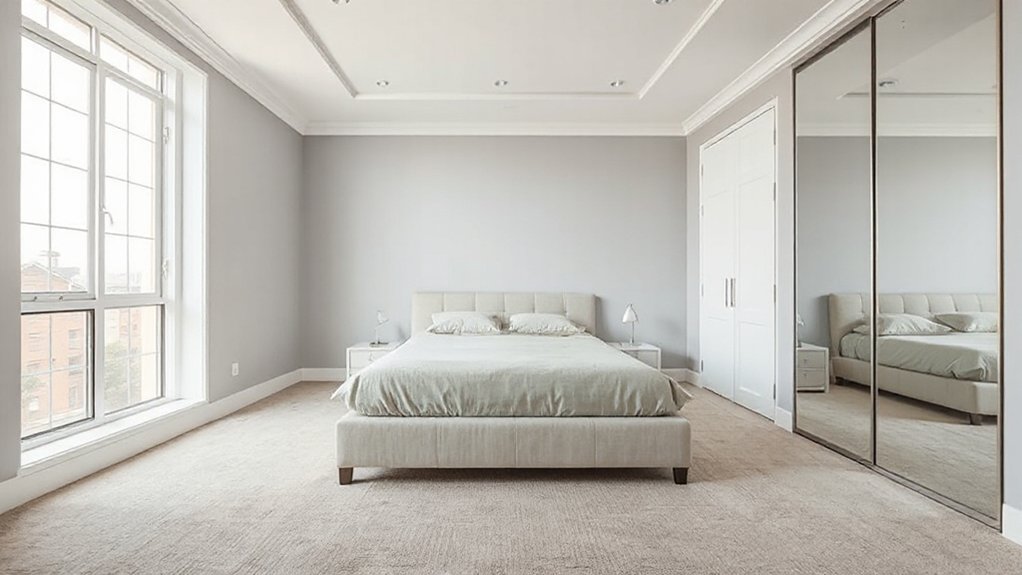
To make a small bedroom look bigger, prioritize light, simple shapes, and open sightlines. Choose a cool, bright palette and minimal, reflective surfaces—think glass, mirrors, and satin finishes. Opt for low-profile, multifunctional furniture and hidden storage to keep surfaces clear. Use strategically placed mirrors to bounce daylight and widen ceilings. Maintain clean edges, reduce clutter, and create defined zones with purposeful layout. If you keep exploring, you’ll discover more ways to expand your space even further.
What Makes a Small Bedroom Feel Bigger: Core Principles
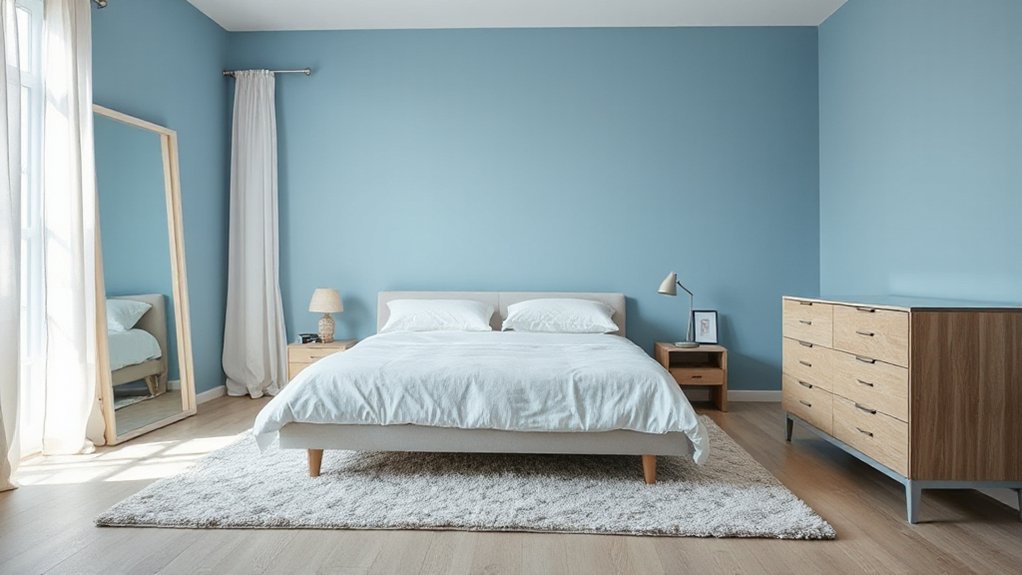
Small rooms feel bigger when you prioritize light, simple shapes, and open sightlines. You streamline clutter, choose low-profile furniture, and keep pathways clear, so the eye travels unbroken.
Use wall mounted solutions to free floor space and create floating planes that read airy rather than crowded. Opt for uninterrupted color blocks and matte finishes that reflect rather than absorb light.
Keep window treatments minimal to maximize daylight; if you can, install ceiling enhancements that bounce light from multiple angles, widening perceived height.
Emphasize verticals with tall, slender elements to draw the gaze upward. Select multi-functional pieces with integrated storage to reduce visual noise.
Every decision should contribute to a cohesive rhythm, where negative space becomes a feature, not a deficit.
Step 1: Lighting Tricks That Instantly Expand a Room
Lighting is your fastest shortcut to making a small room feel bigger. You tune lighting to stretch depth and brighten surfaces, using layered sources rather than one overhead glare.
Start with ambient light that evenly fills corners, then add task lighting near desks or reading nooks, and finish with pinpoint accents to sculpt shadows.
Choose cool, bright bulbs to mimic daylight, which visually widens spaces.
Place mirrors opposite windows to bounce natural light and create ceiling height illusions, making the room feel taller.
For backdrop visibility, opt for unobtrusive ceiling fixtures and flush mounts that don’t crowd the space.
Consider bedroom window treatments that pull light inward—minimal, reflective shades or sheer drapes—so daylight remains your primary enlarger.
Color That Widens Walls: Palettes That Breathe and Reflect Light
Light-reflecting palettes bounce natural and artificial light, making walls feel farther and spaces feel brighter.
Pair soft, airy neutrals with brightness-boosting accents to keep rooms airy without washing out depth.
You’ll guide the eye with subtle contrasts and strategic pops that read as breath for the whole room.
Light-Reflecting Palettes
To make walls feel airy, choose light-reflecting palettes that bounce natural and artificial light around the room. You’ll want surfaces that read bright without glare, so opt for pale whites, airy pastels, and cool neutrals with a satin or eggshell finish.
Keep contrast minimal across large planes to preserve continuity, then use texture and subtle sheen to catch light at different times of day. Pair these shades with strategic accents that don’t overpower, like a bold accent wall or crisp white trim.
Incorporate statement lighting, such as a sculptural pendant or wall-mounted fixtures, to cast dynamic highlights.
Avoid heavy, dark furniture dominating walls; instead, choose compact, reflective surfaces and glass to keep the space feeling expansive.
Soft, Airy Neutrals
- Embrace subtle contrast with warm undertones to prevent clinical flatness.
- Layer textures: cottons, linen blends, and soft wool for depth without bulk.
- Use large, uncluttered surfaces to amplify openness.
These neutrals form a breathable backdrop for furniture silhouettes and reflective surfaces. You’ll notice continued spaciousness as fabrics drape softly, walls stay airy, and every detail reads calm and intentional.
Pair with minimal accents to sustain the visual breeze.
Brightness-Boosting Accents
Brighten walls with color schemes that bounce light and feel breathable. You choose light, airy palettes—soft whites, pale blues, and warm beiges—to widen perception and invite daylight to dance across surfaces.
Use reflective finishes sparingly: a satin wall, a glossy lamp, or a metallic frame can amplify glow without shouting. Keep contrast minimal; opt for tonal shifts rather than bold opposites, so rooms read as one expansive surface.
Introduce wall art and decorative accents in lighter frames and muted tones to maintain calm, airy harmony while guiding the eye outward. Place mirrors strategically opposite windows to double brightness.
Curate a few statement pieces that echo the room’s palette, ensuring every element contributes to perceived openness rather than crowding.
Space-Saving Furniture That Still Feels Premium
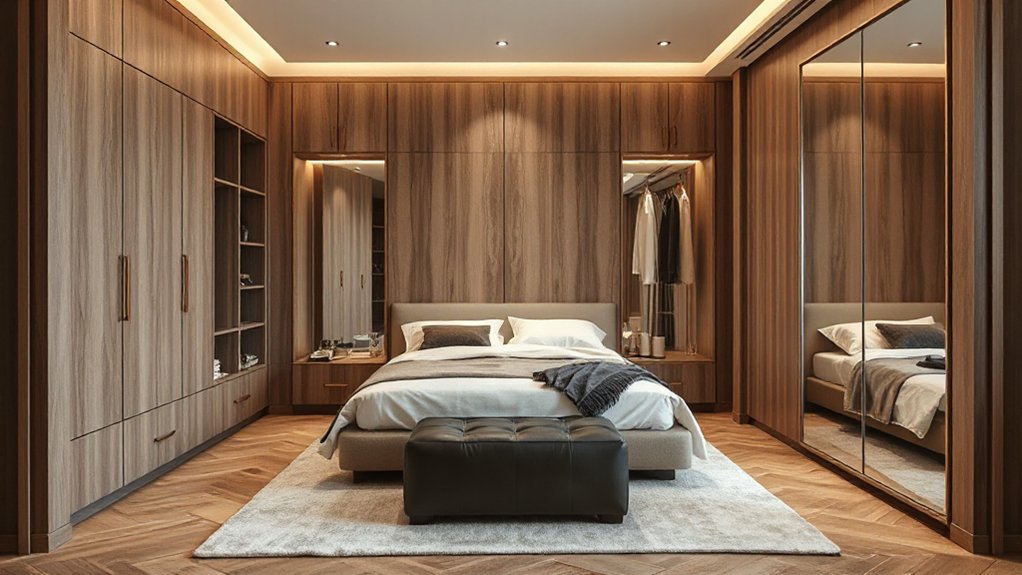
If you want premium appeal without sacrificing floor space, choose furniture that performs multiple roles and looks refined doing it. You’ll feel the room gain depth when pieces hide storage inside clean silhouettes, and lift with luxe finishes that read as high-end.
Prioritize compact, multifunctional items that don’t shout but elevate.
- Storage ottomans that open, double as extra seating, and complement vintage accessories
- Wall-mounted folds and slender desks that disappear when not in use
- Raised platforms or beds with built-in drawers and hidden charging bays
Pair your picks with statement artwork and subtle lighting to amplify polish. The result is a curated, airier feel without clutter.
Vintage accessories anchor the look, while space-saving design keeps lines clean and contemporary.
Layout Patterns for Open, Breathable Flow in Tight Rooms
Use open flow to guide every move: keep paths light, airy, and visually continuous from zone to zone.
Prioritize low-profile furniture and strategic spacing so light travels unimpeded and the room reads as bigger.
Think in sightlines and soft edges that invite movement without crowding, creating breathable, everyday pathways.
Open Flow Focus
In tight bedrooms, open flow means creating sightlines and pathways that feel effortless rather than crowded. You’ll prioritize clean lines, low furniture, and unobstructed floor space so the room reads larger at a glance. Visual anchors, like vintage accents and a statement rug, center the eye without breaking flow.
- Create continuous sightlines from door to window with minimal, low-profile pieces
- Place key storage against walls to keep walkways clear
- Use a bold, single rug to define zones without crowding the center
In practice, choose furniture with slim legs, prefer floating shelves, and avoid chunky silhouettes. The result: a calm, breathable microcosm where movement feels natural and space expands visually. Maintain restraint to preserve the open flow you’ve built.
Light, Airy Paths
Use low, slim profiles and wall-mounted storage to minimize bulk, letting floor and wall planes breathe. Create continuity with a single material or color that travels across zones, guiding the gaze toward windows or mirrors.
Shadow patterns play a subtle role; position lamps to cast gentle, diagonal forms that elongate the space without crowding corners. Ceiling illusions—painted tones, shallow coves, or reflective panels—draw the eye upward, enhancing height.
Keep progressions smooth, edges soft, and sightlines clear for an instantly calmer, more expansive feel.
Hidden Storage Ideas That Hide Clutter and Free Floor Space
Hidden storage can transform a small bedroom by reclaiming floor space without sacrificing style. You’ll prioritize clever nooks, color-coordinated bins, and clear surfaces to keep the room legible at a glance. Focus on hidden compartments and multifunctional furniture that pull weight from visual clutter into intentional design. This approach streamlines perception while boosting usable area.
- Use beds with built-in drawers or a tufted ottoman with hidden storage.
- Opt floating shelves and under-bed boxes to keep surfaces clean.
- Choose a storage bench at the foot of the bed for seating and concealment.
With these moves, clutter stays tucked away, and the room feels larger, brighter, and more functional.
Textures and Decor That Amplify Light and Airiness
Textures and decor play up light and airiness by embracing soft, reflective surfaces, airy textiles, and minimal clutter. You’ll maximize openness by using light-toned textures and clean lines that bounce daylight around the room.
Choose textured fabrics—think linen cushions, brushed cotton throws, and velvet canopy accents—to add depth without heaviness. Pair these with reflective surfaces like glass, mirrors, and high-gloss furniture to amplify brightness.
Limit decorative accessories to a curated few: a sculptural lamp, a simple vase, a single framed print. Keep edges crisp and corners uncluttered to preserve flow.
Opt for cohesive color without busy patterns; subtle variations read as texture, not noise. This approach makes space feel breathable, cohesive, and visually larger.
Quick Fixes to Avoid Common Small-Bedroom Pitfalls
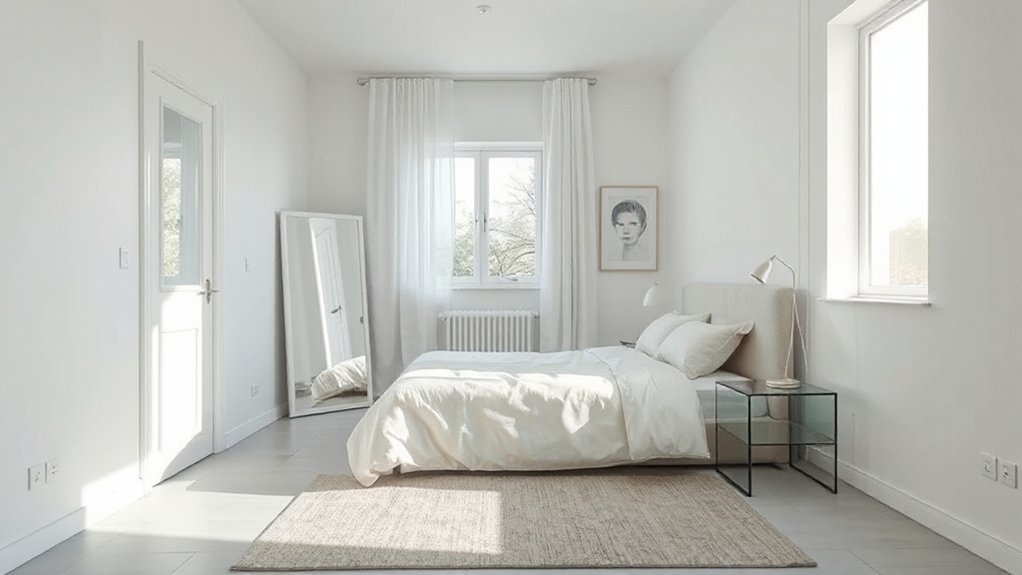
Quick fixes can avert the most common small-bedroom pitfalls, delivering instant gains in space perception. You’ll act with intention, not compromise, and keep a calm flow throughout the room. Prioritize streamlined surfaces, hiding cords, and choosing furniture that doubles as storage. Keep color palettes light and cohesive to expand the ceiling line visually.
Incorporate bedroom feng shui principles by balancing heat, earth, and air with uncluttered zones and purposeful workflow. Emphasize negative space to prevent visual crowding, letting the eye rest and the room feel larger. Minimalist decor keeps essentials only, so every piece earns its keep.
- Declutter and store out of sight
- Choose multifunctional, slender-profile furniture
- Apply consistent light tones and strategic lighting for depth
Frequently Asked Questions
How Can Mirrors Affect Perceived Room Size Beyond Lighting?
Mirrors reflect depth, enlarging space and guiding your eye. You’ll pair decorative wall panels with your mirror, using color contrast techniques to extend lines, create rhythm, and push boundaries without clutter, keeping visuals crisp and strategically balanced.
Which Ceiling Height Tricks Make a Small Room Feel Taller?
Like a telescope, you draw eyes upward. Use light ceiling color and crown molding to trick the ceiling higher, making space breathe. You’ll feel taller rooms when you pair bright ceilings with clean lines and strategic color contrast.
Do Rug Sizes Influence Room Openness or Clutter Perception?
Yes, rug sizes influence openness: choose a large rug to unify space and reduce visual clutter. Color schemes and smart furniture arrangement amplify this effect, creating cohesive zones and smoother flow that visually expands the room.
Can Window Treatments Impact Brightness Without Sacrificing Privacy?
Yes, window treatments can boost brightness while preserving privacy. Try sheer drapery styles paired with light-filtering blinds for layered light. Use privacy solutions like top-down shades, and choose airy colors to visually expand the space.
Are Acoustics a Factor in Making a Small Bedroom Feel Bigger?
Yes, acoustics matter: good sound matters visually and spatially. You implement soundproofing techniques and plan precise acoustic panel placement, creating calmer walls that feel larger and more open while you sleep, work, or relax quietly.
Conclusion
In the end, your small bedroom is a seed, not a cage. Light becomes a river, colors a widening horizon, and clean lines the path that lets you breathe. Choose furniture that whispers, not shouts, and storage that vanishes into shadows. With every thoughtful detail, you plant the idea of space where there was worry. When you enter, the room opens its doors, and you walk into the sky you crafted—compact, calm, and endlessly expansive.