Create a stylish, efficient small-space home office by designing around your tasks. Choose compact desks with slim profiles and integrated storage, add wall-mounted shelving to free floor space, and use modular, folding pieces that reconfigure as you switch needs. Zone the room into focus, calls, and tech with cable paths and a cohesive color palette. Layer lighting for depth and avoid clutter with deliberate textures and scale-driven furniture. Keep exploring to uncover more practical ideas.
Define Your Small-Space Office Criteria
When designing a small-space home office, start by defining clear criteria based on what you actually do there. You’ll translate tasks into space, light, and storage needs, avoiding guesswork. Pin down essential functions first: writing, screen work, calls, and charging gear.
Consider office ergonomics from the start—chair height, desk height, monitor eye level, and keyboard reach—to prevent strain. Map zones: one for focus, one for calls, one for tech, with dedicated outlets and cable paths.
Judge scale against your room’s footprint; a compact desk, slim storage, and wall-mounted shelves can keep footprint low while expanding capacity. Plan for noise reduction: soft furnishings, floor underlays, and a discreet white-noise option if you share walls.
Finalize criteria in a checklist to review before purchases.
Compact Desks That Maximize Footprint and Function
Small desks can pack a lot without eating floor space—think depth over width, with clever features that extend your working area. You’ll prioritize scale: compact tops, slim legs, and integrated storage that keeps surfaces clear.
Look for drop-down panels, fold-out work surfaces, and drawers that tuck under the desk’s edge to avoid bulk.
Ergonomic seating matters: choose heights that align your keyboard and screen, reducing reach and strain while you move around small rooms.
Cable management becomes part of the design, not an afterthought—routing channels, grommets, and concealed clips keep cords tidy and out of sight.
Prioritize modularity so you can reconfigure as needs shift, preserving footprint without sacrificing function.
This approach delivers efficient, stylish work zones you can actually use daily.
Wall-Mounted Storage That Frees Floor Space
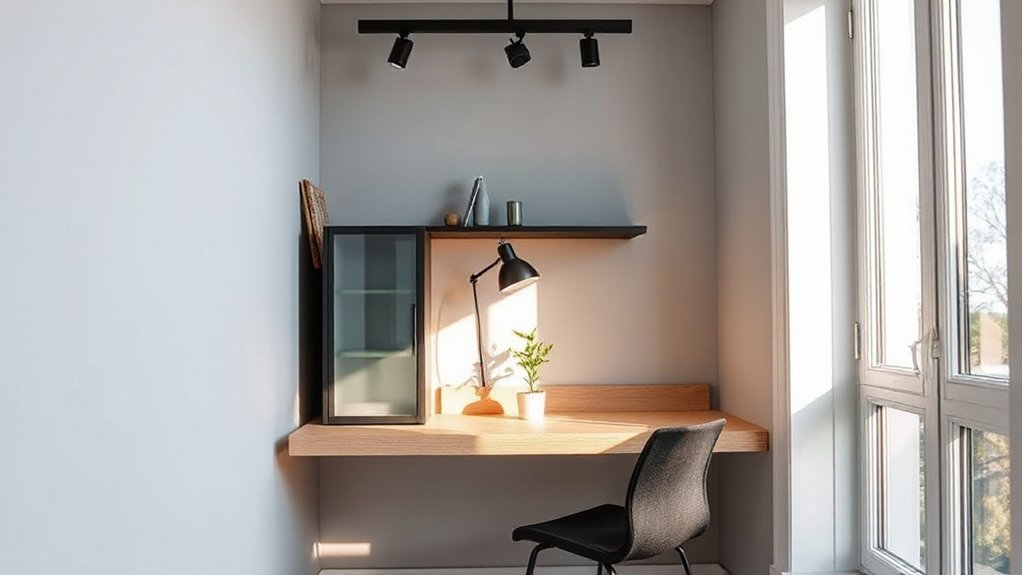
Wall-mounted storage frees floor space by lifting the workspace off the ground and onto the wall where it belongs. You’ll see a cleaner footprint as cabinets, racks, and pegboards tuck above your desk, not around it.
Use vertical height to your advantage: 72-inch wall-mounted storage units create ample room for files, printers, and supplies without crowding your chair.
Choose space saving shelves with adjustable shelves and hidden hardware to minimize visual clutter.
Install at eye level for quick access, then reserve lower rails for daily tools.
Keep gaps around the edges to prevent tip hazards and maintain air flow.
This approach reinforces scale: your desk stays roomy, cables stay managed, and the room feels taller, not tighter.
wall mounted storage supports a lean, focused workflow.
Flexible, Multitasking Furniture for Tiny Layouts
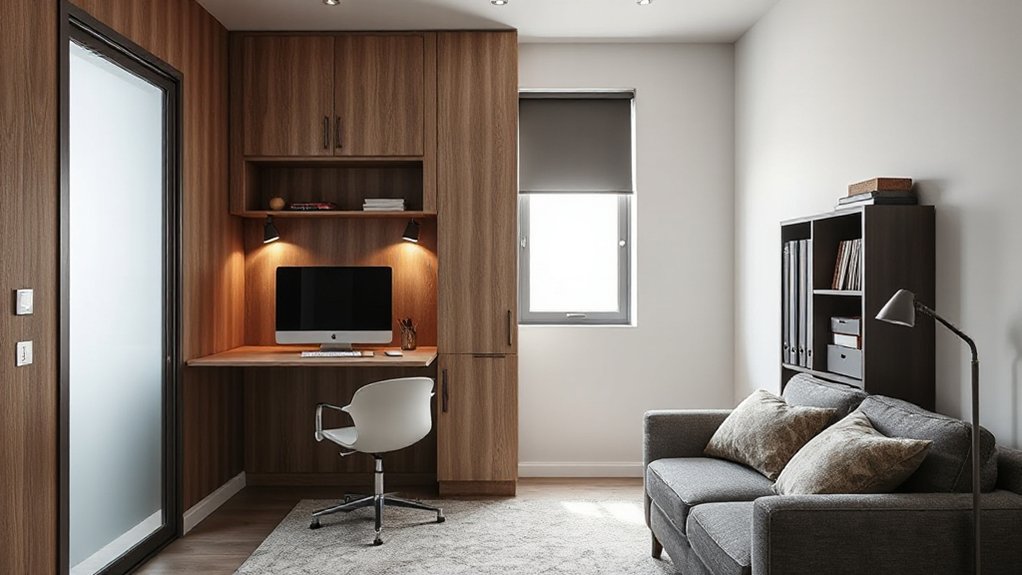
Flexible, multitasking furniture is essential in tiny layouts. You’ll maximize your footprint by selecting pieces that serve two roles, without crowding the room. Choose compact scales, stable mechanisms, and clean lines to keep the space breathable.
Favor pieces that tuck away or fold flat, so you never sacrifice floor area for function. Convertible beds and fold away desks merge sleeping and working zones without clutter, keeping pathways open.
Prioritize modular options you can reconfigure as needs shift, and test how each piece feels in real use. Aim for balanced proportions, so a single wall can host a workstation, storage, and an occasional guest bed without looking crowded.
- Convertible beds for overnight versatility
- Fold away desks that reveal extra surface
- Wall-mounted modules that reconfigure on demand
- Hidden storage within a compact footprint
Lighting That Visually Expands a Small Room
Brighten a small room with mirrors to reflect space and bounce light across every corner. You’ll feel the effect more with light color psychology—soft whites and cool neutrals keep ceilings looking higher and walls expansive.
Layer your lighting: ambient, task, and accents work together to enlarge the perceived footprint without adding clutter.
Brighten With Mirrors
Mirrors do more than reflect; they multiply light and expand space, making a cramped room feel instantly larger. You’ll notice the effect when you place a tall mirror opposite a window, doubling daylight without structural work. Use mirrored furniture to create focal points that read as deliberate design choices, not gimmicks.
Layer reflective decor with matte contrasts to prevent glare and keep scale grounded.
- Position a floor-length mirror beside your desk for a visual extension of height
- Choose a glass-taced console to reflect activity without crowding
- Lean a small, ornate mirror to add character while boosting light
- Pair metallic frames with soft fabrics to temper mirrors’ brightness
This approach keeps ceilings feel higher, walls lighter, and the space more productive.
Light Color Psychology
Light color isn’t just about mood; it’s a practical tool to make a small room feel open. You’ll pick whites and light neutrals with warm undertones to boost perception of ceiling height and wall depth without glare. Aim for even color distribution to avoid corner shadows, and test swatches at multiple times of day to confirm true tone.
Color moods guide your focus: a cool, bright shade can read as crisp and expansive, while a warmer white keeps the space welcoming. Shade psychology matters: lighter hues reflect more light, enhancing perceived space, whereas mid-tone walls ground the room and prevent it from feeling clinical.
Use consistent trim and minimal contrast for polish that reads larger and more cohesive.
Layered Lighting Strategies
Layered lighting is your fastest route to a visually larger room: combine ambient, task, and accent layers to erase shadows, brighten ceilings, and define zones without crowding walls.
In small spaces, ambient glow from ceiling or wall-wash fixtures sets a broad, even field, while task layering targets desks and work surfaces for clarity. Use dimmable options to shift mood and scale with your day.
Keep fixtures close to walls or ceiling to minimize bulk, and let light bounce off light-colored ceilings for extra height perception.
Layered lighting should feel cohesive, not cluttered, so choose sleek, low-profile pieces. Aim for proportional fixtures that complement your desk size and ceiling height.
- Ambient glow from wall-washes
- Task layering at the desk area
- Dimmable controls for flexibility
- Wall-mounted or recessed accents to save space
Color and Texture Tricks to Make a Tiny Office Feel Bigger
Light reflects space, so you’ll want bright walls and surfaces that bounce light around.
Monochrome textures soften edges and merge patterns for a seamless look that still reads tactile.
Layered material depth adds dimensional interest without crowding the scale, keeping your tiny office feeling open.
Light Reflects Space
Wondering how tiny offices feel bigger without costly renovations? You can trick the eye with light and texture. Use walls and ceilings that bounce natural light, pair reflective surfaces with matte accents to keep balance, and choose furniture scaled to the room’s footprint.
The goal is depth, not clutter, so lean into contrast and clean lines. Think textures that catch light without glare, like subtle linen or tweed, and finishes that mirror softly to extend the sense of space.
Place a mirror opposite a window to double daylight, but avoid overdoing it. Keep cables hidden and surfaces uncluttered to preserve flow.
- Reflective wall paneling opposite a window
- Light-colored desk with glossy top
- Large frameless mirror for depth
- Subtle, light textiles to soften glare
Monochrome Soften Textures
Monochrome palettes soften a tiny office by playing with value and texture, not by piling on color. You’ll notice how a single hue, varied in light and dark, creates depth without crowding the view.
Choose a subdued base and introduce soft textures to add tactile interest: matte walls, a satin desk, and plush, low-profile fabrics.
Scale remains king—opt for a compact desk with clean lines, a slim shelf, and minimal hardware to keep sightlines clear.
Incorporate accents in near-neutral tones to avoid visual noise, like a charcoal chair or warm gray rug.
The trick is contrast, not chaos: pair smooth surfaces with gentle knit textiles and micro-weaves to read as a refined, cohesive space.
This approach feels modern, timeless, and perfectly suited to small studios.
Layered Material Depth
You’ll push contrast with deliberate surface layering, pairing matte walls with glossy accents to sharpen depth. Introduce material contrast: a textural rug against smooth floor panels, and a stitched desk mat over a sleek surface. Balance scales so every layer reads as intentional, not clutter.
Use vertical surfaces to create rhythm, alternating wood, fabric, and metal in measured steps. Subtle shadows from varied finishes cue perception of room height, while edge detailing clarifies zones.
- Material contrast: pair matte and gloss finishes to build depth
- Surface layering: layer rug, desk, and wall textures for tactile richness
- Scale-aware accents: choose items that read larger than they are
- Strategic color pops: keep neutrals, add restrained focal hues
Real-Room Small-Space Setups for Inspiration
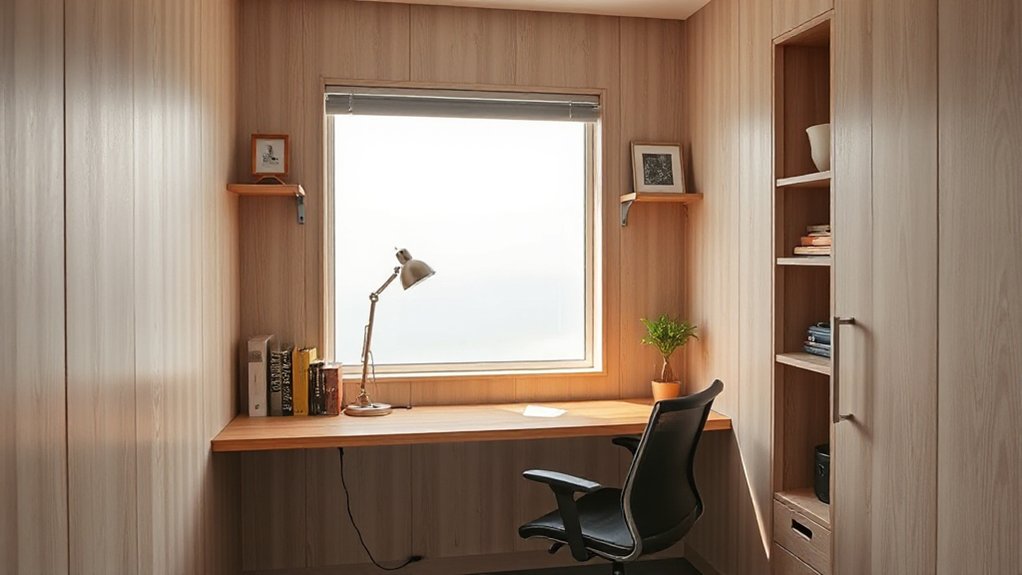
Small-space setups prove you don’t need square footage to feel spacious: clever zoning, multi-purpose furniture, and vertical storage stretch every inch without clutter.
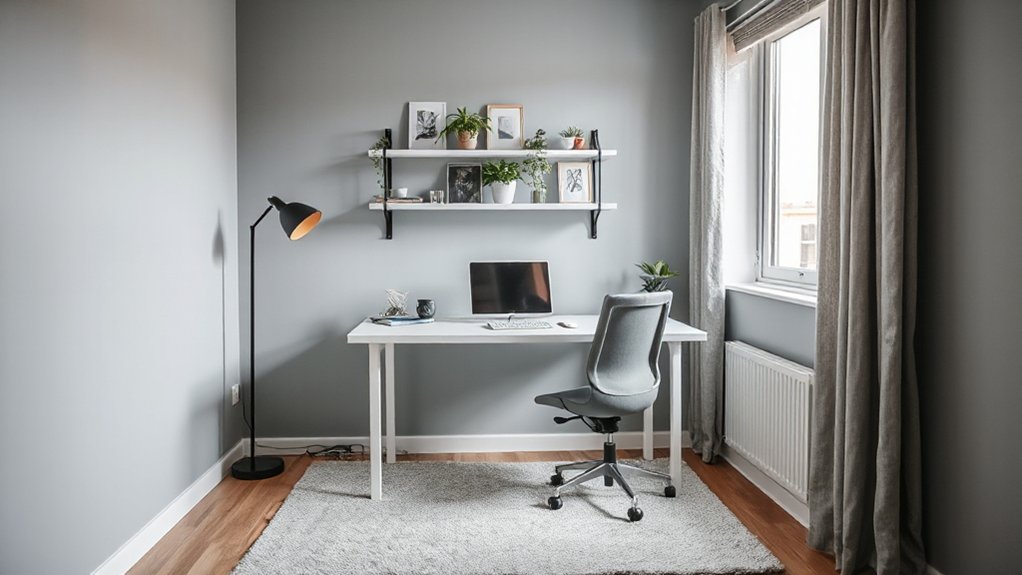
In real-room setups, you’ll see how a compact desk balances with a tall bookshelf, creating a pronounced work zone without crowding the room. Use wall-mounted shelves to keep floor space open, and choose a slim-profile chair that supports posture without dominating sight lines.
Scale matters: match accessories to desk height, monitor size, and room width to avoid visual junk. Add ergonomic accessories for comfort and decorative accents for personality without overloading surfaces.
Let natural light define zones, then anchor with a cohesive color trio and textured textiles. This approach keeps small rooms functional, stylish, and surprisingly expansive.
Budget Upgrades That Pay Off in a Small Office
When you’re optimizing a compact home office, smart upgrades pay off fast without overwhelming the space. You’ll gain function with careful, affordable choices that scale as you grow.
Start with ergonomic seating that supports posture during long sessions, then add soundproofing solutions to quiet distractions without bulk.
Choose compact storage to keep surfaces clear, and swap generic lamps for task lighting that concentrates beam where you work.
Use wall-mounted organizers to maximize desk real estate, and opt for multi-purpose furniture that folds or tucks away when not in use.
These practical moves deliver a cleaner, more focused room without a remodel.
- Ergonomic seating
- Soundproofing solutions
- Compact storage
- Multi-purpose furniture
Frequently Asked Questions
How Do I Measure My Space for a Perfect-Fit Setup?
Begin by measuring length, width, and height, including doors, windows, and clearance. Mark alcoves and path widths; note outlets. Then plan space planning and furniture selection around scale, ensuring proportional desk, chair, and storage fit your flow.
What Are Budget-Friendly Hidden Storage Ideas for Desks?
Hidden compartments help you hide clutter fast; grab budget-friendly, multi functional furniture that fits scales snugly. You’ll save space, stay stylish, and keep essentials accessible with clever compartments, sleek hidden drawers, and versatile desk designs.
Can Small Spaces Benefit From Standing Desk Options?
Yes, small spaces benefit from standing desk options, especially with ergonomic accessories and lighting enhancements to support posture and focus, while scale-aware frames and compact components keep the area tidy and trend-forward for daily use.
How to Manage Cables Without Creating Clutter?
Cable management, clutter reduction: you mount power strips, hide wires in channels, cinch cords with clips, and route under desk. You measure clearance, choose slim hubs, and keep cables parallel, neat, and scalable for future gear.
What Are Quick Color Tips to Visually Enlarge a Room?
Brighten and feel spacious by using cool neutrals and strategic color psychology; opt for lighter tones on walls and ceilings, plus an accent wall to anchor space, expanding perceived height. Use color psychology to guide your accent walls.
Conclusion
In a tiny room, your choices become your compass. You don’t shrink the space; you sharpen your method—compact desks, wall storage, and multitaskers that pull double duty. Light flows, color hums, textures layer, and what once felt claustrophobic now orients you toward intention. Your office isn’t limited by walls; it expands with clarity, scale, and smart upgrades. Small footprint, big impact—you design momentum, one purposeful detail at a time.