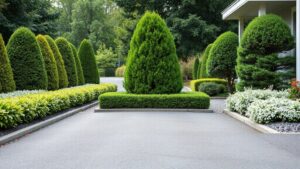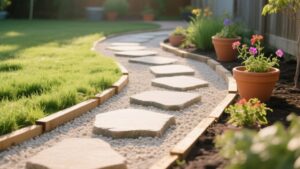
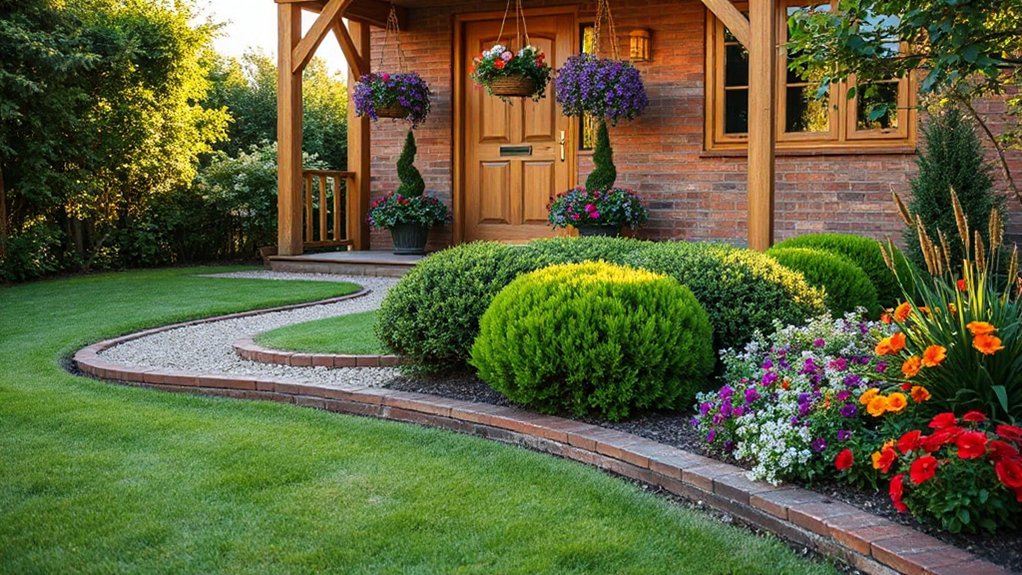
To boost curb appeal, define your goal and design a cohesive front-garden structure with an evergreen backbone, seasonal accents, and a unifying style. Assess sun, shade, soil, and drainage to select drought-tolerant, low-maintenance plants that maintain color year-round. Plan welcoming borders, smart pathways, durable edging, and layered lighting for safety and ambiance. Budget realistically and schedule maintenance to sustain structure and rhythm. If you keep exploring, you’ll uncover practical steps and visuals to implement this plan.
Define Your Curb-Appeal Goal
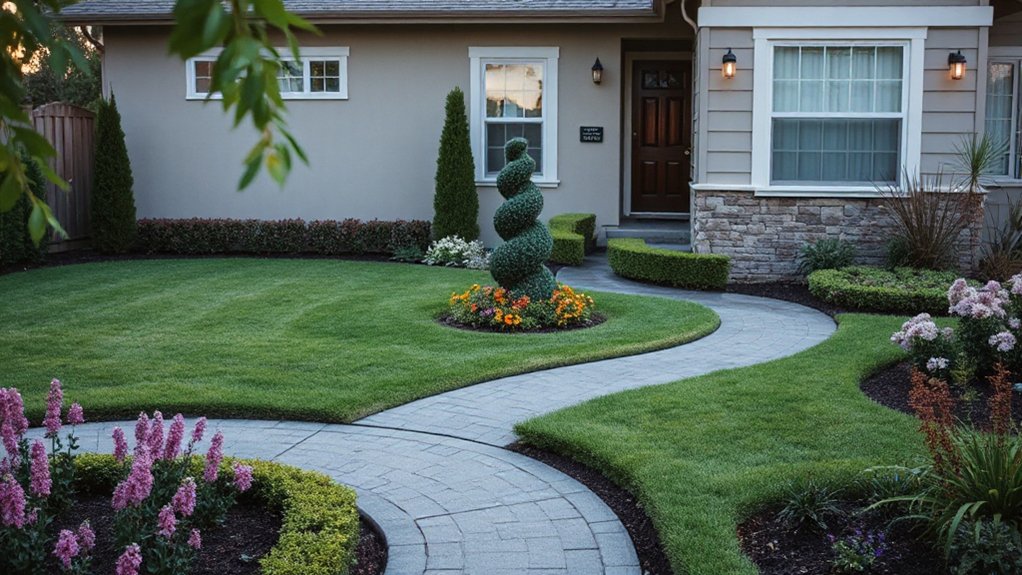
Start by articulating a specific objective for your front garden. You’ll define a curb-appeal target that translates into measurable design decisions.
Establish the visual hierarchy: a focal point, a supporting rhythm, and a quiet backdrop that won’t clash with the street.
Specify functional criteria, such as accessible circulation and low-maintenance planting, so you can evaluate options efficiently.
Quantify color temperature, texture contrast, and scale relationships to guide material choices.
Plan placement for garden furniture where movement remains intuitive and inviting, ensuring lines lead toward the entry.
Decide how outdoor art will punctuate the scene without overpowering it, using it as visual anchors at key sightlines.
Confirm durability requirements, installation methods, and seasonal maintenance to sustain the defined objective.
Assess Sun, Shade, Soil, and Drainage
To design a resilient front garden, you must assess sun, shade, soil, and drainage with precision: map sun paths across the site from dawn to dusk, note stubborn shade pockets, test soil texture and pH, and observe drainage patterns after a rain.
- Map sun exposure by terrace and curb line; record peak and steady shade zones for planting color.
- Test soil texture, pH, compaction, and moisture regimes to guide amendments and garden art placements.
- Observe drainage flow, pooling points, and runoff direction to select permeable substrates and plantings.
This data informs species choice, irrigation needs, and visual rhythm, ensuring durable structure, reliable growth, and cohesive planting color.
Set a Realistic Budget and Maintenance Plan
Set a realistic budget by outlining core materials, labor, and contingency, so you know what fits before you plant.
Plan ongoing maintenance with a simple schedule and cost map, ensuring long-term viability and visual consistency.
Track spending progress month by month to spot variances early and keep the design on target.
Set Realistic Budget
A realistic budget anchors your front garden project and prevents scope creep; establish clear costs upfront by itemizing materials, labor, and contingency.
Budget planning and cost estimation guide your decisions with precision, enabling you to compare suppliers and forecast cash flow. Start with a base cost for hardscape, plants, soil, and irrigation, then add installation and maintenance expectations.
Include a contingency of 10–15% for unforeseen issues like drainage or soil amendment. Use unit prices, not guesses, and document each line item. Track milestones to prevent overspending and reallocate funds as needed.
Visualize the plan with a schematic, color swatches, and a bill of quantities to sustain clarity. Regularly review against actuals and adjust quickly to preserve design integrity and timeline.
- Itemize all cost components
- Define contingency and review cadence
- Validate estimates with suppliers
Plan Ongoing Maintenance
Wondering how ongoing maintenance intersects with budget realism? You’ll create a maintenance calendar that pairs routine tasks with cost triangle limits: labor, materials, and contingency.
Start with seasonal checks—soil, mulch depth, irrigation efficiency—and assign repeat intervals and unit costs.
Visualize tasks as discrete blocks: pruning, weeding, edging, and debris removal, each with a budget line.
Plan for garden furniture upkeep, including fabric refresh, rust prevention, and seasonal cleaning, scheduling replacements before failure.
Incorporate wildlife habitats by budgeting native plant refreshes and habitat-safe tweaks, ensuring ongoing compatibility with local fauna.
Build a maintenance plan that aligns with your kerb appeal goals, not just initial aesthetics.
Document supplier lead times, warranty terms, and recycling options to minimize long‑term expenses while preserving structure and appeal.
Track Spending Progress
To track spending progress effectively, you’ll translate the maintenance plan into measurable, real-time budget checks. You’ll set clear caps for each category, monitor receipts, and compare forecast to actuals in a single dashboard. Visual cues alert overruns, while trend charts show seasonality in garden art purchases and lawn care needs.
Maintain a conservative contingency for unexpected fixes, and document every deviation with timestamps. This disciplined approach keeps kerb appeal sustainable and traceable.
- Track category allocations (garden art, lawn care) against monthly forecasts
- Log expenditures with dates, vendors, and itemized details
- Review variances quarterly, adjust future allocations and maintenance priorities
Choose a Unifying Style for Your Home
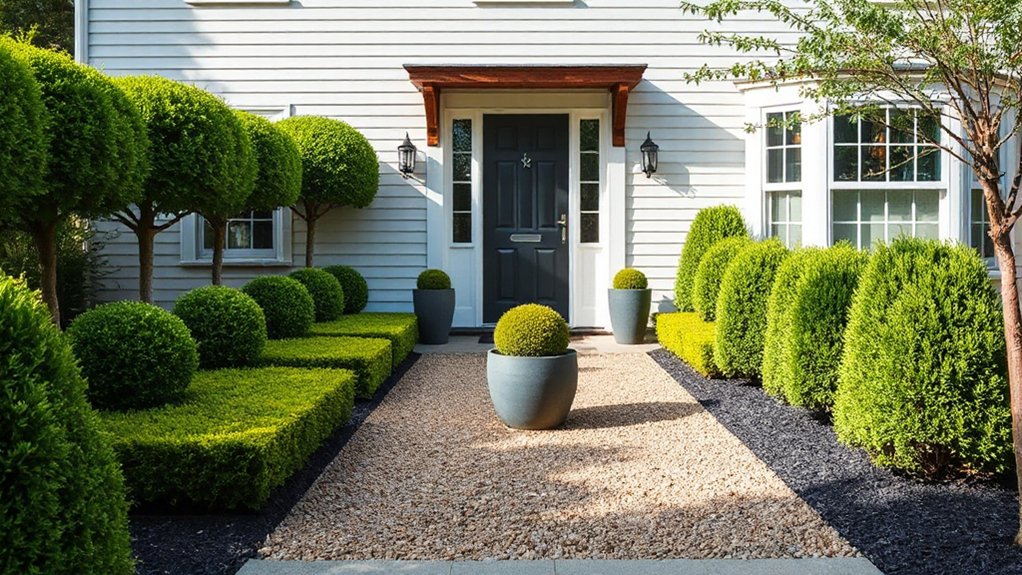
Unifying style anchors your front garden design by aligning elements like materials, color palette, and plant selection with your home’s architecture. Start by identifying a core visual language—modern, rustic, cottage, or traditional—to guide subsequent choices.
You’ll select materials with durable, cohesive textures that echo the façade, then pair a restrained palette to preserve legibility. Visual rhythm comes from repeat patterns, recurring plant forms, and proportioned massing that reflect the structure’s lines.
Integrate a focal feature—garden sculpture or a sculptural bench—that reinforces the chosen language without overpowering the landscape. Place decorative stepping stones to establish movement and a beam of light along paths, ensuring scale aligns with entry points.
Maintain clarity by documenting decision rationales, then execute in phases to preserve consistency.
Create Welcoming Borders With Smart Plant Selection
You can shape welcoming borders by selecting plants that perform across seasons, balancing color, texture, and form for consistent visual interest.
Consider a seasonal interest strategy that pairs bloom time with evergreen structure, so the border reads well year-round.
This approach aligns Smart Plant Selection with Welcoming Border Concepts to create a cohesive, low-maintenance display.
Smart Plant Selection
- Select a three-tier palette: evergreen spine, seasonal accents, and groundcovers.
- Pair foliage with architectural forms that echo garden furniture lines.
- Schedule maintenance tasks with seasonal cues to sustain crisp borders.
Welcoming Border Concepts
A welcoming border starts with a smart plant palette that signals hospitality from the curb: establish an evergreen spine for year-round structure, add seasonal accents that invite closer inspection, and ground the bed with low, durable cover plants.
You select a linear backbone of compact evergreens, then layer mid-height perennials for continuity and rhythm. Choose color-temporal gradations to glimpse navigate the border from curb to porch—never abrupt, always cohesive.
Space flowering specimens to frame focal elements without crowding, enabling clear sightlines to garden sculptures and entry points. Integrate flower arrangements as seasonal focal vignettes, formatted to be viewed from multiple angles.
Maintain texture through foliage variety and leaf shape. Monitor irrigation, drainage, and maintenance cycles to sustain a welcoming, low-maintenance border.
Seasonal Interest Strategy
Seasonal interest hinges on a deliberate plant selection that delivers year-round structure, color, and texture from multiple vantage points. You’ll build a border that reads correctly from curb, doorway, and street, using layered heights, persistent structure, and seasonal accents.
Focus on Seasonal bloom timing and foliage contrast to guide contrasts in shape, hue, and texture. Pair evergreen backbone with deciduous accents, then slot in plants that peak across seasons to maintain visual interest.
Use clumping grasses for motion, and flowering perennials for dramatic color shifts without continuous maintenance. Strategic repetition of color notes across segments reinforces cohesion and perceived density.
- Evergreen backbone with seasonal accents
- Repeating color motifs at eye level and curb line
- Varied bloom windows for continuous interest
Install Lightweight, Durable Edging That Lasts
Installing lightweight, durable edging is essential for a clean, long-lasting front garden. You select edging materials that balance strength, weight, and install ease, prioritizing a low profile that still defines borders clearly.
Choose profiles with a sharp, consistent edge for visual precision, ensuring the line remains straight through installation and after settling. Position backing or trenches to a uniform depth, then anchor with fasteners or soil to resist movement from foot traffic and soil moisture.
Material tolerances matter: rigid plastics or composite composites resist bending, while metal options should be pretreated to prevent corrosion. Maintain design consistency by aligning edging height with adjacent paths and planting beds.
Verify that progression between hardscape and soil are seamless, preventing trip hazards and erosion.
Add Seasonal Color With Smart Plant Choices
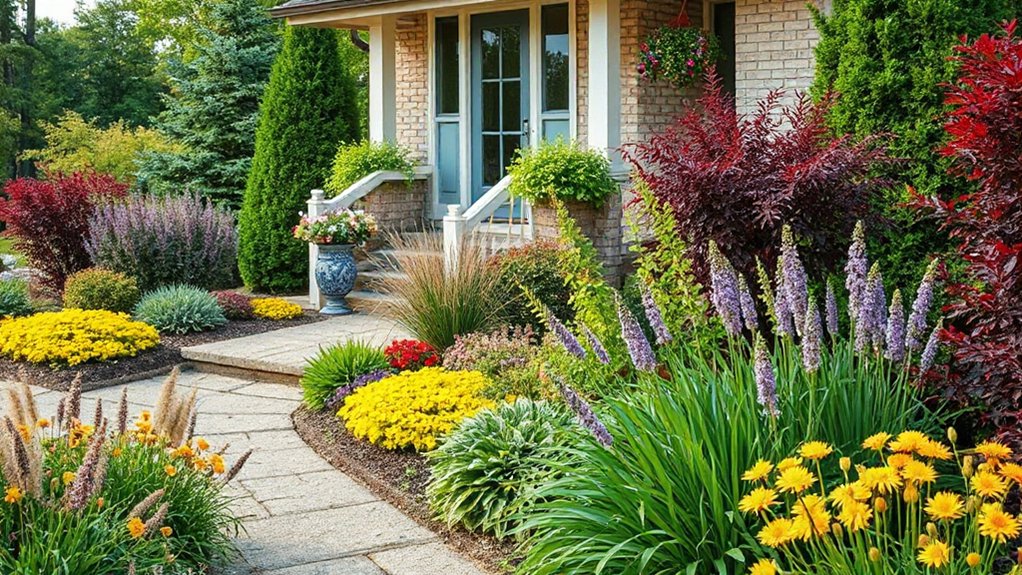
You’ll assemble a seasonal plant palette that keeps color through the year, using a mix of bloom times and foliage accents.
Choose year-round color options and textures that contrast with seasonal highlights, so interest remains even when flowers fade.
Expect clear, visual cues for placement and timing to align with sun, soil, and maintenance windows.
Seasonal Plant Palette
To create a dynamic seasonal plant palette, select species that deliver core color and texture across each key season while prioritizing bloom timing, foliage interest, and garden health. You’ll balance hue, saturation, and value using Color theory, ensuring contrasts for focal points and shifts.
Prioritize plant symbolism to convey mood seasonally, aligning stems, leaves, and flowers with intended garden messages. Choose taxa with staggered bloom windows, reliable drought tolerance, and compatible root structures to minimize maintenance.
Schedule staggered bloom sequences to maintain visual interest.
Pair foliage forms and textures for year-round structure.
Use color accents strategically to reinforce seasonal narrative.
This approach yields precise, visual clarity in the kerb appeal, avoiding excess, while maintaining scholarly rigor.
Year-Round Color Choices
How can you guarantee year-round color without sacrificing garden health? You achieve it through deliberate, data-driven selection and layering.
Begin with a palette that enforces color harmony across seasons, pairing cool and warm tones to maintain visual balance as crops peak and recede.
Choose plant diversity with staggered bloom windows: early spring bulbs, mid-season perennials, late-season ornamental grasses, and subtle winter interest.
Employ structural evergreens as a constant backbone to support color shifts.
Prioritize multi-season textures—foliage, seed heads, and berries—to carry color when flowers fade.
Use succession planting and tight spacing based on mature size to prevent gaps and crowding.
Monitor soil, sun exposure, and drainage to sustain robustness.
This approach yields consistent, varied color without compromising health.
Seasonal Foliage Interest
- Color contrast
- Texture variety
- Seasonal shifts
Build a Year-Round Backbone With Evergreen Structure
Evergreen backbone shapes your garden year-round, providing structure, color, and continuity when lilacs fade and annuals shift. You select durable evergreen species with layered heights to create a stacked silhouette that guides sightlines from curb to entry.
Prioritize plants with clean, dense foliage for year-long mass and seasonal texture; dwarf conifers, hollies, and broadleaf evergreens work well in mixed borders. Maintain a disciplined spacing plan so the backbone reads as a single continuum rather than a collection.
Pair this structure with deliberate garden art and strategically placed outdoor furniture to reinforce rhythm without crowding. Prune to preserve shape, minimize voids, and ensure usable pockets.
Use mulch, edging, and irrigation zoning to sustain evergreen health and visual coherence year after year.
Introduce Focal Points: A Statement Plant or Sculpture
A focal point anchors the front garden by drawing the eye and guiding entry perception. You establish a visual hierarchy with a single, intentional focus, then support it through scale, texture, and color contrast.
Choose a statement plant or a refined artistic sculpture that complements the house façade while remaining legible from the curb. Maintain proportion so the focal point guarantees rather than dominates, and ensure seasonal interest through evergreen structure or adaptable planting.
Consider lighting to enhance silhouette after dusk, and use clean lines to preserve a restrained composition. Focal points, if executed precisely, elevate kerb appeal by creating memorable entry cues.
- Statement plant options with seasonal interest
- Artistic sculptures: material, scale, and lighting
- Placement, clearance, and sightline optimization
Plan Inviting, Safe, Accessible Paths
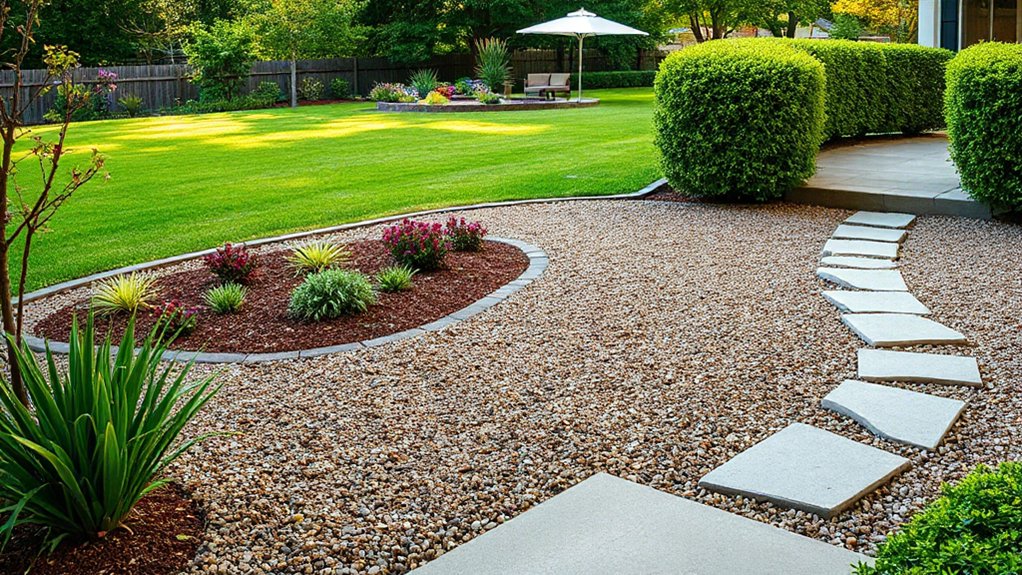
To plan inviting, safe, accessible paths, start with smooth, non-slip Safe Step Surfaces that support steady footing in all weather.
Map a Welcoming Entrance Path that clearly guides visitors from curb to door with level progressions and obvious contrast.
Design an Accessible Route that avoids stairs when possible, uses gentle slopes, and maintains clear width and turning space for wheelchairs or strollers.
Safe Step Surfaces
When designing safe step surfaces, prioritize even, non-slip materials and consistent tread depth to reduce trip hazards and weather-related slips. You’ll craft a predictable cadence for every ascent, with clearly defined edges and durable finishes that endure frost, rain, and wear.
Use contrast edging to cue steps visually, then integrate garden sculptures and decorative borders as subtle wayfinding accents without compromising grip. Pay attention to drainage to prevent puddling, and maintain uniform riser heights to minimize missteps.
For maintenance, select resistant coatings and quantify replacement intervals.
- Specify non-slip textures and slip-resistant coatings for each tread
- Align step heights, widths, and edge visibility with practical thresholds
- Pair surface materials with decorative borders and sculptural markers for clarity
Welcoming Entrance Paths
Use a continuous, firm surface with slip resistance and consistent width to accommodate wheelchairs and strollers. Integrate gentle turning radii and clearly demarcated crossings at driveways, employing contrasting textures to cue progression without visual clutter.
Outdoor lighting should be incorporated along the path at regular intervals for en-route visibility, reducing shadowed hazards.
Add decorative accents—stone alignments, timber edging, or low-profile planters—to enhance definition without obstructing access.
Keep sightlines open, avoid obstacles, and test gradient shifts under dim conditions for dependable nighttime reach.
Accessible Route Design
Accessible routes guide visitors from the street to the door with a clear, firm path that prioritizes safety and ease of use. You design Accessible pathways with precise dimensions, firm materials, and slip-resistant finishes to minimize tripping and wheel-slip risks.
The emphasis is on continuous, unobstructed travel from curb to entry, every surface level and well delineated. You implement tactile cues, consistent lighting, and clear edge definition to assist all users, including wheelchair users.
Key considerations include gradient control, turning radii, and surface drainage to sustain traction in wet conditions. This approach supports wheelchair friendly designs while preserving visual appeal.
- Materials, gradients, and crossings that meet accessibility standards
- Clear, durable edge delineation and lighting
- Consistent surface performance for all weather conditions
Layer Lighting for Safety and Ambiance
Layering lighting for safety and ambiance starts with a clear hierarchy: path lights guide steps, step lights illuminate edges, and downlights reveal foliage without glare.
You’ll position path lights along walkways at NTE 1.5 meter spacing for consistent visibility, preventing trip hazards.
Step lights should sit flush with risers, delivering low-level guidance without blasting glare into eyes.
Downlights mounted high enough to wash trees and shrubs create depth, yet avoid hot spots on leaves.
Use warm color temperature (2700–3000K) to preserve color fidelity of garden furniture and outdoor art.
Wire runs must be concealed, with weatherproof fittings rated for exterior use and IP65 or higher.
Control zones by area: entrance, seating, and sculpture focal points, ensuring progression feels intentional rather than accidental.
Prioritize uniform beam angles and avoid overlapping hot spots.
Mulch and Nourish Soil for Long-Term Health
Mulching and nourishing soil sets the foundation for long-term plant vigor by moderating moisture, improving structure, and feeding soil life. You’ll enhance soil fertility by selecting appropriate organic mulches, adjusting particle size, and timing applications to seasonal needs.
Apply mulch to a uniform depth, preventing soil contact with stems to minimize rot. In parallel, nourish the rooting zone with a tailored schedule—incorporate slow-release nutrients and organic amendments to sustain microbial activity and nutrient availability.
Monitor soil texture, moisture, and pH, adjusting mulching techniques as your beds mature and plant demands shift. Precision layering and consistent depth stabilize temperatures and suppress weeds, while preserving beneficial soil structure for roots to explore.
- Mulching techniques
- Soil fertility management
- Layering depth and timing
Fix Grading, Runoff, and Drainage to Boost Curb Appeal
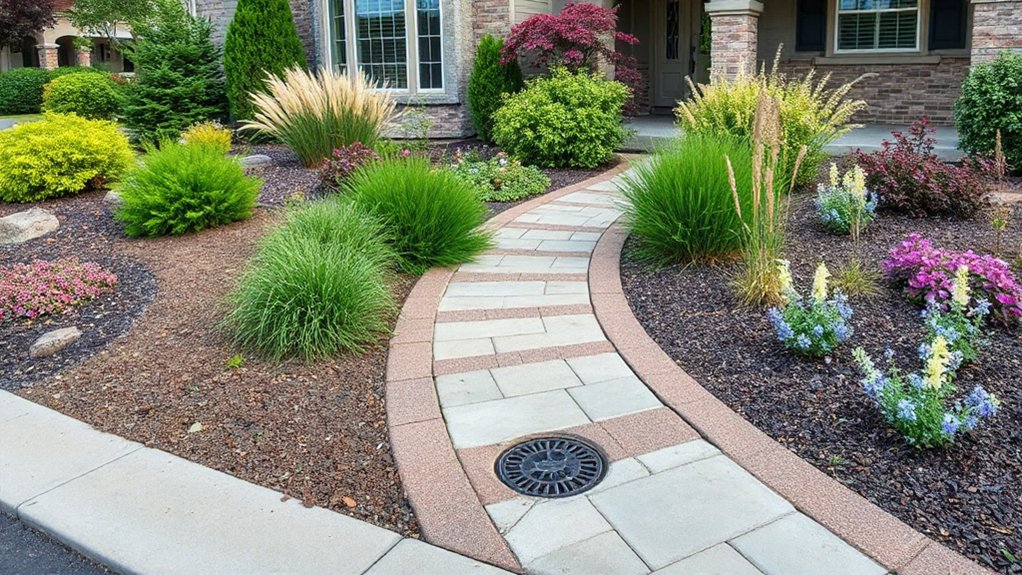
Fixing grading, runoff, and drainage is essential for curb appeal because properly shaped slopes direct water away from foundations, prevent erosion, and keep walkways and entrances visually crisp.
You assess slope angles, check for pooling, and map runoff paths to anticipate concentrated flow. Address grading issues by regrading beds to create gentle, continuous swales that align with the driveway and entry steps.
Implement drainage solutions such as discrete trench drains, perforated outlet pipes, and surface channels that convey water to landscaped bioswales or underdrains without staining masonry. Guarantee downspouts terminate well beyond foundations and connect to at-grade outlets.
Verify soil compaction, test for settlement, and monitor after rain events. Document changes with a simple plan to maintain long-term curb appeal and minimize erosion risks.
Embrace Drought-Tolerant, Low-Maintenance Options
With water management stabilized, you can favor drought-tolerant, low-maintenance plantings that retain curb appeal without constant upkeep. In xeriscape gardens, select textures and silhouettes that minimize irrigation needs while maximizing visual impact.
Prioritize native and adapted species, and group drought resistant shrubs to form cohesive focal points and edges. Use mulch to reduce evaporation, and incorporate permeable groundcovers to maintain soil health and suppress weeds.
Plan for seasonal color with hardy, low-water perennials that tolerate heat without frequent replanting. Construct a layered scheme: tall backbone specimens, mid-height fillers, and groundcovers that finish borders cleanly.
This approach delivers consistent structure, minimal maintenance, and long-lasting curb appeal.
- xeriscape gardens features
- drought resistant shrubs choices
- low-water mulch and groundcovers
Make Small-Fronts Sing: Clever Plantings for Postage-Stamp Fronts
Small front gardens can punch above their weight with precise plant choices and smart layout tricks. You shape a postage-stamp plot with vertical layers: upright grasses, compact shrubs, and low groundcovers to minimize bare soil.
Choose columnar or clumping varieties to maximize sightlines, and group plants in threes for rhythm. Pair evergreen structure with seasonal color to sustain curb presence year-round.
Use narrow, deep containers to create focal vignettes without crowding; rotate flowering stems to sustain flower arrangements through succession. Keep textures varied—serrated leaves next to smooth, glossy surfaces—so light and shadow continually sculpt the façade.
Introduce subtle outdoor art accents at eye level and integrate micro-ornamentation that doesn’t overpower plants. Your goal is a cohesive, legible front that reads as intentional architecture.
Follow a Seasonal Maintenance Calendar
A seasonal maintenance calendar keeps your front garden looking intentional year-round. By aligning tasks with seasonal cues, you minimize guesswork and maximize plant performance. You’ll track prune windows, fertilization dates, and mulching rhythms, ensuring soil health and steady growth.
Visual checks for Seasonal blooms guide you to remove spent flowers and promote next waves of color, while irrigation adjustments prevent drought stress. Record-keeping clarifies performance, supports budgeting, and reduces last-minute scrambles.
Use a simple matrix to mark tasks by month, priority, and completion status, then refine for next year. Embrace consistency, not intensity, and you’ll sustain structure, texture, and cohesion through shifting weather.
- Schedule pruning, feeding, and mulch renewal
- Note bloom cycles and sculpture maintenance
- Log irrigation and seasonal sculpture visibility checks
Implement Quick-Win Upgrades That Dramatically Boost Curb Appeal
To boost curb appeal quickly, target high-visibility upgrades that deliver instant impact. You’ll prioritize elements that strangers notice first: the front door, fascia, and entry path.
Install a bold, weatherproof door color or a high-contrast trim to sharpen silhouette from the street. Refresh lighting with LED sconces and a cold-weather rated fixture for year-round drama.
Replace neglected signage or house numbers with oversized, legible, stainless options. Introduce garden art at focal points—sculptural pieces or vertical sculptures that cast defined shadows at dusk.
Add outdoor furniture strategically: a compact bench or bistro set to anchor the seating plane without crowding. Ensure clean lines, uniform materials, and minimal clutter to preserve a crisp, curated exterior.
Frequently Asked Questions
How Can I Measure Curb-Appeal Impact Before Planting?
You can measure curb-appeal impact by baseline surveying: track soil testing results and mock-up plantings, then compare after integrating landscape lighting; monitor color, texture, and shadows at key times, quantifying improvements in perceived depth, health, and vibrancy.
Which Plants Require the Least Maintenance Year-Round?
Like a seasoned gardener’s ledger, you choose low maintenance shrubs and drought tolerant grasses, minimizing care. You’ll plant smartly, monitor soil, and prune lightly, keeping beauty intact year-round, and you’ll enjoy resilience with dependable, low-effort performance.
What Are Cost-Effective, Quick-Win Edging Ideas?
Install low-cost edging with landscape lighting along the border, and spread decorative mulch to define beds; this quick, budget-friendly approach reduces maintenance, enhances contrast, and visually guides the eye from curb to entry.
How Do I Choose Safe, Accessible Path Materials?
Start by evaluating slip resistance and edge stability; you’ll pick safe, accessible path materials. You’ll consider lighting options and fencing styles to guide sightlines, reduce glare, and improve visibility—opt for low-slip pavers, textured concrete, and compliant railings.
Which Seasonal Tasks Maximize Year-Round Curb Appeal?
You maximize year‑round curb appeal by winterizing beds, spring pruning, summer irrigation, and autumn cleanup, while year-round you install garden lighting and rotate decorative accessories for visual cues and consistent focal points.
Conclusion
You’ve mapped goals, measured sun and drainage, and chosen a unifying style. With smart plant selection and drought-tolerant options, your front yard becomes a cohesive, low-fuss display rather than a scattered patchwork. Stick to a seasonal maintenance calendar and deploy quick-win upgrades to maximize impact now. Think of curb appeal as a hardware project for the eyes—precision, planning, and durability. Finish strong: your home’s first impression will be a sharp, lasting beacon, and you’ll sleep easy knowing you nailed it. Remember, progress beats perfection.