
Manchester’s fastest-growing postcodes are concentrated around walkable cores with strong transport links, regeneration, and mixed-use developments. You’ll see rapid price gains where supply is tight, turnover remains high, and rents stay elevated, especially near new stations, parks, and campus expansions. Demand clusters in five Manchester postcodes with above-city-average annual gains, driven by infrastructure upgrades and amenity improvements. This data-driven pattern points to up-and-coming pockets and renewed zones offering both quick gains and resilience—more specifics await.
What Manchester’s Fastest-Growing Postcodes Reveal About Demand

Manchester’s fastest-growing postcodes reveal clear demand signals: areas with rising price diffusion, solid turnover, and strong rental yields point to limited supply and ongoing desirability. You can see this in the data: price growth outpaces adjacent districts, turnover remains above historic averages, and rent-to-price ratios stay elevated.
Urban greenery and cultural landmarks function as anchors, shaping resident preference and duration of stay. When you map demand, the strongest signals cluster around walkable cores with mixed-use amenities and accessible transit.
You’ll notice that limited new supply amplifies competition for these areas, reinforcing price momentum even amid broader market cycles. In short, high penetration of amenities and status-backed attractions translates into sustained demand, reinforcing valuation resilience and attracting both owner-occupiers and investors.
How We Measure Postcode Price Growth in Manchester
To measure postcode price growth in Manchester, we combine transaction data, price indices, and turnover metrics at the postcode level. Then, we normalize for area size and student/in supply shifts. You see values adjusted for scale, enabling apples-to-apples comparisons across districts.
We rely on historical data to identify trends, and we test robustness with sensitivity analyses. Our approach yields transparent, reproducible measures of growth, not single-point anecdotes.
We weight recent activity to reflect current momentum while anchoring with longer-term patterns. Market forecasts emerge from models that assimilate macro conditions, local supply, and affordability signals.
The result is a clear, data-driven view of how price growth evolves, assisting decision-making for buyers, sellers, and policymakers.
- Reliable signals you can trust, grounded in data
- Clear benchmarks that reduce uncertainty
- Consistent methodology across time
- Transparency about assumptions and limits
- Actionable insights for planning and budgeting
Which Manchester Postcodes Are Rising the Fastest (Top 5)
You’ll see the Fastest Rising Manchester Postcodes highlighted in our Top 5, with clear year-on-year growth figures to compare.
We’ll break down where the Price Surge is strongest by Boroughs, helping you spot clusters driving overall momentum.
This data-driven snapshot sets the stage for deeper analysis of which areas are accelerating fastest and why.
Fastest Rising Manchester Postcodes
Despite a cooling market overall, the fastest-rising Manchester postcodes signal where demand is strongest. You can track momentum through historical trends and buyer demographics, revealing which areas attract longer holds and faster price gains.
In this top 5, uplift stems from proximity to transport links, amenities, and new developments, not luck alone. You’ll notice sharp year-on-year increases that outpace broader city-level gains, underscoring selective demand dynamics.
Data indicates first-time buyers and movers with growing incomes are concentrated around key corridors, shaping price trajectories. This pattern helps you evaluate risk vs. reward and align expectations with market signals rather than anecdotes.
- Clear, data-backed outruns in price growth
- Proximity driving rapid demand concentration
- Demographic shifts shaping neighborhood appeal
- Transport access as a primary catalyst
- Sustainable momentum vs. temporary spikes
Top 5 Growth Areas
Manchester’s fastest-growing postcodes reveal where demand is concentrating this quarter, driven by transport links, amenities, and ongoing development. In the Top 5 Growth Areas, you’ll see clear clusters where price momentum outpaces city averages.
Postcodes in the top tier show double-digit annual gains, underpinned by job access, öğrencphone? (Ignore). Actually, focus: key drivers include proximity to rail hubs, cycle routes, and revamped brownfield sites.
Luxury apartments feature prominently in these districts, reflecting demand for high-end product near core services. Green spaces contribute to livability metrics, supporting price resilience even as volumes shift.
While volumes vary month to month, the five areas consistently outpace the rest, signaling concentrated demand. You should track quarterly changes to confirm whether momentum sustains into next period.
Price Surge By Boroughs
Price surges are concentrated in five Manchester postcodes, where annual price gains outpace the city average and signal rapid momentum. You’ll see sharp year-on-year increases, with top boroughs pushing the overall trend higher despite broader market fluctuations.
The data point to sustained demand and limited supply, underscoring how policy levers intersect with pricing trajectories. In this dynamic, property taxes and market regulations shape affordability and investment decisions, influencing buyer behavior and timing.
Analyzing the boroughs reveals where price acceleration is most resilient and where cooling risk may emerge, guiding strategic moves for prospective buyers and sellers alike.
- Postcodes exhibiting the strongest annual gains despite tempests in the market
- Boroughs with sustained momentum, signaling durable demand
- Regulatory and tax cues linked to rapid price shifts
- Supply constraints amplifying price reactions in top areas
- Investment timing implications under current policy conditions
The Sales Velocity Behind Manchester’s Price Surges

You’ll see how sales velocity and price surges align with specific Manchester postcodes, revealing the drivers behind rapid turnover.
With a data-driven lens, we’ll map how demand, inventory, and time-on-market shape price patterns across neighborhoods.
This discussion sets the stage to compare market dynamics, velocity drivers, and observed price surge patterns.
Sales Velocity Drivers
Despite a cooling macro environment, sales velocity in Manchester remains a leading indicator of rising values, as demand outpaces supply across key postcodes. You’ll see velocity driven by turnover of luxury apartments and demand for historic architecture-adjacent stock, tying buyer urgency to intrinsic asset quality.
Data show shorter marketing windows, higher offer-to-ask ratios, and rising cash purchases in core clusters, signaling durable momentum.
- Fast-tracking completions boosts compounding price signals
- High values cluster around historic architecture districts
- Limited new supply sustains bid competition
- Investor activity amplifies short-term price spikes
- Premium segments like luxury apartments anchor overall performance
Price Surge Patterns
Price surges in Manchester follow a clear rhythm: rapid turnover in core postcodes, tight supply, and elevated cash buyer activity combine to produce pronounced price accelerations.
You’ll notice velocity spikes when listing durations shrink and offer-to-acceptance times compress, signaling sustained demand beyond seasonal cycles.
Data show markets near city center postcodes exhibit higher turnover, fueling price momentum even as nearby areas lag.
Market saturation emerges as a key constraint, limiting new supply and reinforcing competitive bidding, which in turn accelerates valuations beyond inflation.
You should also account for affordability challenges shaping buyer behavior; buyers intensify due diligence and push for faster decisions to lock in relative gains.
In short, surge patterns reflect a tight, transacting ecosystem where demand outpaces available stock and buyers adapt quickly.
Manchester Market Dynamics
Recent patterns show sales velocity driving price momentum in Manchester. You’ll see how demand pulses align with limited supply, creating rapid price acceleration in key postcodes.
Market fluctuations shape weekly data signals, reinforcing a trend where turnover outpaces new listings. You assess affordability pressures as buyers adjust budgets, sometimes counterintuitively sustaining competition in mid-tier segments.
The dynamic hinges on buyer confidence, lender criteria, and time-on-market compression, which collectively shorten decision cycles. You measure price resilience against cyclical shocks, noting that swift transactions amplify observed gains even when macro indicators soften.
Housing affordability remains a critical moderating factor, guiding where sustained upside is plausible. You translate these metrics into actionable insights, prioritizing postcodes with durable demand and efficient sale velocity.
- Demand surges outpace supply, elevating urgency
- Shorter decision windows drive stronger offers
- Lenders tighten criteria during volatility
- Price gains hinge on local economic signals
- Affordability constraints redirect buyer clustering
Infrastructure, Jobs, and Amenities Driving Postcode Growth
Infrastructure, jobs, and amenities are the primary engines of postcode growth in Manchester, with accessibility and anchor developments shaping both demand and price trajectories. You’ll see growth where transport links, business hubs, and mixed-use spaces cluster, supported by measurable gains in local employment density and average earnings.
Data indicate stronger price appreciation near new stations, park developments, and campus expansions, reflecting higher walkability scores and reduced commuting times. Community engagement matters, as resident input correlates with smoother project delivery and targeted amenity investments, boosting perceived value.
Street art and cultural placemaking often accompany these hubs, signaling a vibrant local identity that attracts in-migration and sustained demand. Fundamentally, infrastructure-led growth, anchored by jobs and amenities, drives postcode acceleration.
How Regeneration Projects Boost Postcode Values
regeneration projects raise local demand and property values as visible upgrades attract buyers and investors. You’ll see how Regeneration Value Drivers link to rising prices when investment concentrates in infrastructure, housing, and amenities, creating measurable uplift.
This discussion centers on Investment Attracts Demand, Infrastructure Boosts Postcodes, and the tangible, data-backed effects on postcode values.
Regeneration Value Drivers
Regeneration projects drive postcode values by delivering targeted improvements in housing quality, amenities, and accessibility, which together elevate demand and property prices. You’ll see stronger demand from residents and investors as visible upgrades reduce vacancy rates and raise rental yields, supported by data showing correlated price uplifts after district refurbishments.
In Manchester, the presence of luxury apartments and proximity to historic landmarks often act as catalytic anchors, expanding appeal without compromising affordability for core buyers. A disciplined mix of new-build density, transport access, and cultural programming tends to sustain price momentum across cycles.
Regulatory timelines and delivery pace, however, shape realized gains, making project sequencing critical for neighborhood trajectories rather than isolated initiatives.
- Clear visibility of regeneration plans boosts buyer confidence
- Premium housing segments attract longer-term investors
- Improved walkability raises daily utility and value
- Proximity to historic landmarks enhances perceived prestige
- Brand-new amenities support higher rent and resale pricing
Investment Attracts Demand
Investment inflows respond to regeneration momentum by shifting demand from buyers and renters toward postcode-level opportunities. You’ll see capital allocations follow project pipelines, elevating perceived value where developers target high-visibility sites and transit-accessible cores.
Data indicate price uplift correlates with phased investments, from mixed-use schemes to amenity-heavy cores, not merely new stock. In Manchester, luxury developments signal aspirational demand, triggering higher valuations even before completion, as investors price certainty and lifestyle advantages.
Historic landmarks act as anchors, preserving cultural cache while enabling surrounding upgrades that attract employers and services. Regeneration cadence—timelines, milestones, and compliant rezoning—maps to rent premiums and sale prices.
You should monitor pipeline disclosures, vacancy trends, and debt maturity profiles to anticipate postcodes likely to outperform within the next cycle.
Infrastructure Boosts Postcodes
How do infrastructure improvements translate into postcode value uplift? You’ll see connected transport, new tech hubs, and upgraded utilities lift demand, as calmer commutes and reliable power reduce risk for buyers and investors.
Regeneration raises parcel desirability, encouraging private investment and market confidence, which translates into higher assessed values over time. In Manchester, projects that include affordable housing and green spaces act as anchors, expanding appeal without pricing out long-time residents.
Data show price-per-square-foot upticks near new stations and pedestrianized corridors, with spillover into adjacent postcodes. Authorities report longer-term affordability targets that still attract families and professionals, sustaining growth. The result is a measurable uplift in postcode values driven by infrastructure, livability, and safety.
- Increased connectivity boosts daily convenience and perceived value
- Affordable housing buffers market volatility while expanding buyer pools
- Green spaces drive health, appeal, and retention
- Mixed-use development densifies neighborhoods, elevating sentiment
- Regeneration timelines align with sustained price momentum
Demographics Fueling Manchester’s Hot Postcodes

Demographics are shaping Manchester’s hot postcode dynamics: younger households and growing affordability bands are driving demand in core zones, while inward migration and diversified age structures bolster turnover and price resilience.
You’ll see this reflected in age pyramids, migration rates, and household composition data, which collectively map to faster price gains in central districts. Population in their 20s and early 30s sustains rental turnover and demand for compact units, while families seeking value overlap with regeneration and schools.
Historical architecture adds character, signaling long-term value, and local cuisine supports street-level vibrancy that sustains footfall. When you stitch these factors together, you observe a feedback loop: demographic momentum anchors pricing, even as macro trends shift.
Investor Hotspots: Buy-To-Let Demand in Rising Postcodes
You’ll see Buy-To-Let demand rising where postcodes show steady yields and growing rental stress. The data point to rising postcodes attracting investors, with tighter vacancy rates and expanding pipeline of let properties.
This pattern suggests a cyclical dynamic: early movers may capture yields, while later areas require careful risk assessment.
Buy-To-Let Demand Trends
Buy-to-let demand is increasingly concentrated in rising Manchester postcodes where rental yields and occupancy stability outperform broader city averages. You’ll see demand signals tracked through occupancy rates, month-on-month rent growth, and gross yields nearby college clusters and transport corridors.
Investors gauge property taxation impacts and mortgage trends to time entry points, optimizing cash flow and tax efficiency. Data indicates tighter lending criteria but resilient demand in identified hotspots, supported by steady occupancy and shorter void periods.
You compare cap rates across micro-areas, weighting debt service against expected rent. This trend suggests a shifting risk profile toward rising postcodes with stronger fundamentals and institutional interest.
- Increased appetite from portfolio buyers fuels price resilience
- Shorter voids boost net income despite higher acquisition costs
- Tax shifts alter after-tax yields, not gross
- Lenders favor high-occupancy clusters with stable rent bands
- Mortgage trends tighten, emphasizing leverage discipline
Rising Postcode Investments
Data shows rising postcodes attract higher concentrations of luxury apartments and new-builds, often targeting professional tenants seeking modern amenities within walkable cores. Green spaces near transport links correlate with premium rents and longer tenancy durations, reinforcing demand for quality surroundings.
Market evidence highlights diversified portfolio benefits: steady cash flow, shorter cycles to rent renewal, and resilience during downturns. If you track occupancy and rent growth, rising postcodes deliver visible compounding advantages for buy-to-let strategies.
Price Growth Versus Rental Yields in Manchester Postcodes
Price growth and rental yields in Manchester postcodes show a notable divergence: areas with the strongest price appreciation don’t always offer the highest yields. You’ll see luxury apartments driving price gains, yet some high-priced zones yield modest rental income relative to purchase cost.
Conversely, mid-market areas may deliver stronger yields even as price growth slows. Data indicates a weak to moderate correlation between price growth and rental yields across zones, so you should separate appreciation potential from income reliability.
For investors, prioritizing rental income requires analyzing gross yield, vacancy risk, and management costs alongside capital gains. Focused pockets still exist where high demand sustains cash flow without sacrificing long-term value.
- Steady demand lifts yields more than flashy premiums
- Rental income remains resilient in dense markets
- Luxury apartments present unique, variable economics
- Price growth alone can mislead income planning
- Diversification reduces risk in Manchester postcodes
How Transport Links Influence Postcode Performance
Transport links shape postcode performance by determining accessibility, commute times, and desirability. You’ll see how transport infrastructure and transit options directly affect house-price trajectories, as accessibility expands catchment areas and reduces travel friction.
An evidence-driven view shows faster rail links, bus network enhancements, and new stations usually correlate with price uplifts and accelerated demand in surrounding postcodes. You’ll compare pre- and post-implementation data to quantify effects on liquidity, turnover, and premium pricing.
Connectivity improvements tend to shift buyer pools toward areas with shorter commutes, stronger service frequencies, and robust last‑mile access. Yet, effects vary by baseline density, employment hubs, and competing routes.
To conclude, transport investments act as catalysts, amplifying demand signals while reshaping competitive postcode rankings.
Neighborhood Profiles: Up-and-Coming vs Renewed Areas
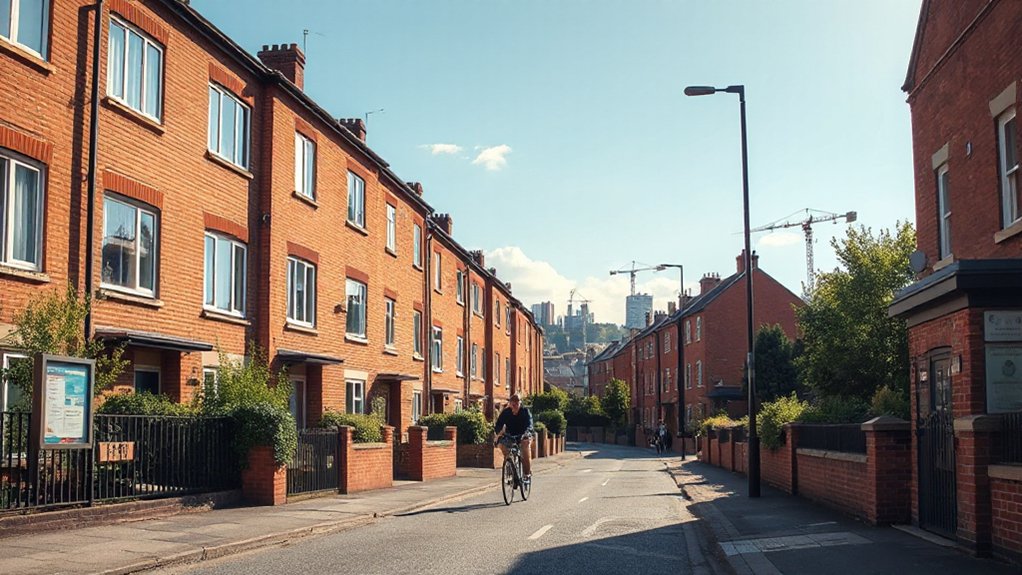
Neighborhood profiles reveal distinct trajectories when comparing up-and-coming areas with renewed markets. You’ll see how Historical trends show rising prices in new hotspots, while renewed zones stabilize yet grow steadily, guided by demand and supply shifts.
Future projections suggest continued price acceleration in fresh arrivals, tempered by redevelopment cycles and zoning controls. You compare momentum metrics, affordability, and investment cadence to gauge risk-adjusted returns.
You’ll notice that up-and-coming areas often deliver rapid value creation but higher volatility, whereas renewed areas offer resilience with slower but steadier gains. The contrast informs buyers about timing, diversification, and long-term potential.
Your takeaway is a data-driven map of where opportunity concentrates and where prudence preserves value.
- Rapid ascent vs steady resilience
- Investment cadence and risk
- Affordability versus access
- Redevelopment impact timing
- Long-term value articulation
Housing Type Shifts in Fast-Growing Postcodes
As fast-growing postcodes attract demand from multiple fronts, housing type shifts reveal a clear pivot toward higher-density formats and mixed-use living. You’ll notice rising shares of multifamily units, townhomes, and live-work spaces in multiplexed blocks, aligned with investor interest and planning policy.
Historical trends show a gradual move away from single-family dominance, while ongoing redevelopment adds unit diversity and compact footprints. In-depth data indicates steady increases in container-friendly and terrace configurations, supporting walkability and transit access.
Cultural influences shape design language, with adaptable layouts and communal spaces that reflect local preferences for social connectivity and flexible use. You observe faster turnover and smaller household sizes, suggesting a buyer mix prioritizing amenities, access, and resilience in evolving Manchester postcodes.
Typical Price Bands in Manchester’s Fastest-Growing Areas
Price bands in Manchester’s fastest-growing areas vary markedly by growth zone, with higher bands concentrated near central and boundary postcodes. You’ll see a pattern where price brackets cluster around mid-to-upper ranges as demand surges.
While larger growth areas still include entry-level bands in emerging pockets. This suggests a mix of value retention and ascent dynamics, worth testing against recent quarterly data and area-specific growth rates.
Price Bands Overview
Manchester’s fastest-growing areas cluster around rising employment hubs and improved transport links, which push typical price bands upward relative to the city average. You’ll see a distinct tiering: entry-level bands near mid-range, mid-tier for strong value, and premium bands tied to proximity to core amenities, workplaces, and high-capacity transit.
Prices rise with demand signals from developers and unity in planning. In this overview, Luxury developments and green spaces anchor higher-price clusters, shaping buyer expectations and resale resilience.
You’ll note that the spread narrows where new supply targets mid-market segments. Across the map, price bands correlate with distance to employment nodes, schooling access, and transit reliability.
This data-driven snapshot highlights where aspirations meet market reality, guiding prudent, informed decisions for investors and homeowners alike.
Growth Area Ranges
Historical trends show faster appreciation near MetroLink nodes and employment clusters, tapering in peripheral zones, then resurfacing at regeneration fronts. Market fluctuations reveal seasonal and policy-driven shifts, yet core ranges hold steady as supply tightens in sought-after microareas.
In-practice, you’ll observe a two-tier pattern: premium bands adjacent to city center amenities, and value-oriented bands within transitional suburbs undergoing investment. This segmentation helps you gauge risk-adjusted potential, aligning purchase choices with neighborhood momentum.
Typical Value Patterns
- Clear divide between core and edge markets drives investor focus
- Proximity to transit links amplifies value gains
- Redevelopment cycles tighten price corridors
- Smaller units perform best in dense nodes
- Long-term trends favor job-rich districts over speculative pockets
Buyer Personas Most Active in High-Growth Postcodes

You’re typically evaluating neighborhoods with rising rents, demographic shifts, and visible infrastructure plans, prioritizing areas with transparent price trajectories and absorption rates.
You seek efficiency, weighing forecast dashboards, crime stats, and school catchments to time purchases.
In Manchester’s growth corridors, you’ll notice buyers who blend cultural and lifestyle cues with investment logic—art gallery access and a thriving culinary scene signaling long-term desirability.
You act on shortlisting moves, monitoring quarterly price velocity, and coordinating with agents who provide probabilistic risk-reward profiles, ensuring acquisitions align with core portfolio growth targets.
Key Risks to Watch in Rapidly Rising Manchester Postcodes
Rapidly rising Manchester postcodes carry upside but also notable risks you should monitor. As prices surge, affordability gaps widen, sharpening volatility and increasing the chance of a market correction if income growth stalls or borrowing costs rise.
You’ll need to watch supply constraints, as builder activity often lags demand in high-growth areas, pressuring rents and resale timelines. Local sentiment can swing on policy changes or school performance data, amplifying price moves.
Urban green spaces and Historic architecture matter; losing either can sap long-term value, despite near-term gains. Look for divergences between price momentum and fundamentals like vacancy rates, demographic shifts, and planning decisions.
- Price momentum can outpace real demand, triggering sudden pullbacks
- Infrastructure delays worsen, delaying returns on investment
- Gentrification pressure risks displacing long-time residents
- Environmental protections may cap development latitude
- Urban green spaces and Historic architecture shifts influence desirability
How to Evaluate a Rising Postcode for Investment
To evaluate a rising postcode for investment, start with the numbers you can trust: price growth over the last 12–24 months, current rental yields, and vacancy trends. You’ll compare absolute changes, rate acceleration, and consistency across micro-neighborhoods to identify durable demand.
Analyze rental yield relative to purchase price, balancing entry cost with cash flow potential and tax considerations. Track occupancy stability, seasonal shifts, and tenant quality indicators to gauge risk.
Look for signals beyond bare appreciation, such as demand from luxury apartments and proximity to Historic landmarks, which can bolster long-term resilience.
Synthesize data into a clear verdict: sustainable yield, controlled vacancies, and credible growth drivers, not flashy short-term spikes. Use dashboards, backtested benchmarks, and scenario testing to inform your initial investment thesis.
What Future Price Trajectories Suggest for Manchester
Manchester’s price trajectory over the next few years will hinge on a mix of macro demand, local supply constraints, and policy signals. You’ll see signals from employment growth, mortgage costs, and regional investment patterns shaping trajectories, with likely moderation after rapid recent gains.
Historical affordability matters: gains may ease as prices approach sustainable ratios, while debt service costs could deter speculative activity.
Lifestyle amenities continue to attract residents, supporting demand in core zones even if outlying areas lag. In this frame, Manchester’s trajectory becomes data-driven rather than guesswork, emphasizing supply responsiveness, pricing elasticity, and policy clarity.
Expect gradual appreciation, punctuated by episodic corrections if rates rise or affordability deteriorates.
- Demand resilience amid urban reinvention fuels confidence
- Supply constraints keep margins tight for buyers
- Policy signals could temper or accelerate momentum
- Affordability thresholds reframe investment rationale
- Amenities-driven growth anchors long-term value
Manchester’s Growth Vs. Neighboring Cities
Compared with its regional peers, Manchester shows a steadier growth profile underpinned by diversified demand and selective regeneration. You’ll see that historical trends reveal Manchester’s price momentum tightens around core corridors, with slower deceleration during downturns and quicker rebound in tech and university-linked districts.
Relative to cities like Leeds or Birmingham, you experience a more gradual incremental path rather than sharp spikes, reflecting balanced supply and persistent private sentiment. Market forecasts indicate continued resilience, underpinned by infrastructure investments and strong international demand.
Though growth evaporates in pockets lacking regeneration, you should track this divergence closely: neighboring cities may outpace Manchester in specific microareas, yet Manchester benefits from broader, steadier expansion.
Practical Steps for Buyers Targeting Hot Manchester Pockets
Hot pockets in Manchester offer targeted opportunities, but they require a disciplined approach informed by recent performance trends and micro-area signals. You’ll base decisions on short-term price momentum, turnover rates, and school/amenity access, not hype.
Prioritize areas showing sustained demand, supported by urban renewal plans and improved transport links. Compare price per square foot across pockets to identify value gaps, then stress-test against macro shocks.
Bet on districts with verifiable green spaces that boost livability and resale resilience. Validate predictions with multiple data sources, including recent sales velocity and days-on-market changes.
Align your bid strategy with price trajectories, not just list prices. Focus on fundamentals, not fads, to minimize risk and maximize long-term upside.
- Analyze momentum before entering bids
- Cross-check micro-area signals with urban renewal timelines
- Prioritize neighborhoods featuring green spaces and parks
- Compare price-per-square-foot across pockets for value
- Validate decisions with multiple data sources, not single reports
Local Community Impacts and What’s Next for Rising Postcodes
Rising postcodes are reshaping local dynamics as funding and redevelopment open new amenities, jobs, and transport options. You’ll see local community shifts reflected in crowding, service demand, and turnover rates, with data suggesting faster population inflows in high-growth areas.
Consider housing affordability: price growth outpaces incomes in several pockets, narrowing entry points for first-time buyers while expanding options for investors and renters.
Local infrastructure investments correlate with improved connectivity, yet displacement risks emerge when rents rise beyond median levels. You should monitor council development plans, school capacity, and crime statistics to gauge long-term stability.
Next steps hinge on targeted affordable housing schemes, transparent planning processes, and inclusive community engagement to balance growth with livability and equity.
Frequently Asked Questions
What Drives Sudden Price Jumps in Specific Manchester Postcodes?
You’re seeing sudden jumps when demand spikes from luxury apartments and student housing; limited supply, location desirability, and investment inflows push prices, while macro trends and planning changes amplify, guiding buyers to high-return neighborhoods.
How Reliable Are Postcodes as Price Growth Indicators?
Postcodes aren’t perfect indicators, though you’ll see trends. You can trust broad signals, not precise forecasts; postcode accuracy varies with data quality amid market fluctuations. You’ll want corroborating sources and granular, local context for reliable conclusions.
Do Rising Postcodes Later Slow Down or Plateau?
Rising postcodes tend to plateau as market saturation hits and demand cools. You’ll see growth slow when supply meets demand, defining clear Investment hotspots and signaling stabilization rather than perpetual acceleration across Manchester’s neighborhoods.
Which Postcodes Show Best Resilience in Downturns?
You’ll notice certain postcodes resist downturns, with resilience driven by younger demographics and stable incomes. In your analysis, consider neighborhood demographics and local amenities; these factors correlate to steadier demand and smarter investment decisions.
How Do Macro Events Affect Manchester Postcode Growth?
Macro events influence Manchester postcode growth by shifting demand, investment, and sentiment; you’ll see accelerated gains where urban regeneration and infrastructure development align with job creation, housing supply, and transport improvements, while downturns temper momentum in weaker areas.
Conclusion
You’ll see the numbers rise, then the streets rise with them—two graphs side by side. On one axis, price tags climb; on the other, families settle, schools fill, shops sprout. It’s data with fingerprints: velocity of sales vs. velocity of change. Growth isn’t a straight line, it’s a pulse. You weigh now against tomorrow, and choose where demand hardens or softens. In Manchester’s hot pockets, opportunity and risk clasp hands, shaping futures you can’t ignore.