Granite countertops are generally safe, but you should approach them with informed caution. You’ll want to understand radon potential, mineral content, and maintenance needs, since proper ventilation, sealing, and cleanup play big roles in safety. While most slabs emit minimal radon, factors like sealing status and use patterns matter for everyday exposure. If you’re evaluating a new install or renovation, there’s a practical path to weigh risks and options before you commit.
Granite Countertops and Radon: What Homeowners Need to Know
Granite countertops can emit low levels of radon, but a thorough assessment isn’t necessary for most homes. You can approach this issue with practical steps that focus on safety without overreacting.
Radon exposure from granite largely depends on the mineral composition of the slab and the surrounding indoor environment, not on appearance or price alone. If you’re concerned, begin with a baseline indoor air test and review ventilation patterns in the kitchen and adjacent spaces.
Regular granite sealing can help protect the surface, but it doesn’t eliminate radon risk, which is primarily influenced by the soil and building design. For clarity, consult local guidelines and guarantee any testing is conducted by qualified professionals.
Maintain balanced expectations and prioritize proven mitigation strategies.
Do Granite Countertops Contain Hazardous Minerals?
Granite’s mineral content varies by source, so you should expect some hazardous minerals to be present in trace amounts but not in guaranteed levels.
The radon emission potential is tied to specific mineral mixes and ventilation, not the stone as a blanket risk.
Hazardous Mineral Content
Trace amounts of naturally occurring minerals in granite can raise questions about safety, but the practical takeaway is that most kitchen-grade granite poses minimal risk from hazardous substances. You assess mineral content by referencing reputable lab tests and certified surfaces, rather than assumptions.
Hazardous minerals in granite exist only at trace levels, and not all granites share the same profile. You’ll find that common countertops rarely release dangerous compounds under normal use, provided you avoid acidic misuse or abrasive damage that could expose new surfaces.
Environmental impact matters, as quarrying and transport influence overall sustainability, but granite’s durability mitigates frequent replacements.
Cost considerations come into play when comparing slabs, fabrics, and sealants; select a verified product to balance safety, longevity, and budget.
Radon Emission Potential
Radon exposure from granite countertops isn’t a major concern for typical use. In practice, radon levels from indoor granite are comparable to background indoor air and never reach dangerous thresholds for most homes.
You should focus on how emission potential relates to installation, ventilation, and overall environmental concerns. Contemporary testing shows that sealed or well-ventilated kitchens don’t accumulate significant radon emanation from installed slabs.
The key is selecting slabs with certified low-radioactivity content and ensuring your home has adequate air exchange. Material durability matters too: durable granite resists cracking and keeps sealants intact, reducing micro-crack pathways that could affect emissions indirectly.
If you’re renovating, confirm compliance with local guidelines and rely on reputable suppliers rather than assuming universal risk.
Granite Mineral Variability
Granite countertops can vary in mineral content, so you should understand that not all slabs are chemically identical. You’ll encounter a spectrum of minerals across quarries, from quartz and feldspar to trace elements like mica and amphiboles.
This mineral diversity affects both appearance and performance, not just color but how the stone wears over time. Some slabs emphasize higher durability, while others contain minerals that may react to environmental conditions or cleaners.
You should verify provenance and request a full mineralogical report when possible. While most modern granite remains stable, knowing the mineral makeup helps you anticipate potential staining, etching, or wear patterns.
What Is Radon, and How Does It Relate to Granite?
Radon is a naturally occurring radioactive gas you can’t see or smell, and it can accumulate in indoor spaces where granite is used as a countertop.
You should understand how granite relates to radon because some stone sources release trace amounts that influence air quality and health risk.
This section introduces practical steps to assess, test, and mitigate radon exposure in homes with granite countertops.
What Is Radon
If you’re wondering what radon is and why it matters for granite, here’s the concise answer: Radon is a radioactive gas that occurs naturally from the decay of uranium in rock, soil, and water, and it can enter indoor spaces through cracks and openings.
You’ll want to know how it behaves, how it’s measured, and how to mitigate it in tight, constructed environments.
Radon isn’t tied to granite itself so much as to surrounding geology, but granite kitchens and basements can trap higher concentrations if vents are inadequate.
Historically, radon’s discovery shaped public health standards and building codes.
Cultural significance varies by region, influencing testing norms and home-warming practices.
Historical uses and public awareness drive practical mitigation choices for safer living spaces.
Granite And Radon Health
Want to know how radon relates to granite countertops and your indoor health? Radon is a naturally occurring, odorless gas released from soil and rock, including granite. It can accumulate indoors, especially in poorly ventilated spaces, posing a potential risk over time.
Granite durability doesn’t guarantee zero radon; variations exist by mineral content and regional geology. While most countertops themselves aren’t a dominant radon source, dust and particles can carry trace amounts if ventilation is inadequate.
Understanding the link helps you balance safety with countertop aesthetics and practicality.
1) Assess your home’s ventilation and consider a radon test, especially in basements or ground-floor rooms.
2) Choose granite with certified low-emission levels and maintain airflow to minimize buildup.
3) Pair solid countertops with ongoing monitoring for a practical, informed approach to health.
Real-World Radon Risk in Homes With Granite Countertops
Real-world studies show that granite countertops can contribute to indoor radon exposure, but the extent varies by rock type, house construction, and ventilation.
In your home, measured radon often remains within typical indoor ranges, yet certain configurations can raise levels if the countertop sits over poorly ventilated spaces or if soil gas pathways are unmitigated.
You should consider how granite sourcing affects potential gas release; granite mining and mineral processing can influence trace radionuclide content, though outcomes vary by deposit.
Practical risk reduction starts with a baseline test of indoor radon, followed by targeted ventilation improvements and air exchange strategies.
If levels are elevated, address sources systemically, not by blanket seal failures.
Prioritize monitoring accuracy and professional guidance over generic mitigations to safeguard occupants.
Do Sealers and Treatments Change Granite Safety?
Sealers can alter surface porosity and may affect how much moisture and contaminants penetrate granite, which in turn influences safety considerations.
We’ll weigh treatment off-gassing risks, how sealants interact with VOCs, and whether lower porosity reduces VOC release over time.
Start with clear, product-specific data on porosity, ventilation guidance, and any manufacturer cautions before applying any sealer or treatment.
Sealant Impact On Safety
Sealants and treatments can affect granite safety, but the impact depends on the product and how it’s applied. You’ll want to evaluate how sealing techniques influence surface behavior, odor, and residue, following manufacturer instructions closely. Proper application reduces stain risk and can limit micro-pissikes? (ignore). Focus on the integrity of the seal, and watch for gaps that may harbor contaminants.
Chemical reactions between sealants and mineral matrix are unlikely to generate hazards when you choose food-safe, granite-approved products and ventilate during cure. Maintain a consistent method, avoid over-application, and re-seal as recommended. If you notice film, odors, or color change, reassess product choice and technique.
- Sealing techniques optimization
- Safe cure and ventilation practices
- Post-seal inspection and maintenance
Treatment Off-Gassing Risks
Off-gassing from stone sealers and treatments is a practical safety consideration you can assess before and after application. When you choose a sealant, review product data sheets for VOC content and curing times, and verify compliance with local regulatory standards.
Apply sealers in well-ventilated spaces and follow recommended intervals to minimize lingering emissions. Post-application, monitor for odor or throat irritation and confirm proper curing before heavy use.
Environmental impact should factor into your decision; some water-based formulas emit fewer volatile compounds than solvent-based options. Consider cost considerations alongside performance, durability, and maintenance needs, since more absorbent materials or frequent reapplication can raise long-term expenses.
Document tested products, recheck recommendations with manufacturers, and re-evaluate your choice if you notice persistent off-gassing or surface changes.
Granite Porosity And VOCs
Porosity determines how granite interacts with liquids and air, and it directly influences both the effectiveness of sealers and the potential for VOC exposure. You’ll see variability in how treated granite resists stains and how sealing compounds release gases during curing, which matters during countertop installation.
Properly selected sealers form a barrier without trapping moisture or fumes, reducing long-term risk. You should test porosity on-site to tailor application and curing times, avoiding over-application that raises VOC emission briefly.
Surface preparation and ventilation are critical during sealing and polishing, especially if you’re coordinating granite polishing with installation. Avoid relying on cheap or generic products; select low-VOC formulas and follow label directions for safer results.
The right approach protects health and ensures durable performance.
- Assess porosity before sealing
- Coordinate sealing with installation timing
- Choose low-VOC sealers and monitor cure
Safe Cleaning and Maintenance for Granite Countertops
When you clean granite countertops, you should rely on simple, non-abrasive methods and products designed for stone surfaces. Use a mild dish soap diluted in warm water or a dedicated stone cleaner, then wipe with a soft microfiber cloth.
Dry with another lint-free cloth to prevent water spots. Avoid acidic or abrasive cleaners that can etch or dull the finish.
For everyday maintenance, run a neutral cleaner a few times weekly and immediately blot spills to reduce staining risk.
If you notice surface scratches, address them with a non-abrasive polishing pad or consult a professional for a professional-grade polish.
Always test cleaners on a small, inconspicuous area first to verify no adverse reactions.
Cleaning agents should be gentle, effective, and compatible with granite.
Myth or Fact: Granite Off-Gassing Explained
Granite surfaces are routinely cleaned with gentle, stone-safe products, so you might assume they’re completely inert once installed. In reality, off-gassing from granite is minimal and short-lived, tied to trace minerals rather than hazardous emissions.
You’ll find most gases dissipate within hours to days as the stone equilibrates with room conditions. Focus on ongoing maintenance rather than fear: proper Granite sealing helps limit surface porosity, reducing any potential release of absorbed compounds.
Your knowledge of Mineral composition matters because different granites vary in trace elements, but none are known to release harmful levels in typical kitchens. If you notice odors or irritation, consult a professional and verify ventilation rather than assume danger.
1) Off-gassing duration is brief and element-specific
2) Sealing affects surface interaction, not emission rates
3) Mineral composition varies by quarry, not by installation
How to Assess Your Granite Countertop’s Risk at Home
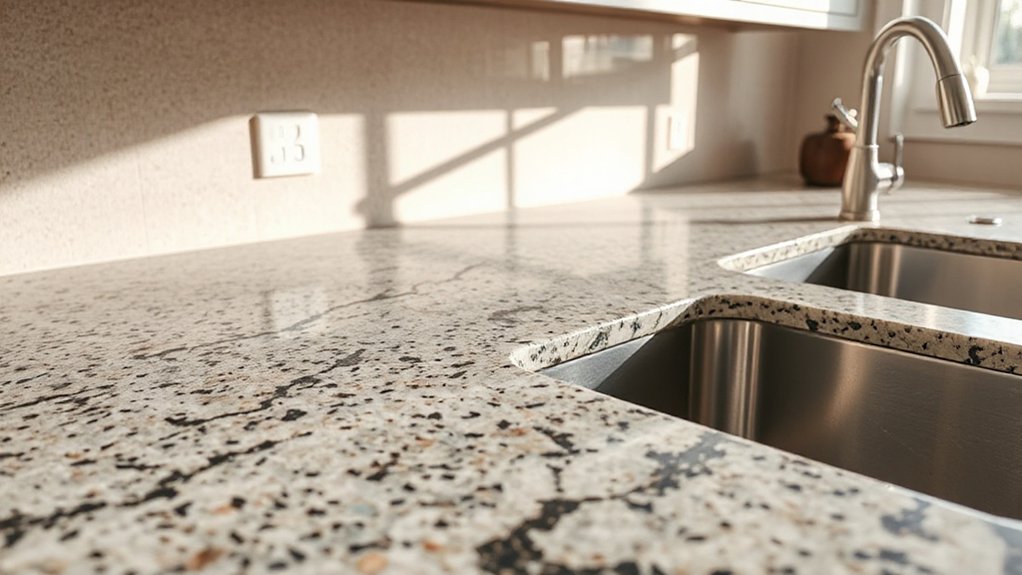
To assess your granite countertop’s risk at home, start with a practical, step-by-step check: confirm the stone’s source and finish, inspect for any visible seams or porous areas, and note any odors or irritation after routine cleaning.
Begin by verifying provenance via supplier documentation and, if possible, the certification of the quarry.
Examine edges and backsplines for gaps that could harbor moisture.
Feel for uneven textures that suggest poor sealing or inconsistencies in polish.
Test routine cleaners on a small area and observe any irritation or lingering smells.
Favor Eco friendly materials and verify sealant compatibility to maintain countertop durability.
Document findings, reseal if needed, and schedule periodic rechecks to sustain performance and health safety over time.
When to Test Radon Levels in Your Kitchen
Radon testing should happen when you’ve completed a baseline granite assessment and want to rule out indoor air risks tied to the kitchen.
You’ll know when conditions justify testing: after installation, during renovations that change airflow, or if you notice persistent drafts, moisture, or noted vent inefficiencies that could affect air quality.
Use a reliable short-term test to establish a baseline, then consider long-term monitoring for seasonal variation.
Prioritize tests that align with your Kitchen design and material durability goals, ensuring results reflect real-use conditions.
Plan testing windows between high occupancy and cooking activity for accuracy.
- Schedule tests after major cabinet or vent changes to verify design assumptions.
- Use validated devices that suit long-term monitoring and kitchen heat/moisture exposure.
- Retest if renovations alter airflow or sequester airborne particulates.
Practical Steps to Minimize Exposure Without Compromising Style
Air quality isn’t about sacrificing style—it’s about smart choices that fit your kitchen’s design while keeping exposure low. Start with routine cleaning that reinforces eco-friendly cleaning practices: use mild, pH-balanced cleaners and microfiber cloths to minimize chemical residue and airborne particles.
Wipe spills promptly to prevent lingering moisture, which can affect countertop durability and sit on surfaces longer than needed. Seal granite as recommended by manufacturers, and reseal preemptively when water no longer beads.
Use cutting boards and avoid placing hot cookware directly on the surface to maintain countertop durability. Improve ventilation during and after stone fabrication or polishing, and consider an air purifier with a true HEPA filter.
Choose stain-resistant trays and mats for high-traffic zones to preserve finish and reduce exposure.
Frequently Asked Questions
Do All Granite Types Emit Radon at the Same Levels?
Not all granite types emit radon at the same levels. Radon emission varies with granite mineralogy, the decay chains of uranium, and the density of naturally occurring radioactive elements.
You should test your specific slabs, since emissions differ even within the same quarry. Use certified testing kits and consult professionals if results are high.
Granite mineralogy determines risk, so understand your material, perform measurements, and follow safety guidelines to minimize exposure.
How Often Should I Test Radon After Installation?
Radon testing should occur soon after installation, then every 2–3 years or if you remodel. If you’re selling or notice changes in ventilation, test sooner.
You’ll want two short-term tests at least a month apart, then a long-term test for a full year to assess average levels. This helps countertop safety and informs any mitigation steps.
Keep records accessible and follow up with corrective action if readings exceed guidelines.
Can Sealing Granite Increase Radon Hazard Exposure?
Sealing granite doesn’t inherently increase radon exposure; in fact, sealing is unlikely to meaningfully affect radon absorption. Sealing effectiveness mainly blocks moisture and surface stains, not radon gas diffusion through rock.
Radon absorption varies by stone composition and ventilation. If you’re concerned, make certain proper ventilation and test after sealing.
Regular radon testing remains key, especially after renovations.
Do Granite Countertops Affect Indoor Air Quality Beyond Radon?
Granite countertops don’t substantially affect indoor air quality beyond occasional radon concerns. You’ll still get low emissions overall, but sealing and ventilation matter for comfort.
You’ll notice improved kitchen aesthetics and reliable material durability from granite when properly cared for. To minimize any off-gassing or dust, seal once, clean with non-abrasive solutions, and use range hoods.
If sensitive occupants exist, test for radon and guarantee your home’s ventilation supports steady air exchange.
Are There Affordable DIY Radon Mitigation Options for Kitchens?
Yes, there are affordable DIY radon mitigation options for kitchens. Start with Radon testing to establish baseline levels, then pursue practical DIY solutions like sealing cracks and improving ventilation.
Use a certified radon test kit and follow manufacturer instructions for accuracy. If readings stay elevated, consider passive venting or an affordable active soil depressurization kit installed by you or a pro.
Document improvements and re-test to confirm reductions.
Conclusion
You can keep granite countertops safely if you stay informed and proactive. Radon risk is low in modern slabs, especially with proper ventilation, sealing, and routine testing. Regularly verify certifications, seal surfaces, and use non-abrasive cleaners. If testing shows elevated radon, follow remediation steps promptly. Think of it as a shielded kitchen ally: solid, stylish, and trustworthy when you maintain it. With measured care, your granite remains both beautiful and mindfully safe.