

To spot growth, focus on London postcodes near Crossrail hubs, Canary Wharf, and tech-enabled corridors, where rising rents and steady capital appreciation meet ongoing regeneration. East London pockets like Bow and Stratford show uplift from Transport for London improvements, while Battersea, Nine Elms, and Clapham demonstrate momentum in demand. Canary Wharf, Soho, and King’s Cross anchor yields with potential uplift from new developments. Croydon, Bromley, and Outer London offer emerging commuter appeal. More opportunities await as infrastructure expands.
What Makes a London Postcode Ripe for Growth
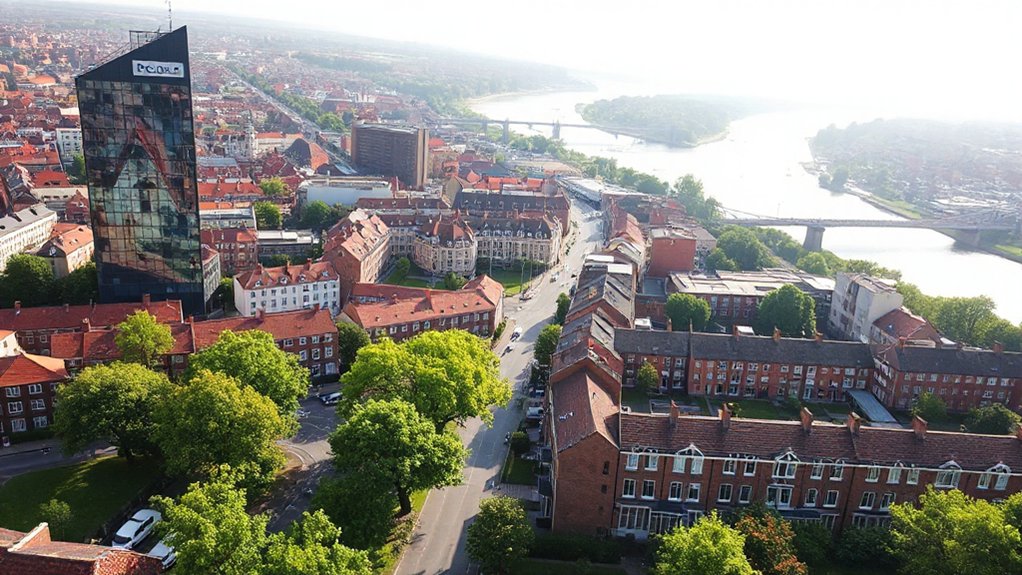
London postcodes with strong growth potential tend to share three core characteristics: improving transport links, supply-demand imbalances, and ongoing regeneration.
You’ll see rapid price appreciation where transport upgrades cut commute times, opening both rental yield and resale value.
Look for neighborhoods with tight housing supply relative to demand, especially those near planned developments, new jobs, or university expansions.
Ongoing regeneration—university campuses, cultural districts, and green corridors—adds long-term value anisotropically, lifting nearby asset performance.
Consider the appeal of Luxury apartments near upgraded hubs, which attract higher rents and faster turnover, while preserving capital through durable demand.
Historic landmarks often anchor tourism- and culture-led growth, boosting ancillary demand and stabilizing long-run performance.
Use data on occupancy, pricing, and unit mix to validate your target postcode trajectory.
East London Uplift: Bow, Stratford, and Lea Valley
East London is showing clear growth hubs around Bow, Stratford, and the Lea Valley, with project pipelines and transport links driving momentum.
Market data indicate rising demand in Bow-Stratford relative to outer boroughs, supported by devalue in affordable housing and enhanced commuter access.
Looking ahead, you can expect evidence-based uplift as investment flows align with regeneration milestones and occupancy trends.
East London Growth Hubs
East London is undergoing concentrated investment in Bow, Stratford, and the Lea Valley, creating measurable uplift in property demand, rental yields, and development momentum. You’ll see corridor-wide gains from cross‑borough infrastructure, with Crossrail-era accessibility boosting unit turnover and sale velocity.
Data indicate rising prime rent premiums near town centers, balanced by improving affordability at scale through targeted urban regeneration and affordable housing initiatives.
Development pipelines show mixed-use schemes delivering amenity-rich housing and commercial space, supporting resident retention and local employment.
Population growth aligns with housing delivery, reducing vacancy risk while sustaining yields.
You gain a clearer sense of risk-adjusted return as project phasing stabilizes, capitalizing on ongoing public‑sector support, private investment, and resilient demand in East London’s growth hubs.
Bow-Stratford Market Momentum
You’ll see rising transaction volumes and shorter times on market across Bow’s postwar and modern clusters, alongside Stratford’s redevelopment corridors and Lea Valley tech spillover.
Data indicate price per square foot gains outpacing outer zones, led by luxury apartments near transit hubs and key retail nodes.
Historic districts within these areas are reaccelerating as conservation-led schemes mix with new-build density, preserving character while boosting appeal.
Forward-looking indicators point to continued yield compression for select assets, alongside disciplined rent growth, especially in upgrade segments and luxury apartments near central transport lines.
Battersea, Nine Elms, Clapham: Momentum and Demand
Battersea, Nine Elms, and Clapham are rapidly gaining momentum as premier growth corridors, underpinned by sustained demand from owner-occupiers and rental investors alike. You’ll see consistent yield resilience as new builds convert demand into measurable price growth, supported by urban regeneration and targeted infrastructure upgrades.
Population projections point to steady occupancy rises, with daily demand driven by local amenities, schools, and green space. Development pipelines show a tilt toward luxury apartments and mid-market units, balancing imperatives of affordability and aspirational living.
Market data indicate shorter holding periods during upswings and price acceleration in prime pockets, with rental competition tightening in high-demand clusters. Forward-looking indicators suggest durable value uplift, reinforced by controlled supply and quality placemaking.
Transport Hubs That Lift Value: Crossrail, FTZs, and Rail Links
Transport hubs release value by accelerating connectivity and demand. Crossrail, FTZs, and enhanced rail links reshape catchment areas, boosting rental yields and capital growth in adjacent postcodes. You’ll see clearer commute modes, shorter modal transfers, and higher, more resilient demand from both residents and businesses.
Data trends point to concentration of value near major interchange nodes, with spillovers into surrounding streets and micro-markets. Smart city initiatives amplify efficiency gains through integrated data, real-time routing, and multimodal planning.
Green space development near hubs further enhances livability, supporting longer tenancy durations and higher buyer confidence. Looking ahead, pandemic-era travel resilience combined with progressive infrastructure rollout suggests sustained, incremental uplift, making proximity to these hubs a measurable, forward-looking investment signal.
Emerging Commuter Hubs: Croydon, Bromley, Outer London

You’re poised to track how Emerging Commuter Links in Croydon, Bromley, and Outer London translate into tangible Price Growth Signals.
Early data show faster rental yields and steady capital appreciation as new links boost accessibility and bid fundamentals.
We’ll synthesize transport investments with buyer sentiment to forecast which corridors offer the strongest, evidence-based upside.
Emerging Commuter Links
Data shows rising occupancy in multidimensional transit corridors and middling capex per square foot relative to inner zones, signaling upside without premium risk. Beyond transit, planned redevelopment streams target mixed-use cores, anchoring demand around transport nodes.
Luxury apartments cluster near stations, aligning with higher-income tenant profiles seeking convenience, while preserving affordability compared to central London. Historical landmarks and established town centres anchor community identity, supporting long-term value through steady visitor and resident footfall.
Price Growth Signals
Early signs point to stronger price growth in Croydon, Bromley, and outer London as commuter-linked demand tightens around new and faster transit options. You’ll see signals in price-to-rent ratios, with modest upfront costs relative to central zones yet rising transaction volumes in these hubs.
Data indicate price momentum is broadening beyond traditional bedrooms to value-added sectors like luxury apartments, where buyers seek turnkey attributes and enhanced amenities near stations.
Historical landmarks in redeveloped town centres contribute to perceived prestige, helping sustain premium pricing even in flatter cycles.
We expect continued uplift as cross-borough connectivity expands, boosting liquidity and investor confidence.
What matters next is pace: annualized growth trajectories, planning approvals, and user-led transit improvements aligning to durable long-term appreciation.
Canary Wharf, Soho, King’s Cross: Yield Anchors With Uplift Potential

Canary Wharf, Soho, and King’s Cross stand out as yield anchors with significant uplift potential, underpinned by diverse demand drivers across finance, media, tech, and amenities.
You benefit from projected rental growth fueled by returning corporate activity, mixed-use regeneration, and population inflow to central hubs.
Data indicate resilient occupancy in luxury segments, with price-to-rent dynamics favorable for buy-to-let pathways and yield compression in premium stock.
Soho’s creative economy and historic districts attract steady demand, while Canary Wharf’s finance-fueled inflow sustains long-cycle upside.
King’s Cross combines tech employment with improved transport links, expanding catchment and lifestyle amenity appeal.
Expect upside from new luxury apartments and refurbished historic districts, tempered by macro-scale affordability constraints and policy shifts that influence redevelopment timelines.
Frequently Asked Questions
How Do Taxes Affect Long-Term London Investment Returns?
Taxes influence long-term returns through tax incentives and ongoing costs; you should model after-tax cash flows, consider reliefs, and plan for market volatility, which can dampen appreciation yet create opportunities in resilient segments.
Which Postcodes Show the Strongest Rental Yield Consistency?
Directly: you’ll find affordable neighborhoods with steady rents, and infrastructure developments underpining yield consistency. You’re tapping data-driven signals, watching rental stability rise as markets mature; you see symbolically rising bridges to secure, forward-looking returns.
What Role Do School Catchments Play in Value Growth?
School catchments strongly influence property value, shaping demand and price growth. You’ll see steadier appreciation in areas with high-performing schools, as families trade up. Data-driven trends suggest catchment quality predicts value trajectories and rental resilience.
How Do Planning Permissions Impact Future Capital Appreciation?
Planning permissions shape future gains: zoning regulations steer development density, affecting supply and prices, while proactive community engagement signals approval likelihood. You’ll see improved outcomes when developers align plans with local needs, supported by transparent data and robust forecasting.
Which Macro Factors Most Influence Post-2024 London Markets?
Hope flickers like a lighthouse as you read: macro factors shaping post-2024 London markets include market volatility and demographic shifts; you’ll navigate with data-driven, forward-looking analysis that shows where resilience, demand, and investment returns align tomorrow.
Conclusion
You’ll see the data converge: growth hotspots cluster around transport-enabled zones, emerging commuter towns, and demand-led cores like Canary Wharf and King’s Cross. The trend lines point to eastward uplift, sustained by Crossrail and FTZs, while yield anchors tighten competition in high-potential pockets. If you diversify across Bow, Croydon, and Nine Elms, you balance velocity with resilience. Picture a 1960s jet, coasting into a modern district—speed, momentum, and smart risk-taking driving future returns.