
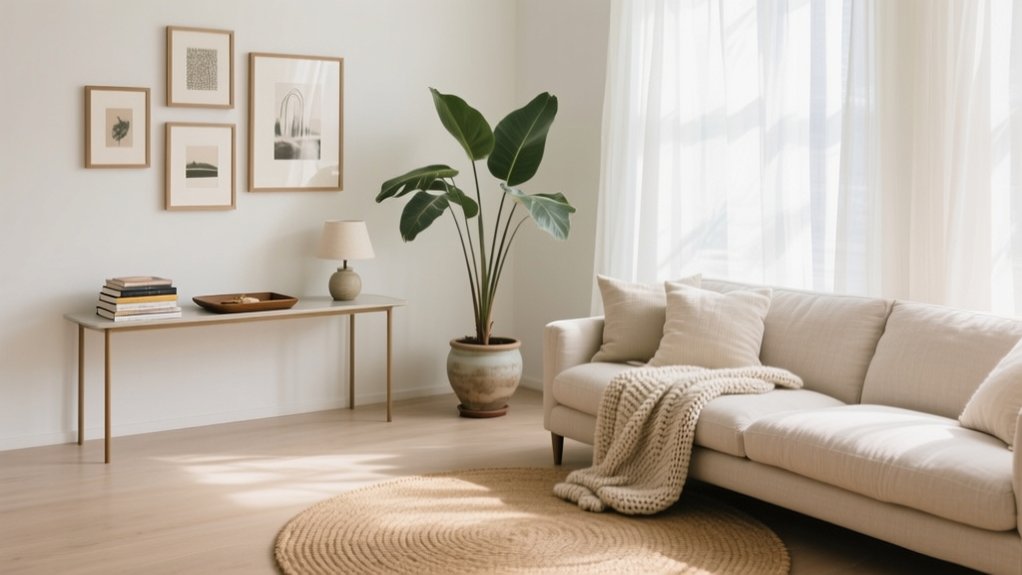
Start by choosing a clear vibe—brighter, cozier, or calmer—so every change works together. Set a 10-minute timer, clear your main surfaces, hide cords, and leave one useful item plus one styled piece. Rearrange furniture to open walkways, float seating off walls, and anchor zones with a properly sized rug. Swap throw pillows for fresh color and texture, update curtains, and add layered warm lighting. Use mirrors to bounce daylight, then finish with a plant. Keep going for a simple one-hour checklist.
Pick Your Goal: Brighter, Cozier, or Calmer
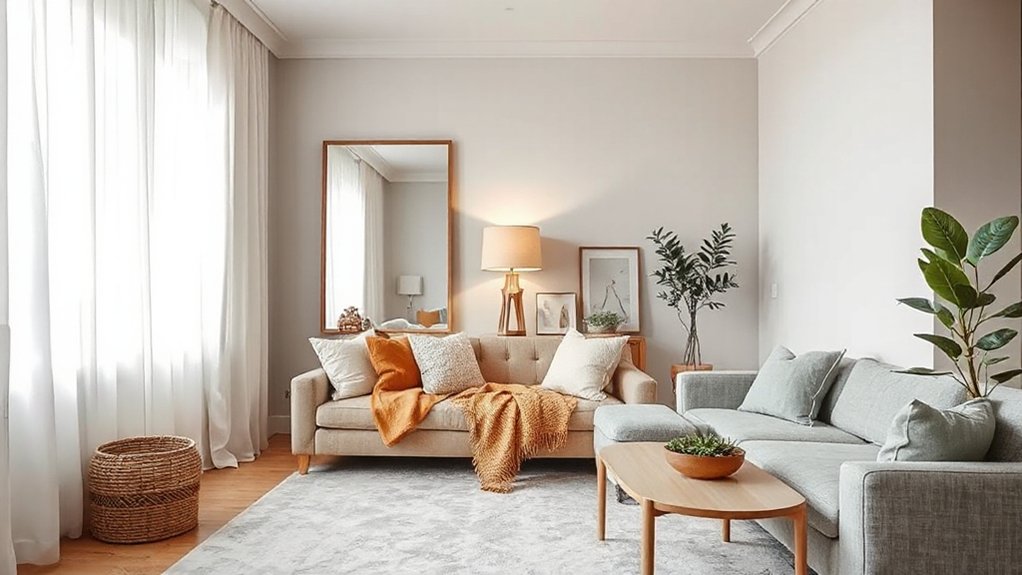
Before you buy anything new, decide what you want the room to *do* for you—feel brighter, cozier, or calmer—because that one goal should steer every choice you make next.
For brighter, pick a light Decor theme, reflectors like mirrors, and airy textiles; keep contrast crisp with black accents or warm metals.
For cozier, lean into richer tones, layered lighting (table lamps + sconces), and touchable fabrics like bouclé or wool; choose a furniture style with rounded edges and lower profiles.
For calmer, limit the palette to two to three muted hues, add matte finishes, and repeat simple shapes; a streamlined furniture style with hidden storage reads serene.
Once you choose, edit purchases so every piece reinforces that vibe.
Do a 10-Minute Declutter + Surface Reset
Once you’ve picked the vibe you want, set a 10-minute timer and do a quick declutter plus surface reset—because clear sightlines make any room look instantly more intentional. Start with the “landing zones”: coffee table, console, nightstand, kitchen counter. Scoop anything that doesn’t belong into a tote, then return items to their proper rooms after the timer ends.
Next, edit what stays visible. Aim for Clutter control by keeping one practical item (remote tray, coaster stack, catchall bowl) and one styled piece (candle, small plant, art book). Wipe surfaces fast with a microfiber cloth for that just-finished sheen.
Finish with Surface organization: corral cords, stack papers in a slim file, and align objects so edges feel clean and modern.
Refresh a Room by Rearranging Furniture Flow
Even if you don’t buy a single new piece, you can make a room feel fresh by tweaking the furniture flow to create clearer pathways and stronger “zones.” Start by identifying the natural walkway (door to sofa, sofa to kitchen, bed to closet) and give it about 30–36 inches of breathing room.
Then, float key pieces like sofas or chairs a few inches off the wall to break the boxed-in look. Next, anchor each zone: center a rug under front legs, align the coffee table 14–18 inches from seating, and angle one chair toward the conversation area.
Use furniture placement to aim sightlines at a focal point (window, art, TV) instead of blocking it. For better spatial flow, keep tall pieces to the perimeter and balance visual weight across the room.
Swap Throw Pillows for Color and Contrast
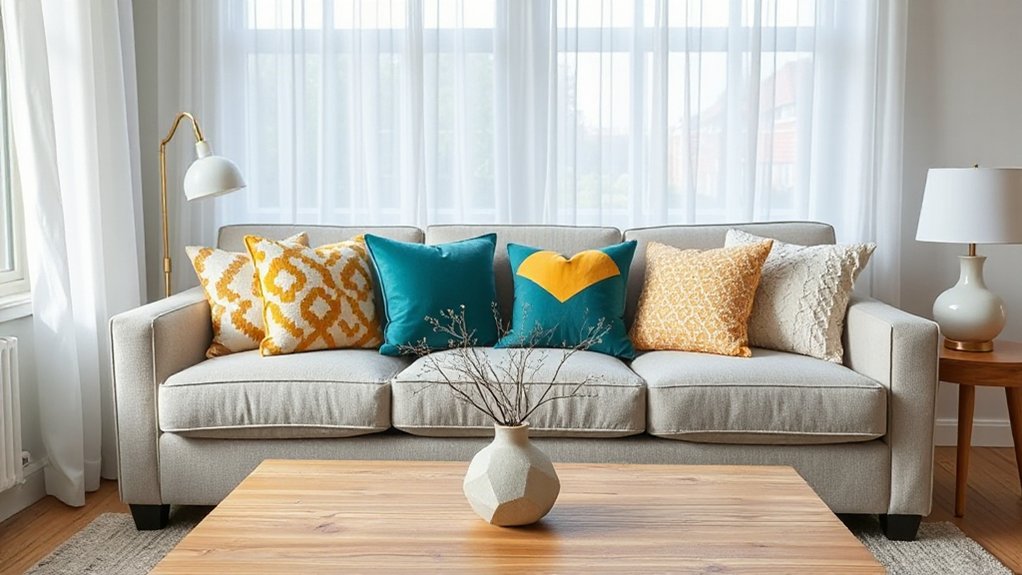
Swap throw pillows to add instant color and contrast without committing to new furniture. You’ll get a cohesive look faster if you pick a tight color palette, then mix patterns and textures—think stripes with a small-scale print, plus linen or velvet for depth.
Keep it current and budget-friendly by rotating seasonal pillow covers so your sofa shifts from airy spring tones to richer fall hues in minutes.
Choose A Color Palette
Why let your sofa blend into the background when a tight color palette can do the heavy lifting? Start with your room’s fixed pieces, then pick 2–3 core colors and one accent you’ll repeat.
Use Color psychology to set the mood: blues calm, greens balance, warm neutrals welcome. Add energy with complementary hues, but keep saturation consistent so the look stays intentional.
When you swap throw pillows, you’ll instantly reinforce your palette without repainting or replacing furniture.
- Choose a dominant color (60%) for large surfaces
- Add a secondary color (30%) in pillows and throws
- Use an accent (10%) for bold contrast and punch
- Repeat the same undertone (warm or cool) throughout
Mix Patterns And Textures
Once you’ve locked in your color palette, use pattern and texture to keep the room from feeling flat. Swap your throw pillows to introduce color and contrast without committing to new furniture.
For Pattern mixing, pair one bold print (like a large-scale stripe or geometric) with one smaller, quieter pattern (micro-check, pin-dot, or subtle floral) in the same palette. Anchor them with at least one solid pillow to give your eye a place to rest.
Then lean into Texture layering: combine nubby bouclé, crisp linen, soft velvet, or woven leather to add depth, especially in neutral rooms.
Keep shapes varied—one lumbar, two squares—and repeat one accent color twice for a pulled-together, designer look.
Rotate Seasonal Pillow Covers
When your room starts to feel stale, rotating seasonal pillow covers gives you an instant color and contrast update without touching the big pieces. Treat it like quick Seasonal decor: swap covers, keep inserts, and you’ll refresh the vibe in minutes while staying budget-smart.
Aim for balanced pillow arrangements by mixing solids, stripes, and a small-scale print, then repeat one accent color across the sofa and chair to look intentional.
- Spring/summer: linen or cotton in airy pastels, crisp white, or botanical prints
- Fall: rust, olive, and plaid in textured weaves for warmth
- Winter: velvet, boucle, or faux fur in deep jewel tones
Year-round: one neutral “base” cover set that anchors every rotation.
Stick to three tones max, and vary sheen for depth.
Change Curtains to Control Light and Mood
Switch your curtains to fine-tune both daylight and the room’s vibe, starting with fabric weight—sheers soften glare, while lined drapes add privacy and a cozy, insulated feel.
Then update color and pattern to steer the mood: warm neutrals keep it calm, rich tones add drama, and subtle stripes or botanicals bring a current, layered look.
You’ll get the biggest impact when you match the curtain’s opacity and palette to how you actually use the space, day and night.
Choose Fabric Weight
How much light you let in—and how the room feels—often comes down to fabric weight. Swap your curtains to tune brightness, privacy, and drape without changing the whole room. Start with material selection: heavier weaves hang straighter and block more glare, while lighter fabrics float and soften edges.
In busy spaces, prioritize Fabric durability so panels don’t bag, pill, or fade after frequent pulls and sun exposure.
- Use sheers to diffuse daylight and reduce harsh contrast.
- Choose medium-weight linen blends for a tailored, modern fall.
- Pick blackout or lined drapery for bedrooms and media rooms.
- Add thermal curtains to buffer drafts and steady temperature.
Measure for full stack-back so you don’t lose window area when they’re open.
Update Color And Pattern
Fabric weight sets the baseline for brightness and drape, but color and pattern fine-tune the mood your windows broadcast. Use Color psychology: cool blues and soft greens calm bedrooms, warm terracotta energizes kitchens, and crisp white lifts low-light rooms. If you want more glow without glare, choose pale neutrals with a tight weave and a matte finish.
For Pattern blending, match one curtain color to a dominant room tone, then echo a secondary accent in the print. In small spaces, pick low-contrast stripes or micro-geometrics to add movement without visual noise.
In larger rooms, go bolder with oversized botanicals, but keep the palette limited to two or three hues. Swap hardware to black or brass so the update feels intentional, not temporary.
Anchor the Space With a New Rug
Even if you don’t change a single piece of furniture, a new rug can instantly define the room’s layout and make everything feel more intentional. Start by sizing up: you want at least the front legs of seating on the rug, or all legs if the room allows.
Use Rug textures to add depth—flatweaves read crisp and modern, while wool pile feels cozy and quiet-luxury. For Pattern coordination, echo one or two colors from your pillows, art, or drapes so the room looks edited, not busy.
- Choose a low-pile rug for high-traffic zones
- Try a vintage-style print to soften stark furniture
- Pick a warm neutral to unify mixed woods and metals
- Add a rug pad for comfort and clean edges
Layer Lighting: Overhead, Task, and Glow
Once you’ve grounded the room with a rug, use layered lighting to make it feel finished at every hour. Start with overhead: a flush-mount, pendant, or track that spreads even light for true ambient ambiance. Put it on a dimmer so daytime brightness and evening softness live on the same switch.
Next, add task lights where you actually work—swing-arm sconces by the sofa, a desk lamp with an opaque shade, or under-cabinet LEDs in the kitchen. Aim bulbs at 2700K–3000K for warm, flattering color.
Finish with glow: small table lamps, picture lights, or LED strips tucked on shelves to create depth and calm. This layered illumination prevents harsh shadows and makes corners feel intentionally styled.
Use Mirrors to Bounce Light and Widen Rooms
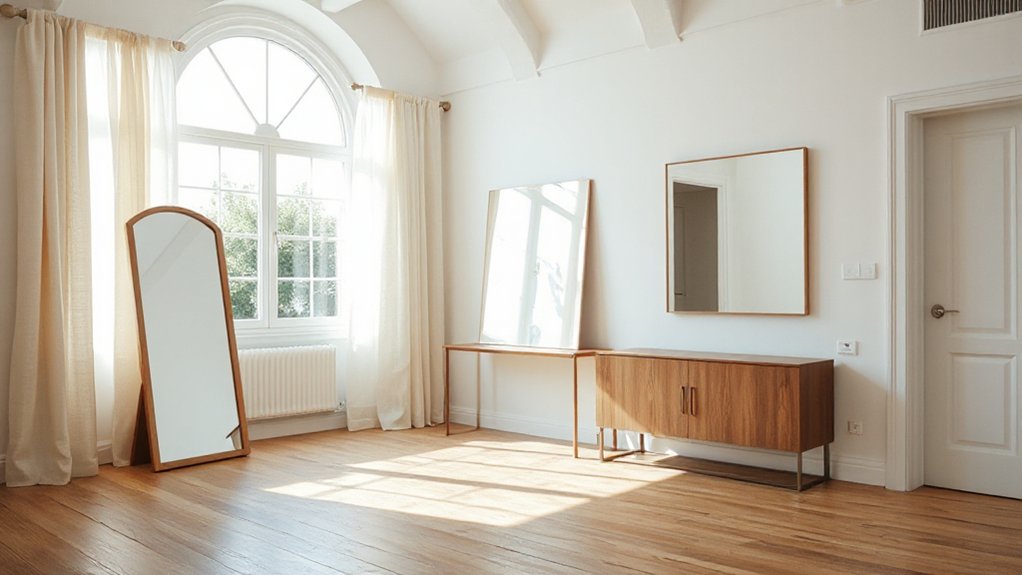
Where can you get more daylight without adding a single window? Use mirrors to amplify what you already have. Smart mirror placement turns small rooms airy by doubling sightlines and boosting light reflection from lamps and daylight.
Place a mirror opposite or adjacent to a window to catch the brightest angles, then aim it toward a focal point so the bounce looks intentional, not random. In tight spaces, go tall to stretch the wall; in long rooms, go wide to broaden proportions.
Choose thin frames or arched silhouettes for a current, gallery-like feel.
- Hang across from windows to multiply daylight
- Face a lamp to spread warm evening glow
- Lean a full-length mirror to add height
- Group smaller mirrors to mimic a large pane
Try Renter-Friendly Paint Shortcuts (Small Areas)
If you can’t repaint an entire room, you can still change the vibe fast by targeting small zones. Try peel-and-stick paint panels for a crisp color block, paint an accent niche to spotlight shelving or art, and use removable trim touch-ups to sharpen baseboards and doorframes without a permanent commitment.
You’ll get a high-impact refresh that’s easy to reverse when your lease is up.
Peel-And-Stick Paint Panels
Want the look of a painted accent without the mess, fumes, or landlord drama? Peel-and-stick paint panels give you crisp color fast, and you can remove them cleanly when you move. Choose adhesive panel options in modern hues (clay, deep olive, inky blue) or subtle textures that mimic brushwork.
For a clean DIY wall installation, measure twice, mark a level line, and smooth from the center outward to prevent bubbles.
Use them on small areas like behind a desk, above a headboard, or around a mirror for instant polish.
- Pick low-tack adhesive rated for painted drywall
- Clean walls with isopropyl alcohol, then dry fully
- Heat edges lightly with a hair dryer for tighter seals
- Store extra panels flat for easy touch-ups later
Painted Accent Niches
Peel-and-stick panels handle quick color on flat walls, but a painted accent niche gives you that built-in, designer look with only a few brushstrokes. Pick a shade 2–3 steps deeper than your wall for crisp Color contrast, then test it on poster board to avoid surprises under lamps.
Keep it renter-friendly by staying small: paint only the niche’s back panel or ceiling, not the surrounding wall. Use a mini foam roller for a smooth, modern finish, and cut edges with an angled sash brush.
For extra polish, choose eggshell or satin so light bounces and the recess reads intentional. Style the niche with Texture layering—stack books, matte ceramics, and a woven basket—so the color feels anchored, not loud.
Removable Trim Touch-Ups
- Peel-and-stick molding strips, cut with a miter box
- Removable adhesive caulk for seams
- Sample-size paint + mini brush/foam roller
- Low-tack tape for clean lines
Add Plants for Instant Texture and Life
Even if your furniture and color palette feel “finished,” a few well-placed plants add instant texture, movement, and that lived-in warmth designers love. Use Indoor greenery to soften hard edges: place a tall fiddle-leaf fig or dracaena near a window to balance a sofa’s horizontal lines, and tuck a pothos on a shelf so vines break up straight geometry.
Keep Plant arrangements intentional, not random. Group odd numbers (three small pots) for a modern, styled look, and vary heights with a stand or stacked books. Match planters to your room’s finishes—matte black for contemporary, warm terracotta for earthy, ribbed ceramics for the current tactile trend.
If light’s low, pick snake plant or ZZ; they’ll still look crisp and healthy.
Build a One-Hour Refresh Checklist + Shopping List
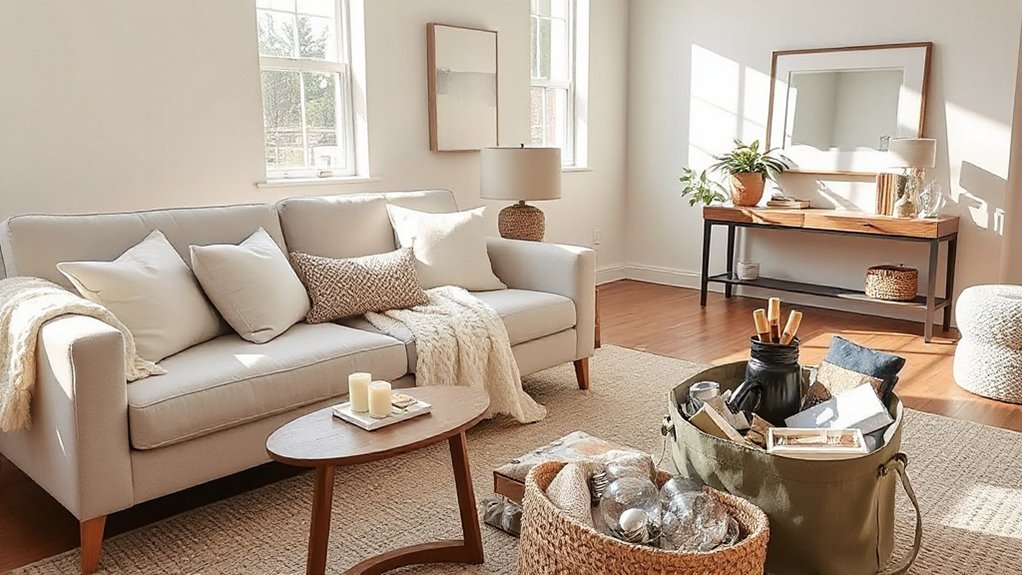
When you’ve only got an hour but want the room to look intentionally updated, follow a tight refresh checklist and a small, high-impact shopping list.
Start by resetting the “bones”: clear surfaces, then tweak furniture placement so walkways feel open and the focal point reads instantly.
Next, edit styling to a consistent palette (warm neutrals, matte black, or brushed brass).
Finish with one statement upgrade that photographs well—usually wall art.
Shop only what moves the needle fast:
- Oversized wall art or a pair of matching frames
- One textured throw + two pillow covers (trend: bouclé, stripes)
- A rechargeable table lamp or warm LED bulb (2700K)
- A tray and one sculptural object for the coffee table
Set a timer, work top-down, and stop when it looks intentional.
Frequently Asked Questions
How Can I Refresh a Room on a Very Tight Budget?
You can refresh a room cheaply by decluttering, swapping throw pillows, and rearranging furniture for flow. Add Budget friendly decor like thrifted vases, paint accents, and hang DIY wall art using printable posters in frames.
Which Interior Design Styles Are Easiest to DIY for Beginners?
You’ll find Minimalist aesthetics, Scandinavian, and modern farmhouse easiest to DIY as a beginner: you’ll stick to clean lines, neutral palettes, and simple textures. Add Vintage accents via thrifted frames, brass lamps, or patinated mirrors.
How Do I Choose a Cohesive Color Palette Across Multiple Rooms?
Like a playlist, you’ll pick 3–5 core hues and repeat them for Color coordination. Anchor with neutrals, add one accent, and tweak warm/cool tones per room for Palette harmony. Match undertones, finishes, textiles, and lighting.
What Are Common Mistakes That Make Small Rooms Feel Cluttered?
You make small rooms feel cluttered by using cluttered furniture, pushing everything to walls, blocking pathways, and ignoring scale. You also add overcrowded accessories, too many patterns, and poor lighting, so nothing gets breathing room.
How Often Should I Update Decor to Keep a Room Feeling Fresh?
Update decor seasonally, with small tweaks every 3–4 months. Does “fresh” really mean constant shopping? You can swap seasonal decor, rotate wall art, and refresh textiles annually, keeping trends current without visual clutter.
Conclusion
Now you’ve got a quick, trend-smart toolkit to refresh any room without a full redo. Pick your vibe—brighter, cozier, or calmer—then declutter, reset surfaces, and fix the flow by rearranging furniture. Swap pillows, update curtains, and add a mirror to stretch light like a spotlight. Use renter-friendly paint in small zones, and bring in plants for texture. Wrap it up with a one-hour checklist and a tight shopping list.