
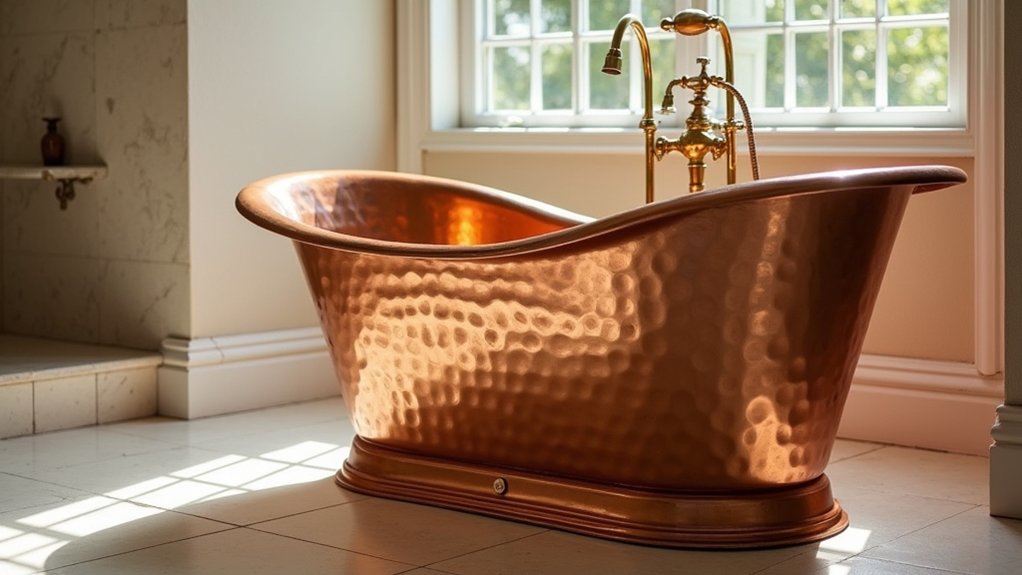
Did you know copper bathtubs can resist dents and corrosion better than many plated alternatives? You’ll weigh its durability and unique patina against higher upfront costs and ongoing maintenance. The aging process creates character, but it also means regular care to preserve finish. If you’re weighing ROI and installation realities, this discussion narrows to timing, budget, and the kind of home you’m renovating—and that choice might hinge on what you value most in long-term aesthetics and performance.
Why Copper Bathtubs: Benefits and Trade-offs
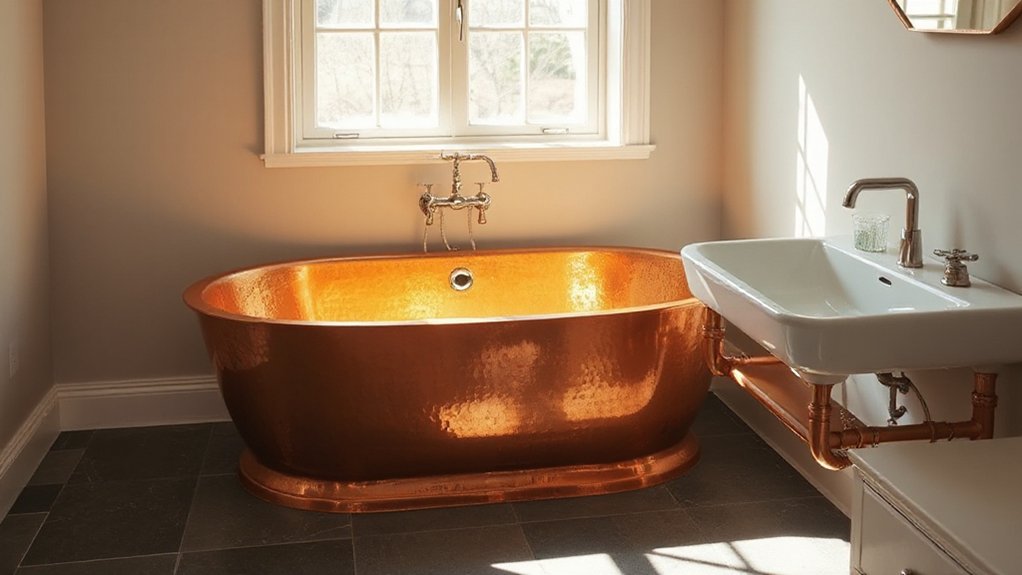
Copper bathtubs offer a striking blend of durability and aesthetic appeal, but they come with considerations that affect maintenance, cost, and long-term performance. You’ll value its heritage, but weigh practical trade-offs before committing.
Historical appeal adds character that can elevate bathroom design and resale perception, especially in period homes or high-end renovations. The metal’s antimicrobial properties offer a niche convenience, yet require mindful care to preserve patina and finish.
Environmental impact matters: copper sourcing, production emissions, and end-of-life recyclability influence your sustainability assessment.
Ongoing maintenance is simpler than you might fear, but patina changes demand routine cleaning with mild agents to avoid corrosion risk.
Durability Facts: How Copper Withstands Everyday Use
Copper’s exterior resists daily Gaide: you’ll find its patina forgives fingerprints and minor bumps without immediate damage. Its tough shell stands up to routine cleaning, hot water, and household products, reducing the risk of surface wear.
In real-world use, this translates to a durable finish that stays visually consistent while you maintain it.
Copper’s Tough Exterior
Although copper’s surface resists many daily hazards, its toughness isn’t about invincibility—it’s about predictable, durable performance under typical bathroom and kitchen use. You’ll find that a copper bathtub handles impact, heat, and moisture with steadiness, thanks to a homogeneous metal structure and controlled alloy content.
Its exterior resists denting more than you might expect, yet you’ll appreciate the yield strength that prevents sudden deformation from routine bumps. Scratches reveal a warm patina rather than shallow wear, contributing to an evolving, low-maintenance aesthetic.
In practice, durability hinges on finishes and installation details—protective coatings, proper anchoring, and drainage integration—keeping joints and edges secure. Aesthetic appeal and historical significance reinforce copper’s position as a timeless, resilient material choice.
Everyday Wear Resistance
Even with its tough exterior, a copper bathtub is built to endure everyday use without sacrificing performance. You’ll notice solid durability from the metal’s intrinsic strength and low brittleness, which helps resist daily bumps and routine cleaning.
Copper’s surface naturally develops a patina, but this doesn’t imply weakness; it enhances corrosion resistance by forming a protective layer that slows ongoing degradation. For daily maintenance, wipe spills promptly and avoid abrasive cleaners that could create surface scratches.
When cared for, the finish remains uniform, preserving both appearance and structural integrity. Surface scratches may occur with heavy abrasive contact, yet they’re typically shallow and blend over time.
The Patina Journey: How Copper Ages and What It Means for You
The patina on copper isn’t just cosmetic—it’s a predictable, science-backed aging process that affects color, texture, and performance over time. As you observe your tub, you’ll notice Patina development shifting from warm, reddish tones to deeper browns and greens, driven by oxidation and exposure.
This evolution isn’t random; it follows predictable stages influenced by environment, humidity, and use patterns. You gain a durable, self-reinforcing surface that resists further corrosion, but color shifts may alter perceived heat and tactile feel.
Understanding the aesthetic evolution helps you set expectations for design harmony with fixtures and surrounding materials. In short, the patina becomes an authentic signature, not a flaw, signaling provenance and care.
Your copper tub evolves with you, maintaining character while delivering lasting resilience.
Maintenance Essentials: Cleaning, Protection, and Preventing Reactions
Copper tubs reward proper care with a durable, low-maintenance finish, but managing patina-friendly wear requires a practical cleaning, protection, and reaction-prevention routine.
You’ll establish cleaning routines that remove mineral buildup without abrading the surface, using pH-neutral cleaners and soft cloths. Avoid abrasive pads and acidic solvents that dull luster or roughen the patina.
Protect the copper by applying protective coatings designed for metal finishes, reapplying as recommended to maintain a controlled patina and inhibit tarnish from humidity or cleaners.
Reactivity is minimized by drying after use and promptly wiping spills, especially acidic substances.
Regular inspection catches micro-scratches or corrosion risks before they deepen.
Integrate these steps into a routine you can sustain, ensuring long-term beauty without compromising the copper’s character.
Costs and Value: Budgeting, ROI, and Installation Realities
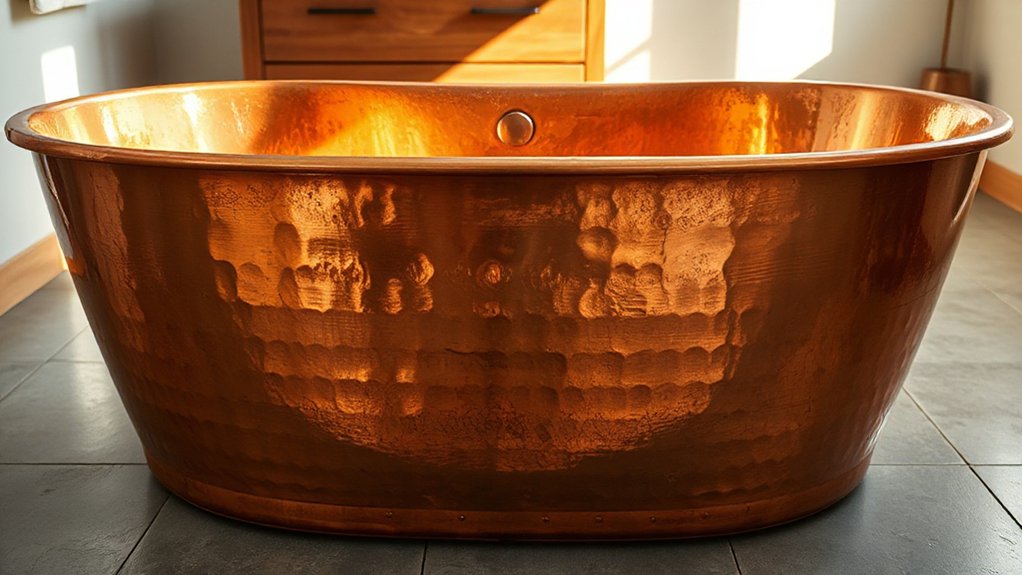
Copper tubs can be a sound investment, but budgeting hinges on upfront costs, long-term maintenance, and installation realities you’ll need to plan for. You’ll weigh material price against shipping, insulation, and compatibility with existing plumbing.
The luxury investment label isn’t just prestige; it reflects higher fabrication tolerances, lead times, and skilled installation—factors that affect ROI. While durable, copper demands targeted protection and periodic patina maintenance, which can influence lifecycle costs.
Expect premium install fees for custom sizing, reinforcement, and drainage integration. In terms of value, you gain aesthetic appeal and potential resale uniqueness, but depreciation isn’t guaranteed in every market.
If you prioritize unique bathroom storytelling and long-term durability, copper can justify the premium; otherwise, compare return timelines against alternative finishes.
Is a Copper Bathtub Right for You? A Practical Decision Guide
Consider whether a copper bathtub aligns with your budget, maintenance tolerance, and design goals, because the material’s premium price and ongoing care shape its practicality in everyday use. You’ll weigh historic value against modern function, balancing initial cost with long-term durability and resale signals.
Historical authenticity matters: a true copper piece conveys legacy and patina, but it comes with periodic maintenance to preserve finish and prevent corrosion in high-use bathrooms.
Aesthetics drive decisions, yet you must assess installation constraints, weight, and plumbing adaptations. If you prioritize aesthetic versatility, copper harmonizes with metals, stone, and warm woods, adapting to traditional or contemporary schemes.
If ease and predictable upkeep define your choice, you may prefer alternatives. In short, decide based on how well copper’s character aligns with your lifestyle and maintenance tolerance.
Frequently Asked Questions
Can Copper Tubs Be Repaired if Dented or Scratched?
Yes, copper tubs can be repaired if dented or scratched. You’ll restore the finish with professional-grade, patina-safe fillers and gentle polishing.
Deeper dents may require cold-working or resurfacing.
Maintenance tips include sealing to prevent tarnish and avoiding abrasive cleaners.
Material durability remains high, but repairs must be handled by specialists to preserve antimicrobial properties and heat conduction.
You’ll want an expert for seamless color match and long-lasting protection, ensuring continued longevity and value.
Do Copper Bathtubs Affect Water Taste or Smell?
Did you notice a dingy taste or strange aroma with copper tubs? In short, no secondhand taste or odor should emerge from normal use. If you detect changes, it’s usually from water contaminants or fittings rather than the copper itself.
Focus on Water filtration and Odor issues in your system. You’ll want properly treated water and clean fixtures to prevent metallic notes, ensuring consistent, high-quality water experience and material integrity.
Are Copper Tubs Compatible With All Plumbing Setups?
Copper tubs aren’t universally compatible with all plumbing; you’ll face variations in supply lines, trap configurations, and water pressure basics.
You’ll want to assess material durability and guarantee a proper bonding and drainage setup.
Installation complexity matters, since some systems require copper-compatible fittings and professional soldering.
You’ll need flexible adaptation for aprons or fixtures, plus pressure testing.
With the right plan, you’ll align with standard code, avoid leaks, and maintain ideal water flow and longevity.
How Long Does a Patina Take to Form Naturally?
Naturally, patina formation on copper tubs can take years, not days, depending on exposure and wear. You’ll notice copper aging gradual shifts in tone, from bright to warm to a smoky green as oils, water, and air interact.
In ideal conditions, expect visible aging over months to a couple of years; full patina may take longer. You’re in control of speed via cleaning, humidity, and use, shaping the final copper aging profile.
What Resale Value Do Copper Bathtubs Add?
A copper bathtub can boost resale value modestly, typically by signaling historical authenticity and durable construction.
You’ll attract buyers who prize longevity, unique patina, and kitchen-and-bath prestige, with the potential for a premium in higher-end homes.
While the exact uplift varies by market, your best leverage lies in its historical authenticity and aesthetic appeal—paired with quality installation and proper maintenance.
Expect stronger demand in boutique or heritage properties, where distinctive, long-lasting fixtures matter most.
Conclusion
Copper bathtubs bring durability, timeless style, and antimicrobial benefits, but you’ll invest more upfront and commit to ongoing care. Your best move is to weigh the patina you’ll love against maintenance needs; patina can be part of the charm if you’re patient. If you fear upkeep, opt for a protective sealant and regular cleaning to minimize reactions. In short: deliberate choice, informed maintenance, enduring value.