
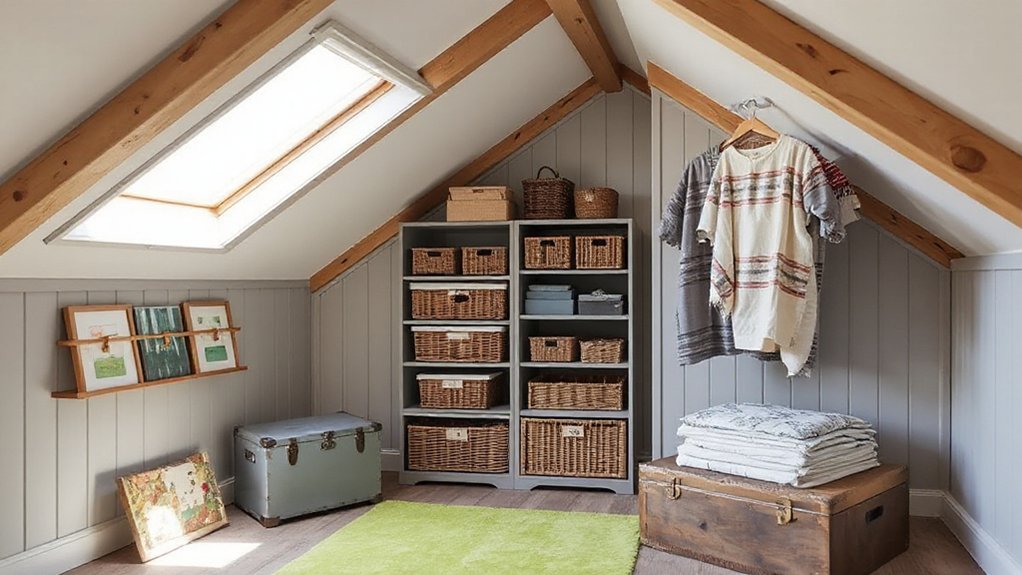
Like a quiet archive, your attic holds promise you’ve yet to tap. You’ll map goals, weigh constraints, and spot clutter before it grows. You’ll see how modular shelves, slim pull-outs, and labeled bins bite into awkward angles, while tight insulation and airflow protect what matters. With a few budget hacks and smart lighting, the space becomes usable without overhauling your home. Curious about the exact setup that fits your layout? Let’s start.
Assess Attic Storage Goals and Constraints
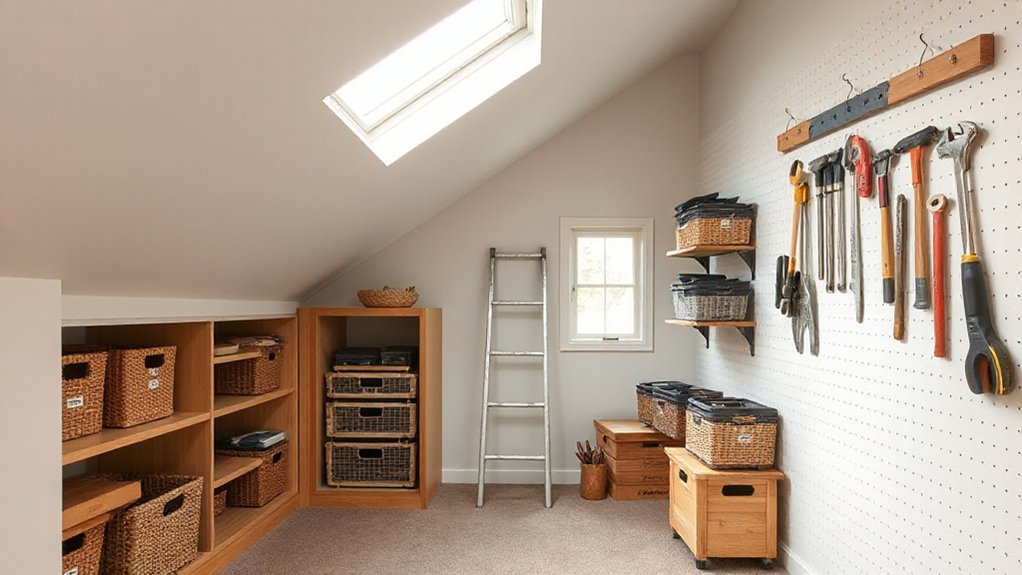
Start by defining what you actually need from attic storage. You’ll map goals: what you’ll store, how often you access it, and how it affects headroom. Identify constraints like ceiling height, structural load, and existing insulation gaps. Clear goals keep decisions focused and prevent overbuild.
Consider attic insulation and ventilation options early—proper insulation reduces heat and moisture intrusion, while ventilation prevents mold and odor buildup as you store seasonal items.
Decide on layout: bins, shelves, and hanging zones that minimize crawl-space intrusion and maximize usable floor area. Think about access points, door clearance, and potential fall risks, then plan safety measures and lighting accordingly.
Align budget with priorities, trimming features that don’t serve core needs while preserving clean, organized storage.
Quick-Win Storage You Can Install Today
Think fast and declutter with quick-install racks that maximize vertical space in minutes. Pair them with foldaway shelf solutions for instant, tidy surfaces you can use today.
You’ll notice a cleaner attic layout with less effort and more room for the things you actually need access to.
Quick-Install Racks
Quick-install racks let you reclaim vertical space in minutes, so you can organize now rather than later. You’ll love how fast these systems go up and how clean they look against attic walls. Select lightweight, powder-coated rails that won’t warp in seasonal humidity, and mount at eye level for easy access.
Consider adjustable totes or shallow bins so you can swap items without reconfiguring the whole setup. Prioritize a tight, organized ladder or walkway to preserve floor clearance.
As you plan, balance Attic insulation with each rack’s footprint to prevent heat transfer mishaps. Pair racks with ventilation optimization by leaving small gaps around vents and avoiding blockages.
The result: accessible, durable storage that enhances space without clutter.
Foldaway Shelf Solutions
Foldaway shelves are a smart, grab-and-go solution for small attics: they tuck away when not in use but pop out for instant, reachable storage. You install lightweight brackets under eaves or a shallow loft lip, then hinge panels fold flat when idle.
Pick a depth that mirrors your stored items to keep walkways clear, preserving airflow. Use perforated shelves or slats to reduce dust buildup and improve visibility.
For best results, pair with attic insulation upgrades and keep ventilation improvements in mind; vents should stay unobstructed and warm-air flow unimpeded.
When loaded, keep heavier items toward the hinge side to prevent sag.
Maintenance is quick: wipe surfaces and check bolts quarterly to maintain smooth operation and long‑term utility.
Under-Eave and Corner Solutions for Easy Access
Under-eave storage makes the most of tight spaces by using the often-unused roofline. You’ll gain accessible overhead zones without widening rooms, so your attic feels calmer and organized.
Choose slim profiles and pull-out hampers that tuck against the eaves, keeping floor space clear for movement. Corner niches can hold labeled bins, maximizing awkward angles without clutter.
Ascertain you plan entry points near stairs or ladders for quick reach, noting where ceiling height limits access. Attic insulation should stay intact around storage modules, so you don’t compromise temperature control.
Pair your setup with good roof ventilation to prevent moisture buildup and odors. Use durable, low-profile lids to minimize interference with lighting and walkway paths.
This approach delivers tidy, functional storage that respects the attic’s architecture.
Flexible Modular Shelving for Small Attics
Flexible modular shelving adapts to irregular attic layouts, letting you reconfigure as your storage needs shift. You’ll gain tangible organization without committing to a single plan, because panels slide, rotate, and lock into steps that fit sloped ceilings and nooks.
Prioritize vertical density to maximize footprint, using tall, narrow modules above bins and crates. Choose lightweight, sturdy materials so you can rework the setup as seasons change.
Add custom labeling to each zone, so you know where holiday decor sits versus seasonal gear at a glance.
Integrate lighting enhancements—compact LED strips along every rail brighten deep corners and reduce rummaging.
Keep a clean aesthetic with uniform finishes and hidden hardware for a calm, usable attic that feels larger than it is.
Climate-Smart Ways to Protect Your Stuff
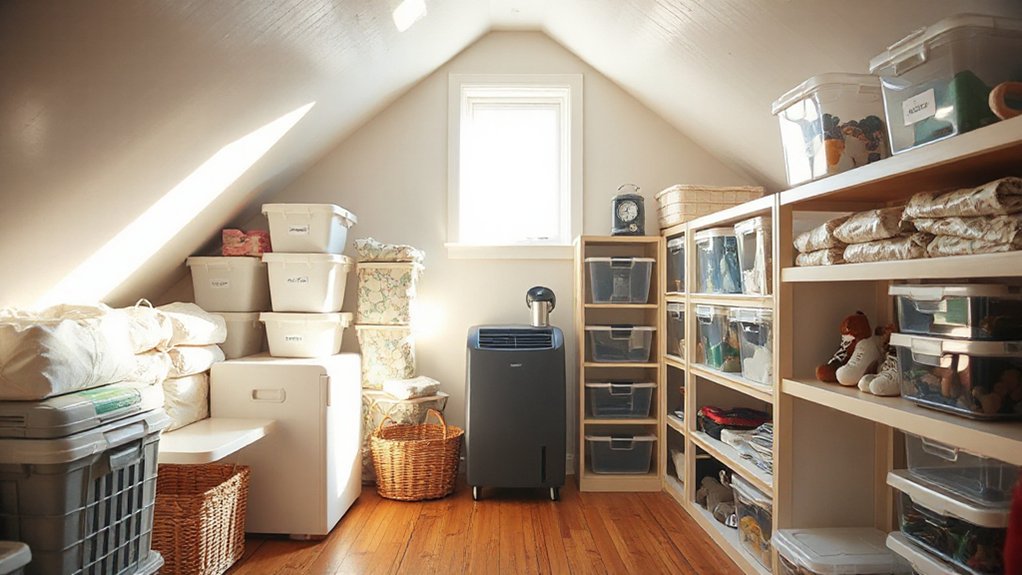
Climate-smart storage protects your items from humidity, temperature swings, and pests, turning that modular system into a lasting investment. You optimize the attic environment with targeted climate control, keeping sensitive textiles, photos, and electronics stable.
Lightweight, breathable containers prevent mold, while desiccants address moisture at a glance. Insulation upgrades reduce cold bursts and heat spikes, so you won’t stress over seasonal extremes.
Seal gaps around ducts and access doors to curb drafts and critters, then choose airtight tubs for long-term holds. Elevate airflow with a simple vent or exhaust fan to deter damp pockets.
Use labeled, color-coded bins to minimize rummaging and maximize visibility. This approach blends aesthetics with practical reasoning, delivering durable protection without clutter.
Budget Hacks to Maximize Every Inch
If you’re squeezing more storage out of a tight attic, start with a plan that prioritizes accessibility and visibility. Budget hacks hinge on smart framing, not splurges, so map zones: frequently used items near the door, seasonal gear higher up, rarely touched treasures in slim access.
Install modular shelves, stackable bins, and uniform lids to minimize fuss when you fetch items. Use clear, labeled containers for quick recognition, and avoid overbuying by repurposing sturdy compliance or vintage decor pieces as discreet storage.
Maximize ceiling height with shallow wall-mounted systems; shallow drawers keep small items tidy. Seal gaps with affordable attic insulation to cut cold drafts and moisture.
Small investments—good lighting, pegboards, low-profile racks—pay off in function and aesthetic cohesion.
Frequently Asked Questions
How Do I Choose the Right Attic Storage Height for My Space?
Aim for a clear, comfortable height you can reach without strain; measure from floor to peak and add clearance for movement. Consider Attic insulation and ventilation solutions to maintain airflow, preventing heat buildup while maximizing usable storage space.
What Are the Safest DIY Attic Flooring Options for Beginners?
You should opt for sturdy plywood subflooring and tongue-and-groove panels, ensuring even support and slip resistance. Prioritize attic insulation and ventilation improvements, plus guardrails. Use caution, test loads, and keep pathways clear for safe DIY flooring.
Can Attic Stairs Affect Ceiling Clearance and Room Usability?
You notice a coincidence: attic stairs shift ceiling clearance, subtly changing room usability. If you cohere attic insulation and ceiling beams, you’ll retain headroom, improve airflow, and keep storage practical without sacrificing aesthetics or space efficiency.
Are Lighting and Electrical Considerations Needed for Attic Storage?
Yes, you need electrical wiring and proper lighting placement. Make certain circuits handle added load, install accessible switches, and keep fixtures away from insulation. Use daylighting where possible, choose low-profile LEDs, and prioritize safe, practical wiring for attic storage.
How Do I Prevent Moisture With Fabric and Paper Storage in Attics?
You can cut attic moisture by 60% with proper dehumidifier placement, preventing damage to fabric and paper. Use mold prevention techniques like breathable storage bags, silica gel, and elevated, well-ventilated shelving. Monitor humidity and air flow regularly.
Conclusion
Here’s your final takeaway: you can transform a small attic into a sleek, functional storage hub without crowding your space. Think modular shelves, slim pull-outs, and labeled bins that fit awkward corners. Prioritize insulation, airtight containers, and breathable desiccants to guard valuables. Light up with LEDs, seal gaps, and repurpose what you already have to save cash. The result? A climate-smart, accessible attic that feels calm, organized, and almost effortless—like design you can live in, not just store in.
Rhetorical device: a gentle analogy (like design you can live in, not just store in).