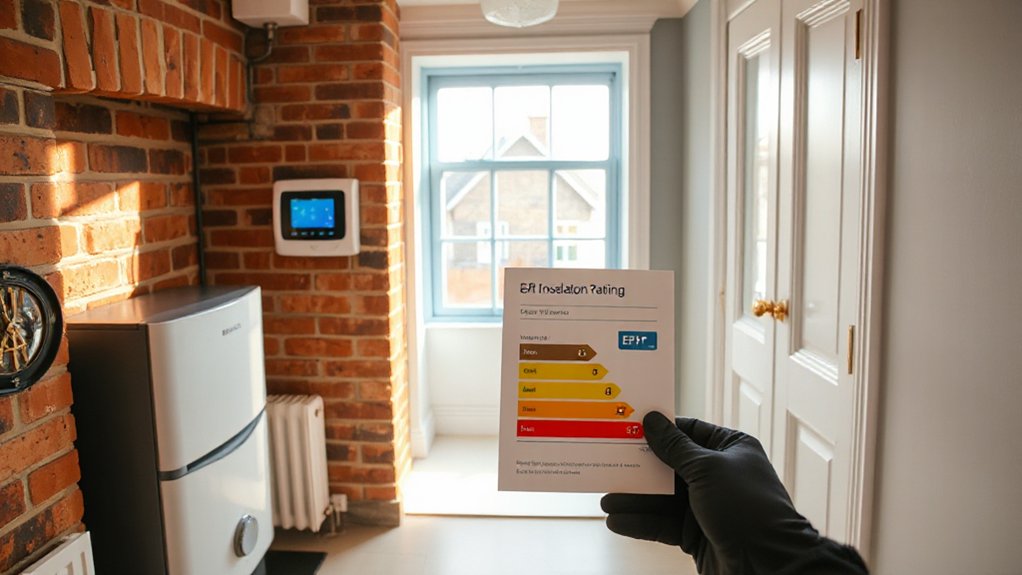
Improving EPC ratings in older UK properties starts with tight, cost-efficient insulation and airtightness, since gaps and heat loss drive bills and carbon emissions. Begin with budget options like loft and cavity insulation, then seal around frames and upgrade draught-proofing. Add smart controls to reduce boiler runtime and target zone heating, followed by moderate heating upgrades if needed. Consider heritage-conscious renewables, prioritising reversible, low-impact tech. Planning and preservation considerations matter; manage expectations and safeguards as you pursue upgrades. Continue to optimize for long-term performance.
What EPC Ratings Mean for Older UK Homes (Why It Matters)
EPC ratings quantify a property’s typical yearly energy consumption and carbon emissions, expressed on a scale from A (most efficient) to G (least efficient).
For older UK homes, these ratings reflect how your building performs in real conditions, guiding both comfort and operating costs. You’ll see Energy efficiency concepts translated into measurable indicators, enabling objective comparisons across properties.
A higher rating often correlates with lower energy bills and reduced environmental impact, which can influence buyer or renter perception.
In terms of property valuation, EPCs provide a standardized metric that informs market assessments and financing decisions.
Understanding your current rating helps you identify practical upgrades that preserve character while improving efficiency, supporting a competitive position in the market and a clearer long‑term ownership plan.
Prioritize Insulation on a Budget: Where to Start
Insulate first, then iterate: start with cost-effective fixes that deliver the largest reduction in heat loss per pound. You can prioritize practical gains by targeting loft and cavity wall insulation, door and window draughts, and pipework in unheated zones.
Budget friendly options exist when you choose standardized materials and straightforward installation methods that don’t require extensive rewiring or major trades.
Assess existing gaps with a simple heat loss assessment, then apply tight-fitting loft boards, reflective foil to reduce radiant transfer, and sealant around frames.
For cavity walls, guarantee proper filling by a qualified installer, and consider external or internal insulation where appropriate to minimize disruption.
Keep notes on insulation tips and costs for ongoing EPC monitoring and review.
Heating Upgrades That Cut Bills (What to Do First)
To cut energy bills quickly, prioritize heating upgrades that deliver measurable, immediate reductions in consumption. You should begin with strategies that yield verifiable savings within weeks, not months.
Smart thermostats enable zone control and adaptive scheduling, reducing boiler runtime while maintaining comfort. They provide data you can monitor to confirm impact on daily usage.
Next, pursue radiator upgrades where heat distribution is suboptimal; upgrading to higher-output individual units or adding thermostatic valves reduces overheating and uneven rooms, improving overall efficiency.
Prioritize systems with compatible controls and simple commissioning to minimize disruption.
Avoid over-investment in marginal gains; target interventions that demonstrably lower gas consumption and heat loss.
Document baseline metrics and post-install results to validate EPC improvements and support ongoing energy planning.
Smart Controls for Low-Disruption Efficiency
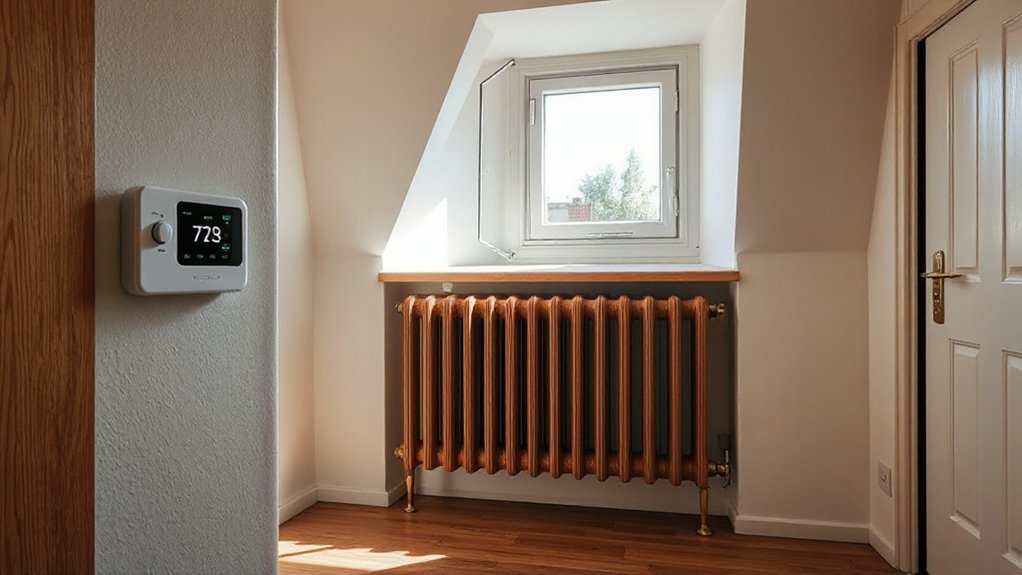
Smart controls provide centralized, user-friendly management of heating and hot water, enabling precise schedules and responsive adjustments.
You’ll find low-disruption upgrades include smart thermostats, zone control, and occupancy-based saving features that minimize installation impact.
The EPC impact overview highlights how these controls reduce energy waste, with measurable gains aligned to existing systems and user behavior.
Smart Controls Overview
What do smart controls offer for low-disruption efficiency in older UK properties, and how do they differ from traditional controls? You gain centralized adjustment, automated scheduling, and adaptive setpoints that respond to occupancy and weather, reducing energy use without intrusive replacements.
Unlike conventional thermostats, smart controls integrate with existing heating systems, valves, and sensors to optimize performance across zones. You benefit from remote access, real-time monitoring, and fault detection, enabling timely maintenance and reduced heat loss.
Implementation prioritizes minimal retrofit, leveraging wireless hubs and retrofit-friendly actuators. Home automation capabilities enable coordinated control patterns, preserving comfort while lowering EPC-related penalties.
Precision commissioning ensures calibrated operation, avoiding overshooting or short cycling. In practice, you’ll see measurable efficiency gains, clearer energy insights, and a sense of belonging within a modern, efficient home.
Smart controls support sustained low-disruption improvements.
Low-Disruption Upgrades
Could you implement low-disruption smart controls that fit seamlessly into older UK properties? You equip existing systems with compact, wireless controllers that don’t require extensive rewiring. The approach prioritizes minimal disruption, rapid installation, and verifiable gains in EPC metrics.
Energy efficient lighting modules replace or retrofit incandescent fixtures, paired with occupancy sensing to reduce standby draw without compromising comfort.
Low cost ventilation is managed via demand-controlled ventilation strategies, using smart timers and humidity sensing to sustain indoor air quality while limiting heat loss.
Controls are interoperable with common heating systems, enabling scheduling, remote monitoring, and fault alerts.
The result is precise, reproducible improvements in efficiency without compromising the building’s fabric or resident routines. This aligns with a practical, inclusive upgrade path.
EPC Impact Overview
1. You’ll find that EPC impact from smart controls hinges on measurable, low-disruption efficiency gains. By grouping programmable thermostats, occupancy sensors, and heating setpoint strategies, you reduce run hours without compromising comfort. This clarity helps maintain occupant trust and supports consistent performance across seasons.
Energy efficient lighting and water saving fixtures play complementary roles, lowering auxiliary loads and streamlining demand profiles that EPC assessments monitor. When controls respond to real usage patterns, you capture demand reduction credits and improved hot water management, translating to tangible score uplift.
Documented baselines matter: track pre- and post-implementation consumption, control responsiveness, and user engagement. This approach meets regulatory expectations while fostering a sense of belonging through transparent, accountable energy performance improvements.
Windows and Draught-Proofing for Green Comfort
Windows and draught-proofing are essential to improving EPC ratings in older UK properties. You assess older frames for heat loss, focusing on sealing gaps and upgrading insulation where feasible.
Window efficiency becomes central, so you compare sash, casement, and secondary glazing options against cost and performance.
Draught proofing techniques include door sweeps, lintel seals, and draft stoppers at key leakage points, applied with attention to existing building fabric.
You should measure pre- and post-intervention air leakage to quantify gains, ensuring compatibility with historic fabric and maintenance practices.
Prioritize airtightness improvements that preserve character while minimizing thermal bridging.
Document performance shifts for stakeholders, and integrate weather-stripping plans with long-term maintenance.
This approach fosters belonging through reliable, transparent efficiency enhancements.
Renewable Options for Period Properties
Renewable options for period properties require careful assessment of building fabric, historic constraints, and load profiles. You’ll compare technologies such as heat pumps, solar PV, and solar thermal for compatibility with traditional layouts and chimney access.
Prioritizing energy performance and minimal visual impact is essential. This discussion links period-specific considerations to overall EPC improvements, focusing on prudent integration and long-term efficiency.
Renewable Reading: Period Homes
For period homes, renewable options must respect historic fabric while delivering measurable energy gains. You assess integration strategies that minimize visual impact and preserve essential heritage cues, focusing on long-term performance and reliability.
System selection emphasizes non-intrusive technologies, reversible installations, and compatibility with existing fabric, ensuring compliance with planning and conservation guidelines. You weigh insulation improvements, airtightness, and low-profile PV or solar tiles that complement rooflines without eroding architectural character.
When addressing Historic preservation and Cultural significance, you prioritize documented heritage value and community context, documenting interventions for future stewardship.
Energy efficiency retrofits are paired with responsive controls and grid-smart curtailment to avoid overdevelopment. You communicate findings with stakeholders, balancing modern efficiency with reverence for place, heritage, and user belonging.
Historic Heat: Green Upgrades
In period homes, you can improve comfort and reduce emissions by prioritizing low-impact, reversible renewable options that respect fabric and character. Historic heat strategies emphasize compatibility with historic preservation goals, ensuring installations don’t undermine structure or historic curatorial intent.
You’ll evaluate solar thermal, heat pumps, and biomass only when located to minimize visual intrusion and noise, with reversible fittings where possible. Cultural significance guides placement, timing, and finish choices, avoiding alterations that erase historical details.
Efficiency upgrades should be prioritized alongside ventilation to avoid damp and condensation issues common in older fabrics. System controls must be documented for future care, aligning with preservation ethics and EPC accuracy.
This approach fosters inclusive stewardship, enabling homeowners to participate in a shared, responsible energy shift without compromising legacy qualities.
Planning Considerations for Listed Buildings and Rentals
Planning considerations for listed buildings and rentals require balancing heritage protections with practical energy improvements. You assess what constitutes a listed asset, then identify feasible upgrades that preserve character.
Heritage restrictions shape allowable interventions, so you consult planning authorities early to avoid delays. You should anticipate requiring renovation permits for structural changes, insulation work, or alterations to windows, doors, or vents.
Document performance targets and expected EPC impact to demonstrate proportionality to listed status. Seek guidance from conservation officers to align proposals with conservation principles while pursuing energy efficiency gains.
Where possible, opt for non-invasive measures first, such as enhanced controls, smart thermostats, or airtightness improvements that avoid visible alterations.
Maintain transparent communication with landlords and tenants to ensure shared commitment to compliant, effective efficiency upgrades.
Frequently Asked Questions
How Do EPCS Differ for Period-Specific Construction Methods?
EPCs differ by accounting for historical construction and period specific techniques, so you assess insulation, airtightness, and fabric efficiency in context. You identify how historic methods influence heat loss, then target upgrades without compromising authenticity or character.
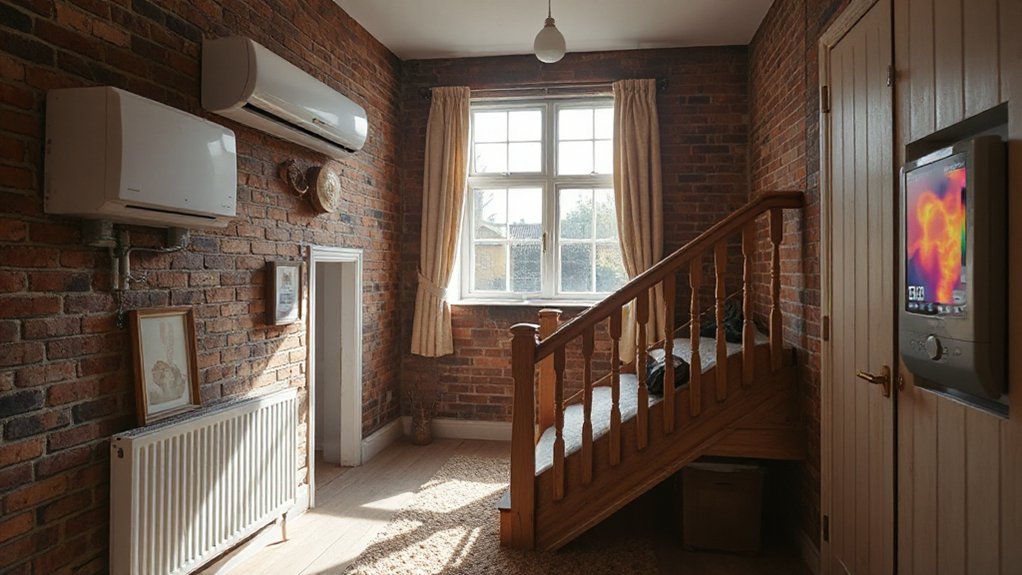
Can Thermal Imaging Identify Hidden Heat Loss in Older Homes?
Yes, thermal imaging can identify hidden heat loss in older homes, revealing insulation effectiveness gaps and air leakage paths; you’ll interpret patterns to target improvements and feel confident in the accuracy of your retrofit decisions.
Are There Grants for Retrofitting Listed Buildings?
Grants exist for retrofitting listed buildings, though eligibility hinges on historic preservation guidelines and Building regulations. You’ll navigate funding alongside conservation requirements, coordinating with local authorities to guarantee compliant, energy-efficient upgrades that respect heritage values and community inclusion.
Do EPC Improvements Affect Tenant Rights and Tenancy Agreements?
Yes, EPC improvements can affect tenant rights and tenancy agreements, so you should review clauses on alterations, notices, and energy-related works; verify consent requirements, potential costs, and protection against unwanted disruptions to guarantee you and your tenants belong.
How Long-Term Are Savings From Heat Pump Installations in Fluctuating Climates?
Energy savings from heat pumps persist long-term in fluctuating climates, though effectiveness hinges on climate adaptation and ongoing maintenance; you’ll notice improved energy efficiency, and consistent gains as you adapt systems to seasonal variations and occupancy patterns.
Conclusion
Improving your older UK home’s EPC isn’t a one-off task; it’s a sequence of calibrated upgrades. Start with insulation, then efficient heating, smart controls, and draught-proofing, before considering windows and renewables. Each step builds on the last, optimizing comfort and cost. Balance improvements with listed status or rental requirements to avoid constraints. Remember: the true target is a steady, measurable drop in energy use, not a single flashy upgrade—think compound interest for your home’s performance.