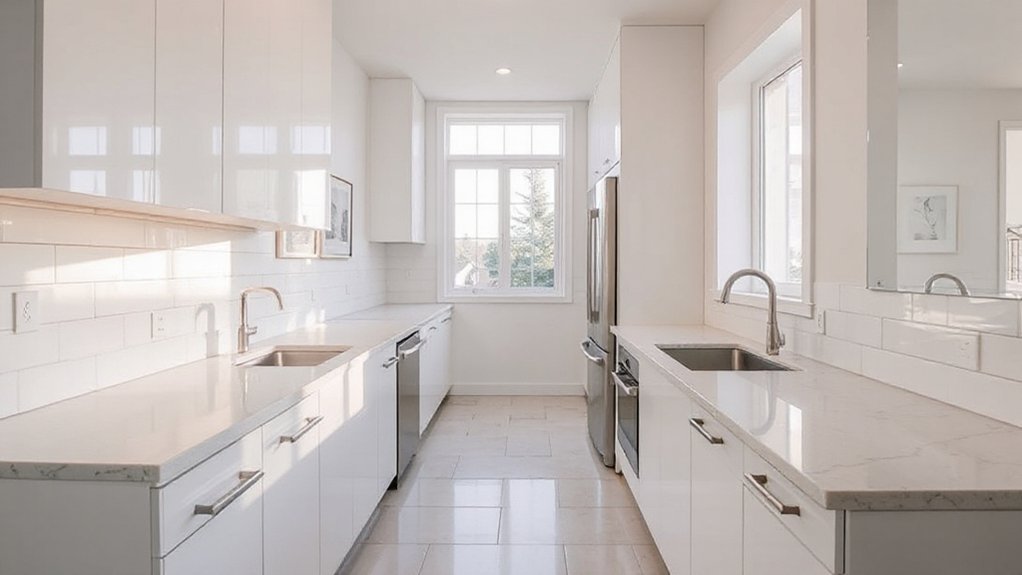
Like a quiet invitation to a familiar room, your small kitchen can feel bigger with a few focused moves. You’ll keep prep, cook, and cleanup in clear zones, use vertical storage, and reduce clutter with closed cabinetry. Bright, even lighting and reflective surfaces add depth, while unobstructed paths and compact furniture preserve flow. Subtle upgrades—mirrors or glass-front cabinets—pull in light and space. Ready to start reshaping the feel, one practical step at a time?
Why a Small Kitchen Feels Cramped : And How We Fix It
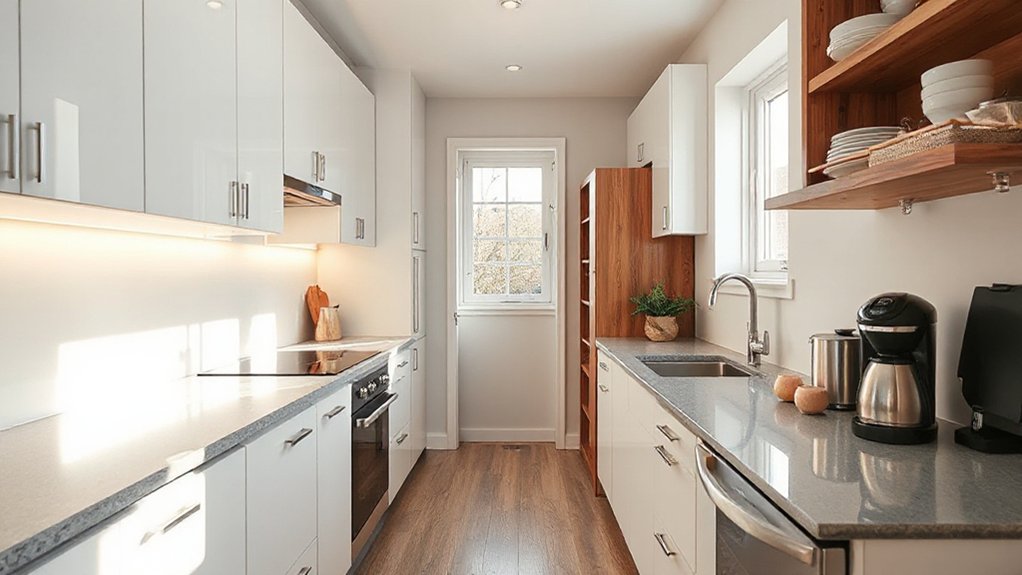
A small kitchen often feels cramped because every inch of space matters, and clutter instantly multiplies. You’ll notice under-counter clutter crowding work zones, drawers that don’t fully close, and walls that trap your line of sight.
The fix begins with clear zones: prep, cook, and clean, kept distinct with minimal props. Color schemes play a vital role—neutral bases with single, restrained accents open perception and reduce visual fatigue.
Choose flat-front cabinets and handleless doors to lessonize noise and create smoother lines. Decorative accents should stay sparse: a singular bowl, one plant, one framed note.
Maximize verticals, mount tools, and store out-of-sight items behind closed doors. By removing excess and harmonizing hues, you regain perceived space and calmer flow.
Brighten on a Budget: Lighting Tricks That Feel Airy
Brighten a small kitchen without breaking the bank by leveraging light strategically. You’ll choose practical sources: under-cabinet LEDs, bright white bulbs, and dimmable options to adapt mood. Aim for even illumination to avoid harsh shadows; place strips where counters meet to eliminate dark corners.
Use reflective surfaces—glass, polished backsplashes, or stainless accents—to multiply each lumen. Keep fixtures simple and unobtrusive; a slim pendant can guide the eye without crowding space.
Color illusions matter: cool whites expand perception, while subtle warm tints soften edges. Maximize natural light whenever possible with sheer window treatments.
Decorative accents in metallic or glass catch highlights and add depth without clutter. Your setup should feel airy, coordinated, and purposeful, delivering brightness through restraint rather than excess.
Open Sightlines: Layout Tweaks That Reveal Space
Open sightlines start with clearing clutter and choosing furniture that breathes. You’ll keep pathways clear and seating compact, so counters stay visible and work zones feel larger.
Align cabinets and decor to a simple rhythm, avoiding abrupt breaks that trap the eye. Use low-profile shelving and open-front storage to emphasize visual openness, not bulk.
Extend counters visually with the same edge height and color as adjacent surfaces, so the line of sight travels uninterrupted.
Minimize freestanding islands; if you must have one, make it slim and movable to preserve sightline continuity.
Mirrors or glass-front cabinets can enhance depth, creating sightline illusions without crowding the room.
Maintain a neutral backdrop to let architectural features breathe and space read as cohesive.
Smart Storage to Reclaim Counter and Cabinet Space
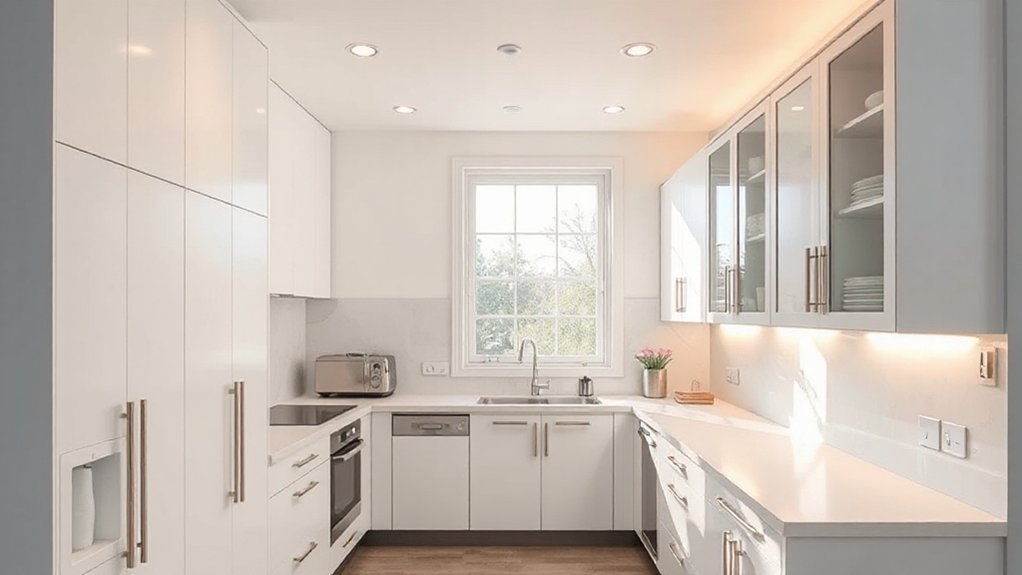
Smart storage trims clutter by reclaiming counter and cabinet space without sacrificing function. You’ll optimize every inch by prioritizing vertical hooks, magnetic strips, and slim organizers that fit tight gaps.
Use hidden compartments in your island or beneath a pull-out cutting board to tuck rarely used tools out of sight. Choose multi purpose furniture, like a compact workstation with integrated charging, or a cart that doubles as a prep surface and storage zone.
Install door racks on pantry and cabinet doors to hold lids, spices, or lids. Label baskets for quick scanning, and group items by frequency of use.
Maintain airflow and accessibility by keeping one clear space on the counter for daily tasks. Regularly purge unused gadgets to sustain lean efficiency.
Quick, Affordable Upgrades That Deliver Big Impact
If you’ve just trimmed clutter with smart storage, you’re ready for quick, affordable upgrades that deliver big impact without a remodel.
You can boost perceived space with color contrast: light walls against darker countertops or cabinets to sharpen edges and create depth. Swap out hardware for slim, matte metallic pulls to reduce visual bulk while elevating finish.
Add decorative accents that read as deliberate cues, not clutter—think a single framed print, a compact recipe board, or a small rug with a subtle pattern.
Improve lighting with bright, diffused LEDs near work zones and under cabinets to erase shadows.
Keep accessories limited and purposeful, rotating seasonally to maintain a clean, breathable rhythm.
These small moves yield noticeable, cost-efficient expansion.
Frequently Asked Questions
How Can Color Choices Affect Perceived Space in a Small Kitchen?
Color psychology guides you: light, cool neutrals open spaces, while Palette contrast adds definition. You’ll balance glossy and matte finishes, keep cabinets pale, accents bold, and use consistent color flow to visually expand your small kitchen.
Do Mirrors or Reflective Surfaces Really Create More Depth?
Yes, mirror illusions work; reflective surfaces add depth by doubling light and space. You’ll notice a room feels larger as you place them strategically, creating perpetual horizons. Use them deliberately, avoiding clutter, and you’ll preserve a clean, efficient kitchen.
Can Window Treatments Influence Kitchen Brightness Without Glare?
Yes, window treatments influence brightness; choose sheer fabrics and light colors to minimize glare. Use Lighting techniques like layered ambient and task lighting. Try window treatment styles that soften daylight without blocking it, keeping your kitchen feeling open and functional.
What Role Do Rug Textures Play in Small-Kitchen Design?
Texture contrast matters: rugs with varied pile heights enhance depth, while rug layering adds dimension without crowding feet. You’ll notice a 20% lift in warmth perception. Use subtle tones; keep textures simple, functional, proportional for small kitchens.
Are There Budget-Friendly Ways to Create Focal Points Without Clutter?
Yes—budget-friendly focal points work by using decorative lighting and statement accessories strategically, avoiding clutter. You’ll highlight key zones with minimal pieces, guarantee proportional scale, and keep surfaces clear for a clean, functional kitchen feel.
Conclusion
You’ll feel the difference when you keep zones clear, light streams in, and storage tucked away. Stick to compact, functional pieces and reflective surfaces to bounce life through the room. Open sightlines guide the eye and the flow, while smart storage reclaims counter and cabinet space. Quick, affordable upgrades deliver big impact without clutter. Ready to transform your kitchen into a brighter, roomier space you actually enjoy? Isn’t a simpler, cleaner kitchen what you’ve been reaching for?