Make your small garden feel larger by zoning it for dining, planting, and utility, then anchoring each area with one “hero” piece like a bistro set or statement pot. Keep paths slim (18–24 inches) with firm pavers and crisp edging, and choose folding chairs or built-in benches with storage. Add a single focal feature, go vertical with trellises, and refresh fast with standardized seasonal containers. Brighten with pale fences and light paving, then finish with warm, shielded lighting and safely framed mirrors. Keep going to see smart layouts, plant pairings, and lighting placements.
Split Your Small Garden Into Zones
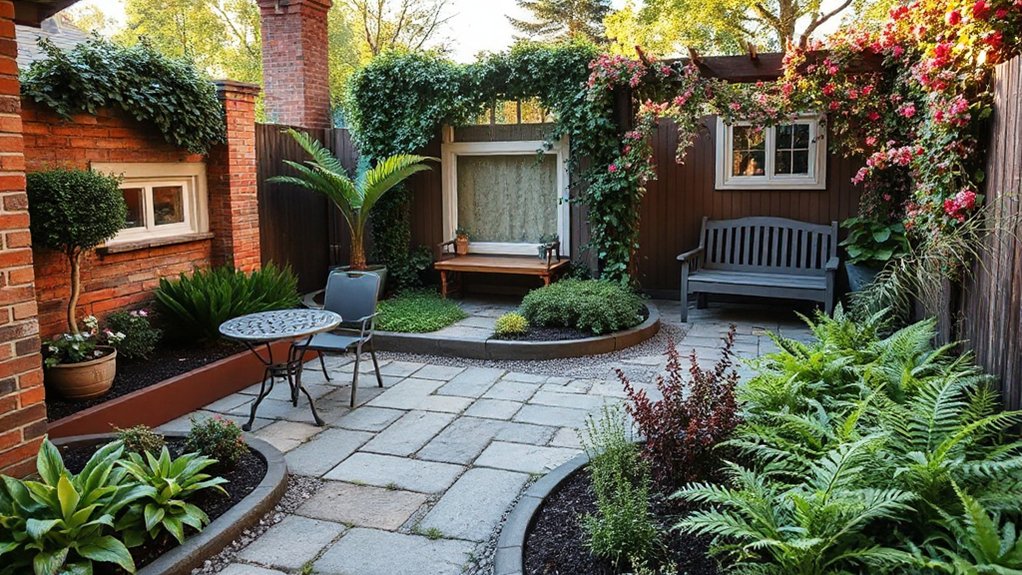
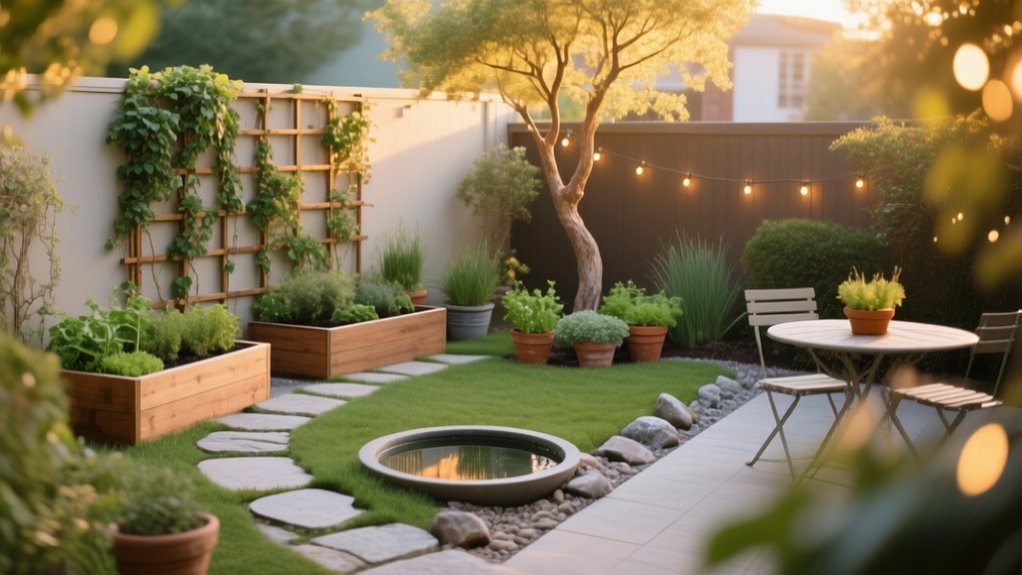
When you divide a small garden into clear zones, it instantly feels larger and works harder for you. Start with Garden zoning that matches how you live: a compact dining nook, a focused planting area, and a tidy utility corner for bins or tools.
Use spatial division to signal each purpose without crowding the layout—think low hedging, clipped grasses, raised edging, or a change in surface texture. Anchor every zone with one “hero” element: a bistro set, a statement pot, or a sculptural shrub.
Then keep supporting plants restrained and repeated for cohesion. Align zones to light and sightlines, so taller planting screens service areas and frames views.
You’ll gain order, flow, and a modern, curated feel.
Plan Slim Pathways (18–24 Inches Wide)
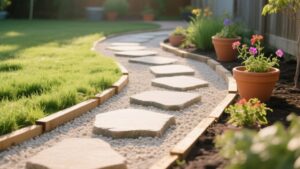
Although wide walkways can eat up precious square footage, a slim 18–24-inch path keeps your small garden functional without sacrificing planting space. Use narrow pathways to link zones directly, so you don’t waste area on sweeping curves unless they solve a specific circulation problem.
Set your route first, then size planting beds around it. Choose firm, low-profile surfaces—compacted gravel, cut stone, brick, or porcelain pavers—to keep the line crisp and modern. Install edging (steel, brick, or buried pavers) so slim walkways don’t creep wider over time.
For safety, plan lighting at turns and entries, and keep clearances tight by pruning spillover plants. If you need access for a wheelbarrow, widen only at pinch points, not everywhere.
Pick Space-Saving Seating (Folding, Built-In, Benches)
Because every square foot counts in a small garden, choose seating that disappears, doubles as storage, or hugs the perimeter instead of floating in the middle. Start with folding chairs you can hang on hooks, tuck into a slim deck box, or lean behind a shed; pick powder-coated steel or teak for weather resistance.
For daily lounging, install built-in benches along a fence, retaining wall, or planter edge so circulation stays clear. Specify a 15–18-inch seat height and add hinged lids for tools, cushions, or kids’ toys.
Choose narrow, armless profiles to prevent visual bulk, and use outdoor performance fabric for quick drying.
Finish with a compact bistro table that nests or drops down when not needed.
Add One Focal Feature (Fountain, Tree, Sculpture)
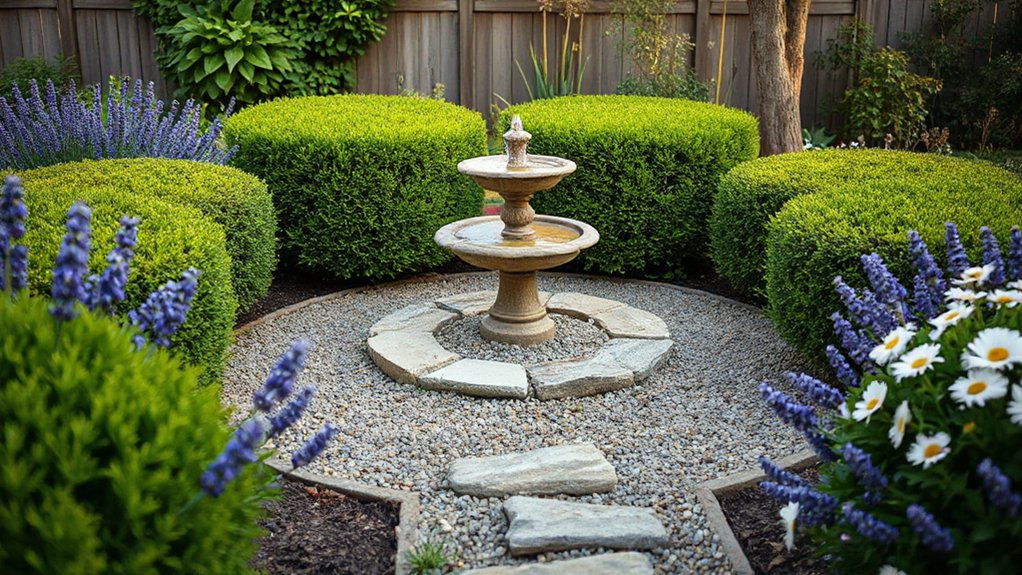
Even in a tiny garden, one strong focal feature creates structure and makes the whole space feel intentional. Choose a single statement piece and let everything else support it.
For modern focal feature ideas, install a compact recirculating fountain; you’ll add sound, movement, and a cooling feel without sacrificing floor space.
Prefer greenery? Plant a small, sculptural tree like a multi-stem Japanese maple in a raised ring, then underplant with low, shade-tolerant texture.
If you want year-round impact, place a weatherproof sculpture or oversized urn on a simple plinth and light it with a discreet spike uplight.
Keep scale tight, materials cohesive, and sightlines clear so your garden centerpiece options don’t compete.
Go Vertical With Trellises and Wall Planters
When ground space runs out, push your planting upward with trellises and wall planters to add privacy, texture, and usable greenery without widening the footprint. Vertical gardening turns blank fences and exterior walls into high-performance zones, boosting screening and visual polish in tight courtyards or side yards.
Choose rustproof steel, cedar, or powder-coated panels, and anchor them into studs or masonry so they won’t rack in wind. Use wall-mounted planters with integrated drip lines to keep maintenance predictable and surfaces clean. For a crisp, modern look, repeat the same module and spacing.
- Map sun and wind exposure before mounting.
- Leave airflow behind planters to prevent mildew.
- Use lightweight, well-draining media to protect hardware.
- Add a slim catch tray to control runoff.
Layer Plants for Height, Texture, and Depth
If your small garden feels flat, plant in deliberate layers to build height, texture, and depth without crowding the footprint. Start with a slim “backbone” of upright plants at the rear or along boundaries—columnar evergreens, clumping grasses, or tall perennials—so the eye reads structure first.
Next, add mid-layer mounds to soften shift and create repeatable rhythm; think hydrangea paniculata, salvias, or compact shrubs with clean silhouettes.
Finish with a low, spreading front edge of groundcovers and edging perennials to hide soil and sharpen lines. This Plant layering approach works best when you engineer Texture contrast: pair fine blades with bold leaves, glossy with matte, and airy flowers against dense foliage.
Keep spacing intentional, and stagger heights to avoid a wall effect.
Use Containers to Change Layouts Fast
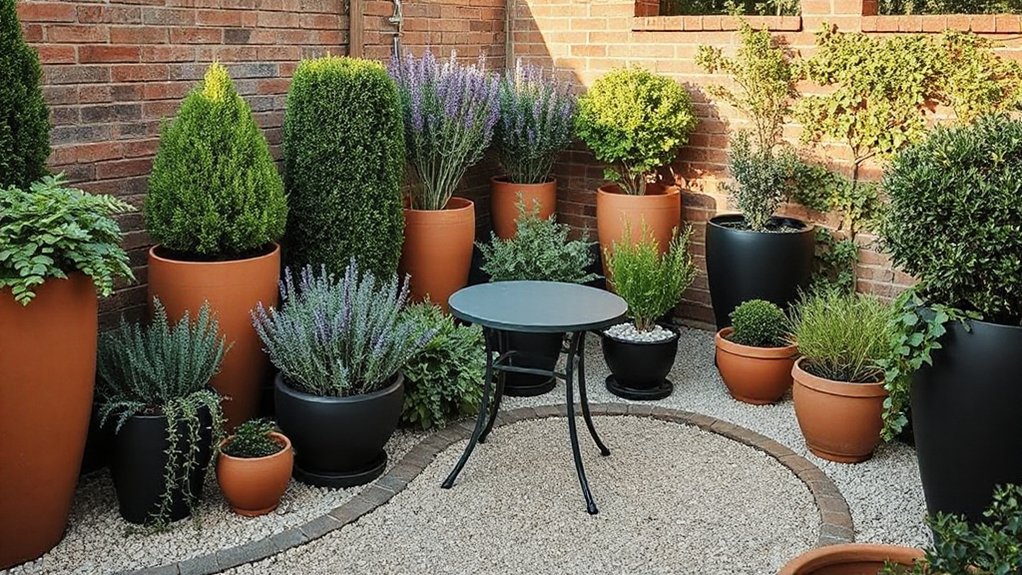
Use containers as your fast-change tool: group modular pots in tight clusters so you can shift “zones” in minutes without disturbing in-ground plants.
Standardize a few sizes and finishes, then rotate placements to refresh sightlines and keep pathways clear.
When seasons change, swap in new container plantings—spring bulbs to summer annuals to autumn grasses—so your small garden stays current with minimal effort.
Modular Pot Grouping
Although small gardens can feel locked into a single layout, modular pot grouping gives you a fast, flexible way to redesign the space without digging or committing to permanent beds. You’ll create structure by clustering pots in repeatable modules—pairs, trios, or grids—then shifting them to open sightlines or define zones.
- Standardize sizes: choose two or three pot diameters so groupings stay cohesive.
- Vary heights: mix tall planters with low bowls to build rhythm and depth.
- Unify finishes: repeat one material or color for a modern, curated look.
- Anchor with weight: place heavier pots at corners to prevent drift and tipping.
With modular pot grouping, you can trial layouts quickly, and customizable container arrangements let you fine-tune balance, circulation, and focal points.
Seasonal Container Swaps
Two or three seasonal container swaps can refresh a small garden’s layout in minutes, letting you pivot from spring color to summer texture to winter structure without moving a single bed.
Start by standardizing pot sizes and saucers, so you can slide replacements into the same footprints along paths, steps, or a patio edge.
For spring, run tight garden color schemes—white tulips, blue muscari, and chartreuse foliage—then lift out the whole pot and drop in summer combos like coleus, calibrachoa, and upright grasses for height.
In fall, switch to mums, heuchera, and trailing ivy; for winter, use dwarf conifers, birch stems, and seeded eucalyptus.
Keep each swap pre-planted in staging pots, and you’ll change the “room” instantly.
Brighten With Light Materials (Fences, Pots, Paving)
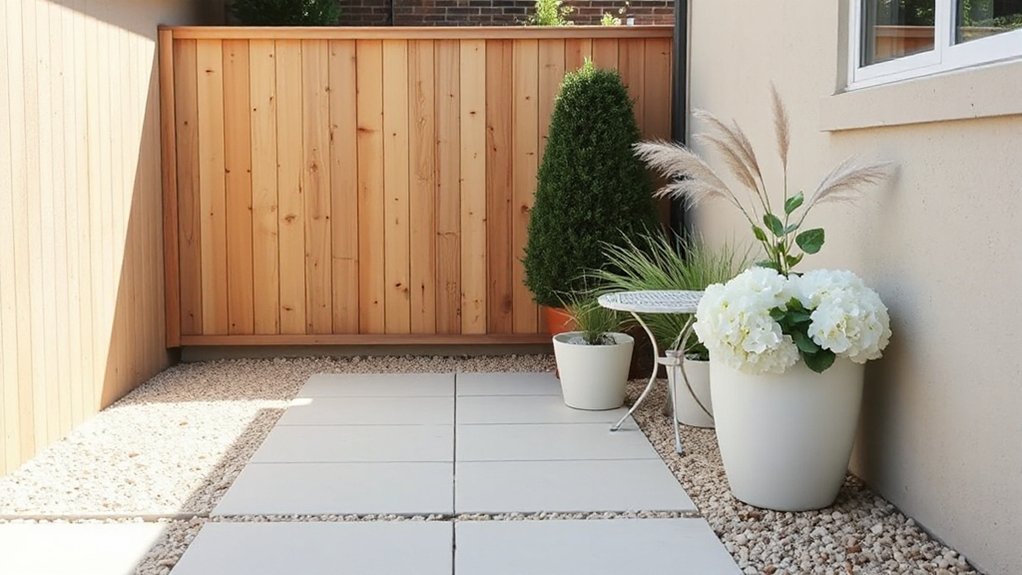
You’ll make a small garden feel larger and brighter by switching to light-reflective materials where it counts. Choose pale fence finishes (soft white, stone, or light grey).
Pair them with light-tone pots, and keep the palette consistent for a clean, modern look.
Install bright paving stones to bounce daylight across the space and sharpen the overall layout.
Choose Pale Fence Finishes
- Use exterior-grade, UV-stable paint or stain for lasting brightness.
- Prep properly: clean, sand, prime knots, then seal end grain.
- Match fence tone to paving undertones for a cohesive, modern look.
- Recoat on schedule to prevent algae, dinginess, and patchy fade.
Use Light-Tone Pots
Because small gardens trap shadows, light-tone pots act like mini reflectors, bouncing daylight back onto foliage and hardscaping. Choose matte whites, warm ivories, or pale greige to soften contrast and make tight corners feel wider.
Place the brightest containers at the back of beds to pull the eye outward, and cluster three in varied heights to create a layered focal point without clutter. You’ll get the clean, gallery-like look designers favor right now, especially when you repeat one shade across multiple pots.
Mix in pastel colored planters—powder blue, blush, or sage—for a subtle trend hit that still reads airy. Keep finishes consistent, but vary textures: smooth ceramic, limewashed terracotta, or composite. Add matching saucers to protect surfaces.
Install Bright Paving Stones
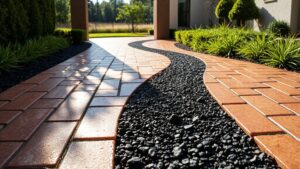
Why let a small garden read darker than it needs to? Install bright paving stones to bounce daylight, sharpen sightlines, and make tight footprints feel wider. Choose pale limestone, porcelain pavers, or light concrete with a matte finish so glare stays controlled and surfaces look modern, not sterile.
Pair them with colorful accents in nearby pots or cushions, and frame paths with decorative borders to keep the palette intentional.
- Size pavers larger to reduce visual “noise” in compact layouts.
- Lay in a running bond to elongate narrow spaces.
- Specify permeable joints to manage stormwater and protect roots.
- Add a slim contrasting inlay to guide movement and define zones.
Seal stains early, and you’ll keep that crisp, airy lift all season.
Light It Up With Low-Glare Outdoor Lighting
Even in a compact garden, well-placed, low-glare lighting can reshape how the space looks and feels after dark without washing it out. Start with warm LEDs (2200–2700K) and aim beams downward so you cut glare and keep neighbors happy.
Use shielded path lights for clean pathway illumination, spacing them to “pool” light rather than create a runway. Tuck solar lanterns into planters or hang them from a pergola edge for a modern, cordless layer.
Add a few low-watt uplights to graze textured walls, grasses, or a small tree, then keep fixture heights low to preserve sightlines. Put everything on a timer or smart plug, and dim where possible for flexibility.
Add Mirrors and Reflective Accents Safely Outdoors
Once you’ve set the mood with warm, low-glare lighting, you can stretch a small garden visually by adding mirrors and other reflective accents—but you’ve got to place them with intention.
Choose weather resistant mirrors rated for exterior use, and treat them as design tools, not gimmicks. Aim reflections toward greenery, not seating, to prevent glare and support outdoor safety. Mount securely on masonry or posts, and keep edges framed to reduce chips.
Reflective metal screens, glazed pots, and water bowls can echo light without looking busy.
Use this checklist:
- Position mirrors to “double” a focal planting bed.
- Avoid direct sun angles that can hotspot plants.
- Use shatter-resistant acrylic where kids play.
- Clean seasonally, and inspect fixings after storms.
Frequently Asked Questions
How Much Does Small-Garden Landscaping Typically Cost per Square Meter?
You’ll typically pay $50–$300 per m² for small-garden landscaping, depending on grading, planting, and materials. Add garden lighting and outdoor furniture and you’ll push totals higher, especially with smart LEDs and modular sets.
Do I Need Planning Permission for Decking, Patios, or Garden Structures?
You usually don’t need planning permission for decking, patios, or small garden structures if they’re low, within boundaries, and not in conservation areas; check local rules. Plan Garden lighting wiring and Outdoor furniture clearances before you build.
Which Plants Are Safest for Gardens With Pets and Young Children?
Better safe than sorry: choose Pet friendly plants and Child safe garden plants like rosemary, thyme, basil, lavender, snapdragons, sunflowers, and Boston ferns. You’ll avoid lilies, foxgloves, oleander, and yew; always verify toxicity before planting.
How Can I Reduce Maintenance Time With Automated Irrigation or Smart Controls?
Cut maintenance by using Smart watering controllers with soil-moisture sensors and weather-based ET data. Set Automated scheduling by zone, add drip lines, and enable leak alerts. You’ll prevent overwatering, reduce hand-watering, and optimize seasonal adjustments.
What Are the Best Ways to Improve Drainage in a Compact Garden?
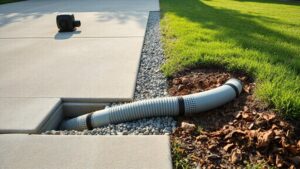
Like a sponge wrung out, you’ll improve drainage by regrading soil, amending with compost and grit, and installing French drains or gravel channels. Prioritize Rainwater management: add permeable paving, rain gardens, and smart drainage solutions.
Conclusion
Small gardens don’t need big square footage—they need smart choices. You can zone for purpose, pave slim paths for flow, and pick seating that folds, tucks, or doubles as storage. You can anchor the space with one bold focal feature, lift greenery up trellises and wall planters, and shift the vibe fast with containers. You can brighten with pale finishes, layer low-glare lighting, and add mirrors outdoors with safe, weatherproof placement.