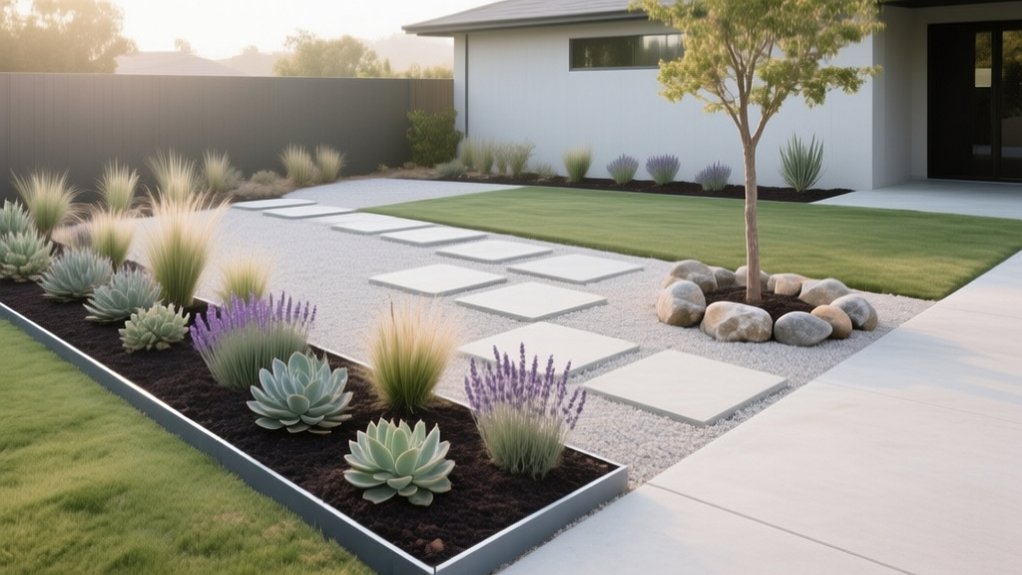
Save time by shrinking your lawn and swapping awkward strips for gravel, paving or low groundcover, then edge everything sharply to stop creep and cut mowing. Plan zones by sun, soil and foot traffic, and hardscape soggy routes with permeable gravel or setts to avoid mud. Plant tidy, drought-tough perennials like lavender, salvia, sedum, Nepeta ‘Walker’s Low’ and Geranium ‘Rozanne’, then mulch 5–10cm to smother weeds. Next, you’ll see the quickest upgrades.
Low-Maintenance Landscaping: The 3 Biggest Time-Savers
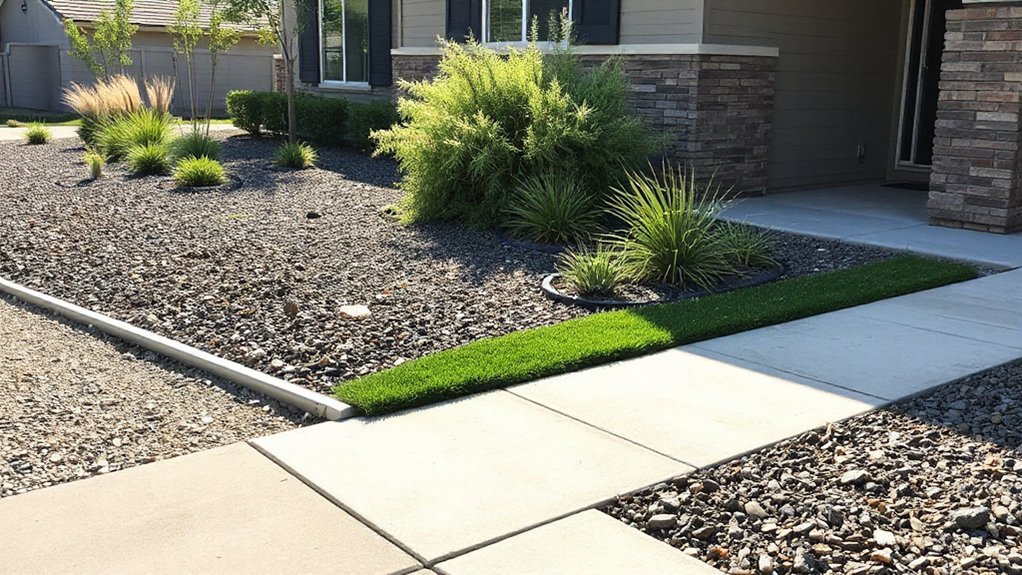
If your week’s already packed, low-maintenance landscaping lets you keep the garden looking sharp without sacrificing your weekends. First, cut mowing to near-zero: swap fussier lawn areas for gravel, paving, or low groundcover, and edge beds with steel or brick so you don’t strim as often.
Second, simplify watering: install drip irrigation on a timer and mulch well to lock in moisture and suppress weeds, especially through dry UK summers.
Third, reduce decision fatigue with repeat planting in groups and a clean layout; you’ll prune less and spot problems faster.
Add instant polish with durable garden art and fit LED outdoor lighting on a dusk sensor, so the space looks finished every evening.
Plan Your Yard by Sun, Soil, and Traffic
Before you buy plants or lay a single slab, map your garden’s sun, soil, and foot traffic so everything goes where it’ll thrive and you won’t fight it later.
Track sunlight for a week: south-facing borders bake, north sides stay cool, and windy corners dry fast in the UK.
Test soil texture and drainage with a spade and a jam-jar settle test; note compacted paths where people cut across.
Put tough, trampling-tolerant planting by gates, bins, and washing lines, and keep delicate plants away from shortcuts.
Match plants to conditions, then set proper plant spacing from the label so they knit together without constant pruning.
Group thirsty plants near a tap or water butt to streamline watering, and prioritise water conservation with mulch and targeted irrigation.
Shrink the Lawn (and What to Replace It With)
Start by shrinking your lawn where it causes the most work—awkward strips, shaded patches, and tight corners—so you’re only mowing what earns its keep.
Replace those areas with low-maintenance groundcovers, bark mulch, or gravel to cut weeding and watering.
Finish with practical hardscapes and native planting beds that suit UK conditions and look good year-round with minimal upkeep.
Smart Lawn Reduction Zones
Even when you like the look of grass, you don’t need a full lawn to get that tidy, “done” feeling in a UK garden. Start by mapping how you actually use the space: a small, square “view” lawn near the patio, then reduce the rest into working zones.
Use Zone zoning to match maintenance to footfall and sun. Keep grass only where kids play or you need a clear route to the shed. Turn awkward side returns, shady corners, and steep banks into non-lawn zones that you won’t mow weekly.
Add Smart irrigation only to the lawn zone, with a separate tap timer and drip line for borders. This cuts water waste and keeps summer care predictable. Edge zones cleanly so it still reads intentional.
Groundcover And Mulch Alternatives
Although a smaller lawn frees up time, you still need a surface that looks deliberate and copes with UK rain, shade, and foot traffic without constant mowing.
Swap turf for living groundcovers and tidy mulches that suppress weeds, reduce mud, and support water conservation by shading soil and slowing evaporation.
Use plant pairing to match sun, moisture, and wear, so gaps don’t open and maintenance stays low.
Edge clearly, plant densely, and top up mulch once a year for a neat, finished look.
- Creeping thyme for sunny paths, light tread, and scent
- Ajuga for damp shade, quick cover, purple spikes
- Vinca minor for dry shade, evergreen carpet
- Wood chip mulch under shrubs to stop splash and weeds
- Leaf mould in borders to hold moisture and feed soil
Hardscapes And Native Beds
Groundcovers and mulches cut mowing, but they still rely on plants to fill every gap—so in high-traffic spots or persistently soggy corners, hardscapes and native beds give you a cleaner, longer-lasting answer.
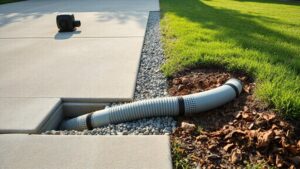
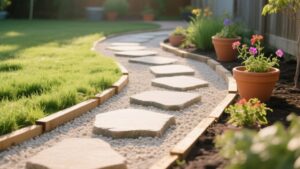
Swap sections of lawn for permeable paving, gravel, or setts to manage rain and reduce mud, then edge it firmly to stop creep.
Build native beds with UK-tough plants like dogwood, sedges, hebe, and hardy geraniums; they cope with poor soils and need less watering.
Use a weed-suppressing membrane only under gravel, not planting areas.
Add Outdoor lighting along paths for safety and year-round use, and position Garden furniture on a level patio so you’re not fighting wobble or lawn wear.
Keep access clear for bins and maintenance.
Best Low-Maintenance Plants for Your Climate Zone
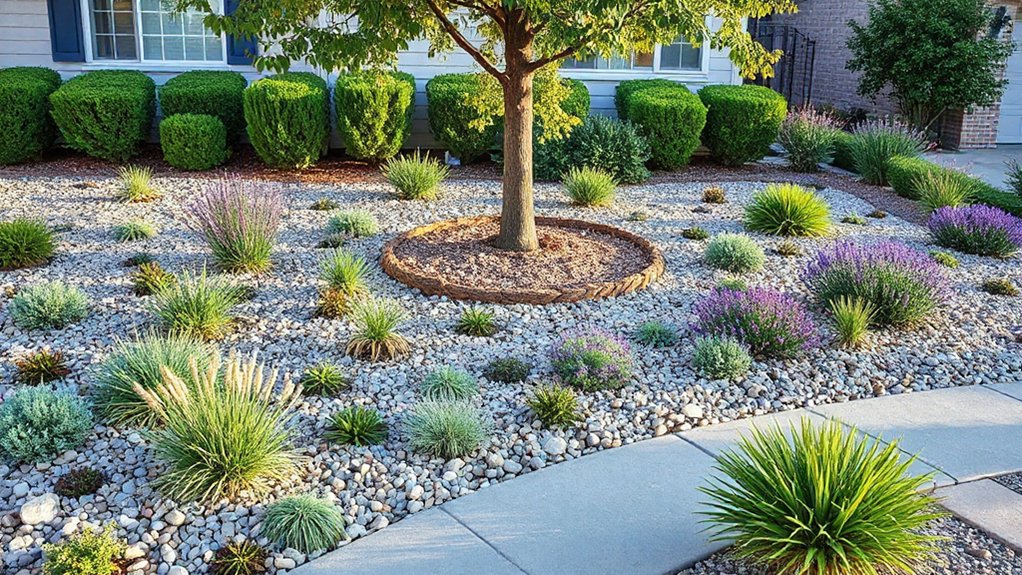
Start by choosing plants that match your UK hardiness and exposure so they’ll thrive without constant watering or fuss. Build your borders around drought-tolerant perennials that cope with dry spells and still look good from spring through autumn.
Finish with native shrubs and ornamental grasses for structure, wildlife value, and year-round interest with minimal pruning.
Zone-Smart Plant Selection
When you match plants to your UK hardiness zone and local conditions, you’ll cut watering, reduce winter losses, and spend far less time replacing what didn’t survive.
Start by noting exposure, frost pockets, soil type, and whether you’re coastal or inland. Then choose proven performers that thrive with minimal fuss, and mix them for Plant diversity and reliable Seasonal color.
- Tough evergreen structure: box alternatives like Ilex crenata or yew
- Reliable flowering shrubs: hebes, choisya, and hardy hydrangeas
- Shade-solutions: ferns, hellebores, and sarcococca near walls
- Sunny borders: lavender, salvia, and catmint in free-draining soil
- Ground cover: geranium, ajuga, or vinca to block weeds fast
Buy UK-grown stock, plant in autumn, and mulch to stabilise soil temperatures year-round.
Drought-Tolerant Perennials
Why keep chasing the hose if your borders can cope with dry spells on their own? Choose drought-tolerant perennials that suit your UK hardiness and soil, then let deep roots do the work.
Lavender, salvia, achillea, sedum and eryngium keep colour coming with minimal watering once established, especially in free-draining beds. Plant in spring or early autumn, water in well for the first season, then mulch with gravel or compost to lock in moisture and suppress weeds.
For a tidy flower arrangement, repeat one or two species in drifts and mix heights for structure without constant deadheading.
Keep pest control simple: space plants for airflow, remove mildewed leaves promptly, and encourage ladybirds by avoiding broad-spectrum sprays.
Native Shrubs And Grasses
Although exotic shrubs can look tempting, you’ll get the lowest maintenance from native UK shrubs and grasses because they’re already tuned to your local rainfall, winds and soils. Choose plants suited to your aspect and soil, then group them for easier watering and pruning.
You’ll cut failures, reduce feeding, and create reliable Wildlife habitats with minimal effort. Aim for native shrub diversity so something flowers, fruits, or offers cover across the year, even in changeable British weather.
Let grasses do the hard work: they knit soil, shrug off wind, and need little more than an annual cut-back.
- Hawthorn or blackthorn hedging for tough structure
- Hazel for light shade and coppice-friendly stems
- Dogwood for winter colour and simple pruning
- Guelder rose for berries and pollinators
- Tufted hair grass for movement and low upkeep
Native Plants That Need Less Water and Fertilizer
Because they’ve evolved for local conditions, native plants can give you a tidy, thriving garden without constant watering or feeding. For Water conservation in the UK, pick species suited to your soil and rainfall, then let them establish with a few deep soaks in the first season rather than frequent sprinkling.
Choose proven Native plants such as field scabious, oxeye daisy, wild marjoram, red campion, and meadow buttercup for borders and beds.
On heavier clay, try marsh marigold and ragged robin; on chalk, go for kidney vetch and salad burnet.
You’ll cut fertiliser use by mulching annually with compost and avoiding high-nitrogen feeds, which push soft growth.
Keep weeding light and deadhead only if you want fewer self-seeded seedlings.
Drought-Tolerant Perennials That Stay Tidy
When summer dry spells hit and you don’t have time for daily watering, drought-tolerant perennials keep borders looking sharp with minimal input. Choose compact, clump-forming plants that don’t flop, and you’ll cut deadheading and staking.
In the UK, prioritise free-draining soil, a spring mulch of gravel or compost, and deep, infrequent watering while plants establish—then ease off for Water conservation.
Mix forms and flowering times to boost plant diversity and keep beds looking intentional from May to autumn. Try these tidy performers:
- Lavender edging along sunny paths
- Nepeta ‘Walker’s Low’ spilling neatly over kerbs
- Sedum (Hylotelephium) holding upright seedheads
- Geranium ‘Rozanne’ filling gaps without smothering
- Echinacea standing tall in a mixed border
Low-Maintenance Shrubs That Rarely Need Pruning
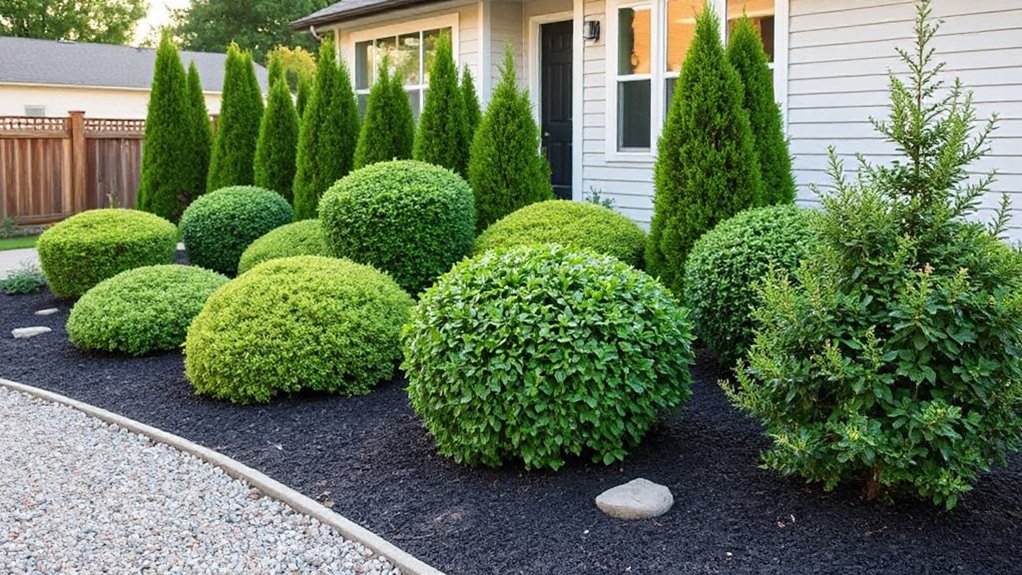
If you want a neat garden without constant clipping, choose naturally compact shrubs that hold their shape in UK conditions.
You’ll also save time by picking slow-growing options that won’t outgrow borders or block paths in a single season.
In the next section, you’ll see which varieties stay well-behaved and where they work best around your home.
Naturally Compact Shrubs
Even with a packed schedule, you can keep your borders tidy by choosing naturally compact shrubs that hold their shape without constant clipping. These plants stay neat through UK seasons, so you’ll spend weekends enjoying the garden, not wrestling with shears.
Use them as edging, foundation planting, or to form natural hedges where you want definition without fuss. Give them decent soil, mulch annually, and water in their first summer; after that, they’re largely self-managing, with only an occasional dead, damaged, or crossing stem removed.
- Box-leaf honeysuckle domes for crisp, evergreen mounds
- Dwarf hebe cushions with glossy foliage and summer flowers
- Compact pittosporum for a dense, rounded silhouette in mild areas
- Skimmia for shade, winter buds, and tidy structure
- Dwarf euonymus for bright leaf colour and clean lines year-round
Slow-Growing Shrub Options
Why choose shrubs that barely grow at all? You’ll cut pruning to a quick tidy, keep borders neat, and avoid constant trips to the tip. Slow growth options suit small UK gardens, front paths, and low hedges where you want structure without weekly clipping.
Start with evergreen varieties for year-round shape: dwarf yew (Taxus baccata ‘Repandens’), Skimmia japonica, and compact Hebe in milder areas.
For sun and poor soil, try dwarf junipers or slow conifers like Picea glauca ‘Conica’.
Prefer flowers? Choose Pieris japonica for spring interest and tidy growth, or Osmanthus for subtle scent and minimal trimming.
Plant into well-drained soil, mulch annually, and water the first summer only.
Ground Covers That Crowd Out Weeds
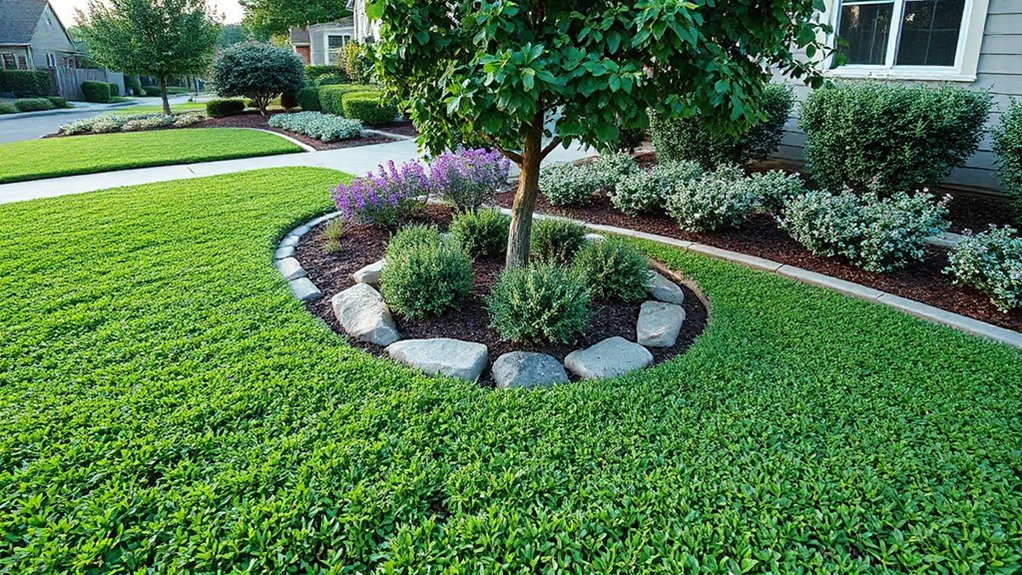
Although weeds love bare soil, you can stop them gaining a foothold by planting dense ground covers that shade the ground and outcompete unwanted growth.
For reliable weed suppression, focus on ground cover selection that matches your light levels, soil type, and foot traffic. Plant close enough to knit together quickly, water in well, and keep edges tidy so they don’t wander into paths.
- Creeping thyme in sunny gaps: scented mats, tough and tidy
- Ajuga in part shade: glossy leaves, fast coverage
- Vinca minor under trees: evergreen spread, good for dry shade
- Hardy geraniums in borders: mound and fill, long season
- Sedum on poor soil: drought-tolerant carpets, minimal fuss
Mulch Beds: Type, Depth, and Where to Use Them
When you need a low-effort way to keep beds tidy, mulch does the heavy lifting by suppressing weeds, holding moisture, and protecting soil from baking sun and winter splash.
For UK gardens, choose composted bark or woodchips for shrubs and borders; use leaf mould around woodland plants; avoid fresh chips near stems.
Keep mulch depth at 5–7.5cm on established beds, and 7.5–10cm on bare soil to block annual weeds, but never mound it like a “volcano” against trunks.
Match mulch color to your house and planting: dark mulch suits modern schemes, while lighter bark brightens shady corners.
Time mulch application for spring after soil warms, or autumn to cushion roots and reduce erosion.
Refresh lightly yearly, not fully replacing.
Simple Hardscaping That Reduces Mowing and Mud
If your lawn edges turn to sludge every time it rains, a bit of hardscaping will cut mowing time and keep shoes clean. Swap fiddly grass borders for crisp, mow-free lines and surfaces you can rinse down. Keep levels slightly proud of surrounding turf and add a discreet fall so water runs off, not into your patio.
- Set edging kerbs or steel borders to stop turf creeping and to guide the mower
- Lay large paving slabs as Decorative pathway ideas from gate to bin store
- Add a small step or sleeper threshold at doors to prevent tracked-in mud
- Build a compact patio apron around taps and sheds where footfall churns soil
- Choose sensible Fire pit placement on a paved circle, clear of fences and overhanging branches
Gravel and Rock Beds: Pros, Cons, and Fabric Tips
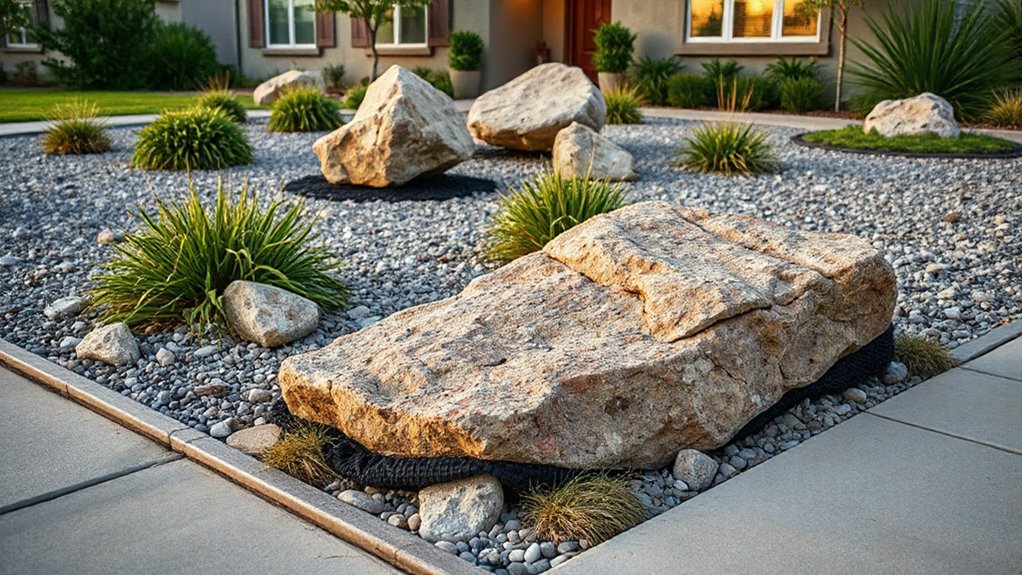
Since gravel and rock beds don’t need mowing and cope well with splashing rain, they’re a smart swap for soggy borders and high-traffic corners. You’ll cut weeding time, reduce mud tracked indoors, and create crisp edges around paths, bins, or sheds.
Choose angular gravel for stability, or rounded shingle for softer gravel aesthetics, and keep it 30–50mm deep for good coverage.
Watch the downsides: stones migrate onto paving, cats may treat it like a litter tray, and windblown leaves can rot into composty pockets.
Install a solid edging and lay a permeable membrane with Fabric reinforcement to stop mixing with soil. Overlap joints by 150mm, pin it tight, then top up annually where it thins.
Drip Irrigation Basics (Easy Setups That Last)
Although a watering can works in a pinch, drip irrigation gives your borders and containers a steady, targeted soak with far less time and wasted water. Start with simple 13mm mainline and 4mm micro-tube, then clip on drippers where plants actually sit.
Good soil preparation matters: loosen compacted ground, add compost, and level the surface so water spreads evenly.
Set a sensible watering schedule—early morning, two to three times weekly in summer, less in spring and autumn—and adjust after rain.
- Outdoor tap connector with filter and pressure reducer
- Battery tap timer to automate runs
- 13mm hose snaked through beds under mulch
- 4mm feeder lines to pots and hanging baskets
- Adjustable drippers at each plant for fine control
Edging and Budget Tips to Keep It Looking Sharp
Even when you haven’t got time for weekly border tweaks, crisp edging keeps the whole garden looking intentional and tidy. Use a half-moon edging iron to cut a clean line twice a year, then top up with bark or gravel to stop grass creeping back.
If you’re on a budget, trench edging costs nothing: slice a V-shaped groove and keep it sharp with one quick pass after mowing. For longer-lasting results, install recycled plastic or steel edging; it’s neater than timber in wet UK winters and won’t rot.
Tie edges into garden decor by repeating materials—gravel by paths, slate by beds. Neat borders also support pest control, removing hiding spots for slugs and keeping bait stations accessible.
Frequently Asked Questions
How Do I Keep Deer and Rabbits From Eating Low-Maintenance Plants?
You’ll deter deer and rabbits by planting rabbit resistant plants, fitting sturdy fencing or netting, and rotating Deer repellents after rain. Keep borders tidy, remove hiding spots, and use raised beds near the house for protection.
Can I Create a Low-Maintenance Yard if I Rent My Home?
Yes, you can, but you’ll need to check renting restrictions and get clear landscaping permissions from your landlord or letting agent. Stick to pots, weed membrane, gravel, and low-care perennials that you can remove.
How Do I Prevent Mosquitoes Without Adding High-Maintenance Water Features?
Stop mosquitoes by eliminating standing water, fitting tight water-butt lids, and clearing gutters. For Mosquito control, use Waterless solutions: CO2 traps, outdoor fans, and citronella diffusers. Plant lavender, reduce shade, and maintain compost.
What Low-Maintenance Landscaping Options Are Safest for Dogs and Kids?
Choose pet- and child-safe natives: sturdy lawn, clover, and bark mulches—soft underfoot, tough on weeds. Avoid Toxic plants like foxglove. Skip Chemical fertilizers; use compost. Fence ponds, keep paths clear.
Do I Need Permits or HOA Approval for Major Landscaping Changes?
You often do: check your council’s planning rules for Landscaping permits, especially for decking, walls, drainage, or tree works. If you’re in an estate, get HOA approval before contractors start. Keep everything written.
Conclusion
If you’ve been treating your garden like a second job, stop. With smart zoning, a smaller lawn, and tough native plants, you’ll claw back weekends you thought were gone forever. Add a bit of hardscaping, lay gravel properly with membrane where it matters, and run a simple drip line, and you’ll feel like you’ve hired a full-time grounds team. Keep crisp edging, stick to a budget, and your kerb appeal stays immaculate.