
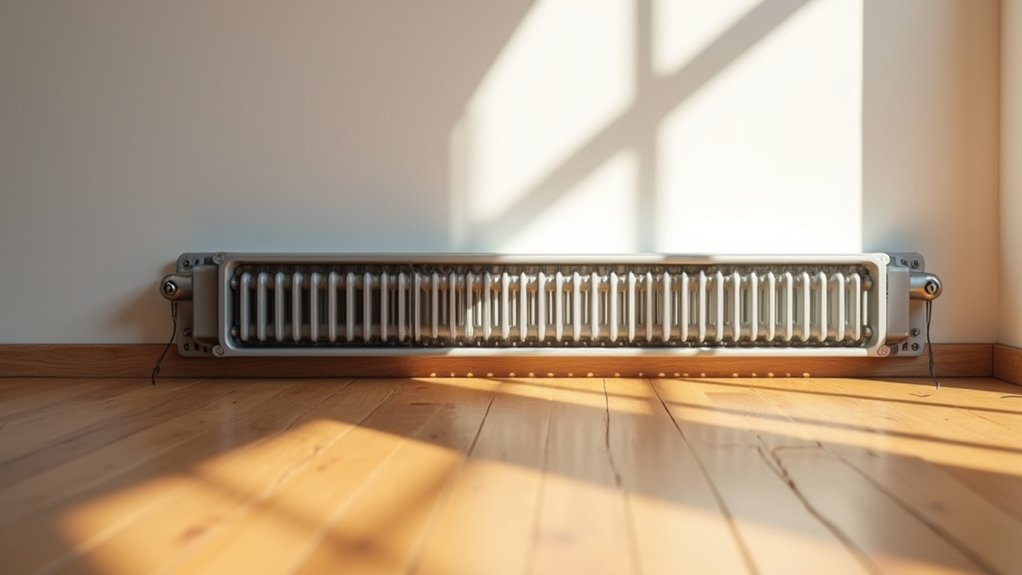
Baseboard heat can be quiet and unobtrusive, yet its warmth may feel uneven if zones aren’t well planned. We’re looking at Baseboard Heat Pros And Cons and explaining what this system actually is.
You get precise zoning, low maintenance, and simple installation in many setups, but comfort hinges on proper layout and balancing. If you’re weighing upfront costs against long-term reliability, you’ll want to weigh how well it fits large, open spaces or poorly insulated areas. There’s more to contemplate before you decide, and the next points guide that evaluation.
What Baseboard Heating Is and How It Works
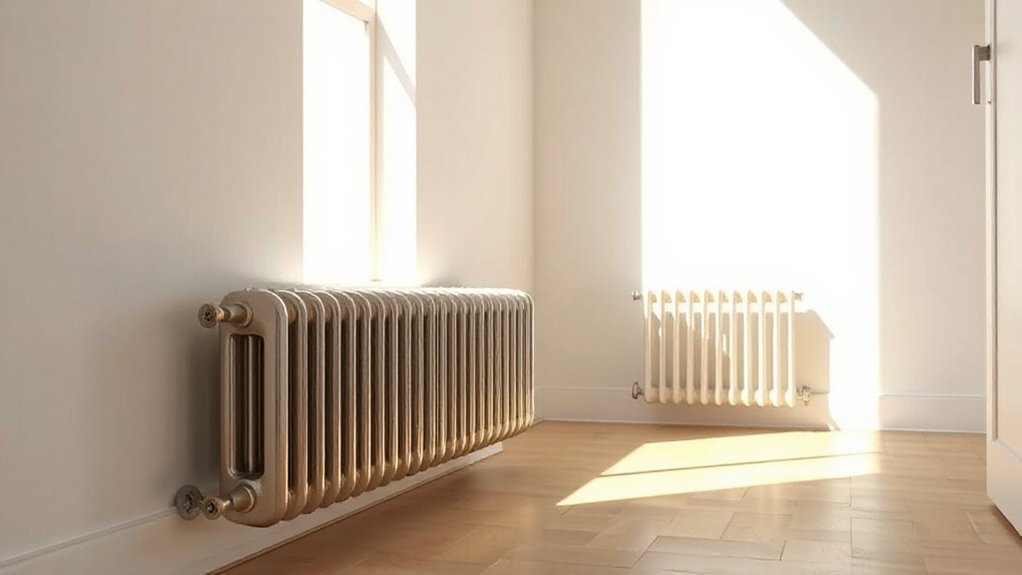
Baseboard heating is a simple, efficient method that relies on hot water or electric resistance to warm a room from the base up. You’ll understand its function by tracing a straightforward path: a supply line carries heated fluid or current to horizontal fins along the wall, the heat rises, and a return line completes the loop.
In hydronic systems, a boiler heats water, which travels through sealed pipes to baseboard units, releasing warmth as it cools. Electric systems use resistance coils integrated into the baseboard elements.
Thermostats regulate temperature, turning heat on and off to maintain setpoints.
Consider historical installation and evolving practices, noting that alternative heating options influenced design decisions over time without changing the core principle of baseboard delivery.
Efficiency hinges on proper sizing, insulation, and airflow management.
Baseboard Heating Pros: Zoning, Quiet Warmth, and Low Maintenance
With baseboard systems, you gain targeted control, reliable quiet warmth, and low ongoing upkeep. Zoning lets you tailor comfort by room or area, preventing heat waste and enabling distinct schedules without invasive ductwork.
Quiet operation comes from unobtrusive convection radiators that heat smoothly, avoiding noisy blowers and drafts. Maintenance is straightforward: dust vents, inspect seals, and monitor performance; no frequent filter changes required.
The historical evolution of baseboard heat reflects a shift from simple one-zone setups to multi-zone, responsive layouts that match modern schedules and energy goals.
Consider environmental impact: efficient operation, longer equipment life, and reduced duct leakage lessen overall footprint.
In practice, design for accurate heat output, proper clearances, and accessible placement to maximize zoning effectiveness and enduring low maintenance.
Trade-Offs to Consider: Upfront Costs and Installation
Upfront costs vary with system size, installation complexity, and labor, so you’ll want a clear estimate that accounts for equipment, permits, and possible retrofits.
Installation time can affect disruption and financing, making it important to align schedules, inspections, and any necessary renovations.
In the long run, weigh energy efficiency, maintenance needs, and potential resale value to judge overall value beyond the initial price.
Upfront Cost Considerations
Planning the upfront costs and installation requirements for baseboard heat means weighing equipment prices, labor, and long‑term value. Your cost analysis should consider unit prices for electric or hydronic components, controls, and mats or baseboard sections, plus ductwork if needed.
Labor factors include permit fees, electrician or plumber hours, and potential wall rehab. Don’t overlook auxiliary items like thermostats, wiring, insulation, and minor renovations that influence performance.
Compare suppliers’ warranties and service plans to estimate lifecycle expense. Financial planning requires projecting energy use, maintenance, and replacement cycles to map depreciation and break-even points.
Be wary of hidden costs from drywall repair or retrofitting, and verify available incentives or rebates. A disciplined cost analysis supports informed decisions and aligns upfront investment with long‑term comfort and efficiency.
Installation Time Impact
Installing baseboard heat isn’t just about cost; it’s about how long the job will take and how that timing affects total value. You’ll gauge installation time by house size, wall accessibility, and system complexity.
Expect faster results in retrofit runs with existing wiring and neatly finished spaces; new installs or deep wall shifts add days. Your planning should allocate labor windows for trades, permitting, and potential revisions.
A DIY installation demands more time, but offers direct cost control; however, missteps raise overall effort and expense. Compare timelines alongside price tags, not just sticker price.
When evaluating cost comparison, factor material lead times, inspection steps, and potential room-by-room sequencing. The aim is predictable completion without compromising safety or performance.
Long-Term Value Tradeoffs
Long-term value hinges on balancing upfront costs with installation decisions that affect durability, maintenance, and energy efficiency. You’ll weigh equipment price, labor, and potential disruptions against anticipated service life and operating costs.
When you pursue a Historic renovation, upfront expenses may rise, but thoughtful material choices and precise placement protect authenticity while minimizing future repairs.
Installation decisions matter for long-term performance: proper clearances, floor heights, and skirting integration influence heat transfer and maintenance access.
Aesthetic integration should guide layout, ensuring baseboard runs complement room geometry and avoid awkward gaps. Consider junctions with windows and doors, since gaps can boost heat loss and diminish efficiency.
Evaluate warranties, service routes, and access panels to reduce future labor. In the end, strategic upfront investment lowers lifecycle costs and preserves resale value.
How Baseboard Heating Affects Zoning and Room-By-Room Control
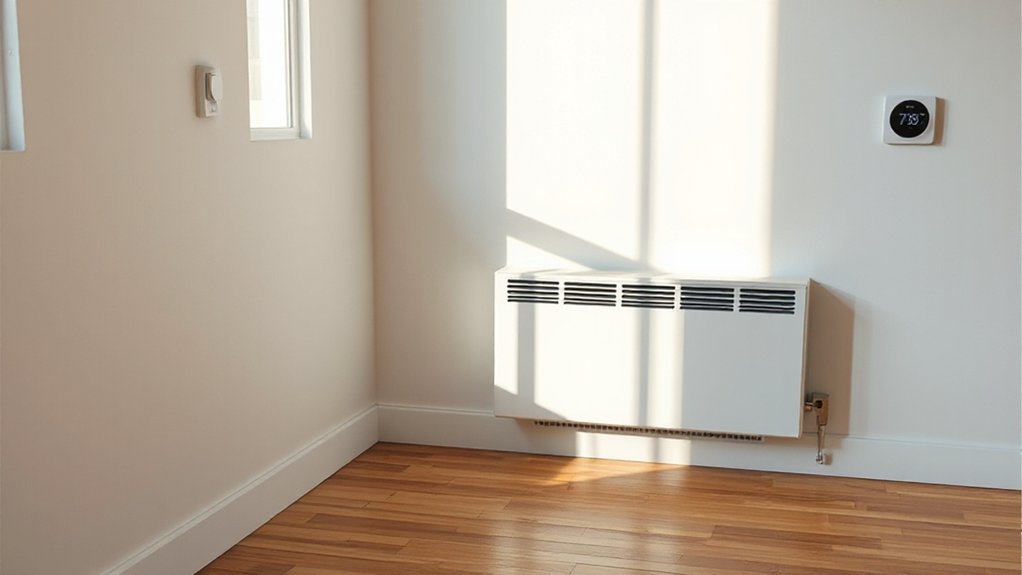
Baseboard heating lends straightforward zoning, but its design can limit fine-grained control compared with other systems. You’ll often rely on individual room tactics rather than centralized zoning, which shapes how you manage comfort across spaces.
- Smart thermostats can improve control by coordinating heat output with time and occupancy.
- Zoning control is feasible but typically less granular than hydronic systems with multiple loops.
- Individual registers respond slowly to setpoint changes, affecting responsiveness.
- Temperature differentials between rooms may persist longer without aggressive balancing.
- Supplemental controls (fans, cool-season variables) help compensate for uneven heat distribution.
Does Baseboard Heat Deliver Even Warmth in Every Room?
Baseboard heat can feel uneven from room to room, even though the system is simple and reliable. You’ll notice warmth concentrations near supply units and along exterior walls, while far corners may lag. Factors include room size, window placement, insulation, and furniture layout, which disrupt natural air circulation.
In practice, heat output isn’t perfectly uniform, but you can minimize gaps with careful placement, proper sizing, and thermostat zoning. Color options exist for some baseboard models, but aesthetic variety doesn’t guarantee even heat; performance depends on heat emitters’ height, fin design, and system pressure.
Installation challenges include adding or relocating baseboards in existing walls, balancing flow, and ensuring unobstructed air paths. If uniformity is essential, weigh supplemental heating or alternative layouts during initial installation.
Maintenance, Durability, and What to Expect Over Time
Maintenance schedules and the expected longevity of baseboard systems guide what you should plan for over time. I’ll outline typical maintenance tasks, how often they’re needed, and what age-related changes you’re likely to see.
You’ll gain a practical sense of durability, common aging patterns, and how to budget for future upkeep.
Maintenance Schedule And Longevity
If you want to keep baseboard heating reliable over time, establish a simple maintenance routine and understand its expected lifespan. You’ll reduce downtime by scheduling seasonal inspections, cleaning dust from fins, and testing thermostats for accurate heat output.
Track age and manufacturer guidance to gauge longevity, and plan component replacements before failures occur. Consider how color options and material choices affect upkeep and heat distribution, choosing finishes that resist grime and corrosion.
With a practical schedule, you’ll extend performance and control costs.
- Schedule seasonal cleaning and air removal as needed
- Inspect connections, seals, and valves for leaks
- Test thermostats and controls for accurate response
- Log component ages and plan proactive part replacements
- Assess finish quality, compatibility, and maintenance needs due to material choices
Durability And Aging Expectations
Over time, baseboard heating shows how durable its components are under typical residential use. You’ll notice metal fins, housings, and enclosure joints resist minor impacts and routine heat cycles, but clarity matters: magnified expansion can reveal stress points near joints.
The aging process tends to slow with proper maintenance, including keeping coats intact and avoiding corrosive cleaners. Paint durability matters, because a sturdy finish protects metal from humidity and heat cycles, reducing corrosion risk at edges and screws.
Expect gradual color fade, minor chalking, and occasional repaint needs in high-traffic rooms. Routine inspection helps you spot loose covers, rattles, or skin-deep pitting early.
With consistent care, performance remains steady, and component replacement timelines align with manufacturer guidance rather than with guesswork.
Space, Design, and Wall-Wacing: Integrating Baseboards With Your Interior
Baseboards are more than a finishing touch; they shape how space feels and how efficiently you heat a room.
- Align wall aesthetics with your color scheme and trim profile to create a cohesive look.
- Choose heights that complement furniture placement and leave clear sightlines for traffic flow.
- Match casing and baseboards to other architectural details for a unified style.
- Plan for outlets, switches, and wall decor to avoid clutter at baseboard level.
- Consider recessed or low-profile options to minimize visual intrusion in small rooms.
This approach keeps you practical: you gain visual harmony without sacrificing accessibility or warmth.
You’ll preserve proportional rooms, ease of painting, and consistent passages between surfaces.
Wall aesthetics and furniture placement become deliberate tools, not afterthought details.
Energy Efficiency and Operating Costs Compared to Alternatives
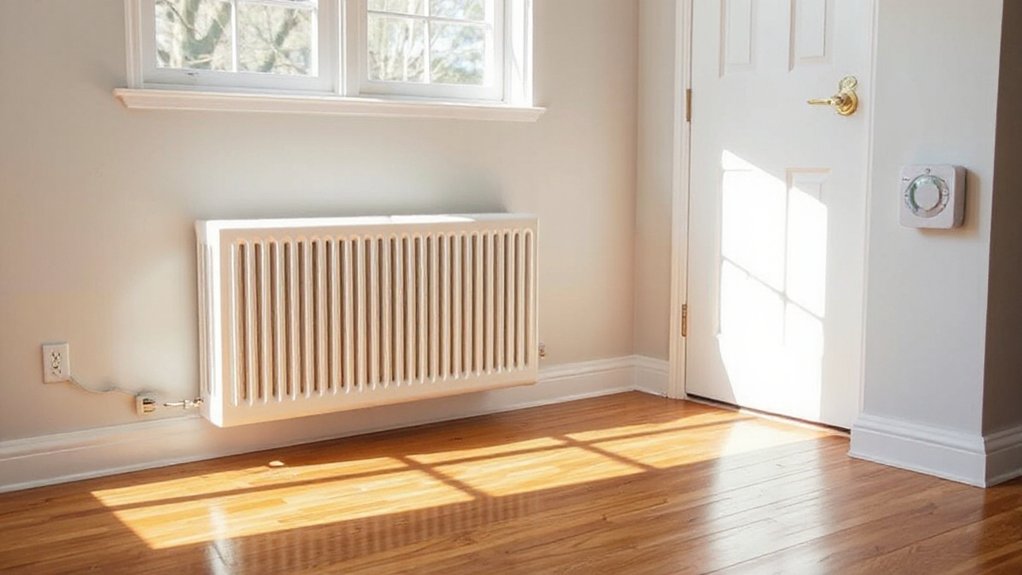
When you weigh baseboard heating against alternatives, energy efficiency hinges on how heat is produced, distributed, and retained in a space. Baseboard systems respond directly to ambient temperature changes, but efficiency varies with insulation, panel quality, and control strategy.
Electric baseboards offer simple, low-maintenance operation but can incur higher per‑kWh costs compared with hydronic or heat pump options. Hydronic setups reduce circulating losses and can leverage renewable heat sources, supporting lower operating expenses in well‑insulated homes.
Smart thermostats enhance control, shaping demand without sacrificing comfort. Compared to alternative systems, total cost depends on installation, energy source, and climate; long‑term savings often depend on proper zoning, setback strategy, and seasonal effectiveness.
In many cases, investment pays off where heat loss is minimized and occupancy patterns favor *ideal* scheduling.
Best Use Cases: Homes and Lifestyles That Benefit Most
Baseboard heat is particularly effective in small spaces where you value efficiency and predictable warmth.
You’ll notice even heat distribution throughout the room, with minimal wall clutter and easy zoning.
This setup suits milder climates and rooms that don’t require rapid temperature swings.
Small Space Efficiency
Could baseboard heating be the smart pick for tight spaces where wall real estate matters and visible radiators feel bulky? In small areas, baseboard units maximize footprint efficiency by running along walls without protruding furniture interference. You gain continuous heat without intruding on floor space, making rooms feel larger and more usable.
Precision control helps maintain comfort without overspending on energy. Consider decorative options and color matching to blend units with trim or wall tones, preserving a cohesive look.
- Slim profiles minimize visual disruption
- Flexible placement around furniture
- No ceiling or ductwork requirements
- Quiet operation preserves ambiance
- Easy integration with existing thermostats and zoning
Even Heat Distribution
This reliability suits rooms with long, uninterrupted wall runs and frequent occupancy, where uniform warmth enhances comfort and perceived efficiency. Color options can help integrate radiators with décor, but the performance isn’t about appearance; it’s about continuous heat along the baseboard rather than zones.
Be mindful of installation challenges, such as clearances from furniture, baseboard height, and floor finish shifts, which affect air flow and heat transfer. With proper planning, you gain predictable performance, fewer hot spots, and simpler thermostat control over time.
Ideal Climate Conditions
- Steady occupancy-friendly rooms
- Well-insulated, low-mass zones
- Seasonal shift homes
- Zoned thermal control
- Quiet operation and long-term reliability
Quick Tips to Maximize Comfort and Efficiency With Baseboard Heat
To maximize comfort and efficiency with baseboard heat, start by balancing temperatures room by room and keeping air unobstructed around the heaters. Maintain even setback schedules so rooms warm uniformly without short cycling. Install programmable thermostats compatible with baseboards to minimize overshoot and runtime.
Insulate exposed pipes and seal gaps to reduce heat loss, especially in basements and crawl spaces. Regularly bleed any air from radiators, and perform a simple annual inspection for corrosion or mineral buildup.
Use decorative styles that promote heat diffusion, such as lighter drapes away from radiators, to avoid blocking convective flow. When you consider alternative heating options, compare total operating costs and compatibility with your existing system.
Prioritize efficiency without sacrificing comfort or control.
Frequently Asked Questions
Can Baseboards Improve Humidity Control in Winter?
Yes, baseboards don’t inherently improve humidity control. In fact, they can dry indoor air if your heating runs constantly.
To help humidity regulation, use a hygrometer, run a humidifier when needed, and seal drafts to reduce moisture loss.
If you must rely on hydroscopic materials, pair baseboard heat with moisture control strategies, like keeping indoor humidity around 30–50%, and monitor it seasonally to prevent condensation and mold risk.
Do Baseboards Work Well With Solar Heating Systems?
Yes, baseboards can work with solar heating systems, but you’ll want proper integration. Use storage or hybrid designs to balance intermittent solar output, and guarantee you don’t overheat spaces.
Consider control strategies that switch to baseboards when solar input dips. Focus on energy efficiency considerations, well-insulated envelopes, and compatible thermostats.
When evaluating alternative heating methods, guarantee the baseboard system complements solar gains, minimizes runtimes, and preserves comfort with consistent heat distribution.
How Noisy Are Baseboard Heaters During Operation?
Coordinated coincidence: you notice baseboard heaters are quiet enough for most rooms, but sizzling or ticking can occur if dust, debris, or thermostat issues exist.
In practice, you’ll experience low hums during operation, with occasional ticking as metals expand. Noise levels stay modest when installed correctly.
Expect installation costs to factor in wiring and placement.
You’ll improve quietness by regular cleaning and venting, ensuring proper sizing, which also keeps long-term energy costs predictable.
Are Baseboards Compatible With Smart Thermostat Scheduling?
Yes, baseboards are compatible with smart thermostat scheduling. Thermostat compatibility depends on the control system (hydronic vs electric) and the thermostat’s wiring requirements, but most modern smart thermostats work with baseboard heat zones.
You’ll get smart scheduling by setting temperature ramps, time blocks, and adaptive routines.
Make sure a C-wire or compatible power option if needed.
If you have a multi-zone system, use zone-specific schedules and keep submetering in mind for accurate updates.
What Is the Typical Lifespan of Baseboard Heat Units?
You’ll typically get 20 to 30 years from baseboard heat units with regular maintenance.
You’ll want to factor energy efficiency and ongoing maintenance into expectations.
You’ll find energy efficiency improves when you purge air, insulate ducts, and keep reflectors clean.
Installation considerations matter for lifespan, including proper clearances and correct wiring.
You’ll extend life by choosing quality fins and a stable mounting, and by scheduling professional service every few years.
Conclusion
Baseboard heat fits modern living with precise zoning, quiet warmth, and low upkeep, yet it isn’t flawless. You’ll trade faster response for steady comfort and may face higher upfront costs and uneven spots in larger spaces. Think of it like a steady metronome: reliable, but not always instant. By smart zoning, good insulation, and thoughtful design choices, you can maximize efficiency, much as a craftsman tunes a piano—achieving balanced, enduring warmth across your home.