
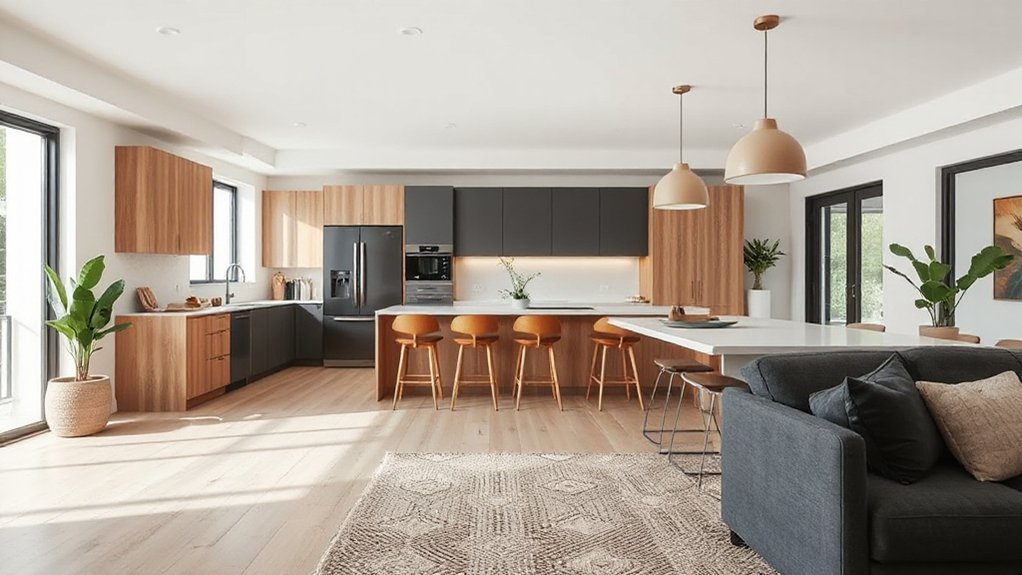
To style an open-plan kitchen and living space, define clear zones with subtle cues like furniture placement, rugs, and color contrast to guide flow. Keep a cohesive palette of 2–3 core tones with neutrals, and layer textures—woods, fabrics, metals—for warmth. Choose scalable furniture that fits daily use and preserves sightlines, then add layered lighting and soft accents for atmosphere. Prioritize clutter control with hidden storage and adjust pieces as needed to enhance balance—and you’ll reveal even more practical tips ahead.
How to Tell If Your Open Plan Flows: 5 Defining Traits
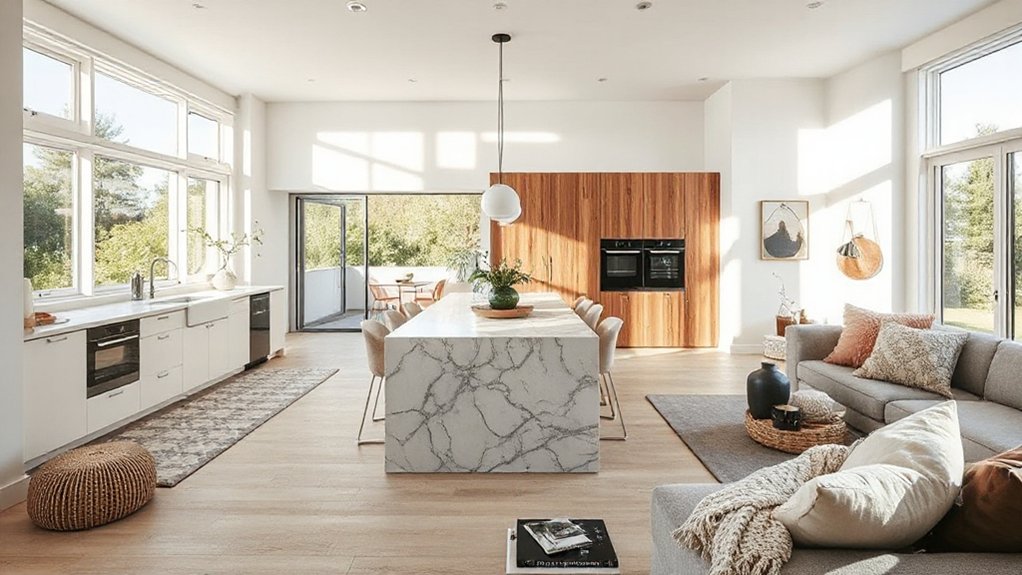
Open-plan spaces work best when you can move through them naturally, without tripping over mismatches in height, lighting, or furniture placement. You’ll recognize a flow when you notice five defining traits guiding your day-to-day use.
First, clear sightlines connect kitchen, dining, and living zones, so tasks and conversations feel seamless.
Second, a consistent ceiling height and floor plane reduce visual friction, helping eyes travel smoothly.
Third, color contrast becomes your ally, highlighting zones without walls and guiding momentum.
Fourth, furniture arrangement supports circulation—the pieces invite movement, not blockage.
Fifth, adaptable lighting sustains mood and clarity from dawn to night, avoiding harsh glare.
When these traits align, your open plan reads as cohesive, functional, and inviting.
Zone Without Walls: Create Distinct Cooking, Dining, and Living Areas
You can establish distinct zones in an open plan by using clear flow and subtle furniture pane separation to guide movement from cooking to dining to living areas.
Consider how furniture placement and rugs define each space without closing them off, keeping sightlines and traffic smooth.
This approach creates functional boundaries that feel cohesive and effortless.
Clear Flow Zoning
Clear flow is about defining cooking, dining, and living zones without walls, so the space reads as one cohesive area while each function remains distinct. You’ll guide movement with subtle cues rather than barriers, ensuring sightlines and light travel uninterrupted.
Use color contrast to delineate zones: a darker kitchen backsplash against lighter living walls highlights cooking boundaries without breaking openness. Vary ceiling heights where feasible to create micro-perimeters—a slightly lowered soffit over prep space, a higher ceiling above lounge seating—without isolating areas.
Furnishings become zones through scale, placement, and axis alignment, not fences. Keep circulation clear by aligning islands, dining tables, and sofas along shared sightlines.
Prioritize task lighting and unified materials to maintain a cohesive, polished flow.
Furniture Pane Separation
Use furniture placement to guide circulation: a low cabinet between kitchen and dining areas creates a subtle barrier while keeping sightlines open. Choose materials and colors that echo across zones to reinforce cohesion.
Color coordination matters: align the panel finishes with cabinetry, tabletops, or upholstery to read as a connected palette rather than separate blocks. Add lighting along the dividers to highlight alteration and maintain function.
This approach yields clearly defined zones with an airy, unified feel, crucial for effortless open-plan living.
Define a Unifying Palette for Cohesion and Calm
A unifying palette ties your open-plan kitchen and living space together by repeating a few deliberate colors, textures, and finishes throughout. You’ll achieve calm by choosing a restrained scheme, then applying it consistently across surfaces and accents.
Prioritize color harmony, selecting two to three core tones and a couple of supporting neutrals to balance light and shadow. Use these hues in cabinetry, walls, and larger furnishings, then echo them with textiles and hardware.
Mood setting comes from subtle contrasts rather than high drama; favor matte finishes and soft reads of color to avoid visual noise. Your aim is cohesion that feels effortless, not contrived.
- Limit the palette to 2–3 core colors
- Introduce a neutral anchor
- Repeat color through cabinets, walls, and upholstery
- Favor matte finishes and soft contrast
- Use hardware and accents to nod to the scheme
Layer Texture for Warmth: Fabrics, Woods, Metals, and Finishes
Layer texture adds warmth by layering soft fabrics, from throws to upholstery, so your seating feels inviting without visual clutter.
Natural wood accents anchor the space, while metallic finishes and careful detailing elevate the mix with subtle, tactile contrast.
Start with a restrained palette of textures and build nuance through material pairings that feel cohesive under the open plan light.
Soft Textures Layering
Soft textures create instant warmth in an open-plan space by layering fabrics, woods, metals, and finishes thoughtfully. You’ll pair tactile materials to invite comfort without clutter, balancing sheen with matte for depth. Focus on proportion, letting textiles soften hard lines while metals echo hardware and lighting.
Use color accents sparingly to keep the palette cohesive and calm.
- Introduce Soft textures with tactile textiles at seating and surfaces
- Layer fabrics of varying weights for visual rhythm
- Mix wood tones to add warmth and character
- Add metal accents in moderation to sing against textiles
- Tie finishes together with a unifying undertone across room elements
Natural Wood Accents
Opt for clean-lined profiles in oak, ash, or elm to preserve modernity, then introduce contrast with textiles and subtle metals. Rustic charm emerges in hand-finished surfaces, live-edge details, and reclaimed planks, which also support acoustic comfort.
Aim for natural finishes on surfaces to maintain a cohesive, breathable palette that ages gracefully. Keep spacing generous around island legs and seating to preserve flow.
Use wood tones that echo floor or ceiling hues for unity, avoiding overly glossy treatments that reduce warmth.
Metallic Finishes Details
Metallic finishes add a reflective layer that complements natural woods and fabrics without overpowering them. You’ll use metallic accents sparingly to punctuate a palette built on warmth, texture, and clean lines.
Start with understated fixtures, then layer in pieces that echo your room’s tones for cohesion.
- Choose matte bases and save the shine for select shiny fixtures
- Mix warm metals like brass with cooler tones for balance
- Pair metallic accents with natural fabrics to soften glare
- Use reflective surfaces strategically—backsplashes, lighting, or hardware
- Keep clutter down to let finishes read crisply and intentionally
Pick Furniture That Fits Scale and Daily Use
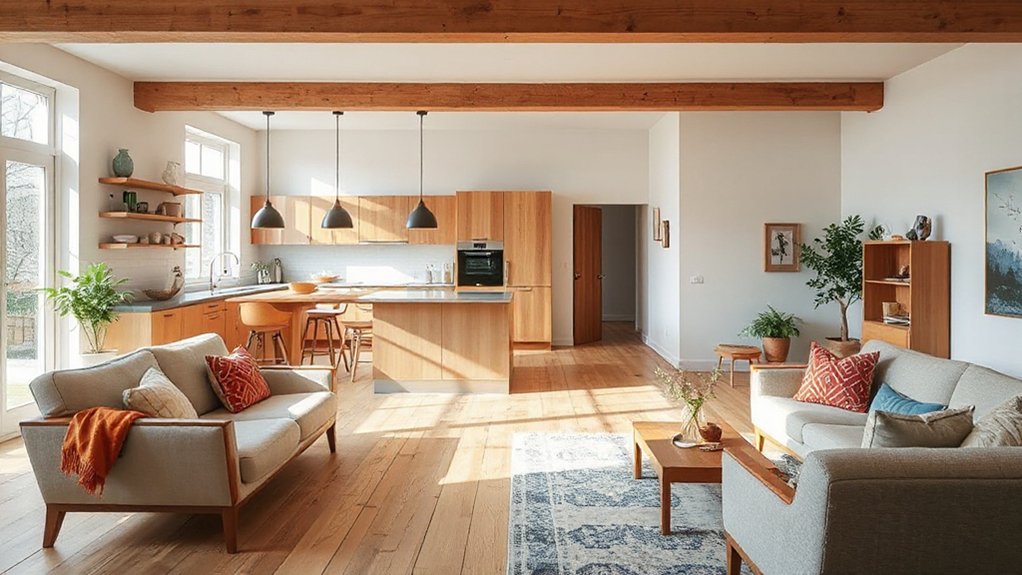
When choosing furniture for an open plan kitchen and living space, prioritize pieces that align with both scale and daily use. You’ll want seating and surfaces that don’t overwhelm sightlines or overwhelm you during routines.
Choose low-profile sofas or modular setups to maintain flow, and select dining chairs that tuck neatly under the table for easy movement. Consider multipurpose pieces, like an ottoman with hidden storage or a console that doubles as a prep surface.
Mix textures with vintage accents to add character without bulk, and guarantee cushions are durable for everyday use.
Integrate greenery through compact planters near seating and on shelves, which softens edges and reinforces a cohesive, lived-in feel without crowding zones.
Lighting That Unifies and Brightens Every Zone
A well-lit open plan relies on lighting that unifies spaces while brightening every zone for daily tasks and social moments. You balance ceiling, task, and accent lighting to avoid harsh shadows and glare, maintaining a cohesive feel across kitchen and living areas. Choose fixtures with dimmable controls and warm color temperatures to adapt from breakfast prep to evening lounging.
Integrate Vintage accents subtly—think story-light pendants or an aged metal sconce—to add character without clutter. Favor Eco friendly materials: recycled glass, bamboo shades, and low-VOC finishes that respect the space and your footprint.
Layered lighting ensures functionality and mood, while hidden or flush installations keep sightlines clean and unified.
- Define zones with ceiling layers and dimmable options
- Use warm white tones for all essential tasks
- Blend vintage pieces as lighting accents
- Choose eco friendly materials for fixtures
- Keep wiring organized for a sleek finish
Ground the Space: Flooring Choices and Rug Strategies
Grounding an open-plan kitchen and living space starts with flooring that defines zones while unifying the area. You’ll choose durable, cohesive materials that handle traffic and spills yet feel seamless underfoot. Consider a dominant floor finish—wide planks, neutral tile, or concrete—that anchors both zones.
Use rugs to cue shifts: a larger rectangle under the seating area, a smaller, washable runner near the prep zone. Pair color schemes across surfaces so tones repeat, creating visual flow without clutter.
Layer textures with natural fibers, sisal, or low-pile blends for practicality. Plant integration matters here too; low, tall, or hanging greenery softens edges and adds warmth without breaking line-of-sight.
Prioritize easy maintenance, sensible underfoot comfort, and a balanced palette that supports future furniture or layout tweaks.
Storage That Stays Visually Light and Accessible
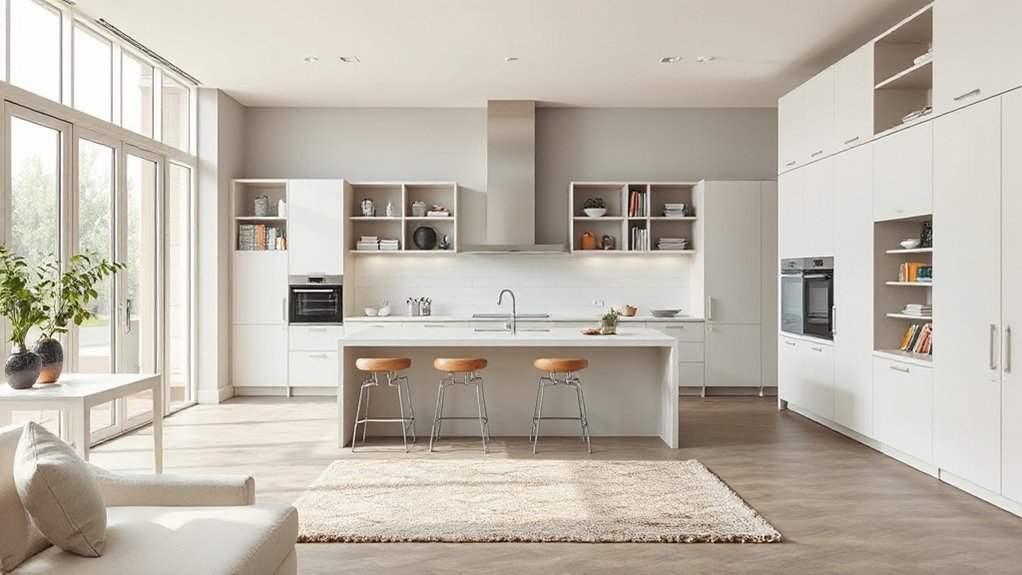
You’ll aim for light, accessible storage that disappears into the design, not against it. Think hidden but handy and modular solutions that flex with your daily routine.
Start with clean lines and smart zones that keep essentials close without clutter.
Light, Accessible Storage
When you design storage for an open-plan kitchen and living space, prioritize solutions that stay visually light and remain easy to reach. You’ll want systems that don’t overpower sightlines, yet offer real accessibility. Built-in shelving and decorative baskets keep essentials tidy without bulk, balancing function and airiness.
Choose low-profile cabinets with ample interior organization, and open shelving for display that’s deliberately curated. Integrate multi-purpose furniture that hides clutter yet stays reachable.
Use neutral finishes to blend with surroundings, and keep a rhythm of open and closed storage to reduce visual heaviness.
- Built-in shelving for modular display
- Decorative baskets to corral odds and ends
- Low-profile cabinetry with organized interiors
- Open shelving for selective display
- Multi-purpose furniture that hides clutter when needed
Hidden yet Handy
Hidden storage should disappear into the room while staying within reach, so choose pieces that conceal clutter without sacrificing access. You want surfaces to stay calm, so look for slim cabinets, pullouts, and ottomans with hidden compartments.
Prioritize high-contrast frames that blend with your cabinetry and keep hardware minimal to reduce visual weight. Handy features matter: soft-close drawers, integrated charging stations, and pull-out spice shelves keep essentials reachable without cluttering counters.
Use floating units to maintain airiness and frequent-use zones to minimize trips. Choose lids, doors, and panels that align flush, creating a seamless silhouette.
Label zones subtly with color or texture cues, not visible clutter. Hidden storage becomes invisible organization that enhances flow and keeps your kitchen and living area feeling spacious.
Modular Storage Solutions
Modular storage keeps your open-plan kitchen and living space feeling light while staying fully accessible. When you choose modular storage, you create flexible zones that adapt as life changes, not just as trends shift.
You’ll appreciate versatile shelving that shifts from display to utility without bulk, preserving clear sightlines. Opt for components with clean lines, soft-close doors, and adjustable heights to maximize every inch.
Integrate closed drawers for hidden clutter and open cubbies for everyday items, keeping the space breathable. Labeling and color-coding can streamline routines without visual noise.
Use modular pieces to sculpt distinct areas—while maintaining flow. The result: practical, polished storage that feels almost effortless, yet performs with purpose.
- Lightweight frames and slim profiles
- Versatile shelving configurations
- Hidden storage within sightlines
- Adjustable heights and depths
- Quiet, durable mechanisms
Personal Touches With Restraint: Art, Decor, and Keepsakes
To keep your open-plan kitchen and living space feeling cohesive, introduce personal touches with restraint—art, décor, and keepsakes that resonate without shouting. You’ll curate a calm collection rather than a cluttered heap, letting each piece earn its place.
Focus on art placement that complements sightlines and lighting, pairing scale with wall area to avoid visual noise. Choose a limited color palette or cohesive frames to sustain harmony across zones.
Keepsake display works best when grouped, not scattered; rotate items seasonally so nothing feels stale. Favor meaningful pieces over quantity, and keep surfaces clear of distractions.
This approach preserves credibility and flow, while still reflecting your personality. Practical, intentional choices make the space feel curated, serene, and easily livable.
Acoustics in Open Plans: Practical Sound-Management Ideas
Open-plan spaces thrive on openness, but that same layout can invite unwanted sound bleed between zones. You can manage acoustics without sacrificing airiness by choosing targeted, practical strategies that work in real kitchens and living areas.
- Use soundproofing techniques like soft, dense textiles and rugs to absorb footsteps and chatter.
- Position furniture to create natural room dividers that don’t feel heavy or isolating.
- Install acoustic panel placement on key walls and near noisy zones to dampen reverberation.
- Choose appliances and fixtures with quieter operating modes and vibration-absorbing mounts.
- Add floor cushions and wall hangings that contribute both style and subtle sound control.
With thoughtful layout and materials, you keep clarity for conversations and movie nights alike.
Small-Space Tactics: Maximize Every Inch With Smart Layouts
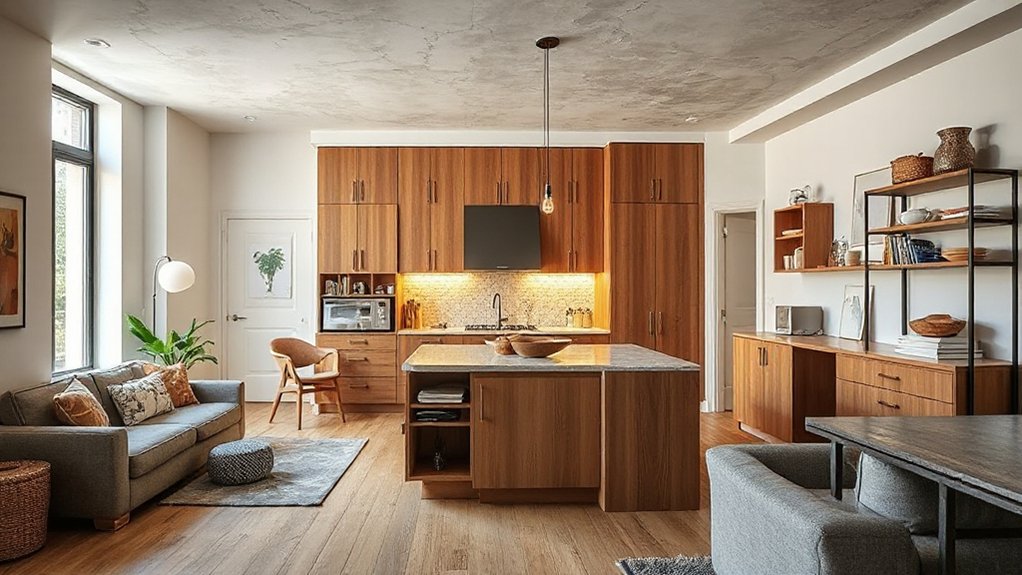
When space is at a premium, smart layout choices become your most powerful tools. You’ll optimize flow by zoning zones with low-profile furniture and clear sightlines, so movement feels effortless rather than cramped.
Use measuring, not guesswork, to place the kitchen work triangle and living area seating for immediate reach and comfortable distancing. Choose modular pieces you can reconfigure as needs shift, and keep surfaces clutter-free to maintain perceived openness.
Color contrast guides the eye, helping rooms feel distinct yet cohesive without crowding them. Ceiling design becomes a quiet ally—vertical lines and lighter tones draw the eye upward, expanding the ceiling visually.
Prioritize hidden storage and multi-functional surfaces to maintain a lean, purposeful footprint.
Seasonal Styling That Stays Fresh All Year
Seasonal styling isn’t about chasing every trend; it’s about making small, repeatable updates that keep the space feeling fresh year-round. You’ll maintain cohesion by leaning on Seasonal decor and Color coordination, swapping accents rather than full overhauls. Think modular storage, removable textiles, and a rotating centerpiece that reflects the month’s mood without overpowering the open plan.
- Swap pillow covers and throws seasonally for instant texture shifts
- Integrate a unified color palette across décor accents
- Use fragrance and greenery to cue the current season
- Rotate decorative objects to reclaim visual balance
- Embrace multi-functional pieces that adapt with minimal effort
Real-World Layouts: Before-and-After Room Transformations
Real-world layouts prove how thoughtful changes can transform an open-plan living space without a full remodel. You’ll see quick wins in scale, flow, and focus that don’t require tearing down walls.
Before-and-after comparisons reveal how adjusting furniture proportions clarifies zones, improves traffic, and reduces visual clutter. A balanced mix of seating and storage creates distinct living, dining, and cooking areas while preserving an airy feel.
Color palettes tie the scheme together after layout tweaks, reinforcing harmony without overhauling finishes. Test layouts with scalable pieces—sofas, console tables, and rugs—to gauge sightlines and reach.
Note how lighting and reflective surfaces enhance perception of space. Small shifts in placement and proportion can deliver big, lasting impact.
Frequently Asked Questions
How Do I Define Zones Without Losing Flow?
To define zones without losing flow, use furniture arrangement to subtly separate areas, like a sofa arc or rug boundaries, while keeping sightlines open; add decorative accents that echo colors from both zones for cohesive, polished function.
What Lighting Blends All Open Areas Effectively?
A subtle glow, like a soft sunrise, makes all areas feel connected. You blend ambient lighting with statement fixtures, guiding routines while maintaining flow, so every zone reads as one. You’ll mix ambience and focal points for cohesion.
Which Storage Ideas Stay Visually Light and Practical?
Hidden storage keeps surfaces uncluttered, and decorative baskets hold daily essentials without bulk. You’ll keep materials lightweight and consistent, pairing woven textures with slim cabinetry, so the space stays practical, polished, and visually airy while you move freely.
How Can I Soften Acoustics in Open Plans?
Soft whispers paint your space with textural accents, easing echoes as you move. You install acoustic panels, then add woven textiles and wood tones; you hear calmer rhythms, and the room hums with balanced, functional harmony.
What Color Palette Supports Seasonal Styling?
You should use versatile color schemes that shift with seasonal accents, embracing neutrals for base layers and adding warm or cool pops as the seasons change. This keeps your open plan cohesive, fresh, and visually balanced throughout the year.
Conclusion
You’ll discover that open plans aren’t about bigger spaces as much as kinder flow. With subtle zones, a unifying palette, and thoughtful textures, you can feel connected without crowding conversations. Embrace smart furniture and quiet acoustics to avoid clutter whispers and keep daily life softly contained. Seasonal accents come and go, never shouting, always inviting. In the end, comfort isn’t loud—it’s the gentle balance that lets every moment breathe.