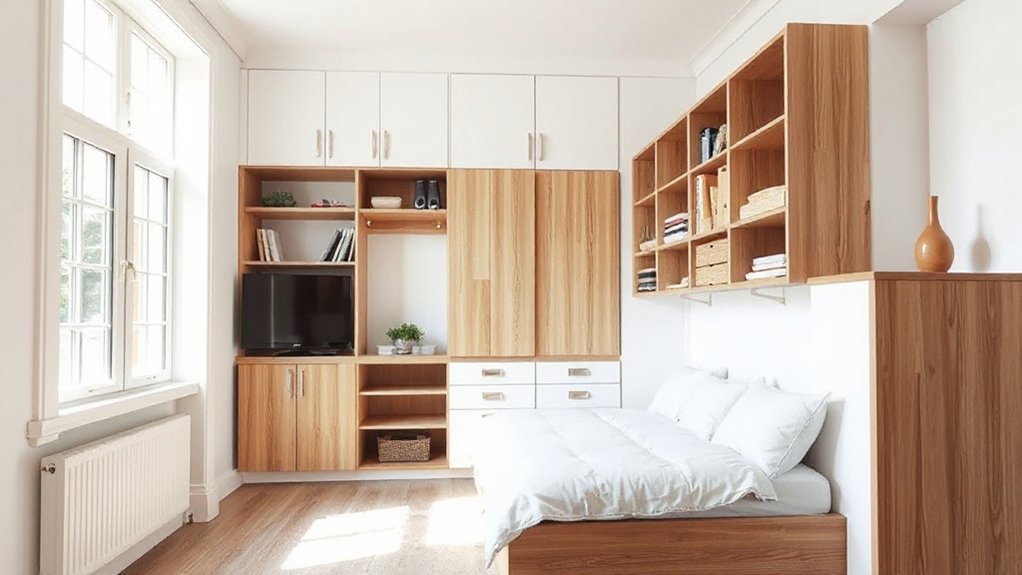
Clear out first to reclaim space. Declutter your closet, keep only what fits, and label bins for keep, donate, or trash. Embrace multi-functional furniture with hidden storage, like ottomans or storage beds, plus modular systems you can reconfigure as needs change. Use vertical shelving on narrow walls and slim racks in corners, plus under-bed and under-stair storage to hide seasonal items. Small tweaks, big gains—and plenty more ideas to discover as you keep optimizing.
What Space-Saving Storage Really Delivers for Small Homes
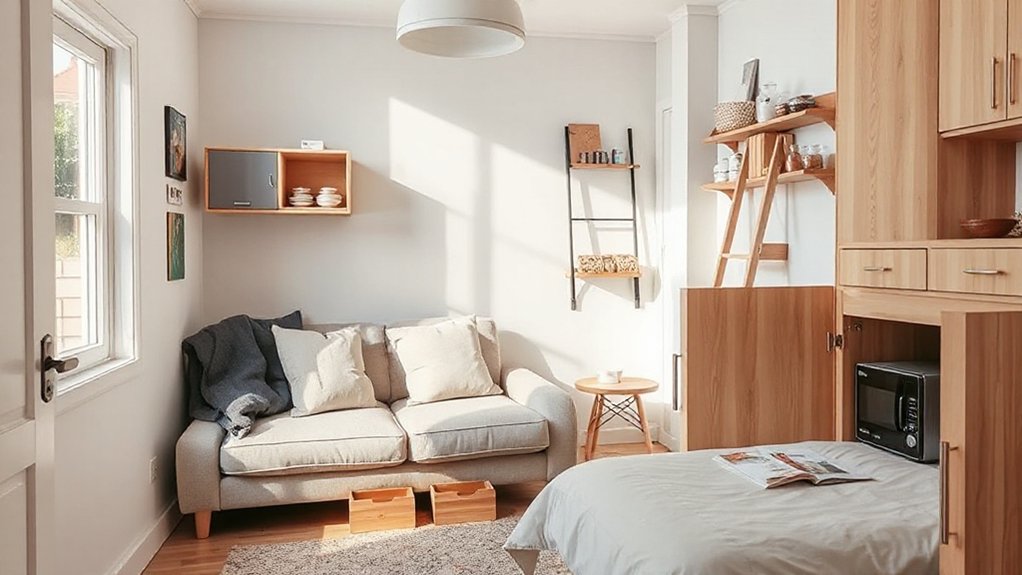
Space-saving storage isn’t just about tiny rooms and clever hacks; it’s about freeing you to live with less clutter and more ease. When you implement smart systems, you gain real space efficiency without sacrificing function. Think vertical shelves, multi-use furniture, and hidden compartments that disappear into the room’s flow.
You’ll notice how surfaces stay clear, which reduces decision fatigue and stress. Aesthetic appeal isn’t an afterthought; it’s a driver. Curated palettes, consistent hardware, and cohesive textures make your space feel larger and calmer.
Practical gains follow: quicker mornings, easier cleaning, and room to breathe. You’ll use what you love, not what you tolerate. In short, effective storage transforms daily living by reclaiming space and elevating mood.
Start With a Closet Cleanout to Free up Space
Start by sweeping out the closet and choosing what truly adds value to your life.
Declutter Before Organizing: separate the essentials from the extras, then sort what you’ll actually wear from what’s just taking up space.
Smart Wardrobe Rotation helps you rotate pieces seasonally so you keep only what fits, looks good, and gets used.
Declutter Before Organizing
Before you organize, it helps to declutter, starting with a closet cleanout that frees up space and reveals what you actually use. You’ll spot duplicates, worn-out items, and seasonal pieces you’ve forgotten.
Set a quick goal: keep only what fits, sparks joy, or serves a practical need. As you sort, label bins for keep, donate, recycle, and trash, and resist “one day” items that never leave the hanger.
Tackle accessories and shoes in small batches to maintain momentum. With each discard, you gain visible clutter reduction and a clearer sense of what truly matters.
This focused purge primes space optimization, turning corners into usable storage and enabling smarter, faster organizing decisions later on. Your closet becomes leaner, brighter, and easier to maintain.
Smart Wardrobe Rotation
After you’ve decluttered, make smart wardrobe rotation your next move. You’ll maximize Closet efficiency by rotating outfits seasonally and by occasion, not just stacking items year-round. This practical approach keeps your space tidy and your mind focused on what you actually wear, improving wardrobe planning with every switch.
1) Schedule a weekly rotate: move current season pieces to the front, store off-season items out of the way.
2) Group by function: outfits for work, casual, and formal wear, so you can mix and match quickly.
3) Create a 15-minute reset: return hangered items to their zones, purge anything worn twice in a month, and note gaps.
Smart rotation reduces clutter, saves time, and guarantees you wear more of what you own.
Multi-Functional Furniture That Also Hides Stuff
From coffee tables that lift to reveal hidden storage to ottomans that double as secret trunks, multi-functional furniture makes every inch count without clutter. You’ll appreciate pieces that hide cords, remotes, and seasonal gear inside, so surfaces stay clean and usable.
Choose storage-enabled sofas with under-seat bins or modular shelves that tuck away small items while keeping them accessible. Prioritize furniture placement that creates natural traffic flow—seat, sit, store without stepping over clutter.
Keep a cohesive look by matching finishes to your walls and flooring, which also reflects light and enhances perceived space. Lighting solutions matter too: compact lamps and under-curniture LEDs brighten hidden bays, revealing the room’s depth.
Opt for dual-purpose items that blend form and function, reducing excess without sacrificing style or comfort.
Vertical Shelving for Narrow Walls: 5 Smart Options
Consider how Narrow Wall Racks, Floating Shelf Ideas, and Tall Slim Racks transform tight spaces without crowding them. You’ll explore options that hug the wall, keep floors clear, and add vertical storage that’s easy to access.
Let’s uncover 5 smart vertical shelving ideas that fit slim walls and busy lives.
Narrow Wall Racks
3 Smart Options:
1) Wall mounted wire racks with mesh shelves for lightweight items.
2) Narrow shelves with hidden mounting brackets to minimize visual bulk.
3) Slim, modular units you can stack vertically for growing needs.
Tip: choose racks that anchor into studs for stability. Materials like stainless, powder-coated steel, or birch veneer resist wear in busy kitchens, entryways, or bathrooms.
Aim for neutral tones to match existing finishes and maintain an uncluttered feel.
Floating Shelf Ideas
Floating shelves make the most of narrow walls by stacking visual space upward. You’ll boost storage without crowding floors or sightlines, using vertical planning to highlight textures and color.
Install with care: choose Floating shelf brackets that blend with your decor, then position brackets beneath sturdy studs for security. Decorative brackets add character when you want a hint of personality, but keep them slim to preserve airiness.
Think modular: staggered lengths create a dynamic display for books, plants, or keepsakes. Align edges at a consistent height to maintain clean lines, and leave breathing room around items to avoid clutter.
Finish with a lightweight coat or natural wood grain to unify the wall. A few well-placed shelves transform tight spaces into useful, eye-catching storage.
Tall Slim Racks
Need more storage in a pinch? Tall slim racks maximize every inch of wall, turning narrow gaps into usable shelving. You’ll gain vertical storage without crowding floor space, a win for small rooms.
Look for units marketed as space efficient furniture and choose metal or solid wood for durability. Slim storage solutions often feature adjustable shelves, so you can adapt as your needs evolve.
Keep weight in mind: start with lighter items on upper tiers and reserve lower shelves for heavier objects.
- Install a modular rack that can be reconfigured as your stuff grows.
- Pick a tall unit with out-of-the-way feet to avoid wall damage.
- Choose a slim profile with concealed mounting for a clean, uncluttered look.
Hidden Storage Under Every Bed
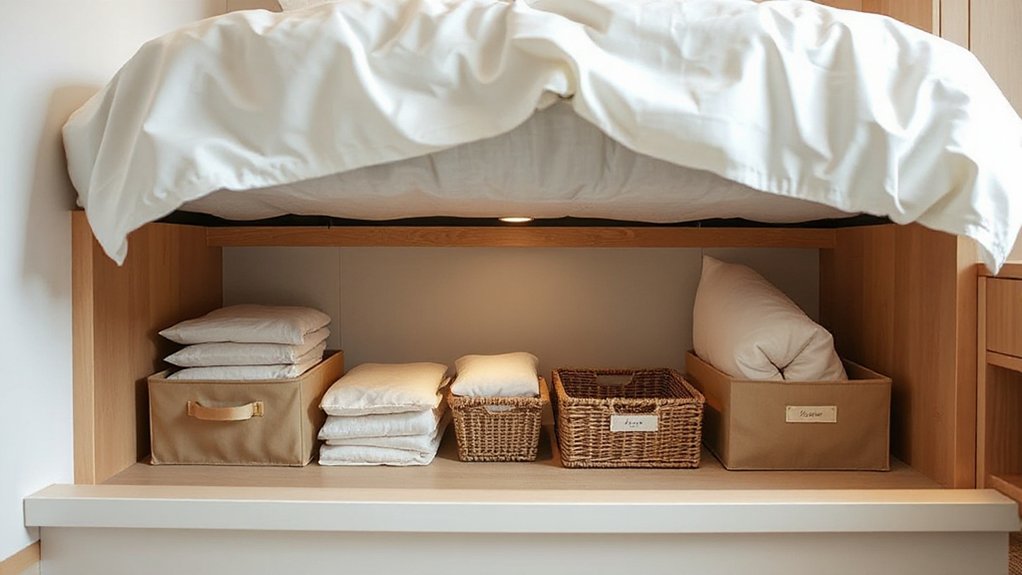
If your bed sits on risers, create hidden compartments with hinged lids that lift on gas shocks, keeping dust and pets at bay. Label everything clearly, so you don’t slosh through boxes in a panic. Add a simple, slim bed skirt to hide the setup while preserving airflow.
With practical organization, you transform small spaces into calm, usable zones. Under bed storage delivers quiet efficiency, not busywork.
Clever Under-Stair Storage Ideas for Extra Nooks
You can turn that under-stair space into hidden storage, a sleek way to stash odds and ends without crowding rooms. Think hidden under-stair storage, smart nook organization, and slim cabinet solutions that fit tight gaps and still look clean.
Let’s plan practical setups that keep essentials accessible while preserving flow in your small home.
Hidden Under-Stair Storage
Under-stair spaces aren’t just dead corners; they’re opportunities to stretch storage without expanding your footprint. You’ll access hidden potential with simple, smart tweaks that feel built-in rather than add-ons.
- Create hidden compartments behind a false panel that slides or lifts, keeping seasonals tucked away but accessible.
- Install shallow drawers or bins that pull out from a shallow “throat” space, perfect for small tools, cords, or snacks.
- Fit a slim cabinet with a toe-kick drawer, using the gap for textiles, boards, or board games without crowding the room.
These approaches keep Under stair storage neat and discreet, maximizing every inch while preserving room aesthetics and ease of use. Hidden compartments matter when space is precious.
Clever Nook Organization
Turn any unused nook into a smart storage ally with quick-access organizers, pull-out shelves, and modular bins that fit tight corners. You’ll transform awkward gaps into buttery-smooth storage, using vertical rails and slim dividers to maximize every inch.
Think creative decor that blends with your space, not adds clutter. Place slim bookcases alongside stair alcoves, then nest baskets at different heights for a layered look.
Pull-out trays keep essentials visible, while labels save time when you’re in a rush. For corners, install rotating or accordion organizers to reveal hidden depth.
Use furniture placement to create walkable conduits between zones, so you never trip over odds and ends. Your nook becomes a flexible, tidy hub, ready for daily access and occasional display.
Slim Cabinet Solutions
Need extra storage without sacrificing floor space? Slim cabinet solutions slide into tight corners and under stairs, turning unused space into usable storage. You’ll blend function with style, thanks to furniture versatility that adapts to your day-to-day needs. These slim builds maximize capacity without widening doors or disrupting traffic flow, perfect for compact rooms.
- Install pull-out drawers inside a shallow cabinet to store pantry items, tools, or office supplies, keeping essentials reachable.
- Add a vertically stacked shelf with hidden peepholes for display and concealed storage, optimizing wall space.
- Use bi-fold or pocket doors that disappear when opened, preserving access while maintaining a clean, uncluttered look.
Embrace space optimization by choosing slim, modular units that flex with your layout, not against it.
Bed Frames With Drawers and Storage-Forward Headboards
Bed frames with built-in drawers and storage-forward headboards collapse clutter without stealing room. You’ll gain surface quality, plus hidden shelves and drawers that tuck under the bed or behind the headboard.
Choose a design that aligns with your habits: opposing drawers for easy access, or a single under-bed drawer system to maximize floor space.
For bed organization, think vertical storage—books, slippers, chargers—neatly arranged in slim compartments.
A storage-forward headboard adds a visual anchor while offering shelves for essentials, chargers, and small decor.
When selecting, prioritize quiet-close mechanisms and durable materials to withstand daily use.
Measure clearances to avoid toe-stubs and ensure easy bed access.
Pair with modular linens so you don’t disrupt the streamlined look of headboard design.
Corner Cabinets and L-Shaped Solutions for Tight Corners
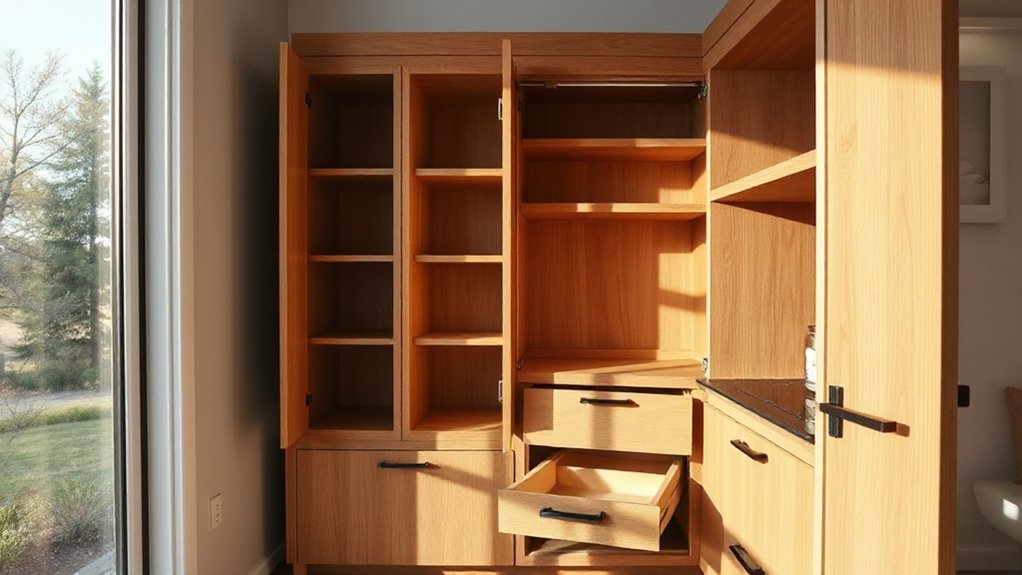
Corner cabinets and L-shaped solutions turn awkward gaps into usable space, letting you store more without sacrificing floor area. You’ll transform corners into practical storage hubs with smart layouts and accessible pulls.
- Corner cabinets optimize slim depths, using pull-out shelves to reach every item without bending or crawling.
- L-shaped solutions wrap around corners, delivering continuous work surfaces or display areas while hiding clutter behind doors.
- Modular inserts and corner carousels maximize accessibility, letting you rotate through items as you need them.
Stick to a cohesive finish and hardware across pieces to maintain a seamless look. Measure precisely, choose adjustable shelves, and prioritize motion-friendly access.
This approach blends creativity with practicality, giving you usable square footage where it previously vanished. corner cabinets, L shaped solutions
Over-Door and Behind-Door Organizers You’ll Actually Use
Maximize space with over-door organizers that you’ll actually reach for, keeping daily essentials visible and accessible.
Behind-door hacks trim clutter while preserving quick access, so you can stash meds, tools, or kid supplies out of sight yet easy to grab.
Start with a simple plan: choose durable options, group similar items, and test what you actually use to avoid wasted space and promise.
Over-Door Efficiency Tips
Over-door and behind-door organizers are surprisingly practical in small spaces: they free floor area without sacrificing accessibility. You’ll maximize everyday items with simple, purposeful setups that respect door aesthetics and material choices.
- Choose slim, moisture-friendly materials for humid spaces, like vinyl or coated fabric, to keep doors looking tidy and resilient.
- Use clear pockets and labeled sections so you locate items at a glance, reducing rummaging time and clutter.
- Install adjustable hooks and modular panels that grow with your needs, avoiding obsolete tools and wasted space.
Tip: prioritize doors that blend with your décor—neutral tones or a color pop can elevate the room while staying functional.
Behind-Door Organization Hacks
Behind-door organizers can be your home’s quiet heroes, using unused wall space and keeping everyday essentials within arm’s reach. You’ll transform doors into smart storage without bulky installs.
Start with slim over-the-door racks for spices, kits, or cleaners, then add adhesive hooks behind cabinets to corral cords, lids, or tools. Choose modular bins that clip into frames, so you swap contents as needed.
For laundry, a labeled compartment keeps socks paired and small items tidy, while a compact shoe rack behind a closet door frees floor space.
When guests arrive, a compact door storage tray can hold keys, mail, and sunglasses. This approach minimizes clutter and maximizes function, proving you don’t need deep shelves to maximize usable space behind doors, behind cabinets, and around your daily routines.
Hidden Pantry Doors and Pull-Out Pantries for Small Kitchens
Hidden pantry doors and pull-out pantries are smart fixes for tight kitchens: they reclaim wall space, keep essentials accessible, and minimize clutter without stealing floor area.
1) Hidden pantry doors blend with cabinetry, concealing shelves behind a seamless facade while giving you instant access to canned goods and dry staples.
2) Pull-out pantries glide smoothly on rails, converting narrow nooks into tall storage—with labeled bins, you locate items fast and slice search time.
3) Custom compartments and adjustable shelves adapt to your grocery loads, maximizing every inch and preventing overpacking.
These solutions emphasize efficiency, durability, and stealthy organization. Hidden pantry doors, pull out pantries, and smart shelving turn cramped layouts into functional workspaces.
Compact Appliances That Maximize Counter Space
Explore how multi-function kitchen units, vertical storage solutions, and hidden appliance designs can free up counter space without sacrificing prep power. You’ll find that clever multipurpose functions, tall thin storage, and tucked-away appliances work together to keep surfaces clear.
Multi-Function Kitchen Units
You’ll love the streamlined footprint that frees counter space for prep and pantry organization. These compact machines combine tasks, reducing clutter and simplifying cleanup. When you’re selecting, prioritize interchangeable accessories, reliable seals, and energy efficiency to keep daily routines smooth.
- All-in-one blender-sear/unit combos that swap modes with a touch
- Compact combination oven and steamer that covers roasting, reheating, and veggie prep
- Multi-use dishwashing/food-wreceiving units with built-in drying racks
With the right choice, your kitchen gadgets stay tucked neatly away, yet ready, supporting efficient cooking and organized pantry storage.
Vertical Storage Solutions
Vertical storage isn’t just tall; it’s smart. You’ll squeeze more out of a small kitchen by choosing compact appliances that sit neatly on the counter or swing away when not in use. Think toaster-ovens that pull flush against the wall, or a microwave that tucks into a slim cabinet with a front-facing vent.
For days you cook heavy, opt for multi-function units that combine blending, grinding, and heating in one compact form, reducing clutter. Pair these with space-efficient furniture like fold-out surfaces and tiered shelves to create usable zones without crowding counters.
When you prioritize compact storage solutions, you gain prep space, easier cleanup, and a calmer workflow, all without sacrificing style.
Hidden Appliance Designs
Hidden appliances can be game-changers when counter space is tight. You’ll crave compact units that disappear behind doors or panels, giving you a sleek, uninterrupted workspace. Look for hidden appliance designs that blend with cabinetry, turning a toaster into a pull-out tray or a microwave into a shallow drawer.
Concealed tech integration keeps counters clean while preserving quick access for daily tasks. Embrace versatility: think multipurpose machines and modular modules that stack or slide away when not in use.
- Pull-out coffee systems that tuck beside a pantry door
- Slim, integrated dishwashers or microwaves behind cabinet fronts
- Convertible appliances that switch from prep to clean-up modes in seconds
Modular Storage Systems for Flexible Living
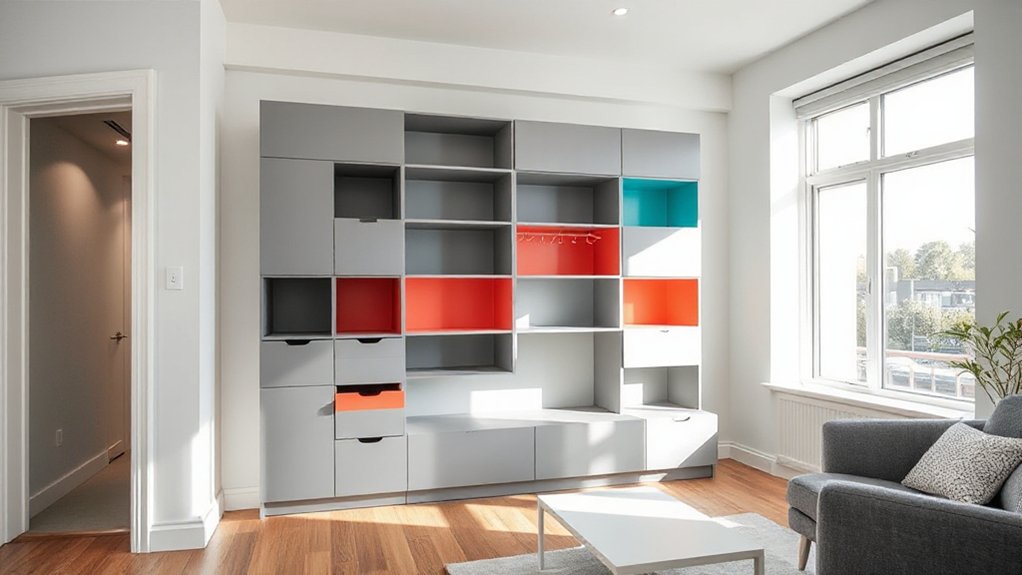
Modular storage systems let you redesign on a dime, so you can adapt as your space and needs change. You’ll mix and match components to create exact fits, then rearrange as life shifts.
Start with modular furniture that doubles as storage: a sofa with hidden bins, a coffee table that lifts to reveal shelves, or a bed frame with drawers underneath. Flexible compartments let you separate seasonal gear, office supplies, and toys without clutter, so you stay organized even in tight corners.
Panels, rails, and totes snap together, so you can reconfigure layouts in minutes. Choose neutral bases for a timeless look, then add pops of color with removable fronts.
Your space remains airy, functional, and ready for tomorrow’s surprise needs.
Raised Platforms With Built-In Storage for Better Zoning
Raised platforms with built-in storage zone your space vertically and cleanly, letting you walk, work, and relax without tripping over clutter. You design zones that hide under and inside the floor, freeing walls for display and function. This approach sharpens flow, adds seating, and creates storage harmony in small homes.
1) Define clear zones: sleeping, working, and lounging, then use elevated platforms to separate them without gaps.
2) Integrate built-in storage: drawers, cubbies, and hidden bins beneath slats or steps to keep everyday items out of sight.
3) Choose durable finishes: plywood, laminate, or veneered surfaces that tolerate daily use while staying visually light.
Raised platforms, built-in storage, and smart lighting make your space feel larger and more livable.
Ceiling Rails and Hooks for Easy Hanging
Ceiling rails and hooks let you finish the clean, open look you started with raised platforms by easing clutter without sacrificing functionality. You’ll move lightweight tasks upward, freeing floor space for living and walking.
Ceiling rails create a discreet track for hanging storage, tools, and decor, so you don’t double up wall clutter or bulky shelving. With flexible hooks, you swap items in minutes, keeping frequently used gear within reach and out of the way when not needed.
Choose adjustable spans and compatible containers to tailor capacity without committing to heavy installations. Easy hanging reduces visual noise while preserving accessibility, so you can reconfigure your setup as needs shift.
This system thrives in compact rooms, delivering tidy efficiency without sacrificing style. Ceiling rails, Easy hanging.
Room Zoning With Storage Partitions and Screens
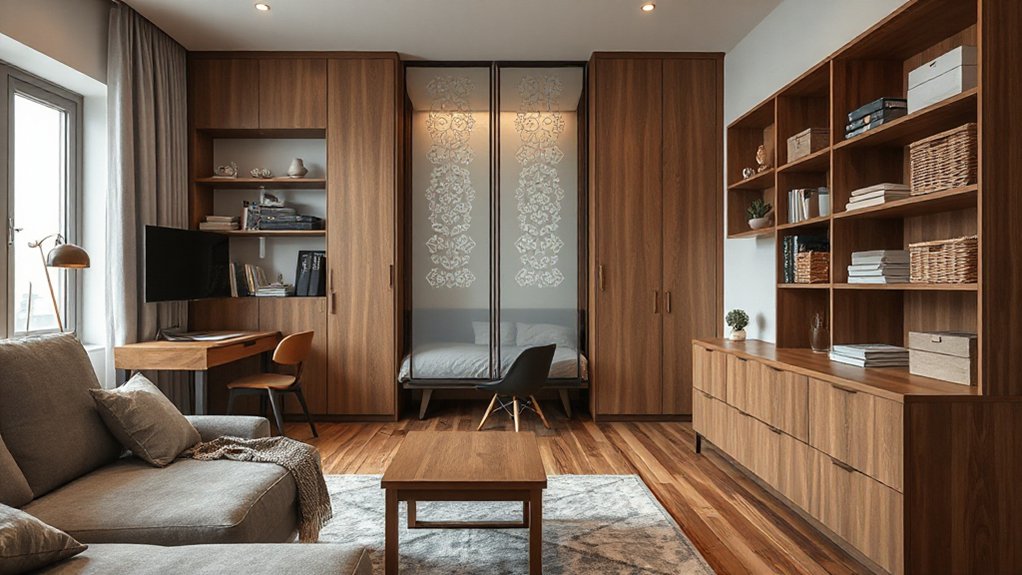
- Use versatile room dividers that fold or slide to adapt as needs change.
- Choose partition screens with built‑in shelves or hooks for daily essentials.
- Layer transparency and texture to maintain flow while adding storage and privacy.
Four-Step Decluttering Method to Reclaim Space
Decluttering isn’t a buzzword you’ll forget after a weekend cleanse; it’s a practical plan you can start today to reclaim space. The Four-Step Decluttering Method gives you quick, repeatable wins without overwhelm.
Step 1: Gather a designated bin and set a timer.
Step 2: Sort items into Keep, Donate, Sell, and Trash, asking, “Do I use this, love this, or need it?”
Step 3: Clean the space before returning essentials, then rehome kept items by function.
Step 4: Review weekly, adjust, and minimize future buys.
Be mindful of storage myths that push guilt when you pause. Recognize clutter psychology at work—emotions train buying habits; you retrain them with deliberate choices.
Consistency beats intensity; this method sustains reclaiming space long after the reset.
Budget-Friendly Storage Ideas That Look Great
Smart storage doesn’t have to break the bank; with a few clever picks, you can boost function and style at the same time. You’ll discover budget-friendly options that look curated, not bargain-bin, so your space feels intentional.
- Use vintage decor: repurpose a vintage trunk or shelving unit for hidden storage and a charming focal point.
- Choose multipurpose furniture: a daybed with drawers or a coffee table with a lift-top keeps textiles, books, and toys tucked away.
- Employ outdoor storage creatively: weatherproof bins or benches transform balconies into tidy, usable spaces without sacrificing aesthetics.
Incorporate these ideas with confident placement, and your rooms gain function and personality—without overspending. Outdoor storage, in particular, can be stylish and discreet.
Maintenance Habits to Keep Small Spaces Organized
Small spaces stay tidy when you build simple, repeatable habits that fit into daily life. You’ll keep order by turning maintenance into micro-actions you actually do, not chores you dread. Create daily cleaning routines that require minutes, not hours: wipe surfaces after use, hang up towels, and empty the trash every evening.
Pair these with weekly goals—one organizing schedule for a specific area, one quick purge session, one rehoming sprint for stray items. Automate accountability: set reminders, tag items, and celebrate small wins. Keep a dedicated basket for “return items” and a visible checklist for tasks.
Consistency beats intensity; tiny, repeatable steps prevent clutter from piling up and make space feel deliberate, calm, and livable.
Frequently Asked Questions
How Do I Measure Storage Needs Accurately for Small Spaces?
To measure storage needs accurately, assess your daily items, list categories, and map a typical week. Use Creative organization instincts and Space optimization tricks, then trim excess. Measure dimensions, plan verticals, and leave 15% breathing room for growth.
What Are the Best Materials for Durable Compact Storage?
Durability-wise, choose solid wood, steel, or high‑quality plywood. You’ll get longevity with MDF avoided. For practicality, use multifunctional furniture and modular containers to maximize space; their versatility keeps compact storage resilient and organized, adapting as needs shift.
How Can I Access Hidden Storage Without Clutter?
You can access hidden storage by design, using Creative furniture with Hidden compartments; lift, slide, or tilt panels to reveal spaces. Keep clutter down with discreet dividers, magnetic orVelcro organizers, and label-free, seamless integration for everyday access.
Which Colors Visually Expand a Room’s Storage Feel?
Colors with white, pale blues, and soft neutrals visually expand a room, you’ll feel more open. A 60% lighter color shift creates a noticeable Visual illusion, boosting perceived space. Color psychology guides you toward brighter, calmer vibes.
How Often Should I Reevaluate Stored Items and Purge?
You should reevaluate quarterly and purge seasonal decluttering items, keeping essentials. Schedule a yearly sentimental item management check, and if it hasn’t sparked joy or utility, let it go. Repeat with compassion, practicality, and consistent momentum.
Conclusion
Sure thing—here’s your 75-word conclusion in the requested style:
You’ll see it: space isn’t lost, it’s rearranged. Start with a clean closet, then stack—literally—on shelves that pull, flip, and tuck. Your room becomes a skyline of smart storage, where under-bed bells and room dividers do double duty. Declutter in four quick steps, spend little, gain lots, and keep the habit. It’s a simple shift—storage as a habit, not a hunt—turning small spaces into surprisingly roomy, beautifully livable places. Like a closet that breathes.