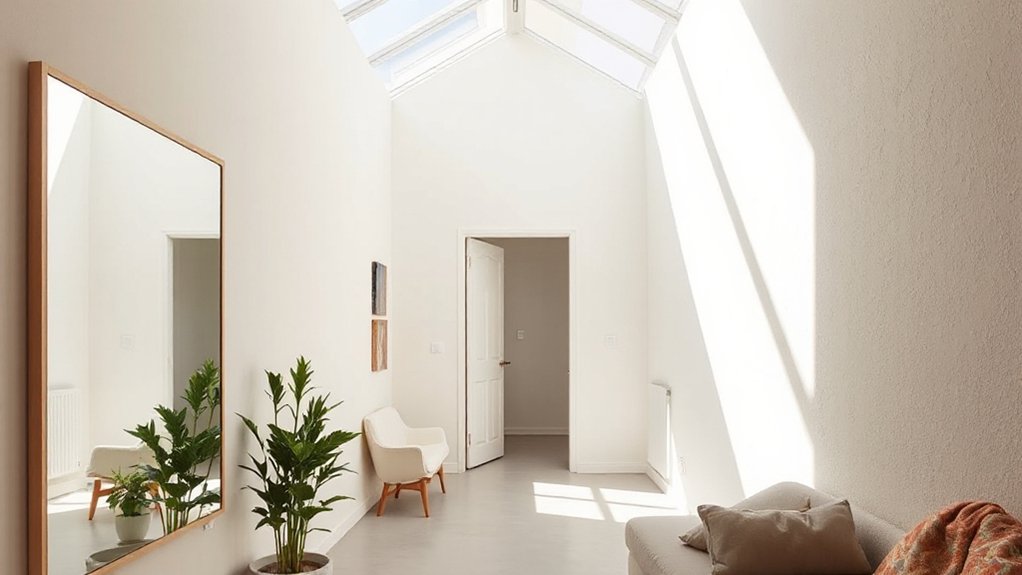
You’re facing a narrow terrace where daylight barely penetrates; the fix is systematic, not serendipitous. Start with a daylight audit: map gaps, sizes, and shading, then prioritize high-quality, reflective surfaces and larger openings that maintain privacy. We’ll outline practical tweaks—from window choices and interior mirrors to layout shifts and skylight options—that quietly compound light without wasting energy. The questions you’ll ask next will determine which upgrade release the most consistent brightness without compromising your comfort.
Diagnose Daylight Gaps in a Narrow Terrace: A Quick 5-Point Check
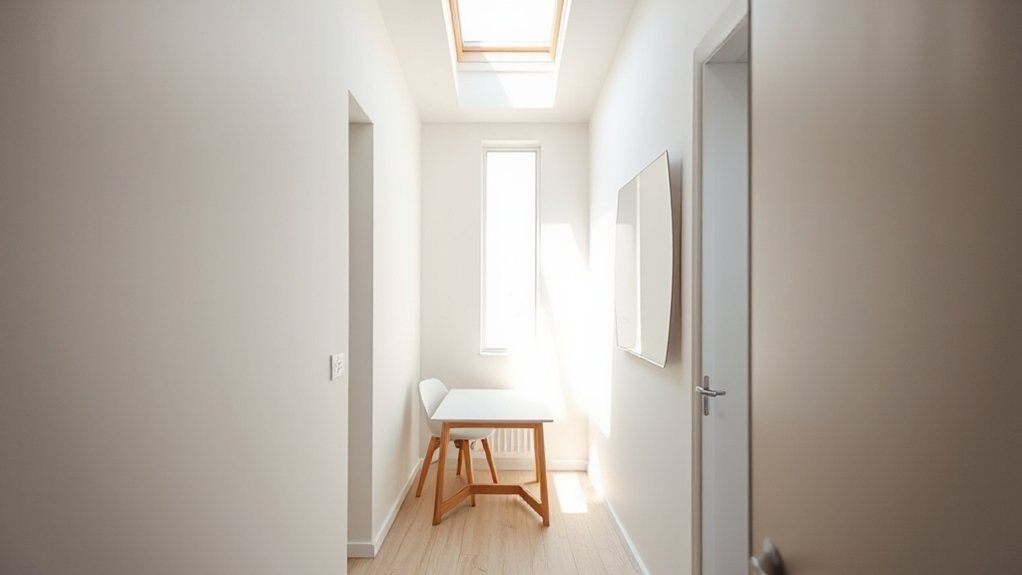
To diagnose daylight gaps in a narrow terrace, start with a quick five-point checklist to identify how daylight travels and where obstructions limit it. You assess window placement first, mapping direct sun angles from dawn to dusk and noting shifts in shading.
Next, you examine wall recesses, internal partitions, and ceiling heights that create dead zones where light stalls. Consider exterior features—fences, neighboring structures, or overhangs—that block outdoor lighting during key hours.
Evaluate interior reflectance: white or light finishes amplify available light, while dark surfaces absorb it. Finally, measure daylight penetration at representative eye levels across the width, recording gaps and their causes.
Compile results to prioritize improvements, focusing on unobstructed lines of sight and strategic window placement.
Choose Window Treatments to Maximize Daylight
Choose window treatments that favor daylight transmission by selecting light-maximizing fabrics and light, sheer curtain options.
Prioritize fabrics with high openness factors and low opacity to maintain brightness while controlling glare.
Consider layering with sheer and lightweight panels to boost perceived daylight without sacrificing privacy or thermal performance.
Light-Maximizing Fabrics
When selecting window treatments to maximize daylight, prioritize fabrics that admit light while reducing glare and heat gain. Choose light-filtering materials that balance visibility with privacy, and avoid dense weaves that block daylight.
Prefer fabrics with a tight, uniform knit or a smooth, flat surface to minimize hotspots and uneven transmission. Fabric patterns should be subtle and directionally neutral to prevent corner shadows or focal distractions; avoid bold prints that interrupt light diffusion.
Consider color temperature: cool or neutral tones reflect rather than absorb, preserving luminance. Test both static and dynamic conditions; select materials with consistent performance under varying sun angles.
Confirm compatibility with existing hardware and easy maintenance. Document performance specs for each option: openness factor, haze, and drapability.
Sheer Curtain Options
Sheer curtains offer a disciplined balance of daylight transmission and privacy, making them a practical first choice for narrow terraced spaces.
You’ll choose sheer curtain options that maximize ambient light while minimizing glare, using fabrics such as lightweight voile or voile blends with low to moderate opacity.
Opt for fuller drapes on one side to allow side-entry daylight, or pair with a solid liner for evening privacy without sacrificing daytime brightness.
Consider rod placement just inside the window reveal to keep sightlines open and avoid bulk intruding on light.
Select neutral tones to reflect rather than absorb daylight.
This approach aligns with window treatment styles that prioritize translucence, scale, and clean edges, delivering consistent illumination without mechanical obstructions.
Daylight-Enhancing Mirrors and Surfaces
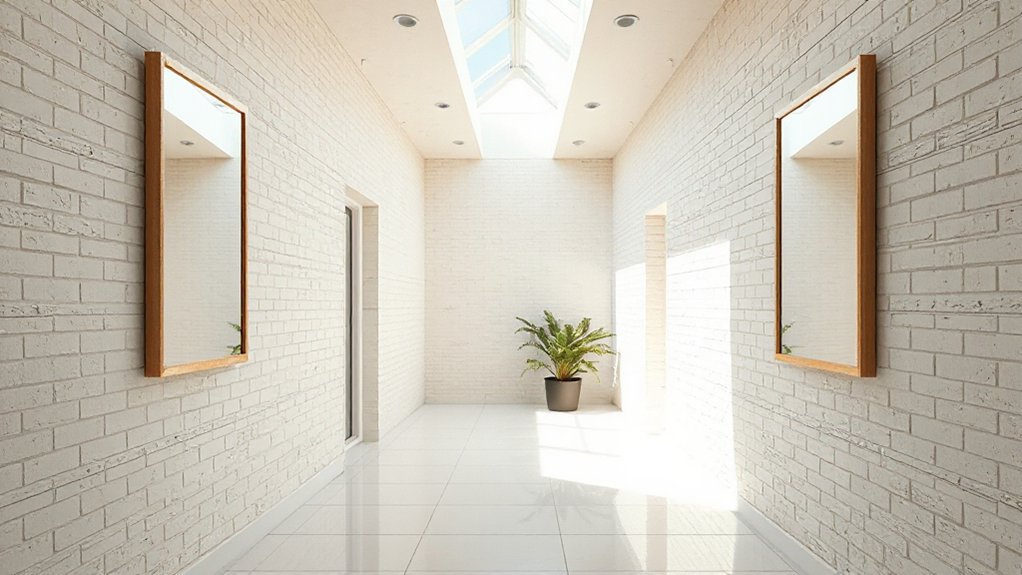
Daylight-enhancing mirrors and surfaces are strategic tools for widening perceived space and boosting ambient light in narrow terraced homes. You deploy mirrors to expand sightlines along corridors and under eaves, minimizing deep shadow zones.
Position mirrors opposite light sources to double daylight reception without creating glare. Choose framed or frameless options with low iron glass to reduce color distortion.
Surfaces reflect light efficiently when finished in high-gloss or satin textures; avoid textures that trap dust or obscure reflections.
Integrate decorative window films to modulate glare while preserving external visibility, and pair with reflective ceiling panels to bounce daylight deeper into rooms.
Maintain clean, uninterrupted mirror planes and avoid excessive segmentation that can fracture luminance. Regularly verify mounting stability, alignment, and finish integrity for sustained illumination gains.
Layout Tweaks to Invite More Daylight (Low-Cost Start)
Optimizing Open Plan Flow, even on a budget, reduces corridor clutter and allows daylight to travel further into rooms.
Use Light-Willing Walls to minimize interruptions and reflect more light from any existing openings.
Combine Mirror And Paint Tricks with restrained color accents to amplify brightness without adding cost.
Open Plan Flow
To boost open-plan flow, start with simple layout tweaks that maximize daylight exposure without major renovation. You’ll prioritize sightlines and flexible zones, minimizing obstructions to natural light paths.
Remove or reduce bulky furniture near windows, and establish a clear corridor from front to rear that guides daylight deeper into the space. Use transparent or low-height partitions to delineate functions without interrupting light.
Ceiling designs should remain slim-profile or recessed to avoid shadowed angles, while keeping electrical and lighting placements aligned for balanced illumination. Integrate indoor plants at focal points to reflect light and soften edges, not block brightness.
Select light-reflective finishes and a consistent color palette to sustain a cohesive, luminous flow throughout the open-plan area.
Light-Willing Walls
Light-willing walls focus on small, actionable tweaks that invite more daylight without major remodeling. You analyze surface interactions, selecting finishes and placements that maximize light transmission. Use light-reflective paints, at least toward semi-gloss or satin sheens, and keep color palettes in cool to neutral ranges to minimize absorption.
When possible, position furniture and partitions to avoid casting angular shadows onto primary glazing, reducing shadow play across rooms. Favor low-profile, high-contrast trim to sharpen light edges without interrupting circulation. Consider wall-mounted reflectors or shallow niches that diffusely bounce daylight deeper into corners.
Avoid dense textures or heavy, dark art near windows, which can trap shadows. Document outcomes with simple daylight measurements and adjust materials to optimize continuous daylight penetration.
Mirror And Paint Tricks
Mirror placement and strategic paint choices can dramatically amplify available daylight at low cost. You’ll place mirrors opposite light sources to bounce daylight deeper into rooms, aiming for reflective angles around 45 degrees to maximize spread.
Use narrow, tall mirrors to elongate sightlines without overpowering walls. Paint selection matters: opt for semi-gloss or satin finishes in cool whites or light neutrals to enhance specular reflection, while avoiding flat, absorbent tones that dull brightness.
Integrate decorative window films on internal panes to diffuse glare and redirect light without sacrificing privacy. Pair with reflective wall panels at key focal points to create a daylight nexus along corridors or stair zones.
Test combinations quickly, and adjust placement after initial daylight patterns shift through the day.
Skylights and Roof Solutions for Upper-Level Daylight
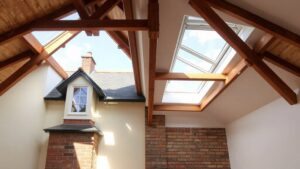
Skylights and roof solutions can substantially boost upper-floor daylight without enlarging the footprint. You evaluate skylight installation options to maximize light without glare. Consider orientation, roof type, and glazing to balance heat gain with daylight quality.
For pitched roofs, roof window options offer more controllable light and ventilation than fixed skylights, enabling seasonal shading and breeze through. Guarantee flashing and waterproofing meet local standards to prevent leaks.
Size and placement matter: align openings with high-contrast interior surfaces to amplify brightness, yet avoid over-lighting sensitive zones. Choose glazing with low-e coatings for energy efficiency and UV protection.
Operate systems with easy-to-use blinds or dimmable glazing for variable daylight. Budget for professional installation to assure structural integrity and warranty compliance.
Daylight-Optimizing Colors and Finishes
To maximize daylight perception, choose colors and finishes with high reflectance and neutral undertones that brighten spaces without biasing color casts. You select a tonal range near whites and light grays, avoiding saturated hues that absorb light.
Use matte or satin sheens on walls to reduce glare, while ceilings benefit from semi-gloss in bright whites to reflect ceiling luminance downward.
For floors, opt for light-toned finishes with low contrast to walls to maintain visual continuity and enhance perceived depth.
Consider color psychology; cooler neutrals can modulate perceived temperature, while warmer accents anchor feels without compromising brightness.
Finish durability matters; pick washable, fade-resistant coatings for high-traffic areas.
Document, test swatches in varying daylight, and adjust based on observed daylight performance and material compatibility.
Privacy-Safe Daylight for Narrow Halls
Even in narrow halls, you can daylight safely without sacrificing privacy by combining controlled daylighting with strategic glazing and architectural features. Start with privacy-enhancement goals, aligning daylight routes to interior occupancies while limiting line-of-sight from adjacent properties.
Use high-contrast, opaque upper panels or frosted lower glazing to reveal light without exposing interiors. Employ narrow vertical or battery-style light wells only where window placement remains restricted, ensuring glare control through diffusers and low-e coatings.
Place windows to capture skylight-aligned angles rather than direct sightlines, preserving privacy while delivering diffuse illumination. Integrate internal reflectors and light shelves to maximize distribution from the existing openings.
Document performance targets, monitor shading impact, and adjust glazing specification to sustain consistent daylight levels without compromising privacy.
Balancing Light: When to Use Artificial Lighting
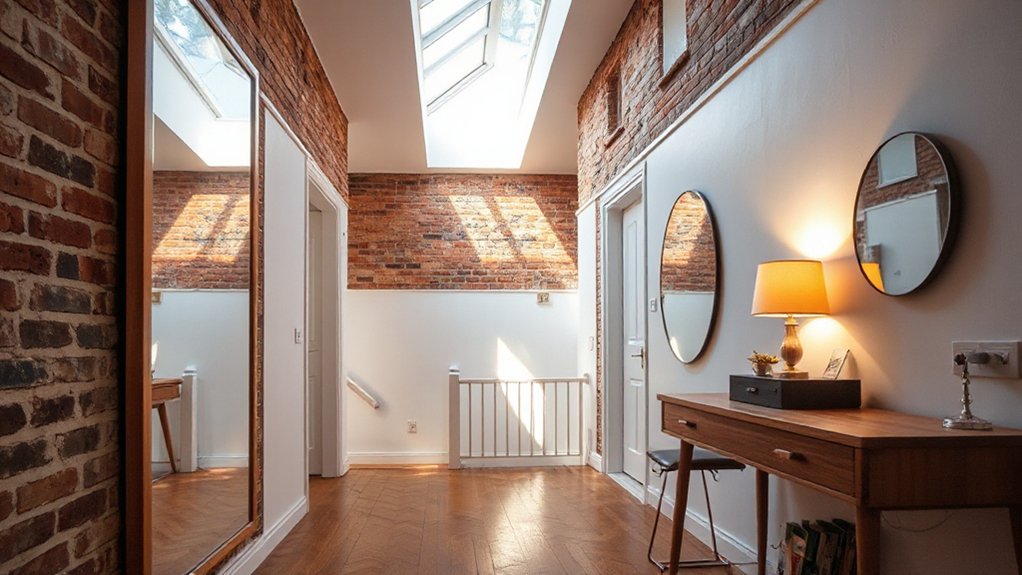
Artificial lighting becomes essential when daylight is insufficient to meet functional and comfort targets in a narrow terraced property. Use it strategically to maintain consistent illumination without glare or energy waste.
You should profile room tasks and occupancy patterns, then deploy layered lighting to balance ambient, task, and accent needs. Rely on artificial lighting strategies that emphasize uniformity, color rendering, and controllability, not brightness alone.
In corridors and stairwells, implement diffuse ambient sources with dimmable capability to prevent abrupt contrasts. For work surfaces, apply task lighting at or near eye level to reduce shadows and eye strain.
Mood enhancing fixtures can refine atmosphere during evenings without overpowering utility. Align fixture selection with room proportions, ensuring minimal glare and efficient distribution for predictable illumination across zones.
Budget Daylight Upgrades You Can Do Today
If you’re aiming for daylight fixes on a budget, start with simple, repeatable measures that maximize natural light without large renovations. Begin with exterior landscaping, pruning overhanging branches and clear sightlines to reflect more daylight into interiors.
Choose window frame styles that minimize obstructions; slim profiles and high-contrast surrounds boost perceived brightness without structural work.
Consider interior reorganization to align seating and work zones with available light, using mirrors to extend daylight deeper into rooms.
Upgrade sealing and glazing where possible with energy-efficient films or low-cost secondary glazing—improvements that reduce glare while preserving brightness.
Install light shelves or reflective coatings on interior surfaces to bounce light downward.
Prioritize tasks by impact, verify compatibility with existing fenestration, and avoid permanent alterations unless necessary.
Frequently Asked Questions
Can Plants Help or Hinder Daylight in Narrow Terraces?
Yes, plants can help daylight by reflecting and diffusing light, but dense foliage may hinder it, reducing indoor air quality and thermal insulation. Choose compact, light-loving species; prune regularly to maintain indoor air flow and preserve thermal insulation.
Is Side Lighting as Effective as Windows for Depth?
Side lighting isn’t as effective as windows for depth; use both where possible. You’ll maximize Artificial lighting and optimize Window placement to create depth, avoid shadows, and improve perception of space in narrow terraces. It’s not a miracle solution.
Do Reflective Ceilings Truly Boost Perceived Brightness?
Yes, reflective ceilings can boost perceived brightness by scattering light; combine with strategic window placement and interior color choices to maximize luminance, reduce shadows, and maintain visual balance throughout the space.
How Do Building Codes Affect Visible Skylight Options?
Building regulations govern skylight options, and you’ll encounter strict skylight restrictions. You should verify local planning rules, guarantee compliance with fire safety and insulation standards, and consult a professional to confirm allowable sizes, placements, and permit requirements.
What Is the Best Blind Type for Glare Control?
A 25% glare reduction is typical with quality roller shades. You should choose window treatments that offer light diffusion, like dimmable or textured fabrics, to minimize glare while preserving visibility. You’ll optimize ambient brightness and comfort with proper installation.
Conclusion
You’ve got the basics: maximize openings, reflect light, and declutter to open daylight’s path. Implement skylights where possible, choose light-reflective finishes, and position mirrors to bounce brightness deeper into rooms. Keep privacy intact with high blinds or frosted panes. Lighting will feel more even when you balance daylight with a touch of artificial light. Remember the adage: “a little light goes a long way.” With precise tweaks, you’ll brighten a narrow terrace without sacrificing comfort.