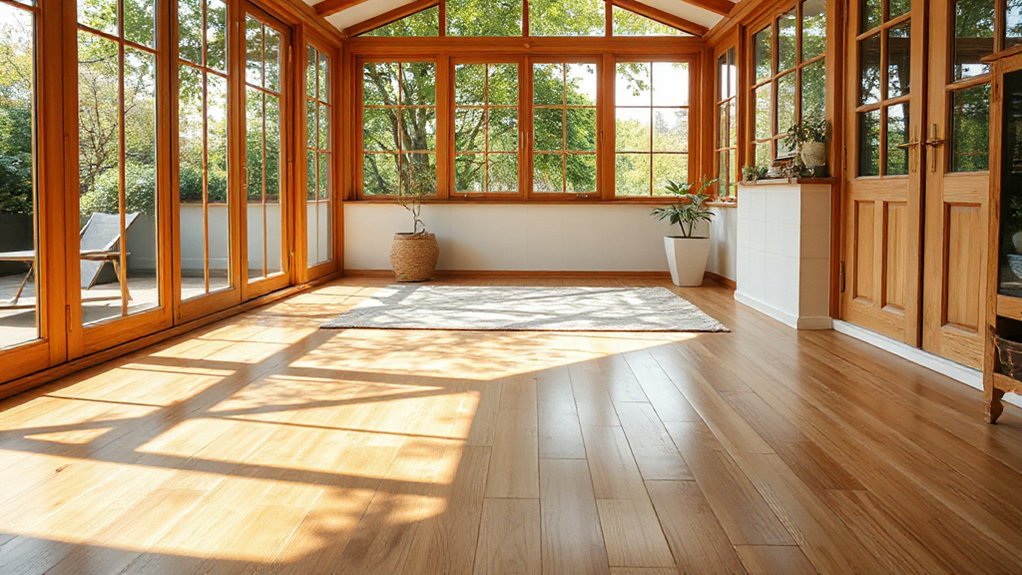
Choosing the right flooring for a conservatory starts with how you’ll use the space, then tests for heat, humidity, and footfall. You’ll want moisture resistance, stability, and easy upkeep, paired with light-friendly aesthetics. Compare ceramic, stone, and resilient options, sample them in natural light, and plan for zones that suit seating, dining, or plants. It’s about balance—comfort underfoot, slip resistance, and long-term durability—before you commit to a look that will age gracefully as seasons change.
Evaluate Conservatory Flooring Needs
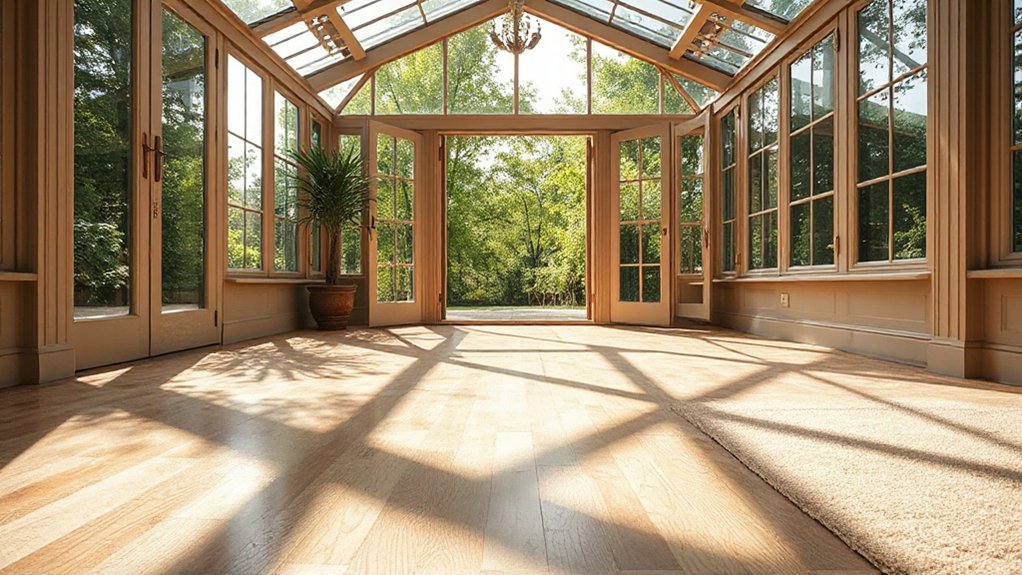
When evaluating conservatory flooring needs, start by considering how you’ll use the space. You’ll balance comfort, durability, and heat transmission, then map practical zones for seating, dining, and plants.
Assess foot traffic, spills, and climate changes, since drafts and sun exposure affect wear. Prioritize substrates that suit large panes and varying humidity, and think about maintenance, longevity, and installation ease.
Visualize how the floor’s tone and texture interact with walls and furniture to create a cohesive mood. Decorative patterns elevate character without overpowering light, while subtle contrasts preserve a calm, inviting feel.
Eco-friendly materials align with responsible choices, offering lower environmental impact and good performance. Choose options that meet safety, acoustics, and insulation goals while maintaining a timeless look.
Compare Conservatory Flooring Options
Choosing a flooring option for a conservatory starts with weighing comfort, durability, and lighting effects, then matching materials to your zones—dining, lounging, and plant spaces—while considering climate swings.
Compare options by daily use, maintenance, and focal points: ceramic or quarry tiles for cool summers, engineered wood for warmth, vinyl planks for durability, and natural stone for timeless appeal.
Consider underfoot texture and slip resistance in wet zones, plus sound dampening for lounges. Factor installation complexity and future versatility—some surfaces lift for rewiring or insulation upgrades.
Decorative patterns and color choices shape perception, helping to define zones without heavy furniture changes.
Balance price against longevity, then visualize seasonal shifts, ensuring your final pick stays cohesive with your décor while offering comfort year-round.
Temperature and Humidity: Impacts on Floors
Temperature and humidity levels can dramatically influence a conservatory floor, shaping comfort, performance, and longevity. You’ll notice seasonal swings affect expansion, contraction, and moisture migration, so select materials that tolerate fluctuation.
Consider moisture resistance in subflooring and finishes, and don’t overlook tolerance to high humidity during rainy days. Choose flooring with stable performance under sun exposure and intermittent wetness, because sunlight sensitivity and moisture share the spotlight in a conservatory environment.
Airflow matters, so guarantee adequate ventilation to curb mold risk and odor buildup. For pest resistance, favor sealed edges and tight joints that deter insects seeking shelter.
Remember that maintenance routines should align with your chosen material’s needs, supporting long-term stability without requiring constant overhaul. Balance aesthetics with resilience to protect comfort and value.
Comfort, Sound, and Maintenance Considerations
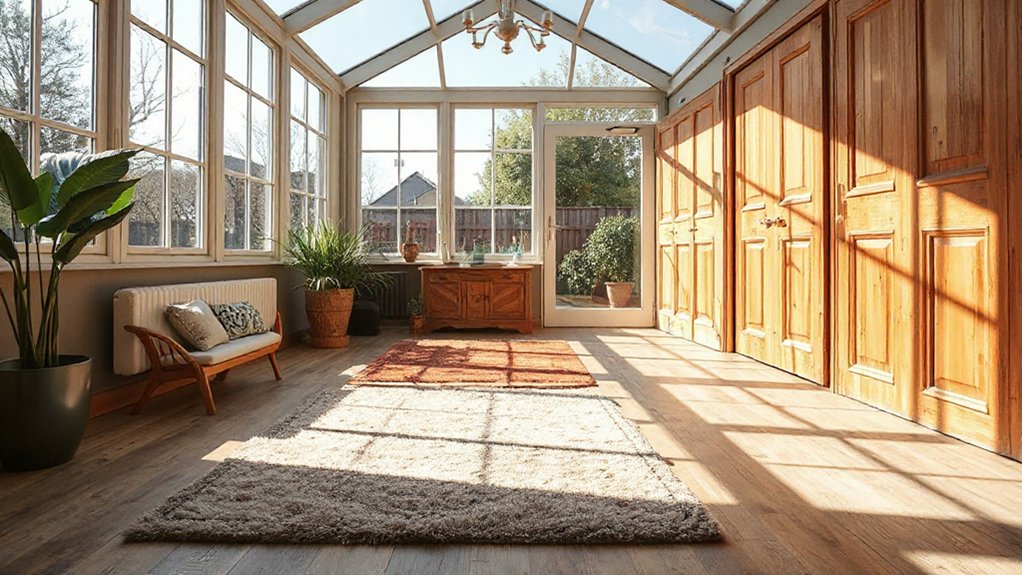
Choosing a floor that feels great underfoot and sounds right in a conservatory starts with your comfort underfoot options and how each surface handles foot traffic. You’ll weigh insulation, softness, and slip resistance, balancing tactile ease with durability in a space that blends indoors and outdoors.
Consider maintenance demands, from cleaning frequency to long-term upkeep, so your choice remains appealing with minimal effort.
Comfort Underfoot Options
A comfortable conservatory floor balances warmth, acoustics, and upkeep, so you don’t notice the surface—only the space it creates.
You want underfoot cushioning that stays springy without overwhelming the room’s brightness. Think materials that feel soft yet solid underfoot, reducing fatigue after hours of sitting or pottering.
Pair that comfort with effective thermal insulation to minimize heat loss and seasonal swings, so barefoot strolls stay pleasant year-round.
Consider floating or layered options that cushion impact while preserving a clean, contemporary look.
Aesthetics matter as much as function: choose textures and colors that complement natural light rather than fight it.
Finally, guarantee maintenance remains straightforward—wipeable surfaces and durable finishes keep the feel inviting without demanding constant care.
Sound and Maintenance Impacts
Luckily, you can balance comfort, sound, and upkeep by selecting flooring that dampens clatter, supports barefoot days, and cleans easily. Your choice influences acoustic insulation, reducing footstep noise and room echo, while enhancing daily comfort.
Prioritize materials with sound-dampening underlayment or inherently solid mass to keep conversations uncluttered. Maintenance matters too: opt for finishes that resist staining, are easy to wipe, and withstand sunlight without fading.
Aesthetic appeal matters as much as practicality; choose tones and textures that blend with daylight and furniture. Consider durability against pets and high traffic, yet avoid overly slick surfaces that undermine safety.
Budget, Installation, and Longevity Planning
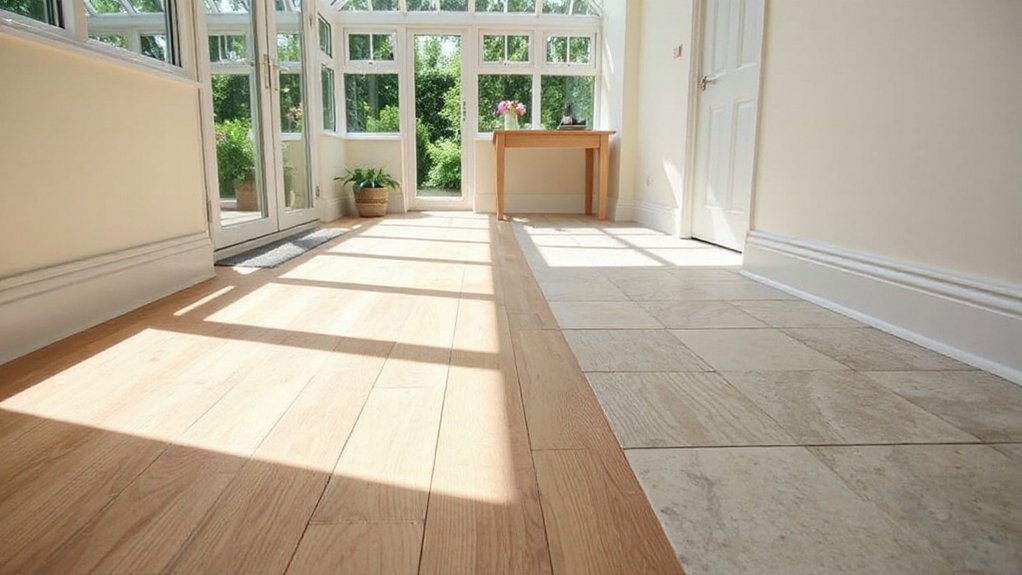
Set your budget early to align with materials, installation, and long-term upkeep.
Consider installation options that fit your space and timeline, balancing cost with quality and future access.
Look ahead to longevity projections to choose flooring that maintains value and minimizes replacements.
Budget Allocation Tips
To allocate your conservatory budget wisely, start by separating up-front costs from long-term expenses and set clear priorities for durability, installation, and upkeep. You’ll want a realistic cap for initial purchase, plus ongoing care, so you don’t overspend today and regret later.
Prioritize materials and finishes that align with how you’ll use the space, then map installation steps against your cash flow. Allocate a buffer for unexpected fixes and seasonal maintenance.
When choosing options, weigh decorative patterns and eco-friendly materials against longevity and ease of care. Consider warranty terms and supplier support as part of your long-term cost.
Finally, document decisions, stagger purchases if needed, and revisit your plan annually to stay on track with quality and value.
Installation Considerations
When you plan an installation, align budget, labor, and longevity from the start to avoid costly delays later. You’ll weigh material options against climate exposure, foot traffic, and maintenance needs, then map a realistic timeline.
Favor practical color coordination that complements your décor while reducing visible wear; think tones that hide scuffs and blend with conservatory light. Prioritize flooring durability without sacrificing comfort or heat transfer, selecting underlayment and moisture barriers suited to your substrate.
Consult installers about precise acclimation, clearance gaps, and expansion requirements to prevent buckling. Document warranties, service intervals, and potential refinishing needs so upkeep stays simple.
Consider phased execution to minimize disruption, and schedule inspections after key milestones. A concise plan protects aesthetics, performance, and your investment over time.
Longevity Projections
Because longevity hinges on upfront planning, align budget, installation, and long-term care from day one to avoid surprises later. You’ll project how your flooring behaves over years, not months, by weighing durability standards against your conservatory’s climate and use.
Budget smartly for underlayment, finishes, and potential refinishing, and factor in seasonal shifts that stress joints and seams. Installation choices influence longevity as much as the material itself, so verify compatibility with your structure and ventilation.
Prioritize material compatibility with sun exposure, humidity, and temperature swings to minimize warping, fading, or creep. Consider maintenance routines that extend life, like timely sealing and cleaning.
Informed selections yield steady performance, reduced replacement cycles, and a cohesive, enduring look. Durability standards guide your confidence; material compatibility solidifies it.
Quick Decision Framework for Conservatory Flooring
A quick decision framework helps you pick flooring for a conservatory without overthinking it: prioritize climate, maintenance, and mood, then compare a few practical options.
You’ll save time by pairing your room’s light, heat, and humidity with durable, low-maintenance materials. Focus on how each choice handles temperature swings and ease of cleaning, not just aesthetics.
Consider decorative patterns and color schemes that complement your walls and furniture, guiding the mood you want—from airy neutrals to bold accents.
For climate, choose water-resistant, stable options like ceramic, stone, or vinyl with rigid core.
For maintenance, favor seamless surfaces or tongue-and-groove joins.
For mood, test samples in natural light.
Narrow your list to two or three contenders, then assess long-term comfort and resale appeal.
Frequently Asked Questions
Can I Insulate Underfloor Heating for a Conservatory Floor?
Yes, you can. Use proper underfloor insulation with your heating system to maximize heat retention; guarantee compatibility with your conservatory’s insulation. This setup improves heat retention and reduces energy costs, while keeping your space comfortable and efficient.
Which Flooring Resists Fading From Strong Sun Exposure?
Sunlight durability shines: choose materials with deep colorfast finishes and UV-resistant coatings, so you stay confident as colors endure. You get Color fading protection and Sunlight durability, keeping floors vibrant while you enjoy bright, sunlit spaces.
Do All Options Require Underfloor Ventilation for Humidity Control?
Not all options require underfloor ventilation; some use passive ventilation. You’ll want explicit ventilation recommendations for humidity management, and consider products with built-in moisture control. Ventilation requirements vary; assess your space, climate, and airflow to optimize humidity management.
How Does Pest Resistance Affect Long-Term Flooring Choice?
Pest resistance guides you to choose durable materials and proactive pest prevention, so you avoid costly repairs. You’ll notice coincidence: a sturdy floor and fewer critters naturally align, giving you lasting beauty, stability, and worry-free conservatory living.
Are Eco-Friendly Materials Compatible With Conservatory Installations?
Yes, eco-friendly materials are compatible with conservatory installations. You’ll value sustainable sourcing and biodegradability features, ensuring you achieve a stylish, low-impact look that respects climate control and humidity while remaining durable, easy to maintain, and visually cohesive.
Conclusion
When you choose a conservatory floor, you’re crafting a covered climate, a cozy canvas. Consider ceramics, stone, or vinyl that resist moisture, stay steady, and spark simple upkeep. Weigh warmth, workability, and wow—comfort underfoot, quiet steps, and slip resistance. Match mood to light, align zones to use, and plan for easy care. Budget wisely, install with care, and enjoy longevity. With ready research, realistic testing, and thoughtful texture, your stylish space can endure seasonal shifts and shine.