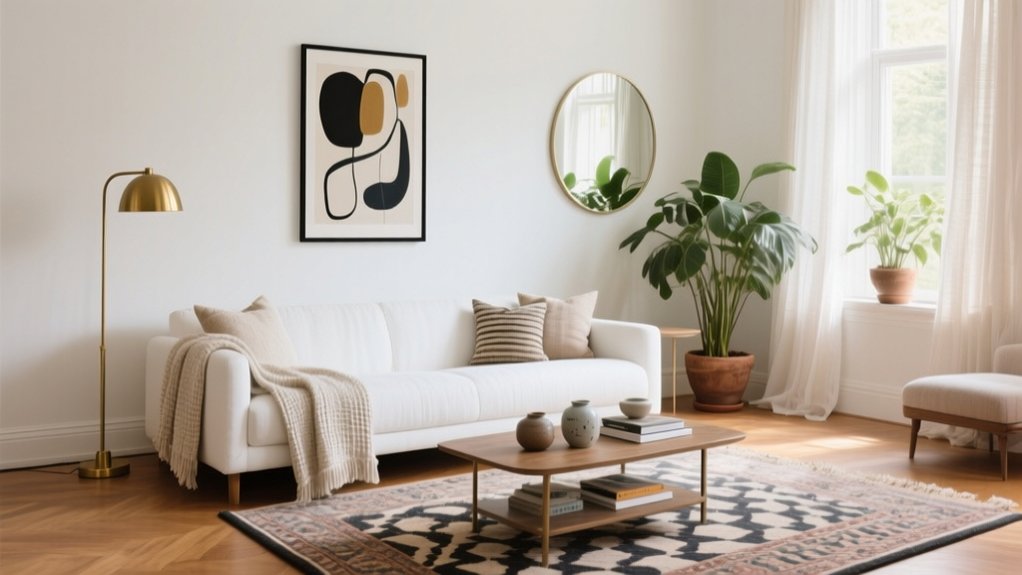
Reset the room fast by clearing surfaces, keeping only daily-use items, and sorting the rest into donate, relocate, or trash. Deep-clean edges, baseboards, vents, and glass, then wash throws and cushion covers. Upgrade lighting with matching warm-white, high-CRI bulbs and add a dimmable lamp for layers. Rearrange furniture to open 30–36 inch walkways and pull seating off walls. Finish with a new rug, fresh pillow covers, a mirror, and one tall plant. Keep going for simple upgrade ideas.
Quick Room Reset: Declutter, Clean, and Edit
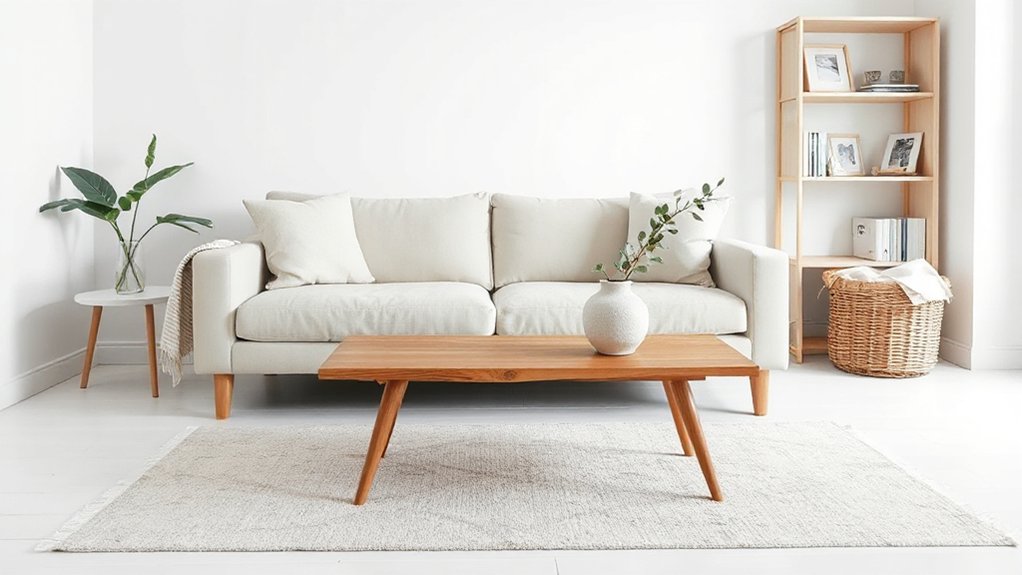
Before you buy anything new, give the room a fast reset by stripping it back to the essentials. Remove everything from surfaces, then put back only what you use daily. Sort what’s left into donate, relocate, and trash, and keep walkways clear for a calmer, more modern feel.
Next, deep-clean the high-impact zones: vacuum edges, wipe baseboards, dust vents, and polish glass and mirrors for instant crispness. Launder throws and cushion covers, and spot-clean upholstery.
Then edit your decorating accessories with intention—group items in threes, vary height, and stick to one metal finish for a current look. Finish with subtle scent enhancement: open windows, replace stale trash liners, and add a clean linen or cedar note.
Upgrade Your Lighting (Bulbs, Lamps, Layers)
If the room still feels flat after a reset, your lighting’s probably the culprit. Swap in better bulbs first: choose warm-white 2700–3000K for cozy rooms, or 3500K for a cleaner, modern vibe. Aim for high CRI (90+) so textiles and art look true.
Then build layered illumination: combine ambient lighting with task and accent sources so the space feels intentional, not harsh.
- Replace mismatched bulbs with the same color temperature and brightness (800–1100 lumens is a solid baseline).
- Add a dimmable floor or table lamp to soften corners and reduce overhead glare.
- Use plug-in sconces or LED strips to highlight shelves, plants, or artwork for a trend-forward glow.
Finish by putting everything on dimmers or smart switches for easy mood shifts.
Rearrange Furniture for a Better Layout
Once you’ve nailed the lighting, the fastest way to make the room feel new is to move what’s already in it. Start by measuring the room and sketching a quick plan so furniture placement feels intentional, not random. Create clear walkways (at least 30–36 inches), then anchor the layout with the largest piece—usually the sofa or bed—facing a focal point like a window or media unit.
Next, refine spatial organization: float seating off the walls to open corners, align key pieces on one visual axis, and balance weight with pairs (chair + side table) instead of scattered singles. If you’ve got an open plan, define zones with back-to-back furniture or a console behind the sofa.
Finally, edit: remove one unnecessary piece to restore breathing room.
Swap Textiles for Instant Cozy (Rugs, Pillows, Throws)
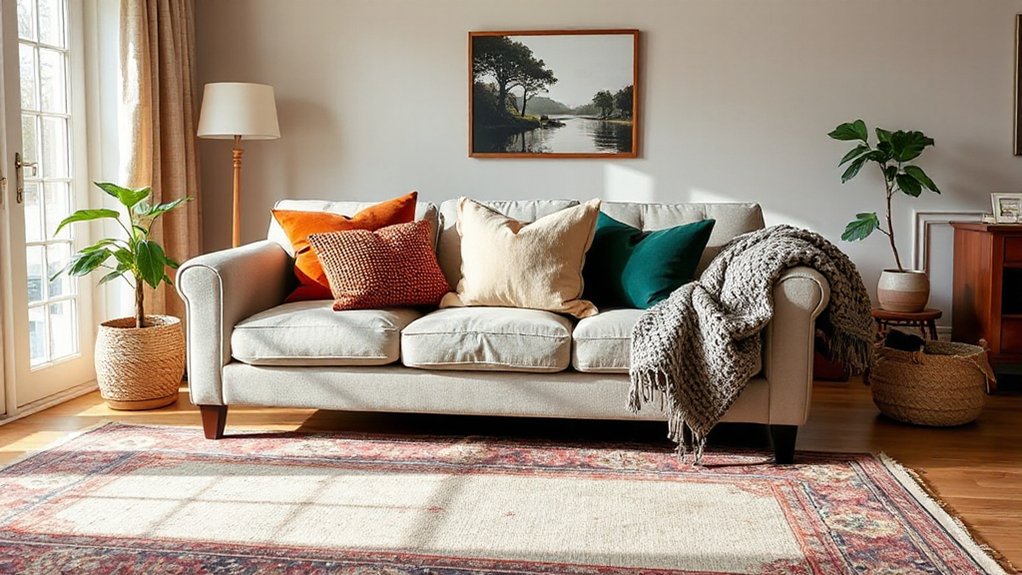
Even when the furniture stays put, swapping textiles can make your room feel warmer, fresher, and more styled in under an hour. Start with a new rug to anchor the space; choose low-pile for sleek, high-traffic zones or plush for loungey comfort.
Then update pillows and throws to layer Textile textures—think bouclé, linen, chunky knit, or velvet—so the room feels intentional, not matchy.
- Rotate pillow covers in two tones plus one patterned “pop”
- Add a throw at the sofa corner and one at the bed foot for balance
- Use seasonal accents: lighter cottons for spring, wool blends for fall
Stick to a tight palette and vary scale: one large pattern, one small, and solids. You’ll refresh comfort and style without touching paint.
Refresh a Room With Art, Mirrors, and Plants
Textiles set the mood, but art, mirrors, and plants change how the whole room reads—without moving a single wall.
Start with art placement: hang the center at about 57 inches, or align with furniture tops for a tailored look. Go bigger than you think; one oversized print feels current, while a tight gallery wall adds energy in small rooms.
Next, upgrade light with mirror styles that fit your vibe: arched mirrors soften sharp lines, thin black frames read modern, and antique gilt warms neutrals. Place a mirror opposite a window or lamp to double brightness, not clutter.
Finish with plants: choose one tall floor plant for height, then layer a trailing pothos on a shelf. Use matching pots to keep it cohesive.
Frequently Asked Questions
How Can I Remove Scuff Marks Without Damaging Paint?
Start with gentle Cleaning techniques: damp microfiber and a drop of dish soap. Test first. Use a melamine sponge lightly. Rinse, dry. If marks remain, do Paint touch ups with matching sheen, feathering edges.
What’s the Best Way to Fix Small Nail Holes Without Repainting?
Like patching a tiny pothole, you’ll fill nail holes with lightweight spackle, smooth, sand, then dab matching paint with a sponge. Skip Wallpaper removal mess; try Furniture rearrangement instead for an instant refresh today.
How Do I Reduce Pet Odors Lingering in a Room?
You’ll cut pet odors by washing soft fabrics, vacuuming with HEPA, and cleaning floors with enzyme spray. Run an air purifier continuously, place odor absorbers like charcoal or baking soda, and boost airflow with fans.
Can I Update Baseboards and Trim Without Repainting Walls?
Yes—you can update baseboards and trim without repainting walls: mask carefully, use a trim-specific semi-gloss, and caulk gaps. Add Decorative wall decals or Wallpaper borders above trim to modernize quickly. You’ll see clean contrast.
What Renter-Friendly Upgrades Can I Make Without Drilling Holes?
You can upgrade without drilling by using Temporary wallpaper for an accent wall, Peel and stick decals on tiles or appliances, tension rods for curtains, adhesive hooks, and layered rugs. Swap bulbs and hardware with removable options.
Conclusion
You don’t need a paintbrush to make your room feel new—you just need smarter edits. Clear surfaces, deep-clean, and keep only what earns its spot. Then warm up your lighting, shift your furniture for better flow, and swap in fresh textiles for instant texture. Add a mirror, a bold print, and a living plant to finish. Here’s the kicker: one mirror can boost perceived light by up to 40%, so every upgrade looks bigger.