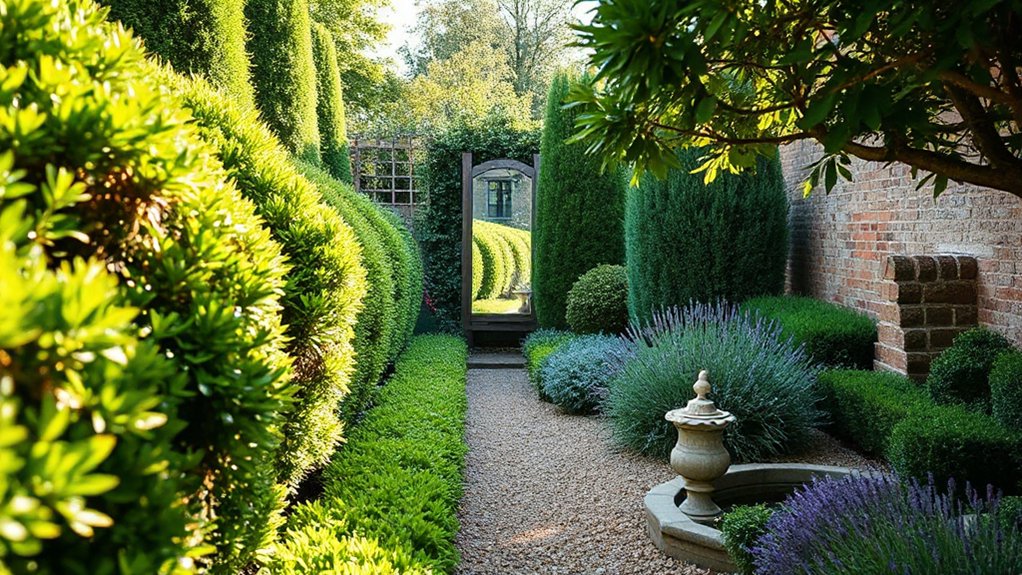
Think of your garden as a window to more space, a thin line between walls and sky that you can heighten. You’ll stack height with climbing plants and tall grasses, tuck compact pots into shaded nooks, and guide movement with winding paths that widen at viewpoints. With edging that defines zones and reflective surfaces to swallow depth, you’ll build structure year‑round from evergreen, dwarf specimens and smart vertical storage. The next steps will sharpen how you plan and plant, if you’re ready to map it out.
Scale Up Your Tiny UK Garden
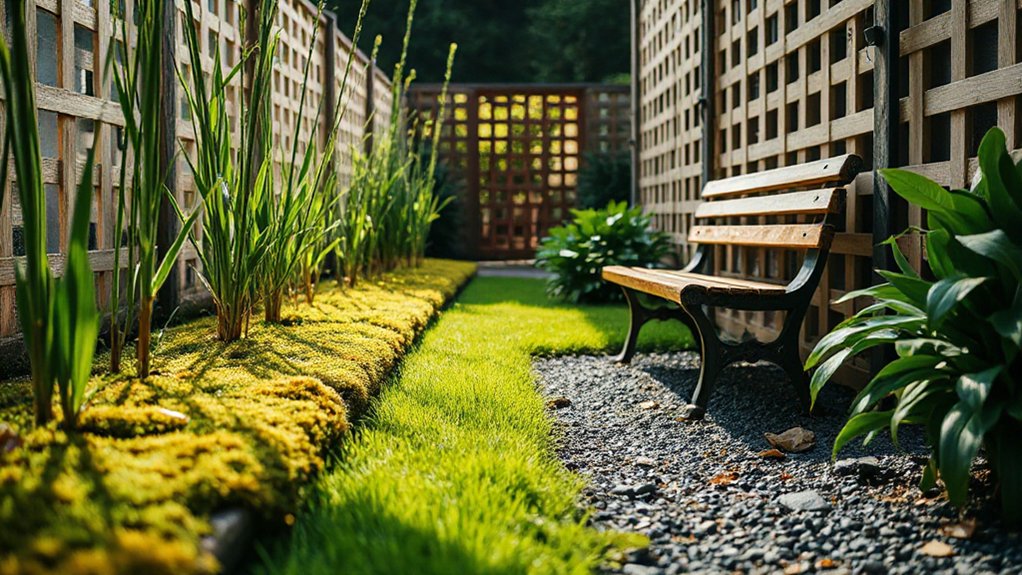
To make a tiny UK garden feel bigger, start by choosing vertical space that draws the eye upward: trellis, tall grasses, and climbing plants energize the horizon line and free ground for core features.
You’ll frame the area with garden furniture placed along sightlines, ensuring pathways stay clear and accessible.
Use climbing species to soften borders, letting foliage rise without crowding the ground plane.
Water features positioned near seating add reflective depth, creating perceived distance and soothing movement that expands the feel of your plot.
Select compact containers to keep clutter down, and group plantings by height and texture for rhythm.
Keep focal points intentional: a bench, a fountain, a discreet trellis, all reinforcing scale without overwhelming the space.
Layer Light: Color, Texture, and Reflective Surfaces
Layering light in a small UK garden hinges on how you pair color, texture, and reflective surfaces to broaden the sense of space. You’ll maximize daylight by using light-toned surfaces on walls and planters, then direct narrow shadows with upright greens that draw the eye outward.
Choose lighting techniques that emphasize pathways and seating without glare, placing fixtures low and discreet to avoid crowding the view.
Balance color coordination across foliage and blooms: cool hues recede, warm tones come forward, and metallics reflect lantern glow for added depth.
Vary textures—gloss, matte, and fibrous—so light bounces differently across tiers.
Keep scale in mind, allowing plant forms to read clearly while the reflective surface play widens perceived boundaries.
Define Zones That Read Bigger
Zones that read bigger hinge on clear, defined boundaries. You map your space into zones by sightlines, surfaces, and scale, so each area reads as a distinct room. Start with a stronger edging line—a low hedge, timber, or gravel—to separate lawn, seating, and planted borders without breaking flow.
Use plants to emphasize changes: tall focal specimens at interval points create vertical rhythm, while massed shrubs forge a sense of enclosure without crowding. Pathway design guides movement, widening at key viewpoints and narrowing at edges to stretch perception.
Introduce garden art sparingly at focal angles to punctuate zones without clutter. Keep materials consistent across zones, tying them together visually, so the smallest plot feels coherent, connected, and expansive.
Compact, High-Utility Plants for the UK Climate
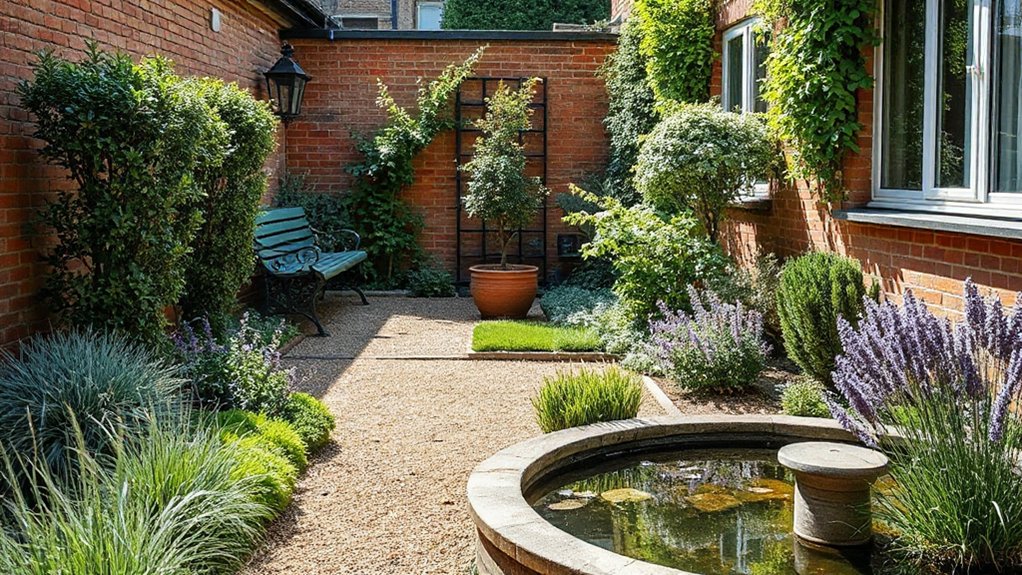
Compact, high-utility plants suit tight UK plots by delivering year-round structure without crowding. When you choose, think evergreen backbone, seasonal accents, and compact habit. Plant selection becomes a process of layering: evergreens for density, deciduous weepers for scale, and with low-growing groundcovers to fill gaps without choking paths.
Consider dwarf cultivars or compact varieties that tolerate our wet winters and drier summers, ensuring year-round presence without height conflicts with structures. Arrange by light, soil, and moisture in your garden layout, placing tall specimens at the back and smaller ones at the front to preserve sightlines.
Favor texture over color bursts for cohesion, and group in successive blooms to sustain interest. Maintain with light pruning to sustain shape and health.
Smart Storage and Vertical Space for Seasonal Tricks
Smart storage and vertical space turn small UK plots into flexible, garden-ready corners. You’ll declutter by using vertical planters that free ground for stepping and snipping, letting herbs and compact flowers spill along walls or fences.
Choose modular shelving you can reconfigure with the seasons, keeping tools, rain gear, and seed trays within easy reach.
Hidden compartments tucked under benches or in seating corners hide cables, hoses, and spare pots, preserving a tidy aesthetic while remaining practical.
Rotate seasonal crops on wall-mounted units to maximize sun exposure and airflow.
Keep a near-daily ritual of checking moisture levels and pruning for airflow; it prevents mildew and makes seasonal tricks feasible without stealing space.
This approach keeps your garden feeling expansive, organized, and plant-led.
Frequently Asked Questions
How Can I Create the Illusion of Depth in a Small Garden?
Install garden lighting along paths and boundaries to carve depth; use vertical planting to draw eye upward, then layer plant heights. You’ll gain perceived space, while a plant-led layout and concise, spatially aware choices keep everything functional and cohesive.
Which Low-Maintenance Shrubs Maximize Perceived Space Outdoors?
You should choose low-maintenance shrubs like box or gardenia that stay compact, maximizing perceived space. Prioritize plant height variety, arrange on edges, and guarantee soil preparation before planting; this minimizes upkeep and supports healthier growth.
Can Scent Influence a Garden Feeling Larger, and How?
Scent-based illusions can make your garden feel larger by guiding movement and masking boundaries; choose Aromatic planting with linear paths. You sense space through aroma, so position herbs and climbers at head height for constant, inviting perception.
What Base Colors Make Greens Appear Brighter in UK Light?
Base greens that read brighter in UK light lean toward yellows and lime tones. Use color theory to pair bold greens with near-neutral containers. Shade selection matters: choose cooler blues at back, warmer yellows in foreground for depth.
Are Reflective Surfaces Harmful to Wildlife in Small Plots?
Like a lighthouse warning ships, you should know reflective surfaces can harm wildlife in small plots. You’ll reduce Wildlife safety risks by curbing mirror glare, choosing non-reflective materials, and marking hazards to prevent bird collisions and entanglement.
Conclusion
You’ve got the basics—now weave them into feelable space. Lean on verticals, reflective walls, and light hues to pull the eye outward. Keep paths curving, zones crisp, and storage tucked away so the garden breathes. Use dwarf evergreens as year-round anchors while climbers blanket fences and repurpose containers by height. As you plant, imagine the view from every corner; every choice should widen, not clutter, your little plot. Scale up slowly, and enjoy the illusion of more room.