
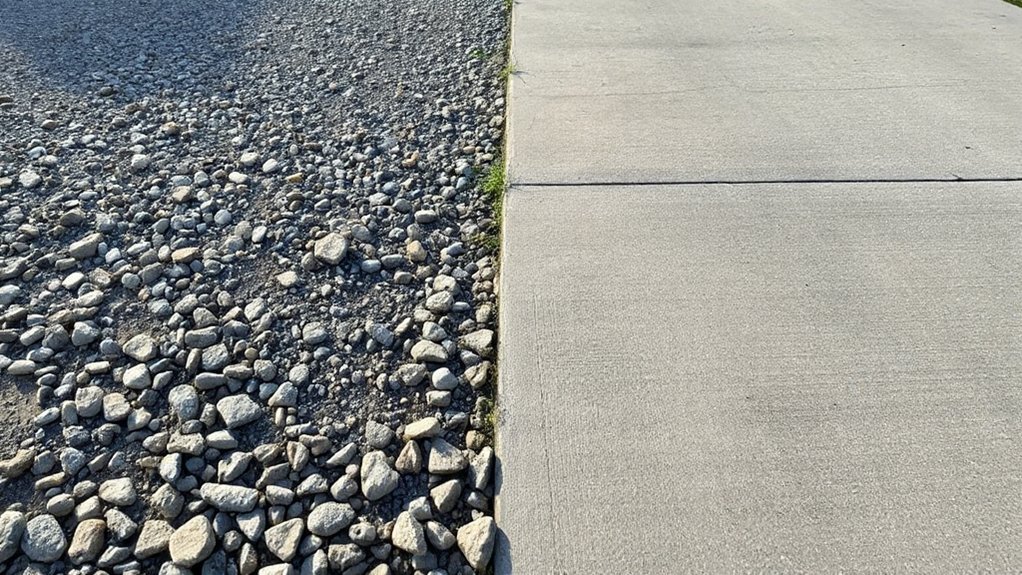
Like a weathered road map from ancient times, your decision between gravel and concrete points to long-term costs and performance. You’ll weigh upfront price, climate resilience, and maintenance needs, then consider how each handles vehicles and drainage. Concrete shines in durability and low upkeep in freezing zones, while gravel offers flexibility and a natural look with ongoing replenishment. The trade-offs lurk in durability, upkeep, and environmental impact, inviting you to weigh options before you commit.
Decision Criteria for Gravel vs. Concrete: Cost, Climate, and Maintenance
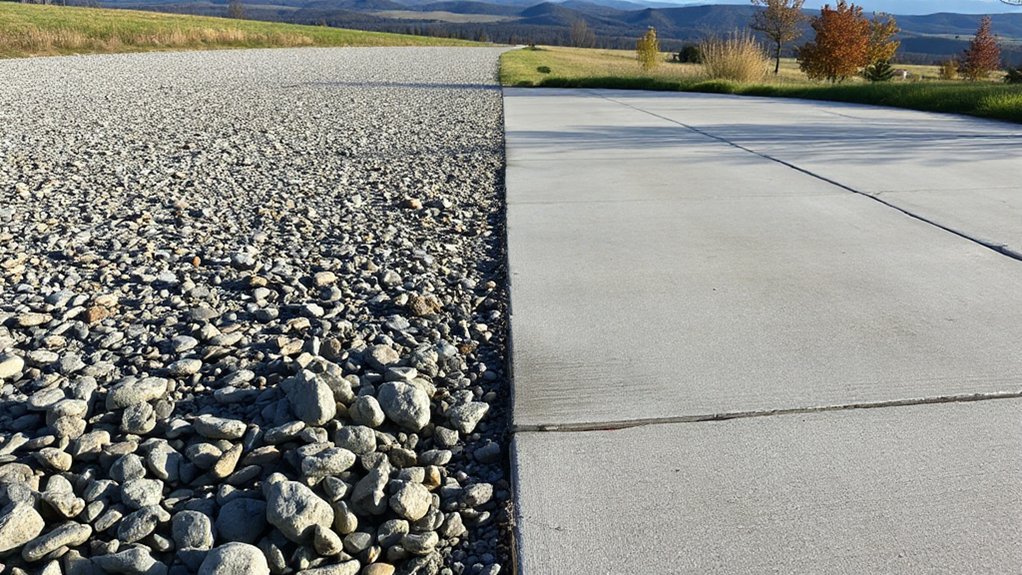
When choosing between gravel and concrete driveways, cost, climate, and maintenance form the core decision criteria. You assess upfront costs, long-term expenses, and disruption during installation.
Gravel typically demands lower initial spend but higher ongoing maintenance, while concrete carries higher upfront costs with longer intervals between repairs.
Climate influences material performance: freeze-thaw cycles, slipperiness when wet, and heat absorption affect choice.
Maintenance considerations weigh in on material upkeep, weed control, sealing intervals, and surface repairs.
Material aesthetics matter, presenting differential appeal: loose aggregate offers a rustic texture; smooth concrete presents a uniform, modern look.
Environmental impact includes production energy, transportation, and end-of-life options; gravel minimizes embodied energy if sourced locally, whereas concrete’s lifecycle involves curing emissions but potential for long service life.
Your decision should balance upfront economics, climate resilience, maintenance effort, aesthetics, and environmental footprint.
Durability in Real Life: Weather, Vehicle Load, and Expected Lifespan
Weather shocks, load demand, and aging effects determine real-world durability for gravel and concrete driveways. You’ll evaluate how freezing-thaw cycles, moisture, and UV exposure stress materials differently.
And how wheel loads and spacing influence deformation or cracking. Expectations for lifespan hinge on climate, usage patterns, and maintenance, guiding your material choice and design adjustments.
Weather Impact Durability
Weather-related stresses shape the long-term durability of gravel and concrete driveways, influencing how each surface withstands freeze-thaw cycles, moisture ingress, and UV exposure. You assess performance by observing crack development, displacement, and surface erosion under seasonal temperature swings.
Gravel resists cracking but migrates under freeze-thaw pressure if fines aren’t graded, affecting marginal wear and maintenance frequency. Concrete endures with proper reinforcement yet remains prone to microcracking when joints aren’t designed for contraction, allowing moisture infiltration and efflorescence.
Both surfaces respond to moisture management: drainage sufficiency reduces pore saturation, limiting detachment and spalling risk. Pest control considerations influence surface integrity and upkeep; poor sealing invites infestations that compromise texture and longevity.
Aesthetic appeal hinges on finish stability and color retention, directly tied to weather exposure and maintenance discipline.
Vehicle Load Endurance
Vehicle load endurance tests how driveways resist real-world use, integrating vehicle weight, axle patterns, and traffic frequency with existing weather-induced vulnerabilities.
You assess how gravel paths distribute load through voids and compaction, while concrete slabs transfer stress more uniformly but crack under repeated heavy loads.
Weight concentration, such as long-wheelbase trucks or frequent heavy-duty traffic, accelerates aggregate displacement or joint distress in gravel, and aggravates surface polishing, ruts, and pothole formation.
Weather cycles interact with load: freeze-thaw widens cracks in concrete, while saturated gravel loses support and oozes under repeated axle passes.
Consider material aesthetics alongside performance, noting that maintenance intervals and surface refreshes influence perceived endurance.
Installation complexity shapes durability outcomes, as proper base prep and compaction reduce early wear and uneven load transfer, aligning expected performance with real-life demands.
Expected Lifespan Variations
Lifespan varies with how the driveway bears up under real-world conditions, as durability hinges on sustained weather exposure, load patterns, and the resulting rate of deterioration. You’ll notice gravel surfaces tolerate freeze-thaw cycles differently than concrete, affecting crack propagation and subgrade erosion.
While concrete handles sustained weight differently, influencing joint behavior and surface spalling. Weather—precipitation, temperature swings, and moisture migration—drives not only material aging but maintenance needs, including sealing cycles and regrading.
Vehicle load distribution matters: concentrated hubs accelerate wear on gravel, whereas rigid slabs transmit stresses to joints more predictably, guiding maintenance timing. These dynamics shape paving aesthetics, visible wear, and user perception.
Environmental impact varies with material choice, influencing lifecycle emissions, replacement frequency, and disposal considerations, informing long-term cost and sustainability decisions.
Drainage and Upkeep Demands: Gravel vs. Concrete
Gravel offers superior drainage due to loose aggregate gaps, but it requires regular track-level maintenance to prevent washout and sediment buildup.
Concrete mandates less frequent intervention for surface upkeep, yet its joints and sealants demand scheduled inspections to mitigate cracking and moisture intrusion.
You should weigh maintenance frequency and associated costs against drainage performance when choosing between the two.
Gravel Drainage Pros
Gravel’s drainage behavior offers distinct pros and maintenance demands compared with concrete. You’ll notice rapid water infiltration around void spaces reduces surface puddling, directing runoff through a permeable base rather than stagnating on a hard plane. This improves site safety after rain and minimizes erosion adjacent to the driveway, provided the subgrade remains stable.
Drainage performance hinges on aggregate size and proper compaction, which prevent rutting and channeled flow. You should anticipate periodic replenishment of surface material to maintain effective porosity and to sustain consistent drainage.
Landscaping aesthetics matter here: a well-graded gravel layer blends with natural surroundings, enhancing curb appeal while enabling flexible landscaping adjustments.
Construction timeline shortens relative to poured concrete, but you must plan for ongoing maintenance to preserve permeability.
Concrete Upkeep Demands
Concrete upkeep demands primarily revolve around drainage management and surface maintenance; neglecting either can accelerate deterioration. You monitor drainage by ensuring proper slope, cross-slope consistency, and unobstructed outlets to prevent standing water, freeze-thaw damage, and efflorescence.
Cracks trigger water ingress; you should seal promptly and schedule periodic joint inspection to control moisture pathways. Surface maintenance focuses on uniform wear and edge retention; you address spalling, scaling, and texture loss to preserve traction and aesthetics.
Concrete aesthetics influence cleaning ease and appearance stability, while Gravel aesthetics can shift if fines migrate or staining occurs, affecting perceived uniformity. You avoid relying on ad hoc repairs that mask substructure issues, since corrective work often compounds cost and downtime.
Maintenance Frequency Comparison
Maintenance frequency differs considerably between gravel and concrete driveways, driven by how each surface handles drainage and surface wear. You’ll notice gravel requires more frequent replenishment and leveling due to displacement from weather, vehicle traffic, and erosion, pushing maintenance into seasonal cycles. Grading and raking are common tasks to maintain a uniform surface, along with periodic gravel additions after washouts.
Concrete, by contrast, emphasizes long-term stability but demands vigilance for cracking, joint sealing, and surface wear over years; maintenance intervals hinge on climate and load. Drainage performance influences cleanup needs: poor runoff accelerates erosion on gravel, while proper slope prevents standing moisture that can undermine concrete joints.
Color options and aesthetic appeal can influence maintenance perception, yet practical upkeep remains more predictable with concrete over the long term.
Upfront Cost vs. Long-Term Value: Budget Guidance by Climate
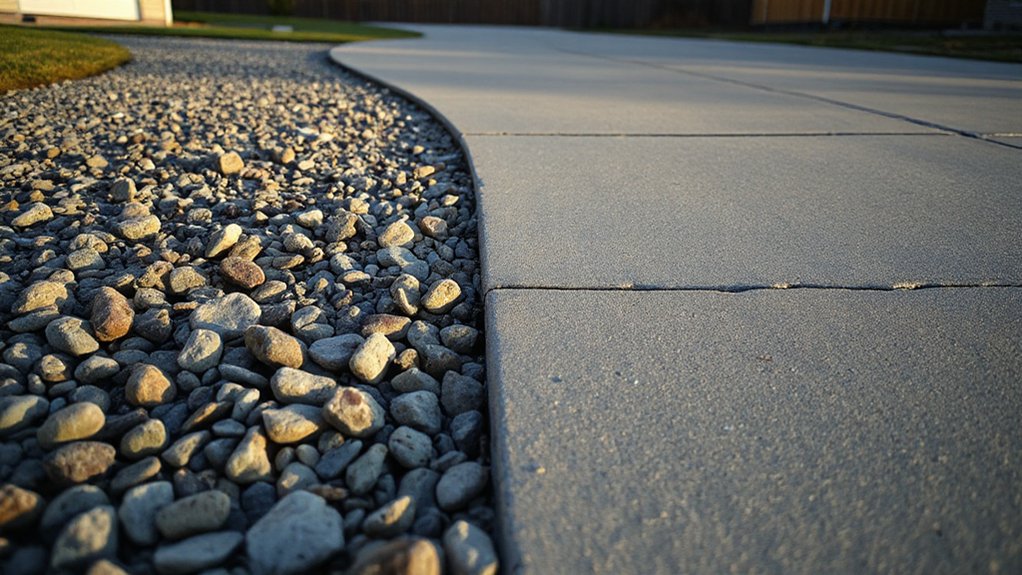
When budgeting driveway options, climate dictates value: upfront costs tell only part of the story, while long-term performance shapes lifecycle costs. You measure initial outlay for gravel and concrete, then project maintenance, replacement intervals, and energy impacts over decades.
In arid or hot climates, heat absorption and cracking risk alter long-term value, favoring materials with lower upkeep even if upfront price is higher.
In cold, freeze–thaw zones, durability and drainage determine total cost, often reducing long-term expense for well-compacted gravel or reinforced concrete.
Aesthetic appeal and environmental impact influence decisions beyond price, since visible finish and stormwater management affect property value and sustainability credits.
Balance climate-driven durability with short-term affordability to optimize lifecycle value rather than snapshot cost alone.
Installation Tips and Hybrid Approaches: Practical Ways to Mix Gravel and Concrete
To harness the strengths of both materials, consider a layered or blended installation that blends gravel stabilization with concrete surfaces. You can implement a gravel base with a beveled edge, then pour a thin, reinforced concrete cap for root and motor load control.
Use a compacted subgrade, geotextile separator, and a controlled pour to prevent settlement.
For hybrid paths, embed decorative gravel within a stabilized concrete mix or create stepping-stone concrete bays filled with coarse gravel. This approach supports landscaping aesthetics while maintaining surface integrity under traffic.
Plan slope and drainage to avoid pooling, and incorporate expansion joints to manage temperature movement.
DIY installation is feasible with proper tools, slurry testing, and curing guidance, but consult local codes for load limits and edging requirements.
Real-World Pros, Cons, and Climate-Specific Recommendations
Gravel and concrete driveways each offer distinct real-world advantages and drawbacks that become apparent under varying climate conditions. In practice, you’ll weigh durability, maintenance, and surface response to temperature shifts.
Concrete excels in freeze–thaw regions with proper joint design, but it cracks under heavy loads or rapid heating cycles without reinforcement. Gravel remains forgiving and easy to repair, yet it requires regular replenishment and wind-related loss, especially in windy climates.
Decorative options can improve aesthetics for both surfaces, but installation costs and long-term upkeep differ markedly. Climate-specific recommendations emphasize drainage, substrate prep, and seasonal maintenance.
Consider Environmental impact alongside lifecycle costs: concrete generally imposes higher embodied energy, while gravel offers lower materials processing but higher ongoing material replacement.
Choose based on your climate, traffic, and maintenance capacity.
Frequently Asked Questions
How Do Snow Removal Methods Differ for Gravel vs. Concrete Driveways?
Snow removal differs: you’ll clear gravel slowly, spreading sand to prevent erosion, while on concrete you sweep or plow, use deicers sparingly, and focus on edge control. Manage snow accumulation and ice melting with targeted traction aids.
Can a Gravel Driveway Be Easily Converted to Concrete Later?
Yes, you can convert, but careful planning is essential. Concrete installation demands durable base, drainage, and timing; expect higher costs. Driveway durability improves gradually. Cost comparison favors initial gravel yet rises with reconversion complexity.
What Maintenance Frequency Is Required After Major Weather Events?
After major weather events, inspect annually and after storms; tighten edges, reseal cracks, and address drainage promptly. Driveway durability depends on timely repairs, while weather resilience hinges on proper slope and material stabilization. Regular maintenance keeps performance consistent.
Are There Environmental Impacts of Aggregate Mining for Gravel?
You should know that roughly 40% of global sand and gravel demand fuels construction, highlighting environmental concerns. You’ll assess mining impacts, including habitat loss and sedimentation, and you’ll weigh mitigation options to minimize environmental impacts from aggregate extraction.
Which Warranty Protections Typically Accompany Each Option?
Warranty coverage for concrete typically includes longer wear and structural guarantees, while gravel driveway protections focus on base stability and drainage. Protection policies vary; make certain materials, installation, and maintenance are explicitly covered, with clear failure definitions and service timelines.
Conclusion
Conclusion: When choosing between gravel and concrete, weigh upfront costs against long-term value, climate, and maintenance. Concrete wins in freezing, heavy-use contexts with proper joints, while gravel shines on a budget, drainage-focused setup with rustic aesthetics. Interesting stat: gravel driveways cost 20–40% less upfront, yet may require ongoing replenishment, effectively spreading costs over time. Key takeaway: align your choice with expected vehicle load, climate resilience, and maintenance capacity to optimize durability and cost.