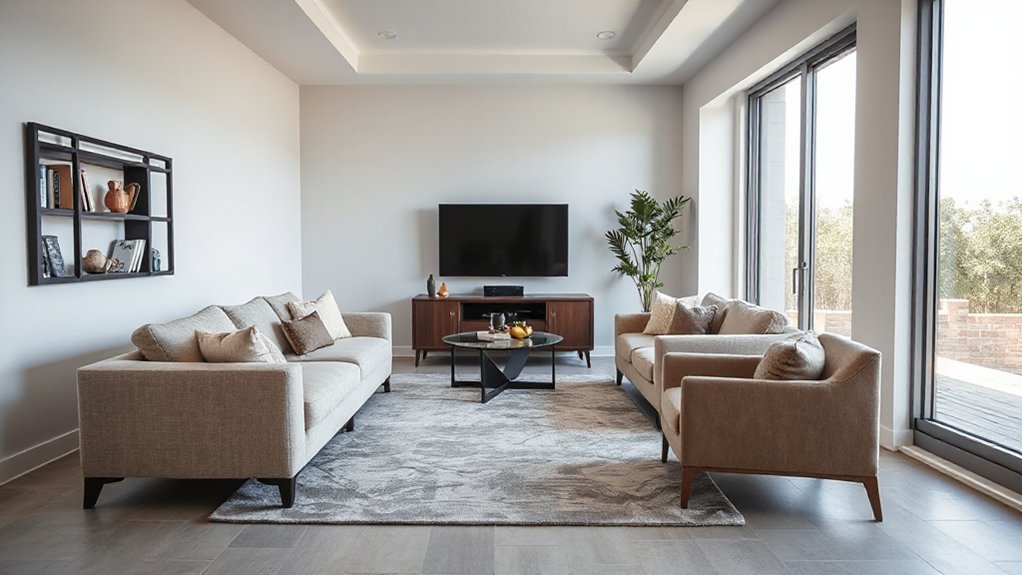
For small living rooms, choose a sofa that fits the space—compact, armless, or low-profile with modular options—so you keep floor space and sightlines clear. Use a compact sectional or modular pieces to maximize seating without crowding, and pick multi-functional pieces with hidden storage. Align layout for smooth traffic flow, creating defined zones while preserving openness. Layer lighting and textures to add depth, and use two to three cohesive colors. Want more tips to optimize every inch? Continue on for specifics.
What Makes Small Living Rooms Work Best
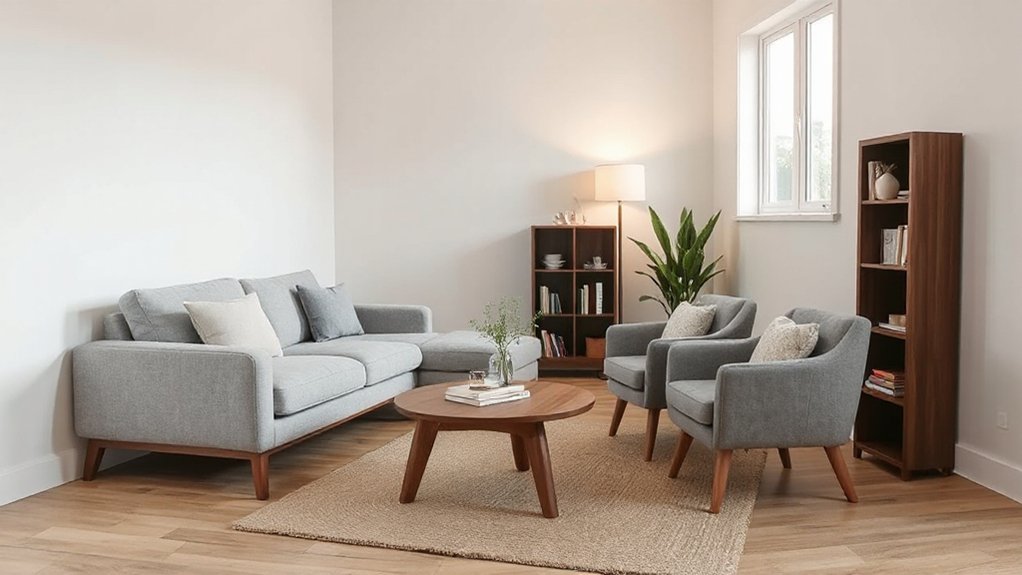
Small living rooms work best when furniture is scaled to fit the space and arranged for flow. You optimize, not overwhelm: choose compact pieces, clear pathways, and versatile storage. Prioritize sightlines from doorway to focal wall, avoiding clutter that crowds the room.
Use artificial lighting to create depth—combine a ceiling fixture with task lamps to reduce shadows and widen perceived space. Accent elements should feel intentional, not decorative excess; select a few decorative accents that reinforce function and style.
Keep color progressions cohesive, favor light neutrals with controlled pops of tone. Place furniture to encourage conversation and ease of movement, with seating angled toward a central point.
Minimize oversized rugs; anchor zones with precise placement, and maintain air between furniture pieces for breathing room.
Choose a Sofa for Small Spaces: Size, Shape, and Flexibility
Choosing a sofa for a small space means balancing seating comfort with footprint. You should prioritize size, shape, and flexibility to maximize flow without sacrificing function.
A compact, armless design often fits better than a bulky option, while a corner or armless chaise can extend seating without overcrowding. Consider a modular setup for adaptability, and choose a low-profile silhouette to keep sight lines open.
Material matters: opt for durable, easy-care Sofa fabric that resists stains but feels inviting. Add decorative accents strategically—throw pillows, a single textured throw, and a slim tray keep surfaces clean and purposeful.
- Compact footprint, high comfort
- Modular flexibility for reconfiguring
- Durable Sofa fabric with tasteful decor accents
Compact Sectionals That Maximize Seating
Compact sectional configurations give you more seating without crowding your floor plan.
Prioritize pieces with clean lines and modular options that can reconfigure for gatherings or daily use.
Consider L-shape or curved layouts to maximize corner seating while preserving traffic flow.
Compact Sectional Configurations
Maximize seating without sacrificing flow by choosing compact sectionals that fit your room’s footprint. In this configuration-focused approach, you’ll prioritize shape, scale, and placement to maximize seating without crowding you out. Opt for low-profile arms, slim bases, and modular modules that can reorient around doors and windows.
Consider corner or armless pieces that create a longer seating line while preserving walkways. Pair with a compact chaise or ottoman for extra legs-up comfort without bulk. Use artistic accents and decorative accessories to add personality without stealing space.
- Modular pieces that reconfigure for different gatherings
- Corner layouts that reclaim awkward footprints
- Low-profile silhouettes with open visual weight to maintain flow
Maximizing Seating Space
If your goal is to seat more people without crowding the room, compact sectionals are your best bet. Choose modular pieces that fit your footprint precisely, then arrange them to create multiple conversation zones without dead space.
Aim for a low-profile depth that doesn’t swallow aisles, and opt for armless or contoured borders to keep sightlines open. Prioritize seating density with narrow arms and slim cushions, while preserving comfort through seat height and cushion firmness.
Integrate decorative accents that draw attention upward rather than outward, freeing floor space for movement. Use wall treatments to enhance perceived size—light colors, mirrors, and vertical patterns reflect light and add depth.
Keep routes clear, and test configurations with people to verify flow before committing.
Multi-Functional Furniture You’ll Actually Use
Multi-functional furniture saves space without sacrificing function. You’ll prioritize pieces that earn their keep with every use, not hasty compromises. Choose storage ottomans, coffee tables with drawers, and wall-mounted desks that fold away neatly.
Look for robust hinges, soft-close lids, and quiet mechanisms so daily action stays unobtrusive. When you select, consider fabric and materials that stay fresh: Creative upholstery that hides wear and Eco friendly materials that resist stains and odors.
Your aim is flexibility, not clutter, so items should swap roles easily across rooms or moments in the day.
- Hidden storage that feels intentional
- Convertible surfaces that don’t dominate the room
- Lightweight modulars you can reconfigure quickly
Layout Principles: Flow and Pathways for Tiny Rooms
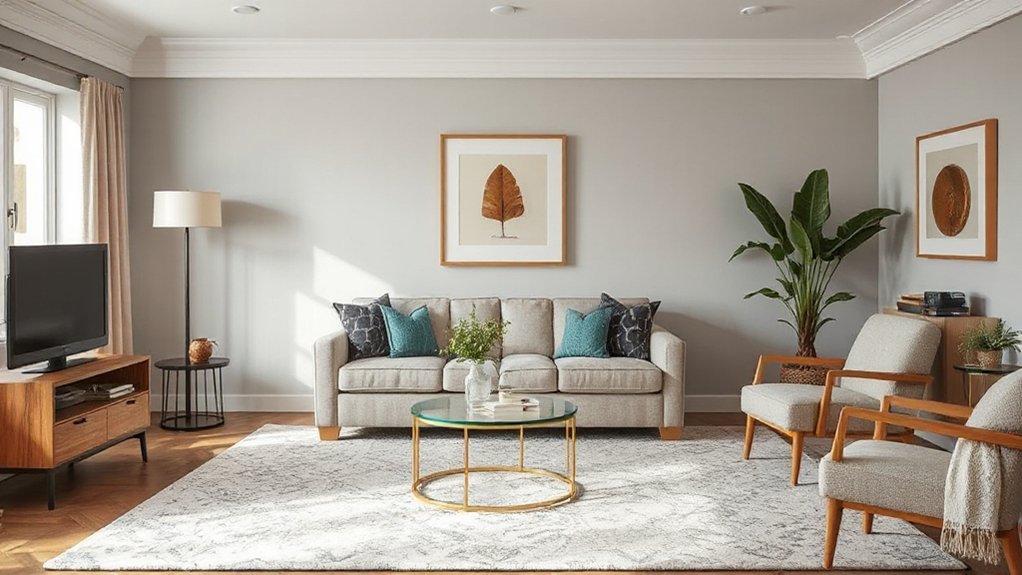
Prioritize clear pathways to keep traffic flowing and avoid crowding. Maintain distinct zones—like living, seating, and touchpoints—so movement stays intuitive and unobstructed.
Use traffic flow to guide furniture placement, creating clear space and natural shifts.
Clear Pathways, Clear Space
Clear pathways are the backbone of a small living room. You’ll optimize flow by keeping major walking routes open and furniture oriented to those paths, not across them.
Prioritize sightlines from doorway to focal point, so you feel spacious the moment you enter.
Use scale and placement to avoid bottlenecks, and allow at least 32 inches of clearance around seating.
Incorporate decorative accents and color schemes strategically to draw the eye without crowding space.
- Position sofas and chairs to form a natural corridor rather than a blocked square
- Place consoles or slim storage along walls to maintain floor openness
- Choose low-profile furniture that preserves sightlines and accessibility
Zone By Traffic Flow
Keep pathways at least 32 inches wide for smooth transit, narrowing only where you add a soft boundary like a rug or low console. Position seating to frame sightlines toward focal points, not clutter, while avoiding crowding on high-traffic routes.
Use furniture edges to subtly guide flow, creating logical pauses for rest and activity. This arrangement supports artistic expression and sensory experiences, letting you move confidently while enjoying a calm, cohesive, compact living space.
Corner Optimization: Turn Undersized Areas Into Assets
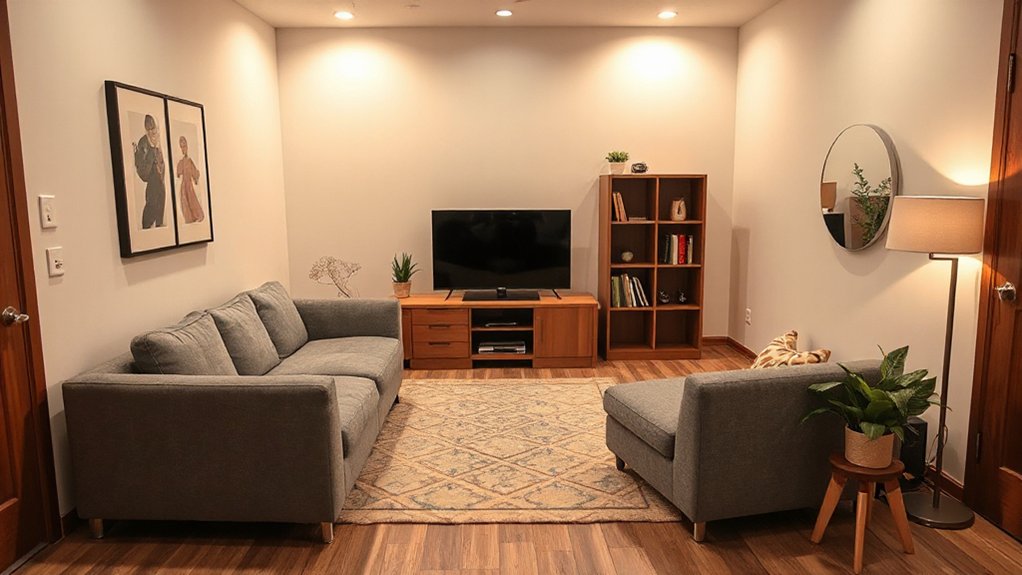
Corners in small living rooms aren’t dead space—they’re opportunities. You can reclaim underused nooks by choosing compact furniture paired with smart placement, turning tight zones into functional features.
Focus on vertical storage, angled seating, or a slim console that doubles as a sideboard. Use artificial lighting to brighten corners without clutter, such as wall sconces or a slim floor lamp tucked beside seating.
Integrate decorative accents to create a focal point without visual chaos.
- Place a compact chair in an alcove with a slim side table
- Install a wall-mounted shelf–lamp hybrid for both storage and glow
- Add a mirror and a few curated accessories to reflect light
This approach keeps pathways clear, boosts usability, and emphasizes style over size.
Create Distinct Zones Without Walls
You can separate two living areas without walls by using furniture placement and visual cues to signal distinct zones. Start with a dominant sofa orientation that anchors the primary zone.
Then place a console or bookcase to carve a secondary seating area without blocking sightlines. Use area rugs to define each space; a statement rug under the main seating draws attention, while a smaller neutral rug marks the second zone.
Introduce artistic murals on an accent wall facing the secondary seating to create a focal point without adding bulk. Align lighting to each area—pendants over the coffee table for one, floor lamps near the conversation zone for the other.
Keep color and texture cohesive across zones to preserve flow.
Scale and Proportion: Matching Furniture to Your Room
Scale and proportion hinges on matching furniture size to your room’s dimensions and traffic patterns. When you pick pieces, opt for silhouettes you can maneuver without crowding walkways. A compact sofa, scalable chairs, and a slim coffee table keep sightlines clear and space functional.
- Use furniture contrast to define zones without walls, balancing dark and light surfaces for depth
- Choose color coordination that ties seating, storage, and accents into one cohesive palette
- Measure clearance corridors to ensure chairs and tables don’t impede flow
Focus on proportional relationships: height, length, and depth should relate to ceiling height and floor area. Avoid oversized or undersized bets; aim for a cohesive, breathable layout that supports daily living and visual harmony.
Color and Texture to Add Depth and Light
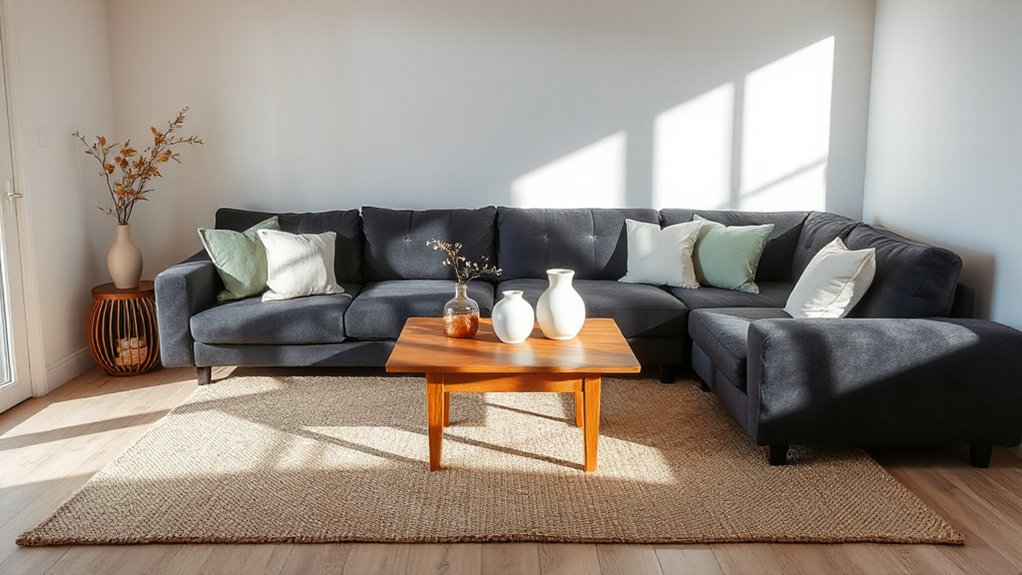
Color and texture build depth and bounce light in small living rooms by layering hues and tactile surfaces. You pair calm neutrals with accent tones to create perceived depth without crowding space. Use color schemes that repeat across furniture, textiles, and artwork to unify the room while guiding the eye.
Texture layering matters: a soft rug underfoot, a woven throw, and linen or cotton cushions add dimension without overwhelming. Reflective surfaces—glass or lacquer—can amplify light, especially near windows.
Keep patterns restrained but intentional; small repeats feel cohesive. Consider a single, bold statement fabric for a chair or pillow to anchor the palette. Balance matte and gloss finishes to prevent flatness, ensuring the room feels open yet inviting.
Smart Storage That Doesn’t Clutter
Smart storage should vanish into the room, not crowd it. You’ll gain space without sacrificing function by choosing hidden compartments and decorative storage that blend with your decor.
Prioritize pieces that multitask: a coffee table with lift-top storage, a sofa with built-in bins, and ottomans that hide blankets and remote clutter. Plan margins that keep sightlines open while tucking essentials out of sight.
- Hidden compartments beneath seating and within side tables
- Decorative storage that matches upholstery and finishes
- Dual-purpose furniture to reduce surface clutter
This approach keeps your living room calm, organized, and visually larger. Use vertical storage sparingly but purposefully, and avoid exposed baskets or generic bins that draw attention.
Regularly reassess what truly needs to stay in sight to maintain a clean, efficient space.
Lighting Strategies to Brighten and Visualize Space
Good lighting can make a small living room feel larger by washing walls with brightness and creating depth. To start, employ ambient layering: a combination of ceiling, wall, and floor lamps that evenly spread light without glare. Use dimmable fixtures to shift mood and depth as you move through the space.
Prioritize task illumination where you read, work, or chat, selecting adjustable desk, floor, or under-cabinet options that clearly define zones without adding bulk. Avoid relying on a single overhead source; layered light reduces harsh shadows and highlights architectural features.
Choose color-friendly bulbs (2700–3000K) to maintain warmth while preserving visual spaciousness. Keep cords hidden and fixtures slim to preserve sightlines. Regularly reassess lighting placement as furniture shifts.
Rugs, Floors, and Shadows: Grounding the Layout
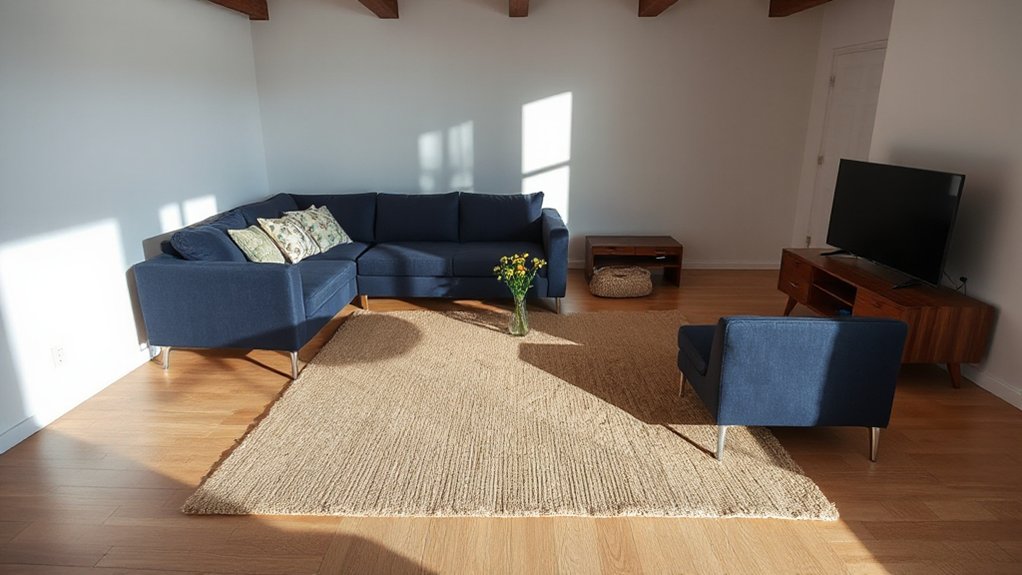
Rugs, floors, and shadows anchor a small living room by defining zones without bulk. You’ll use rugs placement to ground furniture, align sightlines, and protect flooring, all while keeping traffic obvious yet unobtrusive. Shadow play from lighting adds dimension, creating cozy pockets without crowding walls.
- Choose a single large area rug to unify seating and define the main zone.
- Position rugs so front legs of sofas and chairs sit on the rug for cohesion.
- Use directional lighting to cast controlled shadows that emphasize depth.
Keep finishes subtle and cohesive, balancing texture and color. The goal is visual cohesion, not clutter.
Doors and Traffic: Keeping Pathways Clear
Keep walkways clear so traffic flows naturally around your sofa and chairs.
Prioritize furniture placement that leaves at least 36 inches of unobstructed space for main paths.
Remember: clear pathways matter for comfort, safety, and everyday use.
Clear Pathways Matter
Clear pathways are essential in a small living room; when doors open and traffic flows smoothly, the space feels larger and more livable. You’ll maximize movement by reserving at least 30 inches of clear floor space in high-traffic zones and by placing furniture away from door swings. Keep cords tucked, and opt for low-profile profiles to preserve sightlines.
Use decorative accents and color schemes to cue traffic flow without clutter.
- Create clear sightlines with sofa and chairs oriented toward focal points
- Place rugs to define zones while allowing under-door clearance
- Use multipurpose, compact furniture that doesn’t block pathways
Furniture Flow Rules
Strategically manage doors and traffic by sizing furniture and layouts to preserve clear pathways. You’ll place oversized pieces away from entry doors and main walkways, creating a natural flow that invites movement rather than obstacles.
Prioritize low-profile profiles and slim arms to reduce visual clutter while keeping seating comfortable. Position sofas and chairs to frame conversations without blocking exits, and guarantee at least 36 inches of clearance for primary pathways.
Use rug placement to cue traffic direction, not trap it. Introduce artistic accents and vintage charm in smaller doses, so they accent routes without interrupting flow.
Keep tables within reach of seating, but avoid trip hazards by tucking cords and clutter. Regularly reassess furniture shifts as layouts evolve.
Small Living Room Styles: Modern, Scandinavian, Minimal
Small living rooms can shine with a trio of styles: Modern, Scandinavian, and Minimal. You’ll leverage clean lines, functional furniture, and restrained decor to optimize space, light, and flow. Each style centers on a cohesive Decor style and a thoughtful color palette that enhances scale and brightness.
- Modern: lean silhouettes, metal accents, and contrast between light and dark.
- Scandinavian: warmth through wood tones, soft textiles, and airy luminosity.
- Minimal: decluttered surfaces, hidden storage, and monochrome or near-monochrome schemes.
Choose one as your anchor, then blend subtle elements across the trio to maintain balance.
Prioritize multi-functional pieces, hidden storage, and ample negative space to keep the room breathable and visually coherent.
Step-by-Step Tiny Room Makeover Plan
Start by planning the space you’ll use first, outlining traffic flow and essential zones.
Choose multifunctional pieces that maximize storage and seating without clutter.
Use lighting to zone areas—bright, focused light for tasks and softer, ambient tones to define separate areas.
Plan The Space
Before you begin, map the space and set clear priorities: identify the room’s focal point, measure every wall and doorway, and list must-haves vs. nice-to-haves. You’ll plan flow by scale, sightlines, and access to outlets, then sketch furniture zones that don’t crowd paths.
Define a color palette that unifies pieces and highlights the focal point, using artistic accents to add personality without clutter. Allocate anchored seating, a clear traffic corridor, and a minimal secondary surface area for function.
- Determine the main seating arrangement that preserves openness
- Identify storage needs that hide clutter while staying accessible
- Mark decorative elements that reinforce color palettes and mood
Choose Multifunctional Pieces
To maximize function without sacrificing openness, choose multifunctional pieces that blend storage, seating, and surface space. You’ll tidy corners with ottomans that lift to reveal hidden bins, and coffee tables with drawers or shelves keep essentials within reach without crowding sightlines.
Pick a sofa with built‑in storage or modular components you can reconfigure as needs shift.
Opt for nesting tables you can pull in for extra surface space during projects or entertaining, then tuck away when you don’t.
Prioritize furniture durability, so every piece withstands daily use and repositioning.
Coordinate colors across items to reinforce a cohesive feel; limit to two or three hues and repeat accents.
This keeps the room calm, scalable, and easy to refresh when you change layouts.
Zone With Lighting
Think about lighting as a zoning tool. You’ll use it to define zones, guide traffic, and highlight key furniture.
Start with ambient glow that fills the room without glare, then layer task and accent lights to prevent flatness.
Keep controls simple: a dimmer on the main light, a plug-in sconce, and a compact desk lamp.
Position lamps where you’ll naturally expose tasks, like near seating for reading and on a sideboard for display.
Avoid overpowering brightness that shortens perceived space.
Use color temperature consistently to unify zones, leaning toward warm tones for a cozy feel.
Balance is essential: one overhead, one ambient, one task source.
- Define zones with dimmable ambient lighting
- Layer lighting for depth and function
- Place lamps to support seating areas and displays
Common Pitfalls and How to Avoid Them
Common mistakes in small living rooms often derail a design before you start. You might overfill the space with bulky furniture, making traffic zones feel tight and furniture feel disproportionate. Avoid this by prioritizing scale: choose slimmer profiles, and place seating to create clear pathways.
Don’t neglect lighting; a single overhead fixture can flatten the room—add layered light with task, ambient, and accent sources.
Resist clutter that competes for visual focus; instead, curate a few decorative accessories that reinforce your color story.
Wall art should complement, not crowd, walls—hang pieces at eye level and in groupings that breathe.
Finally, skip novelty trends that overpower function; timeless silhouettes and thoughtful layout stay usable as needs shift.
Frequently Asked Questions
How Do I Measure Sofa Fit Without a Door to the Living Room?
You measure sofa fit by checking doorway clearance and furniture placement, then simulate angles in your space. Measure door width and hallway turns, confirm the sofa clears frames, and practice moving it through the doorway before committing to layout.
What Price Range Yields the Best Small-Space Reliability?
You’ll find a luxury budget sweet spot around mid-range prices for reliability, but you’ll still want budget friendly options with solid warranties. You deserve practical, triaged picks that balance quality and cost without overpromising.
How Can I Visualize Space Before Buying Furniture?
To visualize space before buying, use a grid or tape plan, color coordination helps you test palettes, and lighting enhancement guides placement. You’ll move pieces in mind, then snap quick sketches or renderings to confirm proportions and flow.
What Are Silent Space-Saving Tricks for Apartment Corners?
Like a quiet thief, you tuck away corners: you use hidden storage and multi functional furniture, you sweep clutter aside, you navigate efficiency, you transform alcoves, you flatten space, you breathe easier, you conquer cramped shadows.
Which Fabrics Resist Wear in High-Traffic Small Rooms?
In high-traffic small rooms, you’ll want fabrics with upholstery durability and easy Fabric maintenance. Look for tight weaves, microfiber, and performance blends; resist fading. You’ll choose darker tones, avoid delicate textures, and spot-clean promptly to preserve finish.
Conclusion
You’ve got the blueprint for a comfy, efficient space—now trust the layout, not the size. Pick a flexible sofa, add compact storage, and weave in multi-use pieces that don’t cramp traffic. Keep sightlines clear, let natural light lead, and embrace a simple palette. Before you know it, your small living room will feel bigger and inviting, like a well-tuned stage where every item has a purpose. Paint the scene with confidence, and you’ll knock it out of the park.