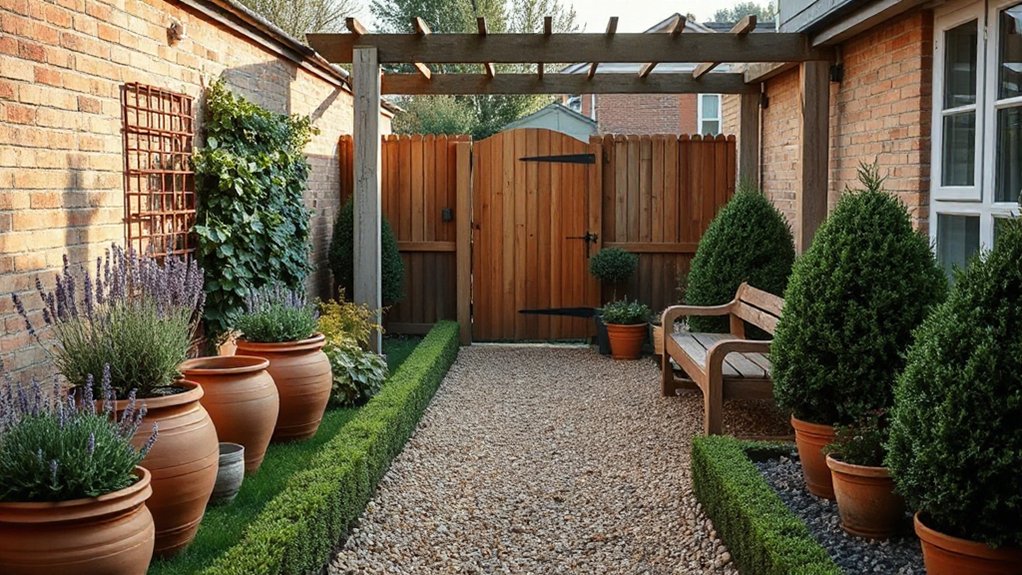
To maximize a small UK garden, map sun exposure by season, test soil texture and pH, and measure width, depth, and height to guide modular bed design. Use layered planting, vertical greenery, and mulch zones to cut maintenance and water use. Choose compact, hardy perennials with drought- or moisture-tolerant traits, plus evergreen backbone plants. Define routes with gravel, paving, and mulch, then add modular screens for privacy. Stay tuned for setup details that expand your options.
Foundations for Tiny UK Gardens: Sun, Soil, and Space
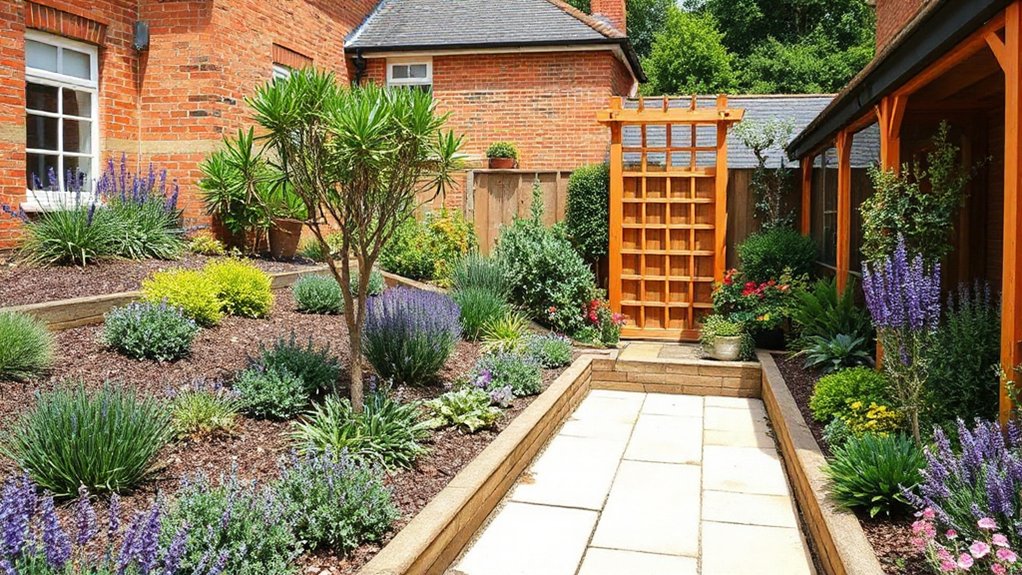
Foundations for tiny UK gardens hinge on three realities: sun, soil, and space. You assess sun exposure first, mapping hours of direct light across seasons to identify *ideal* planting zones and microclimates.
Then you evaluate soil composition, noting texture, drainage, pH, and nutrient content to determine appropriate amendments or plant selections.
You confirm space constraints, measuring width, depth, and height allowances to guide bed design and tool access. You choose materials and configurations that maximize light capture while minimizing root competition and water runoff.
You validate maintenance feasibility, ensuring access for pruning, watering, and soil testing. You document findings to inform planting schemes, irrigation needs, and ongoing soil management, keeping adjustments aligned with seasonal sun shifts and soil responses.
Layering for Space: Vertical, Ground, and Surface Tricks
Vertical, ground, and surface layering optimizes space by stacking plant, soil, and mulch roles to maximize footprint without crowding. You implement vertical layering to extend vertical real estate, using trellises, wall planters, and shelving to separate sun and shade needs.
Ground-layered beds focus on compact, fast-turnover crops, drought-tolerant natives, and dense mulch to reduce evaporation.
Surface tricks place low-profile groundcovers and mulch caps to suppress weeds while preserving access for maintenance.
- Vertical layering: install trellises and staggered planters to create height without widening the footprint.
- Ground layering: group dense, sun-loving species with shallow roots and rapid cycles.
- Surface tricks: use contrasting mulch and lightweight edgings to define zones and improve irrigation efficiency.
Compact Plant Picks: Low-Maintenance Perennials for Small UK Gardens
Compact plant picks should prioritize low-maintenance perennials that thrive in small UK gardens, tolerate variable shade and moisture, and require minimal pruning. You select compact cultivars with uniform mature heights to reduce spreading and shading of neighboring beds.
Focus on drought-tolerant or consistently moist options depending on site microclimates, and favor varieties with once-a-year or minimal-season maintenance. Choose species with strong disease resistance, and group by sun exposure to minimize supplemental irrigation and feeding.
Maintain a lean planting plan that maximizes seasonal interest through foliage texture and subtle bloom, rather than massed, high-effort displays. When arranging flower arrangements or placing garden furniture, guarantee legibility of borders and accessibility for light pruning.
This approach supports reliable performance with minimal disruption to small plots.
Plan for Year-Round Interest in Small Plots
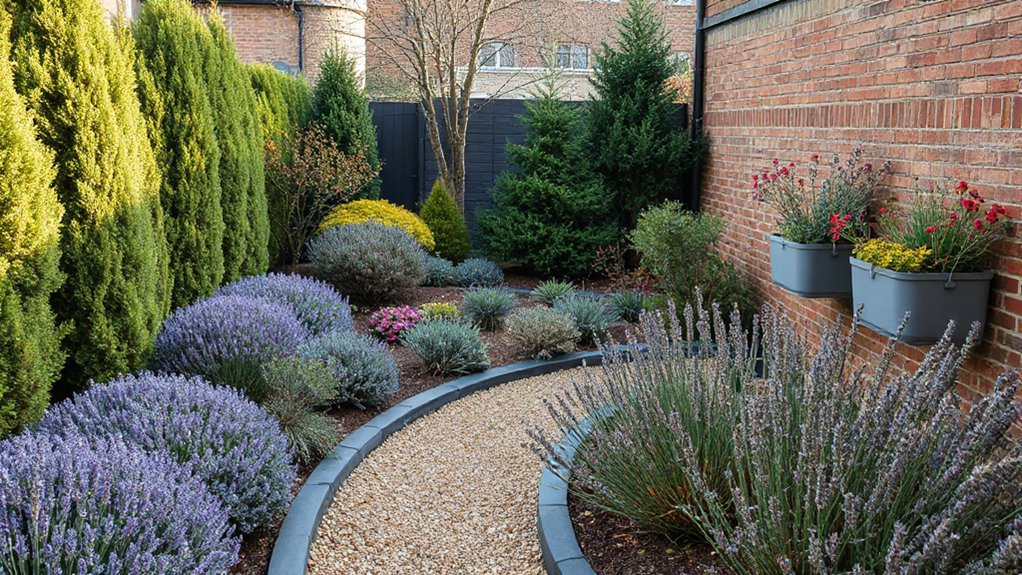
To achieve year-round interest in small plots, prioritize a layered approach that combines evergreen structure, seasonal foliage, and strategic indoor-outdoor viewing points. You’ll create continuity through height variety, texture, and year-round contrasts, enabling visual interest from all angles.
- Establish evergreen backbone with compact shrubs and small trees, interplanted with seasonal foliage accents for continuous perception of depth.
- Integrate Wildflower meadows in transitional beds to deliver seasonal color, plus structural contrast with aromatic herbs for scent cues and pollinator value.
- Design viewing nodes at key sightlines, ensuring focal points remain accessible indoors and out, while maintaining low maintenance and irrigation efficiency.
Optimize placement, irrigation, and soil health to sustain year-round appeal.
Paths and Groundcovers: Gravel, Paving, and Mulch for Tight Spaces
Gravel, paving, and mulch play essential roles in tight UK spaces by defining routes, suppressing weeds, and guiding foot traffic without overwhelming limited plots. You select a restrained palette of materials, balancing texture with scale to maintain sightlines and access.
Gravel offers permeability, reduces mud, and creates informal edges you can adjust with decorative borders. Paving delivers durable, smooth progressions between zones, while small-format slabs minimize visual weight and allow wheelbarrow and seating access.
Mulch moderates soil temperature, retains moisture, and suppresses weed emergence between plants and paths.
Integrate garden sculptures as focal accents where space allows, ensuring supports and shadows don’t disrupt circulation. Keep lines crisp, joints tight, and maintenance minimal; routine edging and occasional top-ups preserve definition and long-term clarity for tight-area circulation.
Raised Beds and Planter Boxes for Mobility and Access
Raised beds and planter boxes should be positioned to minimize reach distances and wheel-radius turns, ensuring you can access all planting zones from a standing or seated position.
Plan for modular, adjustable components so you can modify height and layout if mobility needs change.
Prioritize stable, low-maintenance materials and clear access paths to prevent trips and make routine tasks easier.
Raised Bed Accessibility
- Choose adjustable-height frames and supported seating zones for continuous tasks.
- Position beds within central, accessible corridors and under favorable light.
- Integrate accessible irrigation and tool storage to sustain long-term care.
Planter Box Mobility
Choose bed heights that suit your reach, reducing strain while preserving soil depth for root health. Use corrugated liners or stackable sections to simplify cleaning and amendments.
For accessibility, place frequently used herbs and pollinator-friendly species within reach from seating areas. Integrate garden art as focal points without obstructing movement paths, ensuring visual interest alongside practicality.
Create wildlife habitat by leaving gaps for small mammals or birds and including native plants, water features, and overlapping canopies to encourage beneficial activity.
Color Schemes That Make a Space Seem Bigger
Light reflects space by using lighter tones on walls, furniture, and pathways to create perceived depth.
You’ll maximize brightness through strategic color choices, guiding the eye and expanding the feel of the garden.
A monochrome palette can enhance the illusion, intensifying the sense of space without clutter.
Light Reflects Space
In small UK gardens, light-reflecting color schemes can visually expand the space by bouncing natural light across surfaces and creating a sense of depth. You implement this with precise color choices and controlled contrasts to optimize perception. Focus on reflecting surfaces, minimizing absorption, and aligning tones with garden lighting for consistency. Shade management remains essential to prevent glare while preserving illumination during key hours.
- Choose pale, cool neutrals on walls and fences to amplify daylight without washing out features.
- Pair high-reflectance surfaces with strategic plant placement to extend the light path and enhance perceived depth.
- Integrate subtle, matte finishes to reduce hotspots and maintain even distribution under Garden lighting.
Brightness Through Color
Brightness can make a compact UK garden feel more expansive by using color to manipulate perception of space. You apply color psychology to sequence hues with distance cues, aligning cool tones in foreground perimeters and warm tones toward focal points.
Lightness values should dominate walls, fences, and furniture; you favor high-reflectance finishes to amplify ambient brightness. In practice, choose a restrained palette: whites, light grays, and pale greens as base; introduce accents sparingly to guide the eye and stabilize proportions.
Garden lighting complements this strategy by creating contrast without harsh shadows, reinforcing perceived depth. Plan layered illumination: grazing light along textures, uplights for vertical features, and subtle path lighting to extend borders.
Avoid saturating surfaces; balance chroma with luminance to maximize perceived space efficiently.
Monochrome Garden Illusion
Monochrome schemes can enlarge a small UK garden by collapsing visual boundaries and guiding the eye with consistent tones. You’ll leverage contrast within a single palette to expand perceived space, while preserving cohesion. Use selective highlights to define focal points without breaking flow, maintaining a calm, unified backdrop.
- Align garden textures across surfaces to maintain flow, ensuring subtle variations in material read as a single chromatic field.
- Employ monochrome contrast strategically—brighten edges and features against deeper tones to enhance depth without fragmenting visuals.
- Limit color accents to one shade, preserving unity while drawing attention to structure, seating, or planters.
Result: a lighter, more expansive feel achieved through disciplined design choices, with precise handling of textures, tones, and layout.
Water-Saving Design for the UK Climate
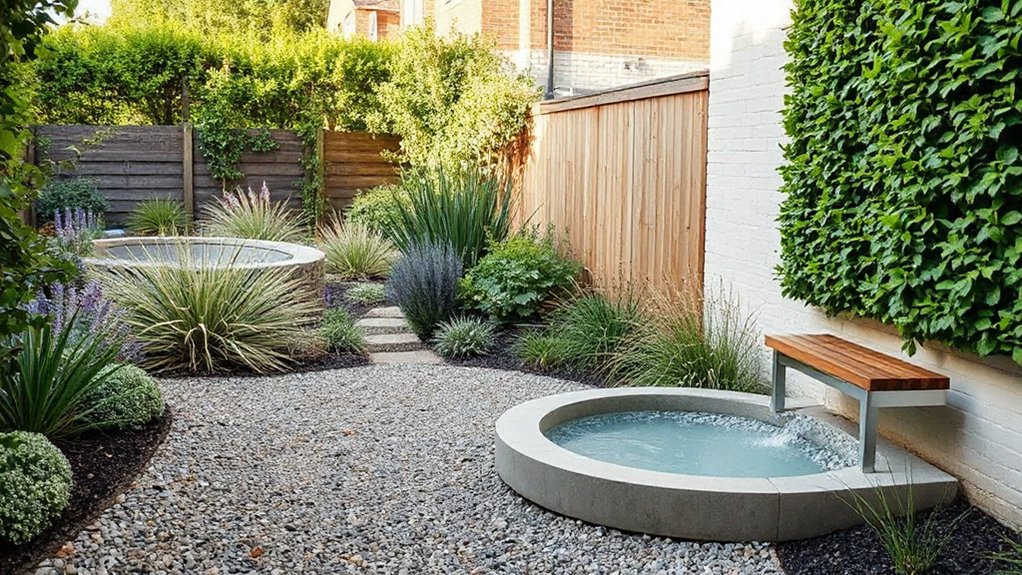
How can you maximize water efficiency in a UK climate without sacrificing garden function or aesthetics? In this design brief, you implement targeted strategies that reduce consumption while sustaining vitality.
Prioritize rainwater harvesting with a compact, above-ground tank and permeable connections to planters, ensuring a clean overflow path and low evaporation losses.
Select drought tolerant plants for mixed borders and container beds, pairing high-contrast foliage with small, deep-rooted species to stabilize moisture use.
Use mulches to limit soil evaporation and shade to lower soil temperature, paired with drip irrigation timed to weather.
Implement greywater-friendly zones only if plumbing permits, and maintain accurate moisture sensors to prevent over-watering.
Favor permeable hard surfaces to promote infiltration and reduce runoff, supporting resilience across seasonal droughts.
Privacy Without Shrinking the View: Screens for Small Spaces
Screens in tight spaces should balance privacy with outward visibility, using lightweight, modular screens that don’t crowd the footprint. You’ll implement space screens that provide garden privacy without visually shrinking the area, prioritizing airflow, light transmission, and low maintenance.
Precision in selection and placement yields a functional perimeter, not a barrier.
- Material choice: opt for perforated metals, lattice, or tall timber slats with gaps to maintain sightlines while deterring enclosure.
- Configurations: use adjustable panels, hinged screens, or corner partitions to tailor screening to sun, wind, and activity zones.
- Mounting and maintenance: select wall- or post-mounted options with weather resistance and easy cleaning to sustain long-term clarity.
This approach keeps your garden visually open while delivering privacy and scenery.
Smart Storage for Small UK Gardens
Efficient storage is essential in tight spaces, where every litre and square inch counts. You optimise a small garden by choosing modular benches with hinged lids, allowing tool kits to stow beneath seating and out of sight. Prioritise weatherproof, low-maintenance materials to minimize upkeep while preserving durability.
Integrate smart storage that blends with design cues: built-in planters can conceal seasonal gear, while slim wall shelves keep frequently used items accessible without clutter. Consider hidden compartments under steps or seating to maximise vertical and horizontal real estate.
Use labeled, stackable containers for tools, potting mix, and hoses to streamline routines. Smart storage reduces surface mess, speeds maintenance, and supports tidy borders, making your garden feel larger and more usable. Hidden compartments enhance discreet organization without compromising aesthetics.
Outdoor Seating That Fits Tight Layouts
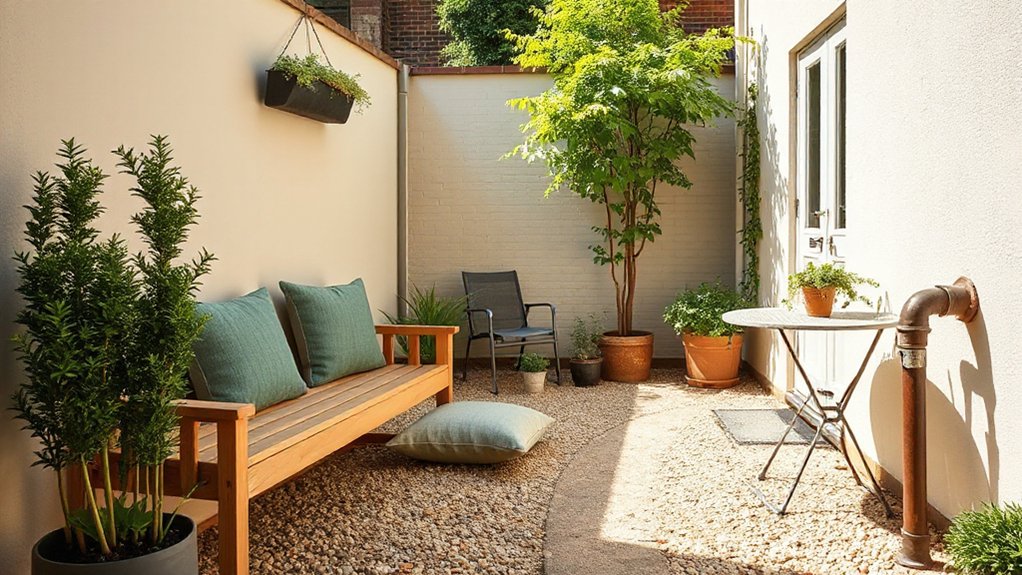
Compact seating arrangements maximize usable area while still providing comfort. Consider cornered patio ideas to convert wasted space into a functional nook.
Opt for foldable outdoor furniture to balance flexibility with durability.
Compact Seating Arrangements
For tight patios, choose seating that maximizes both comfort and footprint, such as modular benches, folding chairs, or compact two-seaters that tuck neatly along walls or corners. You optimize space by selecting low-profile frames and stackable options that allow easy access to plant containers and garden furniture paths.
Prioritize durable, weather-resistant materials and modular configurations that reconfigure for guests or sun shifts. Maintain sight lines and airflow to prevent crowding, and integrate storage within seating to reduce clutter.
- Modular benches with integrated storage
- Foldable or stackable armchairs for flexible layouts
- Corner-ready two-seaters paired with narrow coffee tables
This approach preserves function without compromising aesthetics, ensuring effortless maintenance and neat presentation of garden furniture and plant containers.
Cornered Patio Ideas
Cornered patios demand seating that hugs the edges without sacrificing comfort. You optimize tight layouts by using built-in benches that align with walls, maximizing surface area while maintaining legroom. Select low-profile furniture to prevent visual clutter, and choose modular pieces so you can reconfigure for sun or shade.
Corner nooks benefit from corner shelves and slim planters that add greenery without narrowing paths. Integrate garden art as focal points along the perimeter to guide movement and emphasize structure.
Use durable, weather-resistant materials to reduce maintenance in UK climates. Build a small wildlife habitat with native plants in containers or tucked beds, inviting pollinators and birds without crowding seating zones.
Prioritize clear sightlines, easy access, and safe, slip-resistant surfaces.
Foldable Outdoor Furniture
- Lightweight folding chairs and tables
- Stackable armchairs with weatherproof cushions
- Collapsible bistro sets for intimate dining
foldable outdoor furniture, portable garden seating
Climate-Resilient Planting for British Weather
Climate-resilient planting in British weather requires selecting species and styles that tolerate rapid shifts in temperature, rainfall, and wind. You’ll prioritise hardy, drought- and cold-tolerant varieties with strong root systems and compact growth for small plots.
Choose microclimate-aware placements: sun-trained beds on south faces, sheltered margins behind screens, and well-drained pockets to prevent waterlogging.
Use structural perennials and evergreen tones to maintain winter interest while reducing maintenance. Incorporate rock garden species for dramatic texture and low soil moisture needs, ensuring minimal root competition with adjacent beds.
Prioritise wildlife habitat values by foregrounding insect-friendly blooms and seed providers.
Plan succession to sustain visual interest through seasons, and apply mulches to conserve moisture and suppress weeds.
Regularly monitor soil pH, drainage, and drainage-assisted drainage pathways for ideal resilience.
Budget-Friendly Design Hacks With Big Impact
Budget-friendly design hacks deliver big impact by leveraging smart plant choices, scalable layouts, and low-cost materials. You’ll optimize space with layered planting, vertical greenery, and mulch zones to reduce maintenance and water use, while preserving aesthetic cohesion. Use durable, recycled or local materials for edging and hardscape to cut costs and carbon footprint. Focus on functional grouping and modular components that adapt as your garden grows.
- Select drought-tolerant perennials and native shrubs to reduce irrigation needs while supporting wildlife habitat and garden decor.
- Implement modular planters and trellises that stack or slide into place, enabling quick rearrangement.
- Reclaim repurposed containers and stones, pairing them with cohesive color palettes to unify the space without pricey investments.
Low-Effort Maintenance Routines for 12-Month Care
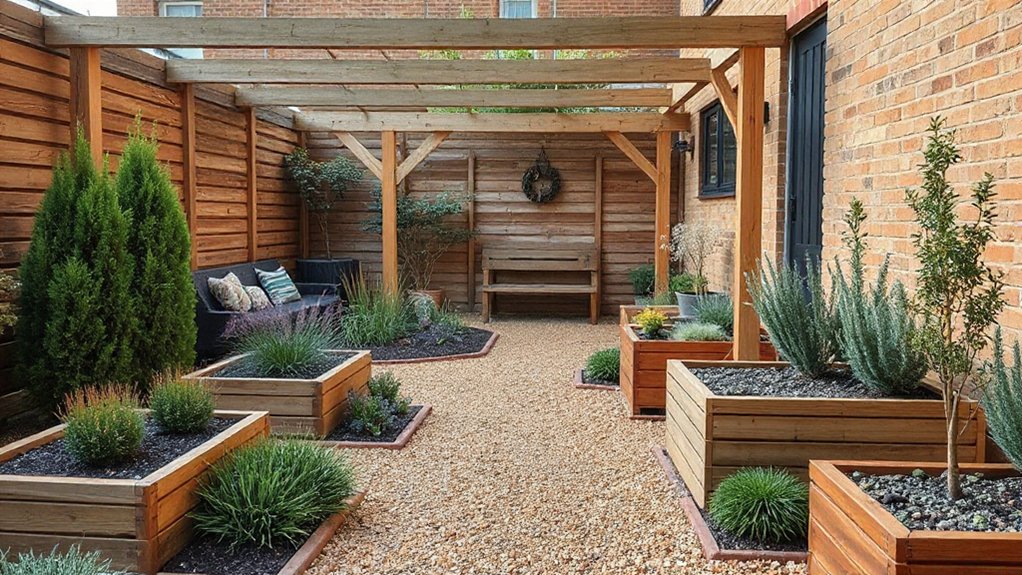
You’ll establish a year-round maintenance rhythm that keeps your small UK garden tidy with minimal effort. Choose easy-care plant selections and align tasks to a simple seasonal schedule to reduce fuss.
This discussion kicks off by outlining practical, low-effort routines for twelve-month care.
Year-Round Maintenance Rhythm
To maintain a small UK garden with minimal effort, establish a simple, year-round rhythm that prioritizes tasks by season and time commitment. You’ll reduce workload by aligning maintenance with plant activity windows and weather. Implement a predictable cadence that supports Garden art and Wildlife habitats without excess inputs.
- Plan quarterly tasks by season, allocating fixed 1–2 hour windows to pruning, mulching, and soil checks.
- Automate where possible: drip irrigation, timed lighting for features, and seasonal adds like compost or mulch to limit manual chores.
- Review monthly results, adjust plantings and habitat patches to sustain biodiversity while minimizing detours from core routines.
Easy-Care Plant Selections
For a small UK garden, choose hardier, low-maintenance perennials and reliable self-seeders that thrive with minimal inputs year-round. You’ll select species that resist common stresses, reduce late-season deadheading, and require infrequent feeding. Prioritize drought-tolerant, compact forms with predictable flowering windows to maintain monthly structure without heavy intervention.
Emphasize soil-improving natives or well-adapted cultivars to stabilize moisture. Pair with groundcovers to suppress weeds and stabilize beds; this reduces upkeep while preserving soil integrity. Consider wildlife habitat when choosing, ensuring nectar, pollen, and berries across seasons to support pollinators and fauna with minimal intervention.
Integrate edible gardening elements, such as compact herbs or edible perennials, that tolerate routine disturbance yet maintain aesthetics. Document cultivar performance for future pruning and division schedules, keeping maintenance routines lean.
Seasonal Schedule Essentials
1) January–February: prune, divide, mulch, and inventory protection gear.
2) March–August: monitor irrigation, replace failed components, and install seasonal art accents.
3) September–December: clean tools, amend soil, and prepare perennials for winter resilience.
Maintain a compact calendar, log observations, and adjust as needed.
You’ll reduce annual labor, improve year-round aesthetics, and support biodiversity with precise timing and minimal disturbance.
Accessible and Age-Friendly Garden Layouts
Allocate seating within easy reach of tasks, plus generous turning radii for mobility aids. Choose raised beds and ergonomic tools to reduce bending. Use contrasting colors and tactile cues for navigation, aiding users with visual impairments.
Zone layout should separate high-traffic from quiet areas, yet maintain visibility for supervision. Integrate garden lighting to extend usable hours safely and highlight key features.
Create wildlife habitats alongside understory planting to support biodiversity without compromising accessibility and maintenance. Guarantee scalable planting plans accommodate changing needs over time and provide clear maintenance guidance.
Seasonal Maintenance Calendar for Small Plots
Seasonal maintenance for small plots in the UK hinges on disciplined timing and scalable routines. You follow a tight annual cadence to protect soil, plants, and microhabitats while preserving garden art and wildlife habitats.
- Spring: assess frost risk, prune perennials, topdress soil, and install nesting boxes or pollinator habitats to support wildlife.
- Summer to early autumn: mulch selectively, irrigate efficiently, monitor pests, and adjust pruning to sustain visual structure and ongoing garden art features.
- Late autumn to winter: clean tools, sharpen blades, document successes, and plan plant combinations for next season, aligning with wildlife habitats and seasonal color.
This calendar keeps maintenance predictable, minimizes waste, and maximizes year-round biodiversity and aesthetic coherence.
Real-Life Small-Garden Transformations: Case Studies
Real-life small-garden transformations reveal how compact spaces can deliver high-impact results with careful site assessment, thoughtful plant selection, and pragmatic design tweaks.
You’ll see case studies where layout optimization, vertical growing, and multi-functional beds maximize growing space while maintaining access.
Precision in plant spacing, soil preparation, and irrigation reduces maintenance and improves longevity.
In practice, designers prioritize low-maintenance species, drought tolerance, and seasonal interest to sustain year-round appeal.
Critical lessons include scaling paths to human steps, using reflective surfaces to expand perceived depth, and integrating vertical planters for herbs and edibles.
Garden décor choices emphasize cohesive color schemes and durable finishes that endure UK weather.
Address pest control proactively with integrated methods, monitoring hotspots, and resistant cultivars to protect the transformed spaces.
Frequently Asked Questions
How to Choose a Focal Point in a Tiny UK Garden?
To choose a focal point, pick a standout element you can view from multiple angles; guarantee it aligns with paths and scale, then spotlight it with garden lighting and complement with water features for subtle reflection and drama.
Which Compact Plants Tolerate UK Shade Best?
Compact foliage thrives; shade tolerant plants excel. You’ll notice some performing best in UK shade, including ferns, hostas, and bergenias. You’ll select compact foliage varieties, and you’ll favor moisture-retentive soil with light, dappled shade.
What Are Budget-Friendly Drainage Solutions for Small Plots?
You should use Rainwater harvesting and permeable paving to handle drainage on small plots, saving costs. Install a simple tank, filter, and gravity-fed outlet, then lay permeable paving to reduce runoff and promote soil infiltration efficiently.
How to Maintain Soil Health in Small Containers Year-Round?
Maintain soil health in small containers year-round by practicing soil enrichment and composting techniques, ensuring consistent moisture and drainage, layer with compost, utilize slow-release fertilizers, and rotate crops to prevent nutrient depletion and pest buildup.
What Legal or Planning Considerations Affect Tiny UK Gardens?
You should check local planning thresholds, Permitted Development rights, and boundary controls; tiny UK gardens often fall under generalPermitted development with limits. Consider garden art and wildlife features, ensuring risk-free installation and compliance with listed building or conservation area rules.
Conclusion
You’ll discover that small UK gardens can thrive with careful planning and a light touch. By prioritising sun, soil, and space, you’ll avoid overreach and keep growth pleasantly manageable. Embrace vertical and ground-layer tricks to honor every inch, selecting low-maintenance perennials for reliable colour. Plan year-round interest, minimal upkeep, and accessible layouts so change feels gradual, not intimidating. In short, subtle adjustments yield sturdy, stylish results—even in compact plots.