
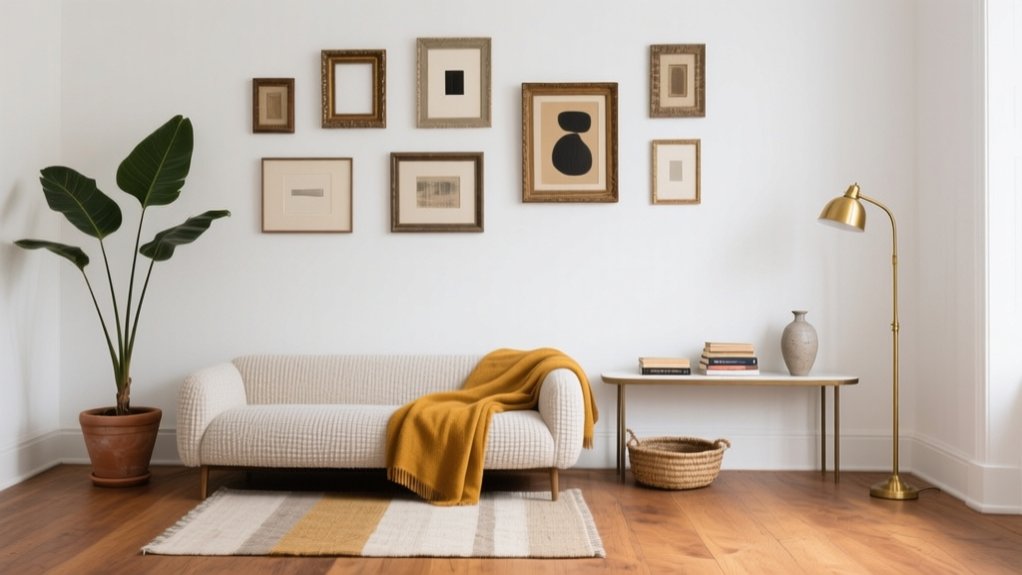
Start by choosing one anchor piece (a rug, sofa or vintage sideboard) and set a clear style direction around it. Keep your palette to three colours, repeating shades in cushions, art and accessories. Add character fast with paint in matte or eggshell, then bounce light with a mirror opposite a window. Layer warm 2700K lamps, textured throws and heavier curtains. Style shelves with books, a ceramic bowl and breathing space, add a tall plant, and finish with new hardware and a signature scent. Keep going for more easy upgrades.
Pick an Anchor Piece and a Clear Style Direction
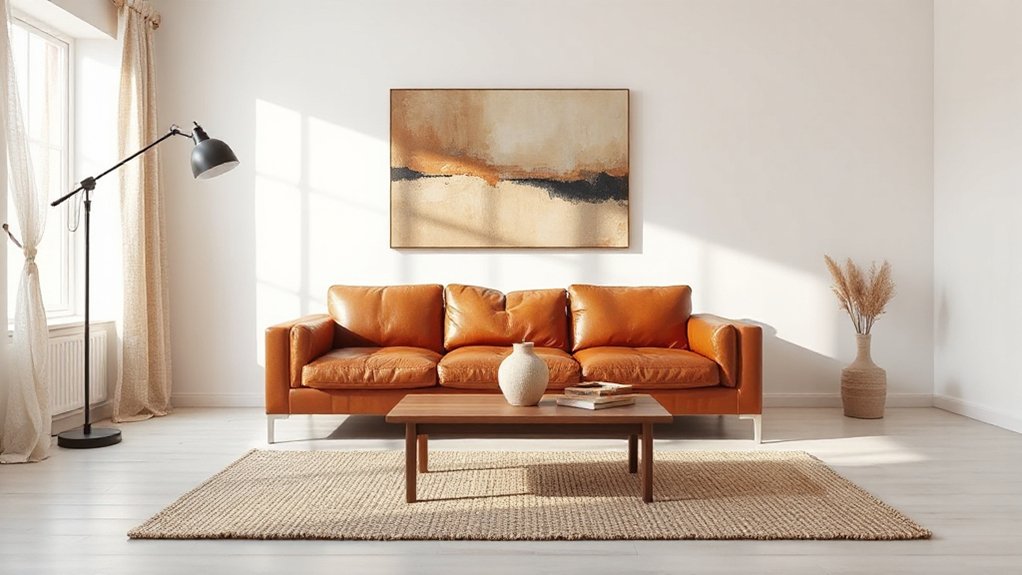
If your room feels flat because everything’s competing for attention, start by choosing one anchor piece and let it set the tone. Make it your Focal point: a sofa with great lines, a statement rug, or an inherited sideboard. Place it where you’ll naturally look first, then arrange the rest to support it, not fight it.
Next, pick a clear direction and stick to it. Decide whether you’re leaning modern, traditional, Scandi, or industrial, then repeat a few defining cues—leg shapes, metal finishes, wood tones, or fabric textures.
This is how you build Style consistency without buying a full matching set. Edit ruthlessly: move out anything that feels “off brief”. You’ll instantly get a room that reads intentional, not random.
Choose a Simple Color Palette (3 Colors Max)
Once you’ve nailed your anchor piece and style cues, lock the room together with a simple three-colour palette. Pick one dominant neutral (warm white, putty, soft grey) to keep things calm, one secondary colour that supports your main piece, and one accent for energy.
For colour harmony, repeat each shade at least twice: cushions and a throw, a vase and a print, a rug and a lampshade. This stops the room feeling bitty. Use finishes to add depth without adding colours—brass, blackened steel, oak, boucle, or linen all work in UK homes.
For mood setting, keep blues and greens for relaxed spaces, terracotta or mustard for cosier evenings, and save high-contrast accents for small, movable items.
Use Paint for the Biggest Character Boost
One tin of paint can change a plain room more than any new cushion ever will. Pick a shade that supports how you want the space to feel; colour psychology matters. Soft greens calm busy kitchens, inky blues add depth to lounges, and warm neutrals make small bedrooms feel brighter.
Plan your paint finish as carefully as your colour. Matt hides imperfect plaster and suits ceilings and older walls. Durable matt or eggshell works well in hallways. Satin or soft-sheen reflects light, so use it on woodwork to sharpen skirting and door frames.
If you fancy drama without clutter, paint the ceiling a tone darker than the walls or pick one deep shade for all four walls. Test swatches in morning and evening light first.
Add Wall Interest With Renter-Friendly Tricks
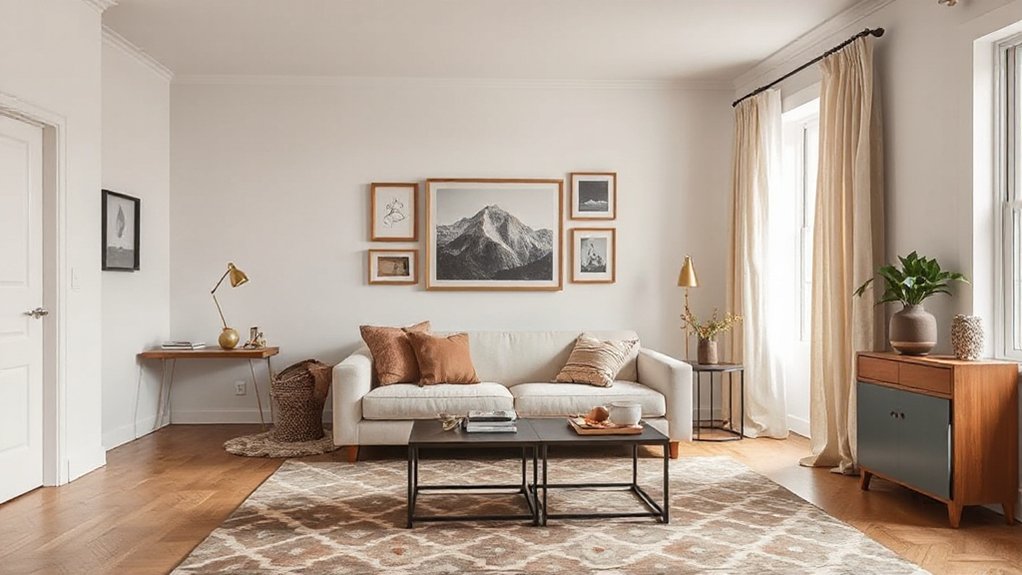
If you can’t paint, you can still give your walls real personality with renter-friendly fixes that come off cleanly. Try peel-and-stick wallpaper accents behind a headboard or on a chimney breast.
Then add removable decals or a statement mural for instant impact. Finish with a temporary gallery wall using Command strips or washi tape, so you can switch things up without losing your deposit.
Peel-And-Stick Wallpaper Accents
Looking for a quick way to add personality to a plain room without picking up a paintbrush? Peel-and-stick wallpaper accents let you introduce colour and character in minutes, and you can remove them cleanly when your tenancy ends.
Start small: line the back of a bookcase, frame a panel behind your bed, or create a faux headboard rectangle.
For Pattern mixing, pair a geometric print with plain textiles, keeping one shade consistent so it feels intentional.
Build Texture contrast by choosing a grasscloth-style or linen-effect finish against smooth painted plaster.
Measure carefully, buy an extra roll, and use a plastic smoother to push out bubbles.
In humid bathrooms, stick to vinyl and avoid direct spray zones.
Removable Decals And Murals
While you mightn’t be allowed to paint, removable decals and murals can still give your walls real impact without risking your deposit. Choose Decorative decals for quick upgrades: arches behind a bedside table, scattered dots for a playful nook, or faux panelling lines to sharpen a bland wall.
For larger statements, go for peel-off mural panels that mimic tiled splashbacks or moody landscapes. Pick mural themes that suit the room’s job: calming botanicals for sleep, city maps for a study corner, or soft clouds for a child’s space.
Clean the surface, measure carefully, and use a credit card to smooth bubbles. When you move out, warm edges with a hairdryer and peel slowly to avoid marks.
Temporary Gallery Wall Hacks
Even though you can’t always put nails in the wall, you can still build a gallery display that feels deliberate and high-end. Start with Gallery curation: pick a tight palette (black, oak, or brass), then mix sizes for rhythm.
Use Command strips, removable picture hooks, or washi tape “hinges” for lightweight frames and prints, and test adhesion on a hidden patch first.
For a confident Wall arrangement, map it on the floor, then transfer it with painter’s tape guides at eye level (about 150cm to centre line).
Lean larger frames on a picture ledge, a console, or stacked books to avoid fixings.
Add depth with postcards clipped to bulldog clips, or mount art on foam board for a cleaner edge.
Rotate pieces seasonally.
Layer Textiles to Make the Room Feel Finished
Once you’ve nailed the basics, layering textiles is the quickest way to make a plain room feel intentional and properly finished.
Start with Textile layering on the sofa or bed: mix two cushions in a solid, add one in a small-scale pattern, then finish with a contrasting lumbar cushion.
Bring in varied fabric textures so everything doesn’t read flat. Pair linen with velvet, chunky knit with smooth cotton, or boucle with brushed wool.
Add a throw you’ll actually use, draped neatly over the arm rather than folded like a showroom.
Swap plain curtains for a heavier weave or add a simple voilé behind them for softness and privacy.
Stick to a tight palette—three tones max—then repeat them across cushions, throws, and window dressings for a cohesive look.
Use Rugs to Define Zones and Add Warmth
If your room feels a bit floaty or unfinished, a well-chosen rug will anchor the furniture and carve out clear zones without moving a single wall.
In an open-plan living room, slide the front legs of the sofa and chairs onto a generous rug to create a proper seating area.
For dining, choose a rug that extends at least 60cm beyond the table so chairs stay on it when pulled out.
In narrow UK flats, runners guide the eye and protect high-traffic floors.
Pick Textured patterns to add depth without clutter, and use Warm color schemes—rust, ochre, or soft terracotta—to counter cool paint and grey upholstery.
Keep the pile practical: low for dining, plusher for lounging.
Add an underlay for grip and comfort too.
Upgrade Lighting With Warm Bulbs and Key Lamps
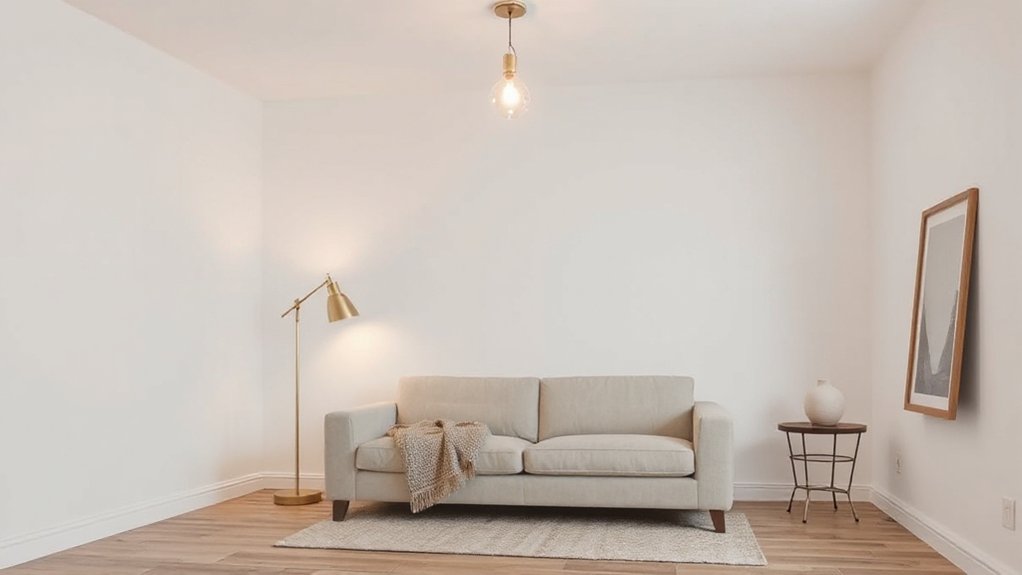
Swap harsh white bulbs for warm tones (around 2700K) and you’ll instantly make the room feel more inviting.
Layer your lighting with a mix of table, floor, and task lamps, so you’re not relying on a single ceiling fitting.
Add a key lamp or two to brighten awkward corners and create cosy pools of light where the room needs character most.
Choose Warm Color Temperatures
Why does a room feel instantly more inviting the moment you flick on the lights? It’s usually the colour temperature. Swap harsh, blue-white bulbs for warm tones (around 2700K–3000K) and you’ll soften shadows, flatter paint colours, and make cosy atmospheres feel natural rather than staged.
In UK homes, this simple change can also make north-facing rooms look less flat, especially in the evening.
Check the box for “warm white” and match bulbs across the room so the light doesn’t clash. If you’ve got dimmable fittings, choose dimmable LEDs to keep that golden glow without flicker.
Reserve cooler bulbs for task-heavy spots like utility areas, not living spaces where you unwind.
Layer Light With Lamps
Although warm bulbs set the mood, you’ll get far more character by layering light with a few well-placed lamps. Start with a ceiling light on a dimmer, then add a table lamp near the sofa to soften evening glare and make reading easier.
Place a floor lamp behind your seating to wash the wall and reduce harsh shadows. Use a small desk lamp for tasks, and you’ve instantly improved mood setting without rewiring.
Choose shades that diffuse light—linen, opal glass, or pleated fabric—and keep bulbs in the 2700K–3000K range.
For accent lighting, pick one statement lamp with a ceramic or brass base to introduce texture. Put each lamp on a plug-in dimmer or smart plug so you can tune brightness through the day.
Highlight Corners With Accents
Once you’ve layered your lighting, turn to the corners—these often fall flat or gloomy, even with warm bulbs. Add corner lighting that’s deliberate: a slim floor lamp tucked behind an armchair, or a small table lamp on a narrow console. Choose warm LED bulbs (around 2700K) to keep the glow cosy, not clinical, and aim the shade towards the wall to soften shadows.
Then anchor the spot with accent furniture. A small side table, plant stand, or vintage chair gives the light a purpose and makes the corner feel planned. Finish with one bold object—a ceramic lamp base, framed print, or textured basket—so the corner reads as a mini vignette, not leftover space, in any UK home.
Hang Art That Sets the Room’s Mood
Where do you want your eyes to land when you walk in? Pick one key wall and hang a single strong piece that signals the room’s purpose.
Calm bedroom? Choose soft landscapes, muted abstracts, or monochrome photography.
Lively sitting room? Go bolder with colour, graphic prints, or playful illustration.
Use simple Mood setting techniques: echo one accent colour already in your cushions, repeat a frame finish, and keep the palette tight.
For smart Artwork arrangement, centre the piece at about 145cm from the floor (UK gallery standard) and allow breathing space around it.
Balance scale with furniture: aim for artwork two-thirds the width of your sofa or sideboard.
Use proper fixings for plasterboard and Victorian brickwork alike.
Build a Gallery Wall That Looks Collected Over Time
Three small rules will make your gallery wall feel like it’s been built up over years, not bought in one go: start with one “anchor” piece you genuinely love, mix sizes and frame finishes (think oak, black, and brass rather than a perfect set), and leave room to add later.
Next, shop slowly: pick up Vintage frames at charity shops, antiques fairs, and car boot sales, and pair them with new prints, postcards, kids’ drawings, or ticket stubs. Keep a loose theme—colour, subject, or mood—so your eclectic collections still feel intentional.
Before you hammer anything in, lay everything on the floor and take a photo; you’ll spot gaps fast. Hang with paper templates or painter’s tape, align to a common top or centre line, and you’re done.
Use Mirrors to Bounce Light and Add Depth
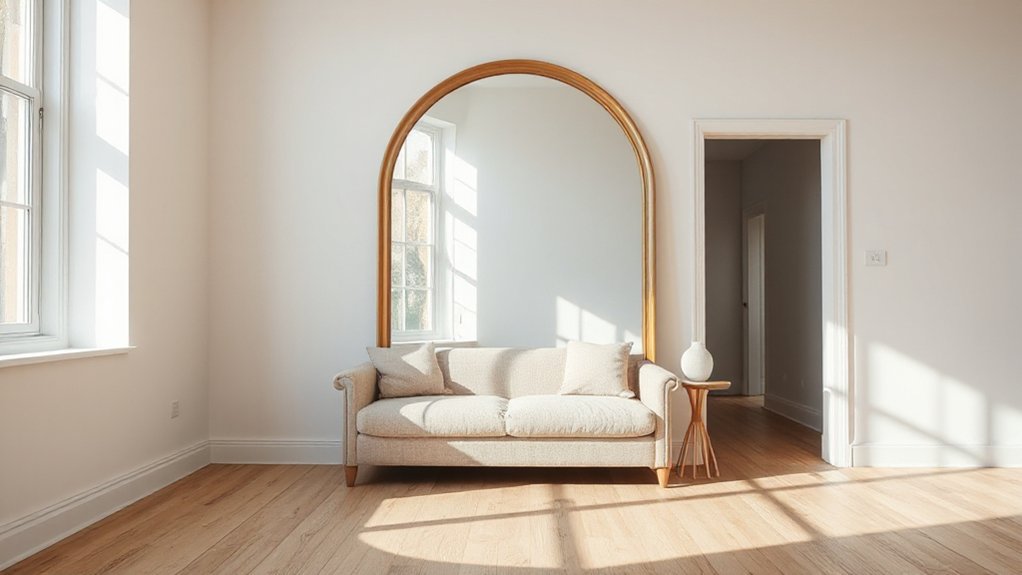
Place mirrors where they’ll catch daylight and bounce it back into the room, such as opposite a window or behind a table lamp to brighten dark corners.
You’ll also make the space feel deeper by positioning a larger mirror at the end of a hallway or above a fireplace to draw the eye through.
Choose a statement style—arched, antique-effect, or a slim black metal frame—to add character as well as light.
Strategically Place Mirrors
If your room feels a bit flat or short on daylight, a well-positioned mirror can change it instantly. Place it opposite a window to reflect natural light deeper into the space, especially handy in typical UK terraces and north-facing rooms. Angle it to catch sky light rather than a blank wall, and you’ll lift the whole mood.
Hang a mirror at the end of a hallway to extend sightlines and make narrow spaces feel wider. In living rooms, set it behind a lamp so evening light doubles without extra wattage. Keep reflections tidy: position it so it bounces your Decorative window treatments, not clutter.
You can also aim it to highlight Unique wall sculptures, giving your best pieces more presence. Leave breathing space around it.
Choose Statement Mirror Styles
Although a basic mirror will do the job, a statement style adds depth and character while still bouncing light around the room. Choose a piece that feels intentional, not merely functional, and you’ll instantly sharpen the room’s proportions.
In UK homes, where light can be limited, place it to catch a window’s glow and spread it across darker corners.
- Mirror framing: Opt for slim brass, blackened steel, or warm oak to echo your fittings and add structure without fuss.
- Statement mirror shapes: Go arched to soften boxy rooms, round to calm busy walls, or an irregular silhouette for modern edge.
- Scale and placement: Hang it slightly higher in tight hallways, or lean a tall mirror behind a console for height and depth.
Mix Wood, Metal, Glass, and Soft Textures
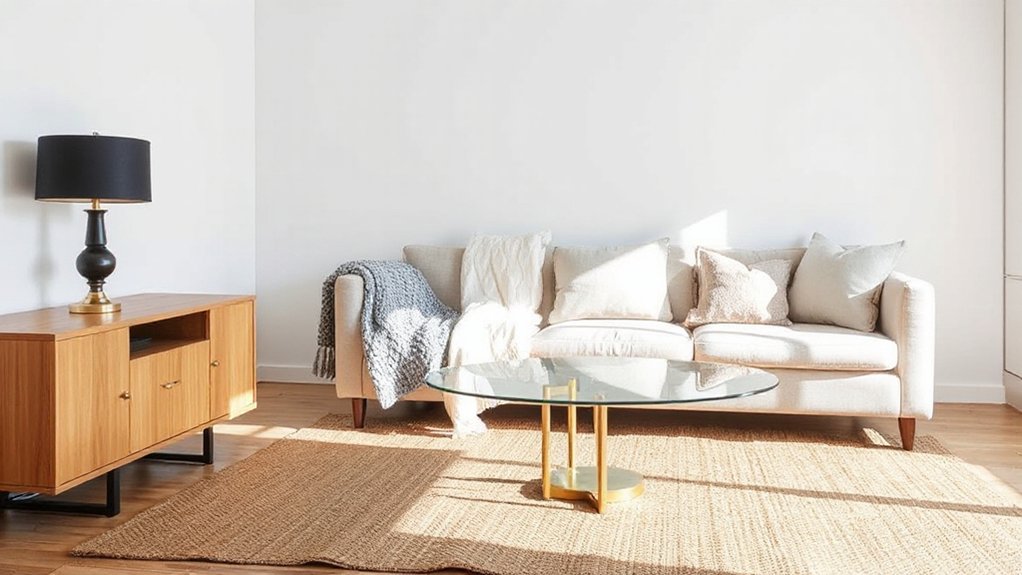
One of the quickest ways to give a plain room real depth is to mix finishes: warm wood, cool metal, clear or smoked glass, and soft textiles.
Aim for Textural contrast without chaos by repeating each material at least twice, such as an oak side table and wood picture frames, then a brass lamp and slim black handles.
Keep Material harmony by choosing one dominant tone (mid-oak, walnut, or pale ash) and one metal family (brass, chrome, or matte black).
Add glass with a coffee table, cabinet door, or pendant to lighten the look, especially in smaller UK terraces and flats.
Balance it with a chunky rug, boucle cushion, or wool throw so the room feels inviting, not clinical.
Add Curtains to Soften Sharp Lines
You can soften crisp edges and boxy windows by hanging curtains in flowing fabrics that move gently and add warmth. Choose linen, cotton voile, or a light velvet to bring texture without crowding the room.
For a smarter finish, layer sheers with drapes so you can filter daylight in the day and get cosy privacy at night.
Choose Flowing Curtain Fabrics
When a room’s full of sharp corners and clean lines, flowing curtain fabrics soften the look instantly without any major changes. You’ll get a calmer feel by choosing materials that move well and hang with a gentle drape, rather than stiff, boxy cloth.
- Pick linen blends or lightweight cotton for relaxed movement that suits most UK homes and won’t feel fussy.
- Use richer curtain textures—velvet, brushed twill, or jacquard—when you want depth and a more tailored finish, especially in draughty period rooms.
- Stick to longer drops and a slightly wider cut so the fabric falls in folds, not tight pleats; it looks more expensive.
Choose a lining for privacy and warmth, and keep colours soft to broaden daylight.
Layer Sheers With Drapes
Flowing fabrics already soften a room, but layering sheers with proper drapes takes it further by adding light control and a more finished frame around sharp windows and hard edges.
Start with Layer sheers on a ceiling-track so they skim the floor; they’ll diffuse daylight and blur harsh lines without blocking your view. Then hang drapes on a separate track or pole, ideally wider than the window, so you can stack them back neatly.
Choose a heavier weave for evenings and insulation, especially in UK terraces and flats with draughty frames. Keep the palette tonal for calm, or pick a subtle stripe to add height.
Finish with simple pinch pleats for structure and a tailored look.
Style Shelves With Books, Bowls, and Negative Space
Although plain shelves can look like an afterthought, a few well-chosen books, bowls, and pockets of negative space can make them feel curated. Start with a tight Books arrangement: stack some spines horizontally, then stand a few upright to break the line. Keep colours cohesive—think muted jackets, linen bindings, and one darker note for contrast.
Add Decorative bowls in ceramic or glass to catch keys, matchsticks, or coins, and to introduce a softer silhouette. Leave breathing room so each piece reads as intentional, not cluttered. Aim for a balanced rhythm across the run, especially in smaller UK living rooms.
- Group in odd numbers and vary height by 5–10cm.
- Repeat one material (oak, brass, stone) twice.
- Reserve one-third of the shelf as empty space.
Add Plants for Height, Color, and Softness
Even a pared-back room feels warmer once you add plants, because their height and soft edges break up hard lines and blank corners. Start with one tall floor plant by a window or sofa—think kentia palm, rubber plant, or dracaena—to lift the eye and make the space feel finished.
Add a mid-height option on a side table for balance, then tuck a trailing pothos or ivy on a shelf to soften edges.
If you want an Indoor jungle look, group pots in threes and vary leaf shapes, not just colours. Choose vibrant foliage like calathea or croton for instant contrast, but match plants to light levels so they thrive.
Use simple terracotta or matte ceramic pots to keep it calm.
Finish With Hardware, Scent, and Personal Objects
Once your greenery’s in place, focus on the finishing touches that make a plain room feel properly considered: swap out basic hardware, add a signature scent, and layer in a few personal objects.
Start with handles, pulls, and switches; upgrading hardware finishes in brushed brass, aged bronze, or matte black instantly sharpens cupboards and wardrobes without a full refit.
Next, introduce scent with a candle or reed diffuser placed away from radiators and direct sun, so it lasts and doesn’t overwhelm.
Finally, edit your surfaces: you’re aiming for meaningful, not messy.
- Choose one metal tone and repeat it across two or three fittings.
- Pick a subtle fragrance (cedar, bergamot, or linen) and stick to it.
- Group personal objects in odd numbers, and leave breathing space.
Frequently Asked Questions
How Can I Add Character on a Tight Budget Without Buying New Furniture?
You can add character cheaply by rearranging what you’ve got, layering thrifted textiles, and mixing Vintage accents like brass frames. Apply Artistic wall decals, swap cushion covers, and style books, candles, and greenery for instant impact.
What Are the Best Ways to Add Character in a Very Small Room?
In a very small room, you’ll add character fastest with bold color accents and thoughtful wall art. Use vertical shelves, a statement lamp, layered textiles, and a single feature wall to keep it uncluttered.
How Do I Add Character While Keeping the Room Kid- and Pet-Friendly?
Choose washable, durable decorative textiles and rugs, and hang wall art high or in tough frames. Use wipe-clean paint, rounded-edge furniture, and closed storage. You’ll add colour and personality without risking paws, spills.
How Can I Make a Plain Room Feel More Luxurious and High-End?
Turn your plain room into a boutique-hotel oasis: layer opulent textures with velvet cushions, wool rugs, and linen curtains. Add luxury accents—brass lamps, framed art, and a statement mirror—then warm everything with soft, dimmable lighting.
How Do I Add Character Without Making the Room Feel Cluttered?
You’ll add character without clutter by curating fewer, larger pieces: choose one bold Wall art focal point, then limit statement accessories to a tight palette. Use trays, baskets, and built-ins to keep surfaces clear.
Conclusion
Step back and you’ll see it: your once-plain room now has a clear anchor, a calm three-colour palette, and walls that feel considered. Paint adds depth like a soft evening glow, while layered throws, cushions, and curtains take the edge off hard lines. Shelves breathe with books and bowls, not clutter. Plants lift the eye and soften corners. Finish with new handles, a clean scent, and personal pieces—small details that make it yours.