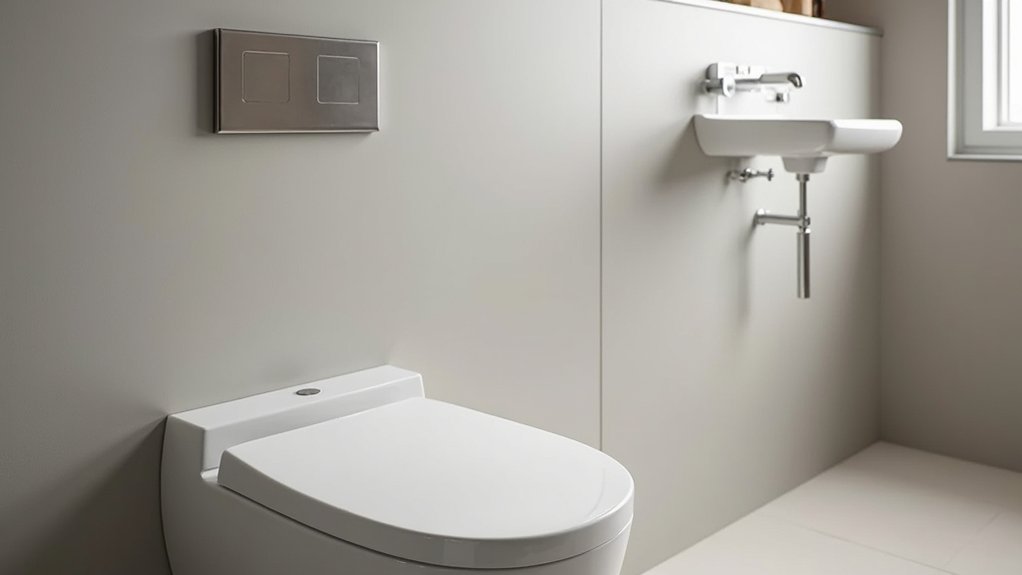
Consider this: you install a concealed cistern behind a wall, achieving a sleek, minimalist bath but facing complex wall modifications and accessibility challenges. You’ll gain space and cleaner lines, yet maintenance can be awkward and costly if leaks occur in hard‑to‑reach spots. So, you weigh design gains against long-term serviceability as you decide whether the upfront work pays off over time. Let’s explore the trade-offs and practical considerations.
What a Concealed Cistern Is and When It Makes Sense
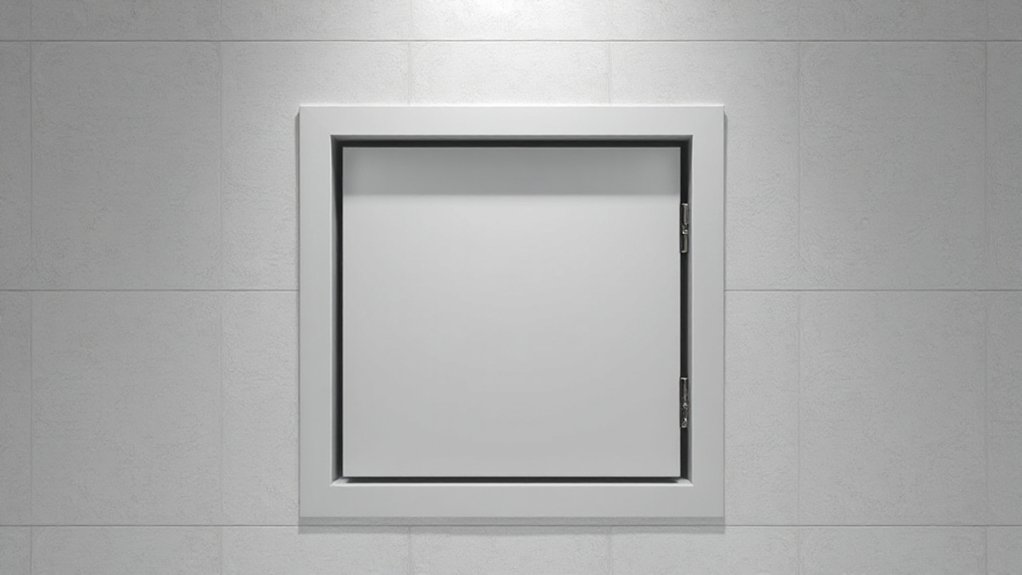
A concealed cistern is a hidden toilet tank installed within a wall or cabinet, with only the flush plate exposed. You install and service it from access panels, not visible fixtures. You’ll understand its purpose by noting its core function: efficient water use and reduced visible plumbing.
Historical development guides your expectation: early valve systems evolved toward integrated, tank-in-wall designs for cleaner aesthetics and easier maintenance.
When it makes sense, you consider wall capacity, access reliability, and future serviceability. You’ll weigh Environmental impact, recognizing reduced exposed materials and potential longer lifecycle efficiency, against installation complexity and potential waste for retrofits.
You assess compatibility with your toilet bowl, flush mechanism, and building structure, ensuring compliance with local codes.
To put it briefly, it optimizes space and cleanliness where plumbing access aligns with your renovation goals.
Space-Saving Benefits and Design Flexibility
Concealed cisterns free up valuable wall and floor space, enabling cleaner layouts and more flexible bathroom planning.
You’ll gain design versatility from hidden plumbing and streamlined fixtures, which simplify custom cabinetry and surface finishes.
With hidden installations, you can reduce obstructions and achieve tighter, more efficient spatial configurations.
Space-Saving Advantages
Space-saving design is a core strength of concealed cisterns, freeing wall space for storage, cabinetry, or easier access to plumbing. You gain cleaner sightlines and reduced clutter, enabling tighter bathroom layouts without sacrificing functionality.
The system’s recessed profile lets you reclaim vanity space and corridor width, improving traffic flow and maintenance access. Historical evolution informs current configurations, guiding where housings reside and how rough-ins accommodate varied wall materials.
Cultural influences shape finish options, mounting styles, and installer preferences, offering regionally appropriate aesthetics and workmanship standards. You’ll benefit from standardized dimensions and modular components that streamline retrofits and new builds alike.
Precision installation minimizes misalignment, reduces leakage risk, and sustains flush, uninterrupted walls. In short, space efficiency reinforces durability, resale appeal, and design flexibility.
Design Flexibility Benefits
Design flexibility stems from the concealed cistern’s modular architecture and adaptable housings, which let you tailor mounting, access doors, and finish options to fit varied wall materials and bathroom layouts.
You gain precise control over installation depth and alignment, reducing remediation needs during renovations.
The system supports multiple color options, enabling coordination with fixtures and cabinetry without custom painting.
Material durability is reinforced by corrosion-resistant substrates and robust seals, prolonging service life in humid environments.
Modular components simplify maintenance, letting you swap modules or doors without full replumbing.
You can relocate or reconfigure the cistern to suit changing space constraints, improving future resale value.
Hidden Installations Pros
Hidden installations save space by tucking components into walls or cabinets, freeing floor area and creating a cleaner, more open bathroom footprint. You gain design flexibility because concealed systems adapt to varied layouts, plumbing runs, and fixture styles without altering visible surfaces.
This approach reduces protrusions, enabling streamlined vanities, wall-hung toilets, and sleek access panels that blend with finishes. Aesthetic enhancement comes from uninterrupted lines, consistent tiling, and cohesive material choices.
You’ll also benefit from easier maintenance access through dedicated recesses, minimizing disruption to decor during upgrades. Plumbing integration is optimized through centralized supply and waste routing, which can simplify future relocations or retrofits.
How Concealed Cisterns Work: Installation Considerations
You’ll set up concealed cisterns with careful attention to wiring, mounting, and access.
Consider wall cavity housing for hiding the tank and ensuring reliable maintenance, plus secure mounting to support the system over time.
Plan for maintenance access and routing that keeps components serviceable without compromising aesthetics.
Concealed Cistern Wiring
Keep power separately fused and grounded, and use grommets where cables pass through metal or plastic housings. Maintain a clean separation between supply wiring and signal lines to minimize interference that could cause misflushes.
Use rated, corrosion-resistant connectors and seal all entry points to prevent condensation. Plan for service access, labeling, and documentation to ease maintenance.
This attention supports bathroom aesthetics while preserving water efficiency, ensuring predictable operation and long-term performance.
Wall Cavity Housing
A wall cavity housing for a concealed cistern serves as the enclosure that anchors the tank, controls, and connections while keeping the mechanism out of sight. You install the housing within a framed wall, ensuring level alignment and solid support for future service.
The unit should accommodate the flush valve, fill valve, and supply lines with clean routing to prevent leaks and vibration. Use a rigid backboard or studs to resist flex under pressure, and provide access panels that meet local codes for inspection and serviceability.
Pay attention to moisture barriers and proper sealing to deter mold and drafts. Aesthetic enhancement and noise reduction arise from a flush, recessed setup that blends with finishes while minimizing operational sound and visible hardware.
Mounting And Maintenance
Secure mounting points to the structural wall or masonry to prevent sagging over time, and align the flush valve vertically for consistent operation.
Use a removable panel or access hatch for serviceability without full demolition.
Keep concealed components protected from moisture and dust, while preserving clear clearances for adjustment tools.
Robotic or manual testing should verify leak integrity and actuator travel.
Plan for service proximity to supply lines, check for corrosion, and ensure aesthetic integration with the bathroom decor.
Prioritize user comfort through quiet operation, reliable fill, and straightforward accessibility.
Maintenance and Access: How Easy Is It to Service?
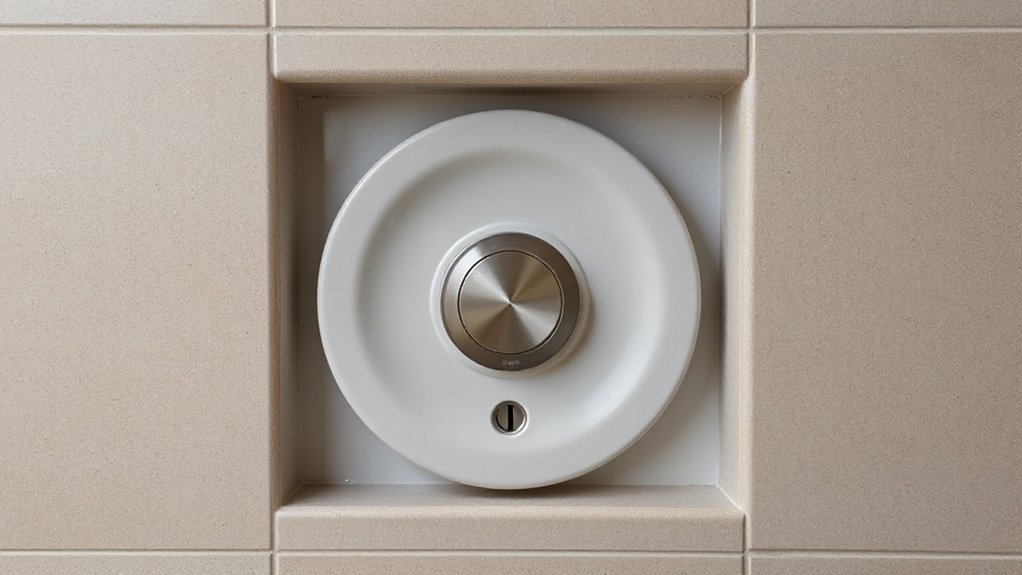
Access to essential components is straightforward, but the ease depends on the installation method. When you service a concealed cistern, you benefit from clear access panels and standardized shutoffs, reducing downtime during maintenance. Compact internal layouts simplify part replacements, but you’ll encounter different access depths depending on wall construction and frame type.
For quick checks, prioritize models with tool-less removable panels and clearly labeled service points. Regular inspections of refill mechanisms, seals, and flush valves prevent leaks and inefficiencies, while testing dual-flush actuators confirms proper operation without floor-level disruption.
Consider aesthetics during routine work; thoughtful panel design supports Aesthetic enhancement while staying unobtrusive. Plumbing integration remains critical: verify supply lines, isolation valves, and condensate management are accessible and secure for future servicing.
Upfront Costs and Long-Term Value of Concealed Systems
Upfront costs for concealed systems can be higher than traditional setups, but the long-term value often justifies the investment. You weigh procurement, installation, and integration against savings from reduced water usage, fewer leaks, and simplified maintenance access.
Hidden components require skilled labor, cabinets, and precision framing, which elevates initial quotes. Historical evolution informs today’s efficiency gains, modular designs, and standardized connections that shorten on-site time.
Long-term value emerges through reduced maintenance cycles, resale appeal, and better space utilization. Environmental impact considerations show lower material waste and improved water efficiency when modern concealed systems deploy dual-flush or sensor-actuated options.
You should assess lifecycle cost, warranty coverage, and service accessibility. Informed decisions balance upfront expenditure with durability, energy performance, and ecological benefits over the system’s service life.
Durability and Common Failure Points to Watch for
Concealed systems endure through careful design, but durability hinges on proper installation and ongoing inspection. You’ll want robust tanks, reliable seals, and stable mounting to prevent leaks and wobble over time.
Common failure points include supply line corrosion, siphonage issues, and valve wear from frequent use, all of which can undermine performance and water efficiency. Check for hard starts or delayed flushes, which signal cartridge or diaphragm fatigue.
Noise reduction matters too: improper isolation can transmit vibration, so verify anti-vibration pads and solid wall anchors are in place. Addressing misalignment prevents cracks and seepage at seams.
Routine inspection supports aesthetics by preserving sleek lines and finish, while proactive parts replacement averts costly repairs. In practice, durable assemblies deliver consistent flushes, minimize nuisance maintenance, and maintain Aesthetic enhancement without compromising reliability.
How to Choose an Installer and Model: a Practical Checklist
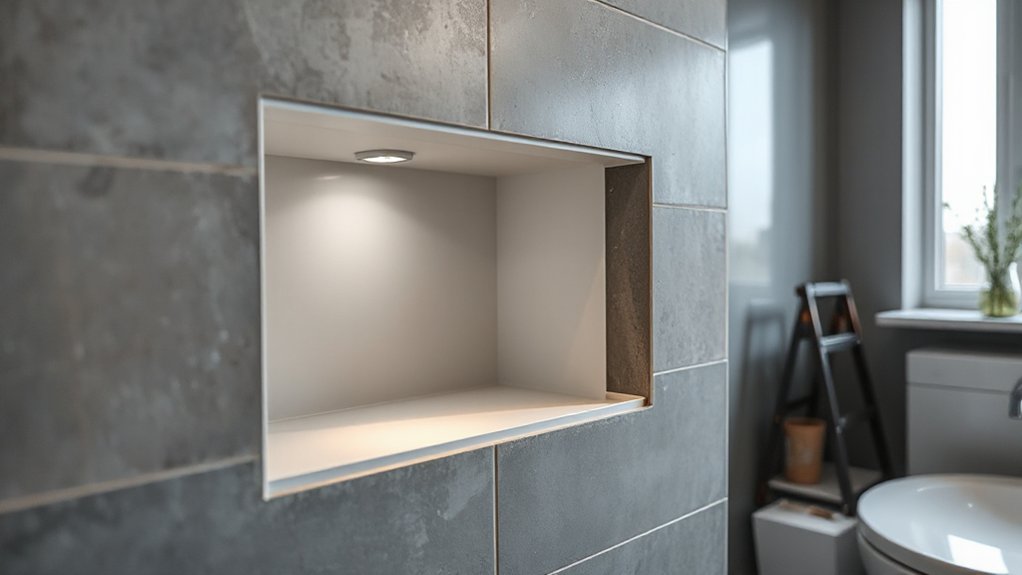
Choosing the right installer and model starts with a clear scope and verified credentials. You’ll define performance needs, installation constraints, and ongoing maintenance requirements before contacting pros.
Verify licenses, factory certifications, and at least three recent installations similar to your project. Ask for a written scope, warranty terms, and aftercare guidance.
Compare models by material durability, finish options, and compatibility with existing plumbing. Assess installation timelines, access requirements, and potential demolition or concealment prep.
Demand transparent pricing, itemized components, and a service plan for preventive checks. Prioritize aesthetic integration with your bathroom’s design—flush mounting, trim compatibility, and concealed hardware.
Check installer references, response times, and post-install support. Guarantee the chosen model aligns with your durability expectations and long-term maintenance needs.
Alternative Concealment Options and When They Outperform
When you weigh concealment options, you should consider alternatives that balance accessibility, cost, and aesthetics just as carefully as a fully concealed cistern. You’ll evaluate exposed or semi-hidden systems, back-to-wall panels, and compact in-wall tanks on objective criteria.
Accessibility matters for maintenance, so choose designs with service access points and reliable seals. Cost considerations include installation complexity, parts availability, and potential retrofit needs.
Aesthetic integration matters; select finishes and profiles that blend with your bathroom’s geometry and lighting. Water efficiency remains a key metric, so favor dual-flush or low-flow options when compatible with your fixtures.
In many scenarios, surface-mounted or panel-integrated solutions offer quicker upgrades and easier future access without compromising durability. Analyze maintenance, compatibility, and long-term running costs before committing.
A Quick Decision Framework: Should You Use Concealed Cisterns?
Weighing concealment options against your bathroom goals should start with practical criteria: accessibility, cost, and aesthetics. If you prize straightforward maintenance, concealed systems can complicate service access, so assess access panels and service routes before committing.
Budget beyond initial install matters: wall modification, rough-in alignment, and potential future retrofit costs add up.
Consider aesthetics as a decision driver: if seamless lines and streamlined fixtures align with your design intent, concealed cisterns deliver a clean look and tactile harmony.
For water efficiency, guarantee flush mechanisms meet your performance targets without sacrificing reliability.
A quick decision framework: compare expected maintenance time, potential renovation disruption, and downstream water savings.
If you value aesthetic enhancement and durable efficiency, concealed cisterns are worth serious consideration.
Frequently Asked Questions
Are Concealed Cisterns Compatible With All Toilet Brands?
Yes, concealed cisterns aren’t universally compatible with every toilet brand. You’ll need to verify mounting patterns, inlet/outlet locations, and frame compatibility for your specific model.
Check the concealed unit’s design flexibility and the toilet’s flushing mechanism, especially for dual-flush systems.
Confirm the installation allows proper access, service clearance, and aesthetic integration with your chosen suite.
When in doubt, consult manufacturer guidelines or a technician to confirm brand compatibility and long-term reliability.
What Maintenance Is Required for Hidden Cisterns?
Hidden cisterns require regular maintenance to stay reliable. You should inspect hidden mechanisms for wear, leaks, and corrosion, and replace faulty seals promptly.
Follow manufacturer maintenance schedules, typically including biannual inspections and fluid-level checks, plus occasional valve adjustments.
Keep access clean and unobstructed, test flush performance, and lubricate moving parts as recommended.
Document service dates and parts used.
Adhering to these steps minimizes failures and preserves peak performance of the hidden mechanisms.
Do Concealed Cisterns Affect Water Pressure or Flush Performance?
Concealed cisterns don’t inherently lower water pressure or flush force; performance depends on tank size, fill valve, and pipe layout.
You’ll likely see stable flushes if your system uses appropriately pressurized supply and correctly tuned valves.
Water efficiency is improved through dual-flush options and reduced leakage exposure, while noise reduction comes from enclosed cabinets and isolation.
Guarantee proper venting and regular maintenance to sustain consistent flush reliability and overall efficiency.
How Long Does Installation Typically Take?
Installation typically takes 1–2 days, depending on plumbing access and wall access. You’ll need rough-in, wall closure, and finish carpentry, with a few hours of wiring and sealant work.
Expect ½–1 day for rough-in if plumbing is straightforward, plus ½–1 day for testing and adjustments.
Design aesthetics and Space savings drive faster deadlines when pre-fab panels arrive. You’ll save time with precise measurements, but allow for contingencies if ceiling access or framing differs.
Can Concealed Systems Be Easily Repaired in a Retrofit?
One interesting stat: concealed systems reduce visible plumbing by up to 60%, boosting aesthetics.
Yes, they can be repaired in a retrofit, though access is key. You’ll need an exposed panel or access hatch and compatible components.
Expect specialized tightening, gasket replacement, and possible tank/flush valve swaps.
This is where aesthetic integration meets space efficiency, ensuring repairs don’t disrupt bathroom lines or dominate the room.
Plan for professional service to avoid retrofit pitfalls.
Conclusion
In short, concealed cisterns deliver a sleek, space-saving look with improved hygiene and adaptable design, but they demand careful planning, a skilled install, and access for maintenance. If you’re prioritizing aesthetics and compact bathrooms, they’re worth the investment; otherwise, the costs and potential service challenges may outweigh the benefits. Think of them as a finely tuned instrument: beautiful when set up right, discordant if neglected. Choose a proven installer and match the model to your maintenance tolerance.