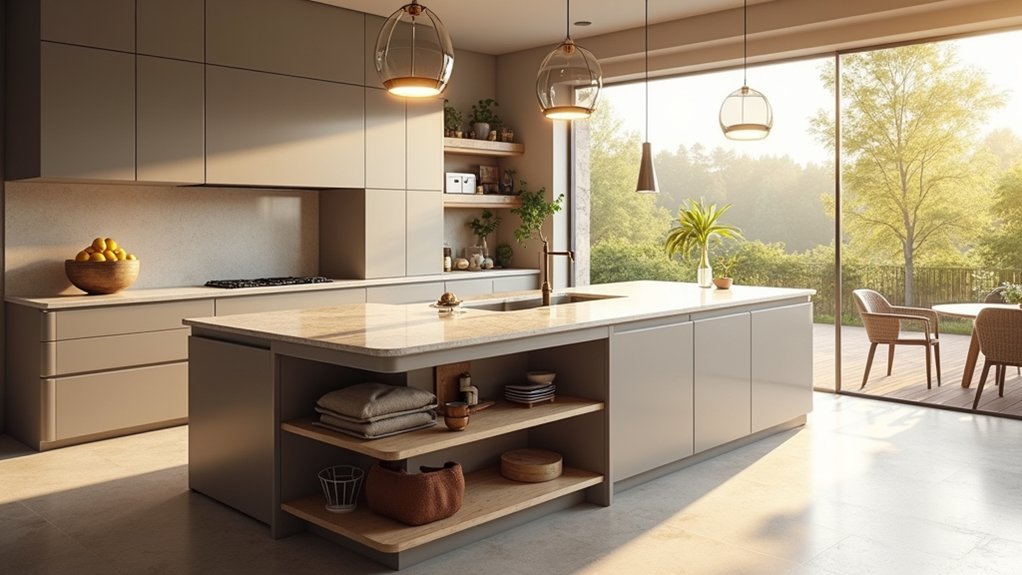
Brace yourself for a kitchen game changer that will redefine how you cook and gather. A well-placed island adds instant prep space, smarter storage, and a center for action you can actually rely on. You’ll streamline workflows, boost family time, and keep clutter at bay with durable, thoughtful design. Ready to see how layout, traffic, and add-ons come together to fit your needs, budget, and space? Let’s explore what matters most for your kitchen.
Increase Your Prep Space With a Kitchen Island
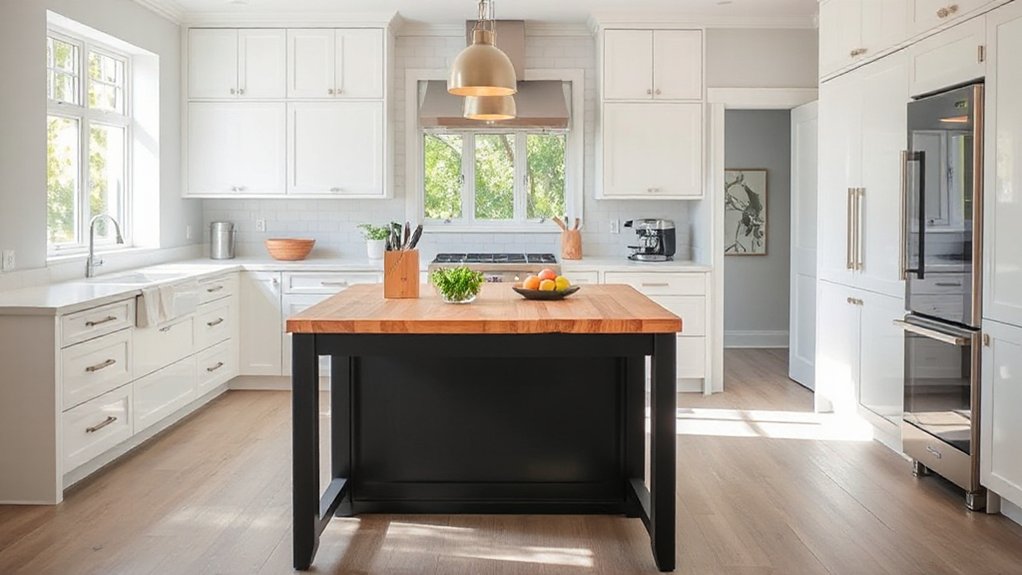
A kitchen island instantly expands your prep space, giving you a dedicated surface for chopping, mixing, and staging ingredients without crowding your main counters. You gain a clear, central work zone that speeds up cooking techniques and keeps mess contained.
With deliberate layout, you assign zones for chopping, rolling, and whisking, reducing steps and boosting efficiency.
The island also enhances appliance integration; place a built-in microwave, wine cooler, or small sous-vide station within arm’s reach, so you don’t drift between rooms.
Use the extra surface for pre-measuring ingredients, tasting, and adjusting seasonings on the fly.
Keep power outlets accessible for small appliances, timers, and gadgets.
A well-planned island streamlines workflow, supports focused prep, and anchors your kitchen’s daily rhythm.
Maximize Storage on Your Island: Drawers, Cabinets, and More
To maximize storage on your island, prioritize a mix of drawers, cabinets, and open shelves that keep essentials within arm’s reach. Use shallow drawers for utensils, deep pull-outs for pots, and tall cabinets for small appliances, guaranteeing each item has a defined spot.
Integrate dividers, labels, and pull-out organizers to maintain order and speed. Choose surface materials that resist stains and wipe clean easily, then pair them with durable hardware to withstand daily use.
Decorative accents—trim, handles, or a contrasting finish—add personality without sacrificing function. Plan lighting above storage zones to improve visibility and access.
Ensure air circulation behind closed doors by avoiding overpacked interiors. Regularly reassess storage layouts as your routines evolve to sustain efficiency and reduce clutter.
Create an Efficient Cooking Workflow With Built-In Appliances
Built-in appliances streamline cooking flow by placing heat, prep, and cleanup within easy reach and at ideal heights. You’ll achieve smoother progressions between tasks when your range, oven, fridge, and dishwasher are integrated into the island layout.
Prioritize appliance placement that matches your sequence: prep near storage, cooking near ventilation, and cleanup adjacent to waste and water lines. This Appliance integration reduces moves, minimizes utensil swaps, and keeps countertops clear for active prep.
Aim for a cohesive system with consistent controls and minimal steps between stations. Design for proper clearance and ventilation to avoid heat encroachment on prep zones.
Consider zoning appliances by task to boost workflow efficiency, while preserving safe, ergonomic heights. Maintain clean sightlines and accessible wiring.
Boost Mood and Family Time: Socially Smart Island Layouts
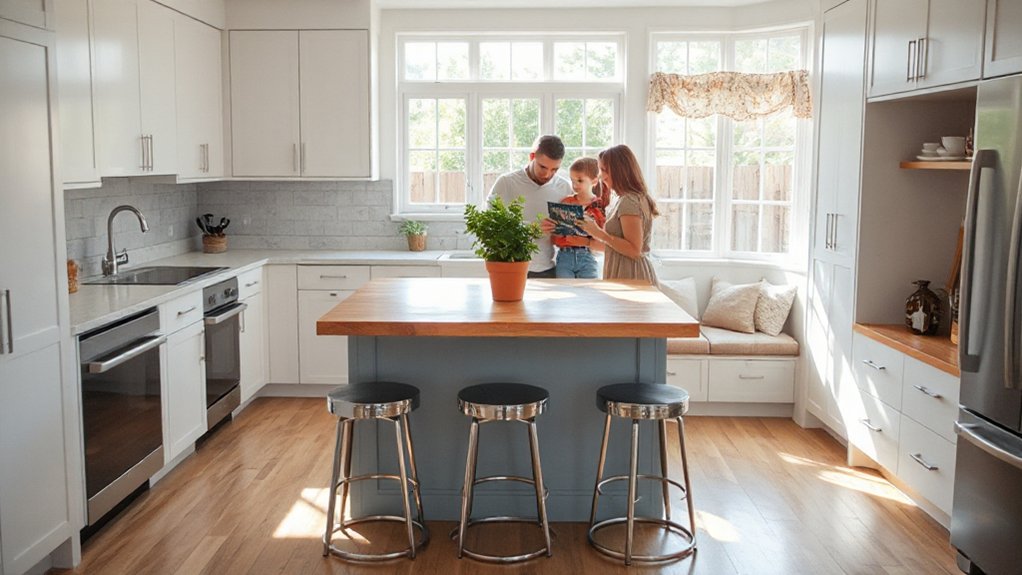
A socially smart island layout keeps conversations flowing by placing seating and prep zones within sight lines, boosting Socially Smart Layouts. When family members overlap tasks—cooking, homework, chats—the Family Time Flow strengthens bonds without clutter or chaos.
Expect mood-boosting spaces that use lighting, color, and accessible layouts to support relaxed, collaborative moments at the island.
Socially Smart Layouts
Why choose a socially smart kitchen island? You’ll boost interaction and mood by crafting clear zones that invite conversation without chaos. A well-planned island supports entertaining zones, design harmony, and smooth progressions between prep, cooking, and cleanup.
Maintain sightlines to living areas so everyone feels involved, not cut off. Use seating at the edge to anchor conversations while you work, and position the sink and cooktop to minimize interruptions.
Prioritize accessible storage to keep essentials within reach, avoiding clutter that stifles flow.
- Clear dining and prep zones
- Seamless sightlines and safe circulation
- Accessible storage for everyday items
Family Time Flow
Ever wondered how a thoughtfully arranged kitchen island can boost family time and mood? You design for flow: keep work zones close but not cluttered, so conversations stay natural while you cook.
Use cooking techniques that invite participation—think shared chopping, tasting, and plating—so everyone feels involved without slowing you down.
Position appliances with purpose: appliance placement near prep and cleanup minimizes steps and maximizes interaction.
A central island that accommodates seating and a clear prep zone invites quick chats, homework, or story time between courses.
Choose a shallow sink, nearby trash, and accessible outlets to support multitasking without interruptions.
Establish zones that encourage gentle collaboration rather than competition, and you’ll notice mood lift and tighter family bonds during daily meals and weekend gatherings.
Mood-Boosting Spaces
To boost mood and family time, design your island with social flow at the center: place seating to face the main work zones and keep clear sightlines to living areas. You’ll create spaces that invite conversation, quick collaboration, and calm routines.
Use color psychology to choose tones that reduce stress and lift energy, pairing warm neutrals with accent hues that energize tasks. Dim ambient lighting signals relaxation, while task lighting anchors meals and chats.
Balance openness with defined zones so everyone feels included without crowding.
- Position seating to foster eye contact and easy passing of items
- Layer lighting for both ambiance and function
- Select finishes that reflect natural light and color warmth
Plan Your Island: Layout, Traffic, and Safe Distances
Plan your island with a clear layout in mind: position it to create smooth traffic flow between the stove, sink, and prep zones. Leave at least 42 inches of clearance on all work sides for comfortable movement.
You’ll optimize efficiency by aligning the island with primary work zones, preventing bottlenecks during peak cooking. Prioritize a simple, unobstructed approach: guarantee drawer and cabinet access isn’t blocked by seating or appliances, and maintain clear sightlines to exits and ranges.
Material choices affect maintenance and longevity, so pick durable, stain-resistant surfaces.
Lighting options matter too: install a layered plan—task lighting for prep, ambient lighting for atmosphere, and under-cabinet glare control.
Keep safety in focus with rounded edges and slip-resistant floors where traffic concentrates.
Customize by Budget: Features and Add-Ons That Pay Off
When you’re budgeting for a kitchen island, focus on features that deliver real value and long-term payoff. You’ll want cost effective upgrades that boost function without overspending, and budget friendly features that endure. Prioritize items that save time, improve storage, or enhance workflow. Avoid flashy add-ons that don’t justify the cost. Instead, select scalable choices you can expand later if needed.
- Built-in power outlets for appliances or charging
- Modular storage and pull-out organizers
- Durable, low-maintenance surfaces
Consider how each choice affects resale value and daily use. Durable materials, efficient lighting, and integrated prep zones pay off by reducing clutter and boosting efficiency.
Keep a simple plan: invest in what saves steps, supports frequent tasks, and fits your budget now and later.
Frequently Asked Questions
How Does an Island Affect Resale Value?
An island can boost resale value, especially when you emphasize thoughtful features. You’ll attract buyers with appliance integration that conceals or houses a microwave, coffee maker, or wine fridge.
With storage optimization that keeps counters clear. Keep finishes cohesive with the rest of the kitchen. Prioritize durable materials and proper lighting.
A well-executed island signals modern livability, helping your home appeal to a broad range of buyers and justifying a higher price.
What Are the Best Island Shapes for Small Kitchens?
A small kitchen benefits from a rectangular or square island because it preserves walkways and offers usable surface without crowding. You’ll want a compact design with rounded corners for safety.
Consider a peninsula if space is ultra-tight. Choose versatile configurations: a prep surface plus seating, or storage-loaded with a pullout trash and shelves. This approach keeps circulation clear while maximizing function in tight layouts.
Can an Island Improve Accessibility for All Users?
Yes, an island can improve accessibility for all users when you prioritize ergonomic design and universal accessibility. Arrange clear walking paths, accessible counter heights, and knee-space beneath the island for seated users.
Use pull-out drawers and front-facing storage to minimize reaching. Choose well-lit tasks, reachable outlets, and a radius for turning.
This practical setup helps you move safely, work efficiently, and accommodate wheelchairs, strollers, or collaborators without compromising workflow.
Are There Safety Tips for Child-Focused Islands?
Yes, there are safety tips for child-focused islands. You should implement childproofing measures and use safety barrier options to keep curious hands away from hot surfaces.
Start with secure drawers and cabinets, cordless blinds, and stove knob covers.
Add a raised edge or non-slip mat to deter climbing.
Supervise closely, set clear zones, and store sharp tools out of reach.
Regularly inspect gates and barriers for wear, and update safety measures as your kids grow.
Do Islands Require Structural Support Modifications?
Yes, islands often require structural support modifications. You’ll need a joist or beam upgrade if your existing framing isn’t enough to carry the added weight and cantilever loads.
Hire a professional to assess load paths, electrical, and plumbing stubs.
In planning, consider Kitchen aesthetics and Plumbing considerations to keep flows tidy.
You’ll also want appropriate footing and potential underpinning.
With proper support, you maintain safety, function, and a polished, functional island.
Conclusion
A kitchen island quietly transforms your space into a smoother, more social hub. Think of extra prep space, subtle storage, and efficient flow that keeps clutter tucked away. With smart layouts and careful budgeting, you’ll enjoy built-in convenience without overstuffing rooms. It won’t shout for attention, but it’ll hum with better meals, easier cleanup, and warmer conversations. Invest wisely, and you’ll savor a calmer, more connected kitchen—where daily routines slip into place with quiet confidence.