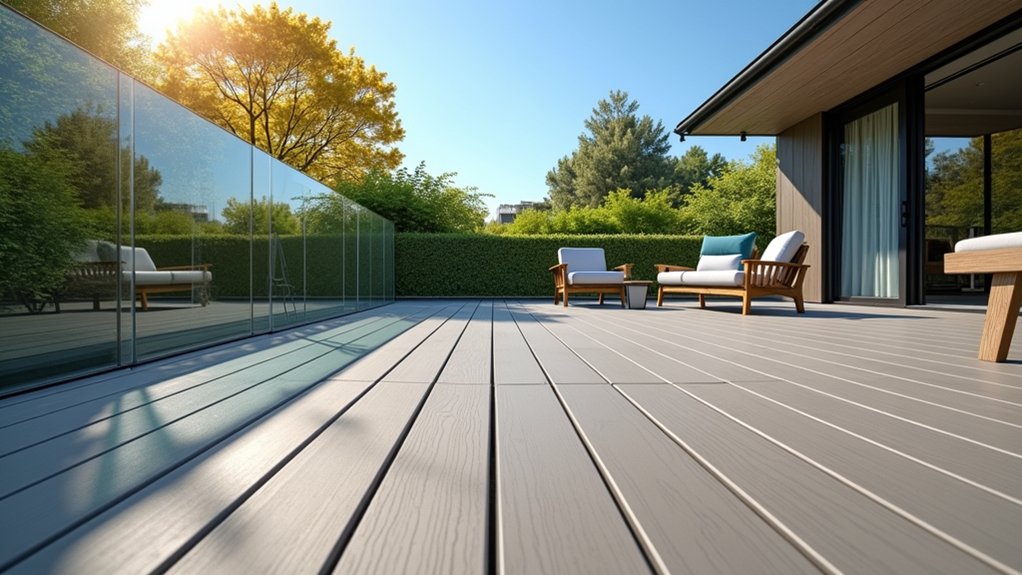
Sometimes the same week the market shifts and you discover composite decking offers real reliability you hadn’t expected. You’ll gain low maintenance, resistance to fading and staining, and a longer lifespan with proper installation. It’s durable in tough climates and comes in textures and colors that stay true over time. You’ll also find a strong recycled-content story and recyclability. Curious how this all translates to your project budget and setup? Let’s start with the basics and narrow down your best options.
Maintenance: How Do Composite Decking and Wood Compare?
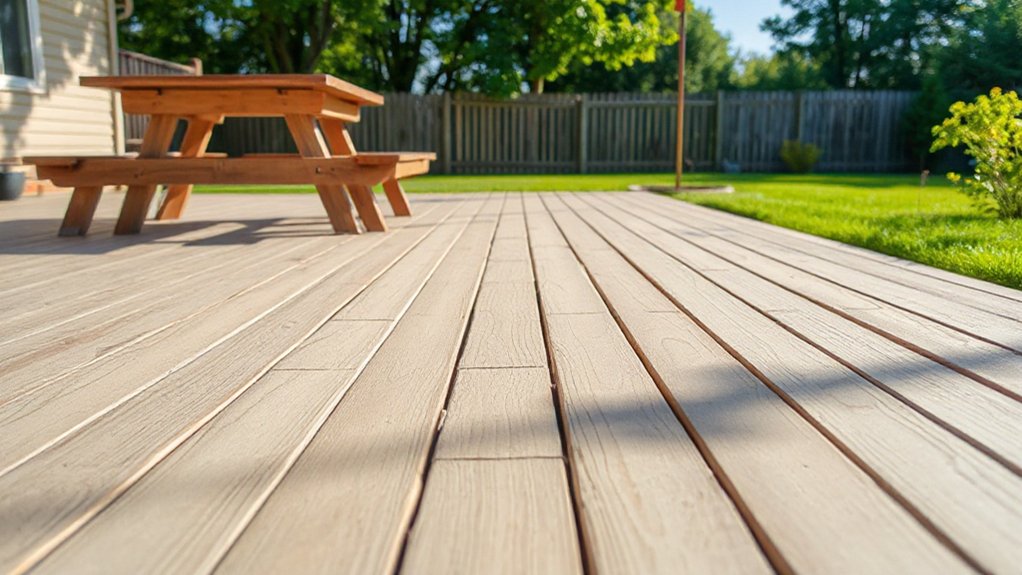
Composite decking generally requires less ongoing maintenance than wood. You’ll notice fewer annual coatings, sanding, and stain sessions because composites resist warping, rot, and moisture damage more consistently.
In practical terms, you clean with soap and water or a gentle cleaner, and you’re done, without frequent refinishing. You’ll also appreciate predictable upkeep across seasons, with stable color and fewer surface checks.
Pattern options matter here: choosing embossed, brushed, or grained finishes doesn’t alter maintenance load, but it can affect cleaning ease and debris buildup, so select a texture that aligns with your cleaning routine.
Slip resistance remains stable when you own a quality composite with a textured surface; unlike wood, it doesn’t rely on seasonal moisture to alter traction. This yields reliable, industry-standard maintenance expectations.
Longevity: Will It Last in Your Climate?
Climate resilience is the core of composite decking’s value, and its longevity hinges on material composition, installation method, and local conditions. In your climate, you’ll assess moisture cycles, freeze-thaw patterns, and temperature extremes to gauge performance.
High-quality composites blend polymer binders, UV-stabilized pigments, and recycled filler to resist warping and cracking.
Proper installation matters: correct spacing, flashing, and substrate prep prevent moisture ingress that accelerates deterioration. Expect improved weather resistance over time when joints and fasteners are chosen for expansion and contraction ranges typical of your locale.
UV protection minimizes surface graying and color fade, preserving appearance without frequent resurfacing.
Real-world longevity hinges on matched product specs to your environment, plus diligent maintenance like cleaning and moss control to sustain protective barriers.
Aesthetics: How to Pick Color, Texture, and Finish
Choosing the right color, texture, and finish isn’t solely about aesthetics—it also affects maintenance and compatibility with your outdoor space. You’ll want a thoughtful approach to guarantee long-term appearance and performance.
- Color coordination: Align deck hues with trim, siding, and landscaping to create a cohesive look and reduce visible wear.
- Texture selection: Choose a texture that matches your foot traffic and cleaning routine. Smoother finishes ease cleanup, while embossed textures hide minor scratches.
- Finish considerations: Opt for finishes that resist fading and moisture. Consider UV stability, warranty terms, and how color depth holds over time.
Environment: What Is the Recycling Footprint of Composite Decking?
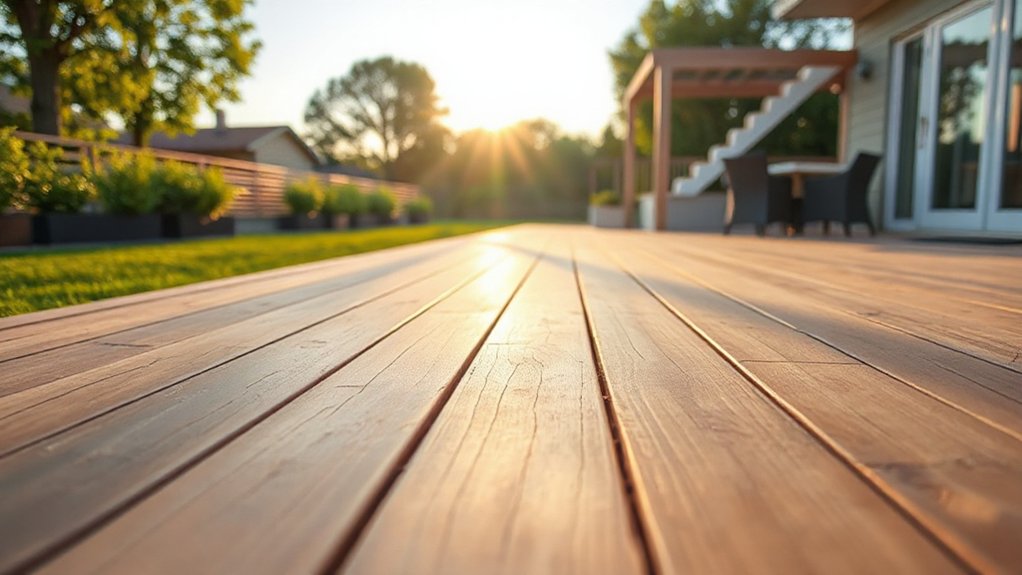
To assess the recycling footprint of composite decking, you need to look at how the materials are sourced, processed, and repurposed at end of life. You understand that profile starts with the feedstock—post-consumer plastics and wood fibers—chosen for compatibility and traceability.
Recycling processes hinge on efficient separation, cleaning, and recompounding into new decking or other products, minimizing losses. You evaluate whether manufacturers use closed-loop systems, energy recovery, or landfill diversion, noting the variance across blends.
The Environmental impact rests on transport emissions, processing energy, and the durability of recycled content in service life. You should compare cradle-to-grave data, certify third-party performance claims, and demand transparent bills of materials.
Cost and Install: What to Expect for Your Space
With composite decking, your space drives cost and installation details as much as material selection does. You’ll balance upfront material costs with long-term savings, installation complexity, and maintenance needs, all while preserving design versatility and material durability.
Expect precise budgeting that accounts for substructure, fasteners, hidden hardware, and potential permits. Professional installers provide timelines, waste factors, and warranty coverage, helping you avoid surprises.
The result is a durable deck that reduces ongoing maintenance while fitting your space, climate, and aesthetic goals.
- Budgeting factors: upfront materials, framing, fasteners, and potential permits
- Installation scope: substructure prep, hidden fastening options, and timeline
- Longevity considerations: durability, warranty, and ongoing maintenance versus traditional wood
Frequently Asked Questions
How Does Maintenance Differ Between Composite and Concrete Decking?
Composite decking requires less maintenance than concrete; you’ll clean less often and worry less about staining or sealing.
For maintenance, you’ll perform regular cleaning with mild cleaners and a soft brush, focusing on Cleaning techniques.
Concrete decking demands more frequent sealing and crack monitoring, plus full cleaning of efflorescence.
Material durability favors composites against scratching and fading, while concrete handles heavy loads but may chip.
Can Composite Decking Be Repaired if Damaged?
Yes, you can repair some composite decking damage. You’ll typically use DIY repairs for surface scratches and small breaks, following the product’s specific repair kit or color-matched filler.
For structural issues, consult a professional. Keep in mind warranty coverage; many manufacturers require professional service for certain repairs to remain valid.
Always check your warranty details before attempting fixes, since improper DIY repairs can void coverage.
Is Composite Decking Slip-Resistant in Wet Conditions?
Yes, composite decking isn’t perfectly slip-proof, but it often offers solid slip resistance in wet safety conditions. You’ll notice higher traction with grooved textures and proper installation.
Yet, you should still use caution on algae or standing water. For best results, choose products rated for slip resistance, clean regularly, and consider anti-slip treatments in wet areas.
Slip resistance improves with maintenance, so you stay alert and keep decks dry after rain.
Do Color Choices Fade Under Prolonged Sun Exposure?
Yes, color choices can fade with prolonged sun exposure. You’ll see changes if the material lacks strong color stability and UV resistance.
Choose products with proven color stability and high UV resistance to minimize fading, especially in exposed areas.
Regular cleaning and protective finishes can help, but the right formulation is key. Look for UV stabilizers and fade-resistant pigments, and verify warranty coverage for color retention over time.
How Fire-Resistant Is Composite Decking Compared to Wood?
Composite decking is more fire-resistant than wood, offering enhanced fire safety thanks to non-porous composition and treated cores. You’ll gain improved material durability, reduced smoke risk, and slower flame spread in most installations.
While no deck is fireproof, you get better performance with composite under typical exposure. Remember: proper clearances, ignition sources, and code-compliant assemblies matter.
You stay compliant by following industry standards and maintaining the system for *best* fire safety and long-term durability.
Conclusion
Composite decking stands up to the elements with low maintenance and strong longevity, making it a clear choice for busy outdoor spaces. An eye-opening stat: many homeowners report up to 25% less annual upkeep compared with traditional wood. You’ll enjoy fade- and stain-resistance, while staying eco-conscious since many products incorporate recycled materials and are recyclable. For a confident investment, choose a proven texture and a color that stays true over time, and pair it with proper installation.