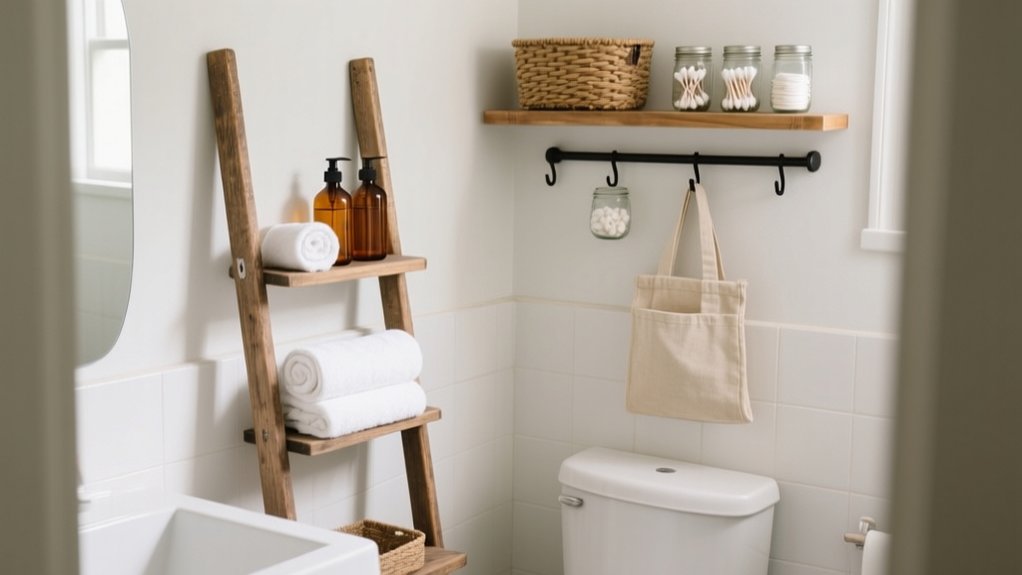
Start by mapping four zones—vanity, toilet wall, shower, and door—and list what’s allowed in each based on moisture and light. Add no-drill adhesive hooks and slim caddies on cleaned tile, and wait 24 hours before loading. Build a 12-inch-deep over-toilet shelf with a rail and sealed wood for towels and backups. Use over-door hooks, door baskets, and drawer dividers. Add a vertical countertop stacker and heat-safe hair-tool holster. Keep going for more tight-space layouts.
Map Your Small Bathroom Storage Zones Fast
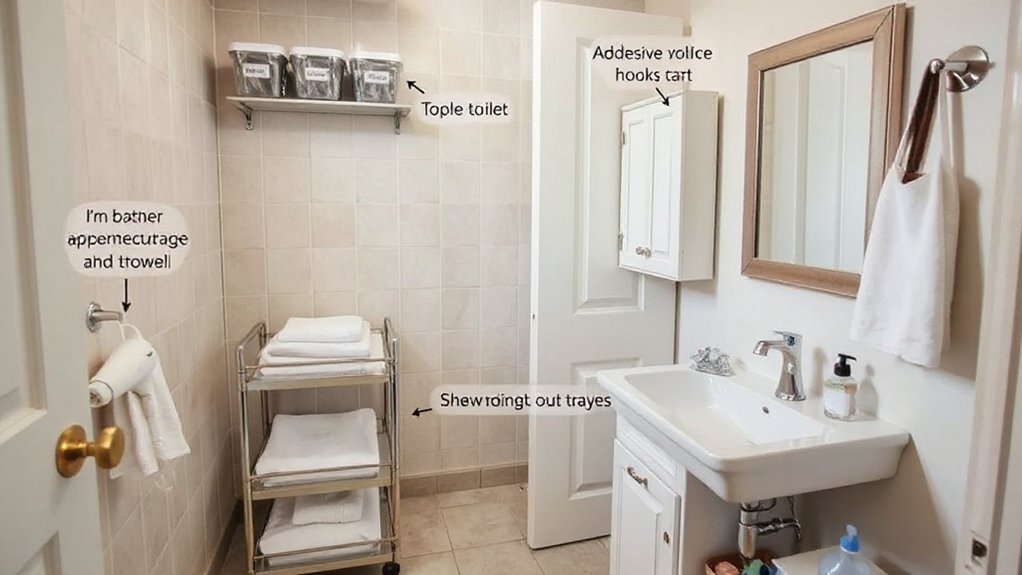
Before you buy bins or drill a single hole, take five minutes to map your bathroom into clear storage zones so every item has a logical “home.” Start by standing in the doorway and labeling four areas—sink/vanity, toilet wall, shower/tub, and door/back-of-door—then do a quick sweep: daily-use items stay within arm’s reach, weekly backups go one step farther (a shelf or cabinet), and rarely used supplies move up high or down low.
Next, audit obstacles: note where bathroom lighting is dim so you don’t stash essentials in shadowy corners. Mark moisture hotspots and plan ventilation solutions so towels, paper goods, and meds don’t sit in damp air.
Finally, measure each zone’s usable depth and height, and write a one-line “allowed items” list for it.
No-Drill DIY Wall Storage for Tight Spaces
Although your bathroom walls feel like wasted real estate, you can add serious storage without touching a drill by using removable adhesive systems built for tight, humid spaces.
Start by degreasing tile and paint with isopropyl alcohol, then dry fully so pads bond hard.
Use adhesive hooks beside the mirror to hang hair tools, a razor pouch, or a small caddy, keeping items off the sink edge.
Mount magnetic strips inside a cabinet door or on a narrow wall to corral tweezers, nail clippers, bobby pins, and small scissors without a cup.
Choose waterproof, high-hold strips, press for 30 seconds, and wait 24 hours before loading.
Keep weight light and group items by daily routine for faster grab-and-go access.
Over-the-Toilet Storage Ideas You Can Build
Removable adhesive organizers handle small items well, but the open space above your toilet can hold the bulky stuff if you build for it. Start with a slim over-the-toilet shelf that straddles the tank: two vertical side frames, a top shelf, and one mid-shelf for towels and backup paper. Keep the footprint tight—12 inches deep max—and anchor it to wall studs with L-brackets so it won’t wobble.
Add a shallow ledge rail to stop bottles from tipping. Integrate bathroom lighting by mounting an LED strip under the top shelf for nighttime visibility. For humidity, seal wood with polyurethane or use primed plywood.
Want more privacy? Pair it with shower curtain ideas like a longer liner to reduce spray drift. Measure height for clearance and easy cleaning.
Door and Drawer DIY Organizers (Renter-Friendly)
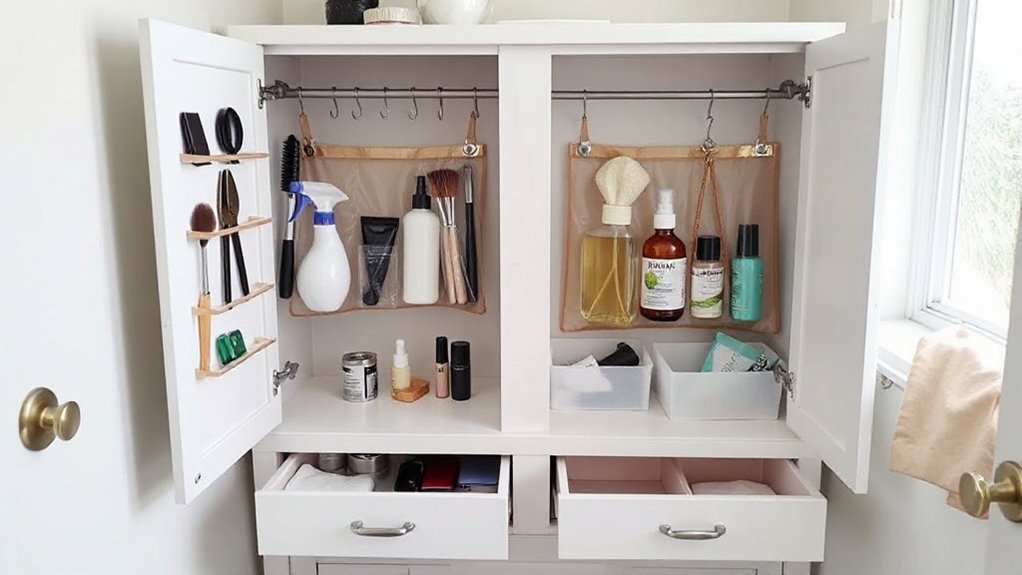
When your bathroom storage has to work around a lease, door- and drawer-based organizers give you extra capacity without drilling a single hole. Use over-the-door hooks inside the vanity for towels, robes, or a hanging caddy for hair tools. Add adhesive wire baskets to cabinet doors for spare soap, wipes, or travel bottles; stick felt pads on contact points to stop rattles.
Inside drawers, corral everything with Adjustable dividers so floss, razors, and meds don’t migrate. Cut dividers to depth, then label sections with tape for quick resets.
For metal drawers or door backs, mount magnetic strips with removable adhesive to hold tweezers, nail clippers, and bobby pins. Keep heavy items low, and leave door clearance so hinges don’t bind.
Countertop DIY Organizers to Cut Clutter
If your sink ledge keeps collecting bottles, makeup, and hair tools, build countertop organizers that stack vertically and assign each item a “home” in inches, not feet. Start with a two-tier caddy: cut a bamboo cutting board base, add a dowel center post, and screw on a smaller tray up top for daily-use items.
Drill 1-inch holes in a wood block to stand toothbrushes, razors, and mascara upright. Add a slim lidded box for cotton rounds to stop visual clutter and keep luxury aesthetics.
Use eco-friendly materials like reclaimed wood, cork, and glass jars with labeled lids. Mount a hair-tool holster on the side of your caddy using heat-safe pipe clamps.
Keep cords wrapped and off the counter.
Frequently Asked Questions
What Humidity-Resistant Materials Work Best for DIY Bathroom Storage?
You’ll get best humidity resistance from stainless steel hardware, sealed marine plywood, PVC, and ceramic tiles as splash-proof surfaces. Choose compact wall-mounted brackets, closed-edge shelves, and silicone-sealed joints so moisture can’t seep in.
How Do I Prevent Mold and Mildew Inside Storage Bins?
Like nipping it in the bud, you’ll prevent mold by keeping bins dry: add silica packets, crack lids for airflow, and follow ventilation tips. Stick to cleaning routines—wipe weekly with vinegar, dry thoroughly, and don’t store damp items.
What Weight Limits Should I Consider for Adhesive-Mounted Bathroom Organizers?
Check the label, but you should plan for 2–8 lb per organizer; halve it in steamy showers. Prioritize Adhesive strength, prep surfaces well, and use smart Mounting techniques. Don’t overload; distribute items across multiple mounts.
How Can I Childproof DIY Storage Solutions in a Small Bathroom?
Start with what you can’t see: hazards. Use Child safety latches, corner guards, and anti-tip straps; mount organizers high, lock meds and cleaners, add soft-close hinges, and keep Storage organization tight with labeled bins.
What’s the Best Way to Waterproof Wood Used in Bathroom Organizers?
Use wood sealing plus waterproof finishes: sand smooth, seal end grain, then brush on marine spar varnish or water-based polyurethane in 3 thin coats. Caulk joints, elevate organizers with feet, and recoat yearly.
Conclusion
You don’t need a bigger bathroom—you need smarter zones. When you map walls, toilet space, doors, and countertops, you turn “dead” inches into daily-use storage without drilling or clutter. One telling stat: the average person spends about 1.5 years of their life in the bathroom. That’s plenty of time to benefit from hooks, slim shelves, drawer dividers, and stackable trays that keep essentials visible, reachable, and off wet surfaces.