There’s a common theory that a conservatory can never stay warm in winter, but you might push back on that by examining your gaps, glazing, and heat sources. You’ll find practical steps that are easy to implement, from sealing drafts to choosing efficient heating that complements glass. If you want steady warmth without blowing through costs, you’ll need to address insulation, shading, and humidity—with concrete actions you can start this weekend.
Why Conservatories Lose Heat (and How to Stop It)
Conservatories lose heat mainly through poor insulation, air leaks, and radiant heat loss from glass. You’ll tackle this by pinpointing weaknesses and applying targeted fixes.
Start with solar shading to reduce heat gain when the sun blazes and to lower cooling needs later. Outdoor blinds or interior shades work best, and choose fabrics with a tight weave.
Add thermal curtains for additional insulation at night or during overcast days, ensuring they reach the floor and have a blackout lining if possible.
Seal obvious gaps around frames with low-expansion foam or weatherstripping, and check glazing for cracks.
Finally, consider inserting low-emissivity films or secondary glazing where feasible. This approach minimizes heat exchange without sacrificing daylight or aesthetics.
Seal Drafts: Doors, Windows, and Roof Joints
Start by sealing drafts effectively around doors, windows, and roof joints to cut heat loss.
Check door seals for wear and proper fit, replace or adjust as needed, and add weatherstripping where gaps appear.
Regular roof joint inspections help you spot cracks or gaps early and keep warm air inside.
Seal Drafts Effectively
Sealing drafts starts with a quick audit of where heat escapes: doors, windows, and roof joints. You’ll identify gaps around frames, sashes, and panel seams, then prioritize the most noticeable leaks.
Start with draft proofing techniques at doors: apply door sweeps, adjust thresholds, and add weather stripping where gaps exceed tolerances.
Move to windows by checking for loose sashes and pane cracks; use self-adhesive weather stripping and foam seals in persistent gaps.
For roof joints, inspect flashing and eave connections; install compatible gap fillers and sealant where movement occurs.
Consistently test with a simple candle or tissue to reveal air leaks, then re-seal as needed.
Keep notes on where improvements worked, and document seasonal reseal intervals for ongoing efficiency.
Secure Door Seals Fit
Do a quick door-by-door check to make sure seals fit snugly and block drafts effectively. Start at the main door and any patio doors you use most.
Inspect weatherstrips for cracks, gaps, or compression loss; replace or reseal as needed.
Test the seals by closing softly and listening for air leaks or drafts along the frame. Use a light-colored candle or incense to reveal escaping air—move the source around the edges to locate trouble spots.
Ensure the door frame latch aligns with the strike plate for consistent closure.
Consider upgrading to self-adhesive foam or brush seals where gaps persist.
This supports door security and helps with lock maintenance, keeping entry points tighter and your conservatory warmer.
Roof Joint Inspections Regularly
Regular roof joints are a common source of drafts in a conservatory, so inspect them regularly and seal any gaps promptly.
You’ll start with a visual sweep, looking for cracked sealant, peeling flashing, or loose panels. Marked gaps should be measured and categorized by size, so you know which sealant or tape to apply.
Use a caulk gun to apply flexible, UV-resistant sealant along joints, corners, and where panes meet frames.
For larger gaps, consider stormproof sealants or backer rods to ensure a solid bed before finishing.
Check the roof guttering and drainage to prevent water ingress that could loosen joints.
Document findings for conservatory insulation improvements and recheck after weather shifts.
Schedule periodic roof joint inspections and maintain consistent upkeep.
Insulation Essentials for Glass Fronted Conservatories
When choosing insulation for your glass-fronted conservatory, start with options like polyiso foam boards, mineral wool, or vacuum-insulated panels that fit your frame and roof profile.
Consider draft reduction techniques such as edge sealing, door sweeps, and secondary glazing to pair with your chosen material.
We’ll compare cost, R-value, and ease of installation to help you balance performance with practicality.
Insulation Material Options
Insulating a glass-fronted conservatory starts with choosing the right materials for the walls, roof, and floor, because each option affects heat retention differently. You’ll balance sheer thermal performance with practicality, selecting cavity wall panels, composite boards, or insulated plasterboard for walls.
For the roof, consider multi-layer panels, insulated tiles, or lightweight polyisocyanurate (PIR) sheets to cut heat loss without overburdening structure.
Floor options include insulated boards, screed with added insulation, or underfloor heating-compatible substrates to minimize heat drain.
When evaluating materials, prioritize moisture resistance, vapor control, and long-term durability. Eco-friendly options, like recycled or low-embodied-energy materials, can align with sustainability goals.
Advanced insulation techniques—such as gap sealing, reflective barriers, and draught-proofing—enhance performance without complexity.
Draft Reduction Techniques
Ever wondered how small tweaks can dramatically cut heat loss in a glass-fronted conservatory? You can start with draft reduction by sealing gaps around doors and vent openings. Use weatherstripping on frames, and fit draught excluders beneath doors to stop cold air sneaking in.
Consider insulating trims or low-profile seals where floor meets walls, especially along the sill. Add window coverings at the outset—thermal curtains or lined blinds—to reduce convective drafts near glass panes.
For large vents, fit adjustable panels or early closing strategies to minimize nighttime cooling. Revisit glazing gaps with silicone and inspect for cracks after storms.
Pair these steps with a routine check, keeping doors closed when not in use and ensuring seals remain intact.
Efficient Heating Options That Work With Glass
There are several efficient heating options that work well with glass in a conservatory, helping you warm the space without wasting energy. Start with smart thermostats to maintain steady temperatures; they learn your routines and adjust heat output automatically. Pair them with zoned heating so panels or radiators only heat occupied areas.
Radiant panels install under floors or on walls, delivering direct warmth without relying on air drafts. Choose low-temperature emitters to reduce stratification and improve comfort near glass walls. Insulation remains important, so combine any option with draft seals around doors and windows.
Consider heat pumps for efficient, year-round performance and quiet operation. Finally, place heaters away from plants to prevent thermal stress while maximizing heat distribution.
Control Humidity for Comfort and Plant Health
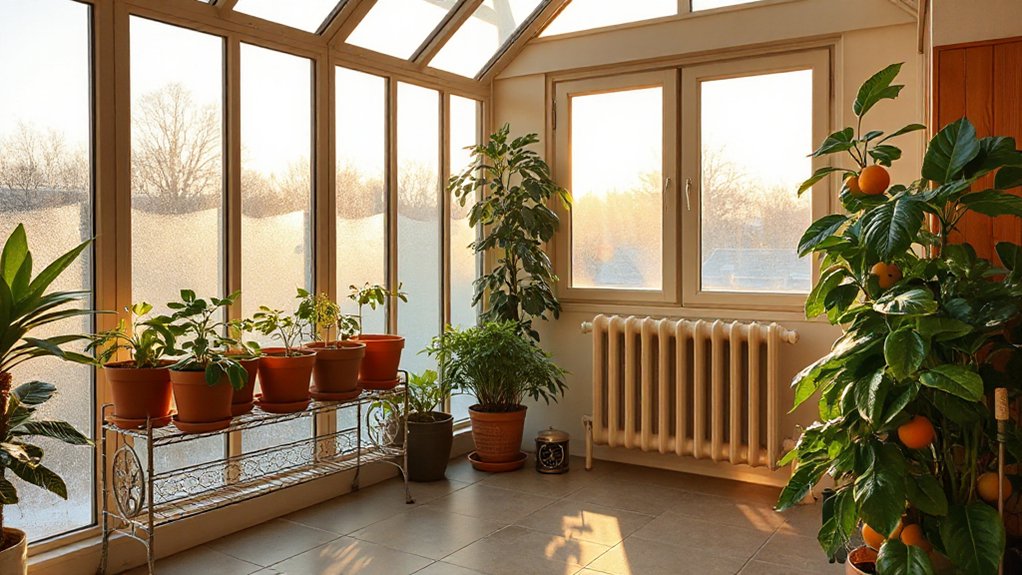
Humidity control is essential for comfort and plant health in a conservatory; start by monitoring real-time levels with a high-quality hygrometer and target a range that suits both people and your plants.
Once you know the baseline, maintain steady indoor humidity by balancing air exchange and moisture sources. Use a dehumidifier or extractor fan during damp spells, and a humidifier when air dries out, keeping doors and vents unobstructed for even distribution.
Place plants away from vents to avoid scorching or desiccation, and group species with similar humidity needs to simplify management.
Check daily, adjust ventilation, and re-evaluate seasonal shifts. Tracks of indoor humidity guide watering, soil moisture, and misting, safeguarding plant vitality while preserving comfortable, draft-free conditions for you.
Maximize Daylight for Warmth: Strategies That Keep Heat In
Maximizing daylight is a straightforward way to boost warmth in a conservatory while keeping energy use down. You’ll harness solar gain by choosing glass with high solar transmittance and low emissivity, which lets sunlight in while reducing heat loss at night.
Position seating to face south or west to capture the strongest winter sun, then optimize shading to prevent overheating on milder days. Use window treatments that trap heat yet remain transparent enough to admit light—insulating draperies or cellular blinds work well when closed during cold spells.
Install reflective surfaces, like light-colored walls or mirrors, to bounce daylight deeper. Seal edges around frames and doors to minimize drafts, replacing worn weatherstripping as needed.
Schedule quarterly checks to maintain performance and daylight effectiveness.
Seasonal Maintenance for Winter Warmth
Keeping a conservatory warm in winter hinges on proactive seasonal maintenance that protects and enhances heat retention. Each season, inspect seals around doors and windows for gaps, then reseal with weather stripping or silicone, focusing on corners and sills.
Clean gutters and ensure proper drainage to prevent condensation on panes. Inspect the roof for loose panels and replace damaged glazing to maintain insulation.
Regularly trim garden furniture and store it during cold snaps to reduce moisture damage and airflow obstructions near vents.
Check radiator or underfloor heating efficiency, bleed radiators, and balance heat distribution by closing off unused zones.
Update window treatments to reflect daylight needs, using insulated blinds or curtains to trap warmth while preserving light.
Schedule a mid-winter check to catch developing issues early.
Frequently Asked Questions
Can I Convert a Conservatory Into a Year-Round Living Space?
Yes, you can, but plan carefully. Invest in Conservatory insulation upgrades and proper Seasonal ventilation, seal drafts, install insulated glazing, underfloor heating if feasible, and consider a robust HVAC or multi-zone system for comfortable year-round living.
What Window Films Best Reduce Heat Loss Without Glare?
Yes—go with reflective films or thermal curtains. They cut heat loss and glare while you stay comfy; install properly, clean regularly, and measure window areas first. Combine two-layered films for best efficiency and even light.
Do Underfloor Heating Systems Suit Glass-Walled Spaces?
Underfloor heating can work in glass-walled spaces, but you’ll need careful planning. Check heat output compatibility and odor-free systems. Prioritize radiator placement near cold spots, and apply insulation techniques to floors and edges for even warmth.
How to Balance Heating Cost With Plant Growth Needs?
You balance heating cost with plant growth needs by prioritizing insulation methods and optimizing temperature windows; use programmable controls and heating alternatives like vents and thermal curtains, then monitor humidity. Insulation methods reduce load, heating alternatives cut ongoing expenses, wisely.
Are There Solar Gain Strategies That Don’T Reduce Light?
You can use thermal curtains and solar shading to boost warmth without sacrificing light; install thermal curtains to trap heat, and use light-transmitting solar shading during sunny days, ensuring you maintain visibility while optimizing solar gains.
Conclusion
You can’t ignore the chill? Think again—lock in heat like a fortress, and your conservatory becomes a pocket of summer, even when it’s blizzarding outside. Seal every hinge, cushion every pane, and layer with insulation until drafts vanish. Use smart heating that hums softly, maintain humidity so plants don’t sulk, and let daylight do the work while you tuck heat where it’s needed most. With these steps, winter warmth sticks around, promised, like a loyal thermostat you can trust.