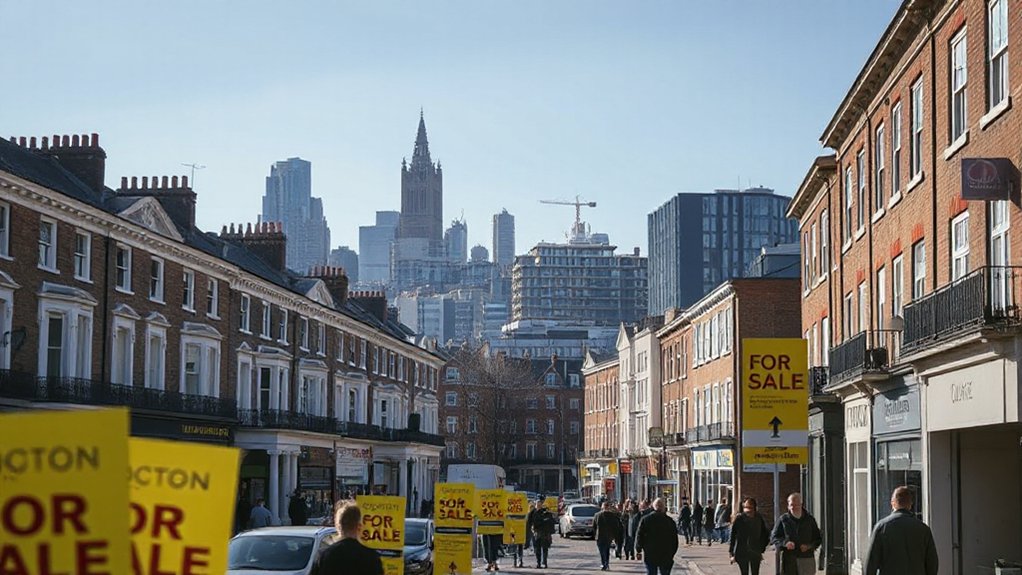
UK house prices are likely to move cautiously over the next 12 months, with limited swings as affordability tightens and regional gaps persist. Rates and policy tweaks will shape demand, but many areas could stabilise near pre-pandemic levels while listings rise modestly in hotspots. Expect supply constraints to cap gains in high-demand regions, with price floors set by affordability and credit access. If you want more context on scenarios and risks, you’ll find practical implications ahead.
What the Next 12 Months Could Mean for UK House Prices
Given the coming year, UK house prices are likely to move cautiously, influenced by the path of interest rates, inflation, and supply dynamics. You’ll see limited price swings as lenders balance risk and demand, with affordability becoming a clearer constraint in regions where prices rose fastest.
Market affordability will tighten for first-time buyers, even as wage growth helps some buyers bridge gaps. Expect prices to stabilize near pre-pandemic baselines in many locales, unless tax changes alter buyer incentives or stamp duty adjustments spur selective activity.
Property taxes, if adjusted, could modestly shift demand toward lower-cost segments or better-value regions. Overall, the trajectory remains data-driven: gradual normalization, selective uptick in some pockets, and protection against runaway pricing in overheated markets.
How Interest Rates, Supply, and Regional Splits Shape the Outlook
How will interest rates, supply dynamics, and regional distinctions shape the outlook? You’ll see mortgage affordability respond to rate paths, while supply constraints and regional variance set the floor and ceiling for prices.
Nationally, slower rate moves may ease debt service pressures, but affordability remains tighter than pre‑2020 norms, tempering transaction volumes. In the near term, modestly rising listings in popular areas could relieve some pressure, yet stock shortages in high-demand regions keep gains selective.
Market sentiment will hinge on policy signals and economic momentum, shaping buyer confidence and timing decisions. We expect gradual price stabilization rather than rapid upswings, with regional pockets of resilience offset by pockets of softness.
UK House-Price Scenarios: Three Paths and What Would Push Each One
Three distinct paths for UK house prices are forming, each tied to how rates, supply, and demand evolve from here. You’ll see one scenario where rates stay elevated but stabilize, limiting borrowing, curbing price gains, and preserving market stability even as listings improve.
A second path imagines rates easing gradually, boosting demand more than supply, pushing modest price growth while affordability remains a constraint.
The third route envisions sustained tightness in supply, with policy restrictions or delays amplifying price resilience despite softer demand.
Across these paths, policy impacts shape the cadence of moves, from credit access to zoning signals. You should monitor how these forces interact, as small shifts could tilt the balance toward slower or steadier price adjustments.
Risks to Watch and the Key Economic Signals That Could Change the Forecast

While the forecast hinges on how the economy evolves, several risks could tilt outcomes and warrant close monitoring. You should watch market stability as volatility or sudden sentiment shifts can abrupt price adjustments, even amid gradual fundamentals.
Policy impacts matter: changes to interest rates, mortgage lending rules, or fiscal support can amplify or mute demand, altering the pace of price moves.
Global growth dynamics, inflation trajectories, and currency shifts feed into UK finance costs and household budgets, reshaping affordability.
Labor market twists, including wage growth and unemployment, influence borrowing capacity and risk premia.
External shocks, such as energy price spikes or geopolitical tensions, can trigger abrupt repricing.
In aggregate, the forecast remains contingent on stabilizing macro signals and calibrated policy responses.
Practical Steps for Buyers, Sellers, and Investors in the Coming Year
As the outlook for UK house prices depends on evolving economic conditions and policy signals, buyers, sellers, and investors can start preparing now by mapping concrete next steps that align with the coming year’s uncertainties.
You should analyze current affordability metrics, focusing on entry costs, mortgage rates, and debt service capacity to avoid overstretch.
For buyers, simulate scenarios under varied rate paths and stress tests to identify sustainable purchase thresholds.
Sellers can stage pricing bands aligned with market affordability, avoiding time-on-market drag.
Investors should diversify across property types and locations with transparent yield projections, factoring in potential changes to property taxation.
Monitor policy signals, data releases, and lender criteria to adjust plans promptly as conditions evolve.
Frequently Asked Questions
How Will Brexit Impact Prices in the Next Year?
Brexit may temper prices slightly, you’ll see slower gains as economic stability fluctuates and trade agreements evolve. You should expect cautious forecasts: data-driven signals point to modest movements tied to macro trends, not dramatic shifts.
Which Regions Show the Strongest Price Resilience?
You’ll notice regional hotspots showing the strongest price resilience, with Market stability improving as demand concentrates in core cities and commuter belts, while nationwide indicators remain cautious. You should monitor data trends closely, adjusting expectations as conditions evolve.
Do Mortgage Stress Tests Affect Prices Soon?
Mortgage regulations and tighter lending criteria could cool prices soon, you should expect gradual impact rather than abrupt shifts. Banks may tighten further if stress tests worsen, which suggests you monitor affordability metrics and evolving lending criteria closely.
Are Rents a Reliable Price Predictor Now?
Can rents reliably predict prices now? Rental trends show momentum, but you should watch affordability shifts closely; they temper demand and price moves. You’ll see a cautious, data-driven view, with forward outlooks shaped by recent market signals.
When Will Prices Bottom Out or Peak?
Prices may bottom soon in some regions and peak later in others. You should watch Market recovery signals and regional variations, as data remains mixed; proceed cautiously, expect gradual shifts, and adjust plans as new numbers emerge.
Conclusion
You’ll see prices respond to rate moves, supply shifts, and regional demand, and you’ll watch them diverge as pockets stay hot while others cool. You’ll compare forecasts, test scenarios, and weigh risks, leaning on data rather than rhetoric. You’ll track affordability, employment, and borrowing costs, projecting modest changes with caution. You’ll plan with timelines, maps, and benchmarks, preparing for volatility yet aiming for stability. You’ll stay informed, deliberate, and ready to adjust as conditions evolve.