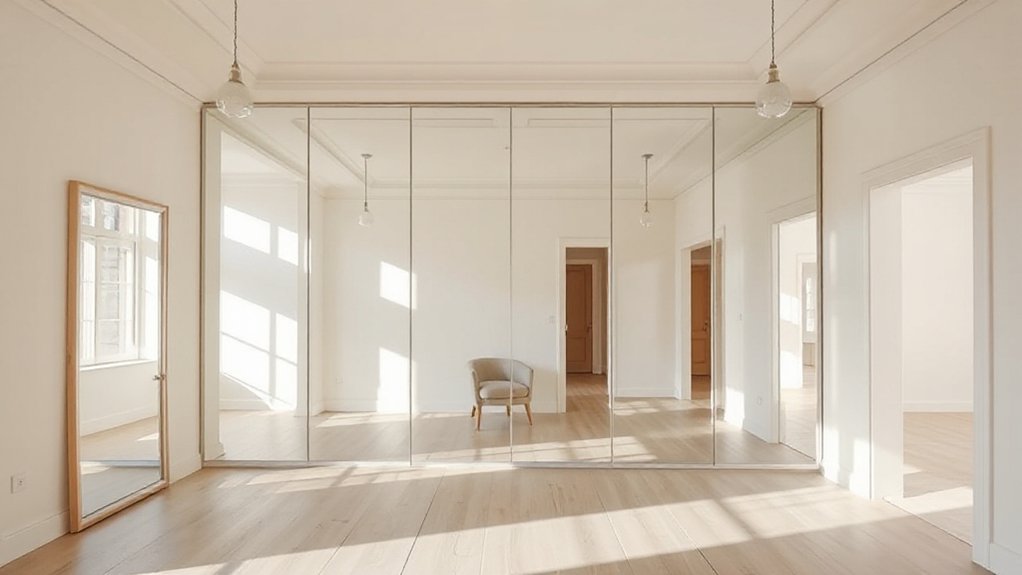
To make any room feel larger, place mirrors opposite windows or light sources to bounce daylight across walls and corners. Choose shapes that visually expand space—tall, vertical mirrors for height, or a single large focal piece to mirror depth. Keep frames light or frameless to avoid visual clutter, and hang at eye level for natural viewing. Use a few well‑planned pieces rather than a crowded wall. Want more precise tips to try? You’ll uncover them next.
Why Mirrors Visually Enlarge Small Spaces
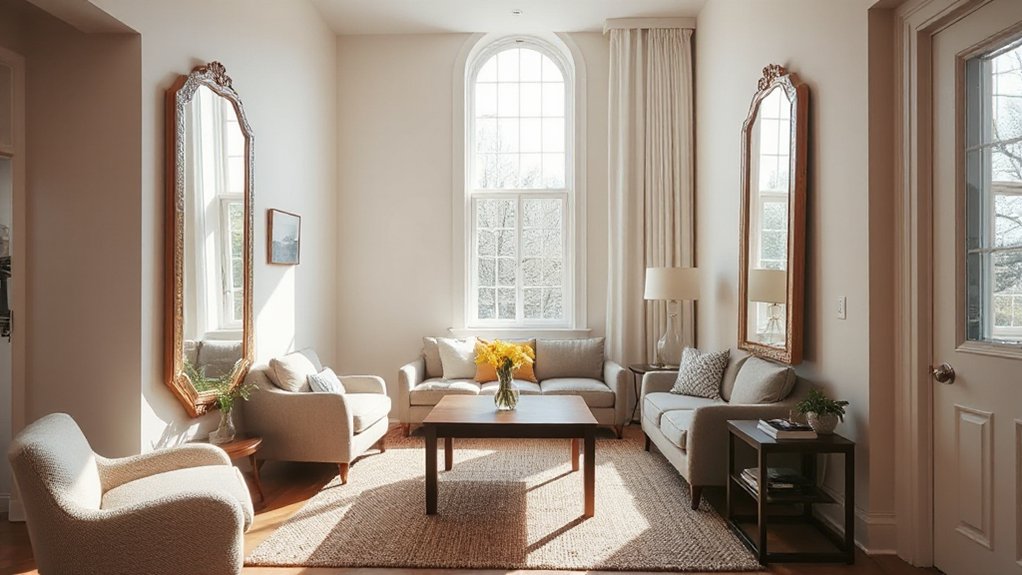
Mirrors make spaces feel bigger by reflecting light and extending the room’s visual boundaries. You’ll instantly perceive more airiness when a mirror doubles as a light source, brightening corners and eliminating heavy shadows.
Choose strategically placed mirrors opposite windows or doorways to bounce natural glow, widening the perceived footprint without actual expansion. In small rooms, go for tall, slim profiles to draw the eye upward and create vertical balance.
Decorative frame options matter: slim metal or frameless styles feel lighter than chunky borders, while a bold frame can punch up style without shrinking space.
Also, remember mirror maintenance tips: clean regularly, avoid streaks, and position away from direct heat or moisture.
Consistency in finish and placement keeps the illusion clean and believable.
Pick Mirror Shapes to Boost Perceived Room Size
To boost perceived room size, choose mirror shapes that guide the eye and reflect light without crowding walls. Pick shapes that feel airy and deliberate, not heavy or bulky.
Opt for elongated or vertical formats to draw the eye upward, creating the illusion of height. Oval and round mirrors soften edges, while rectangular profiles emphasize clean lines and a contemporary vibe.
Consider a single statement mirror or a small cluster that reads as a cohesive artwork. When you mix shapes, keep a unifying element—like similar frame finishes or comparable sizes—to prevent visual chaos.
Look for decorative frames that stay lightweight and modern, avoiding overly ornate detailing. Explore mirror styles that align with your space’s character, then test how each shape affects balance and flow.
Placement Rules: Reflecting Light and Widening Angles
When you place mirrors thoughtfully, you bounce light deeper into the room and widen angles for a more open feel. Placement rules focus on maximizing brightness and perceived space with intention, not clutter. Keep key surfaces reflective but not overpowering, and align mirrors with light sources for the brightest effect. Use decorative frame choices to anchor style while keeping reflection clean and clear. Regular maintenance prevents dulling; Mirror cleaning tips emphasize microfiber use and streak-free cloths.
Consider symmetry or deliberate offsets to balance harmony and depth. Avoid overreaching angles; moderation preserves room calm.
- Align with natural light to extend daylight
- Pair decorative frame choices with existing décor
- Place strategically for perceived width
- Clean regularly to preserve shine
Mirrors That Brighten and Open Up Compact Baths
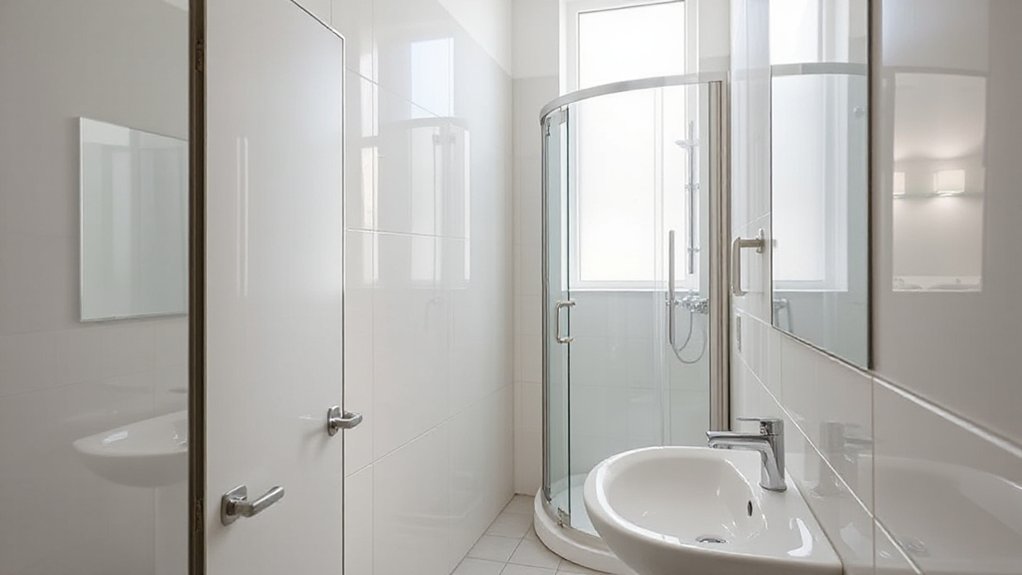
In small bathrooms, the right mirror setup brightens the space and creates visual depth you can feel.
Opt for larger, unobstructed surfaces that bounce light from fixtures and windows, making the area look more expansive.
Use placement and framing to add dimension without crowding, so every square inch reads as brighter and more open.
Brighten Small Bathrooms
- Decorative frame styles that stay light and minimal
- Mirror material options like glass with anti-fog coatings
- Strategic placement to maximize reflected light
- Proportionate sizes to avoid crowding walls
Keep it practical: a wall-mounted or medicine-cabinet mirror can add storage without stealing space.
Opt for reflective surfaces near windows, and choose cool whites or warm neutrals to enhance the sense of openness.
Create Visual Depth
Choose elongated or vertical shapes to draw the eye upward, creating height and airiness. For style, mix decorative frames with frameless panels to balance personality and minimalism; decorative frames add character without crowding the room.
Keep reflections clean by basic mirror maintenance—wipe daily, check seals, and address condensation promptly.
Consider pairing a large wall mirror with a smaller one opposite a light source to maximize brightness. Mount mirrors at eye level for a natural feel, and align edges with cabinetry to avoid visual chaos.
Together, these choices yield depth, brightness, and a more open bath.
Mirrors in Hallways: Creating Flow and Continuity
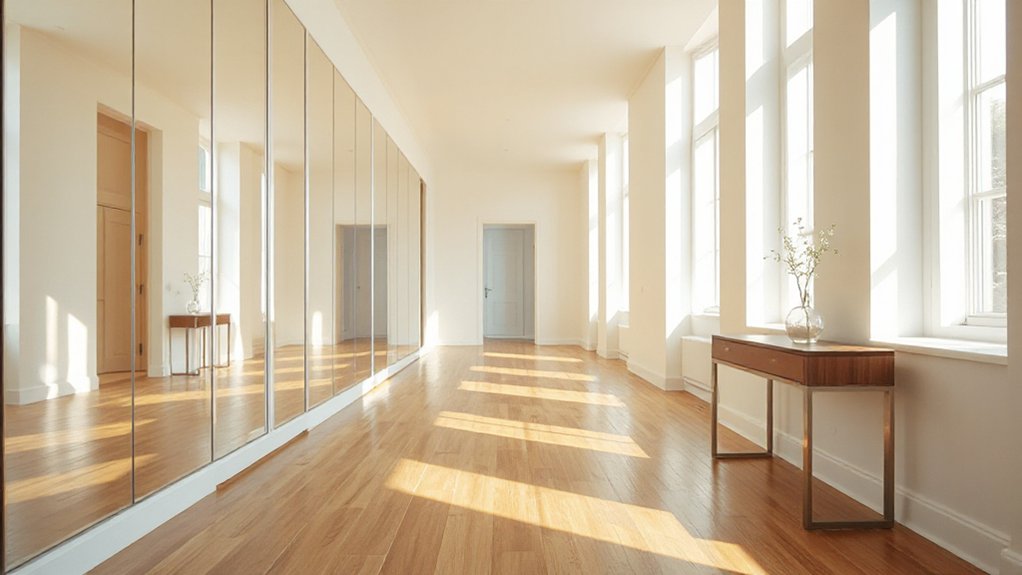
Mirrors in hallways play a pivotal role in guiding movement and visually widening passageways. You’ll use mirrors to create a sense of continuity, bounce light, and subtly extend depth between rooms.
Position mirrors opposite light sources or along walls with clean sightlines to avoid awkward gaps. Opt for slim profiles that don’t crowd narrow corridors, and choose placements that reflect architectural cues like doorways or artwork for cohesion.
- Decorative frame choices that stay unobtrusive and chic
- Strategic angles to maximize light and sightlines
- Mirror cleaning tips to keep reflections crisp
- Syncing mirrors with existing hardware and finishes
Keep scale in mind, and let reflections lead the flow from room to room without overdoing it.
Framing and Texture Choices That Amplify Spaciousness
Framing and texture choices set the stage for a room to feel bigger, so start with lightweight, low-profile frames and smooth, matte surfaces that reflect openness. You’ll want decorative framing that stays unobtrusive, letting the mirrors do the visual expansion work.
Opt for uniform or subtle grain across pieces to avoid busy contrasts. Texture contrasts should be deliberate: pair glossy with soft, tactile fabrics, and introduce a gentle juxtaposition between satin wall finishes and matte cabinetry.
Keep borders thin and clean to avoid breaking lines that cue spaciousness. Avoid heavy, ornate moldings that trap light. Use mirrors with simple borders to amplify depth without competing with art or furniture.
The goal: cohesion that enhances flow, not distraction.
Lighting Strategies That Pair With Mirrors (Natural and Artificial)
Natural and artificial lighting should work in tandem with mirrors to amplify space. You’ll maximize brightness and depth by aligning light sources with reflective surfaces, choosing warm tones for coziness and cool tones for crispness.
Position lamps and sconces to bounce light across walls, not straight into the glass, to reduce glare while extending the visual reach. Use daylight strategically via windows or skylights to create a perpetual glow that mirrors echo.
Consider decorative frame options that complement lighting and frame the reflected space, enhancing perceived size. Maintain reflective surfaces with simple mirror cleaning tips to keep clarity.
- Use soft, even lighting to avoid harsh reflections
- Place mirrors to capture natural daylight
- Pair lighting with decorative frames
- Maintain clean mirrors for maximum bounce
Common Mirror Mistakes That Shrink Rooms: And How to Avoid Them
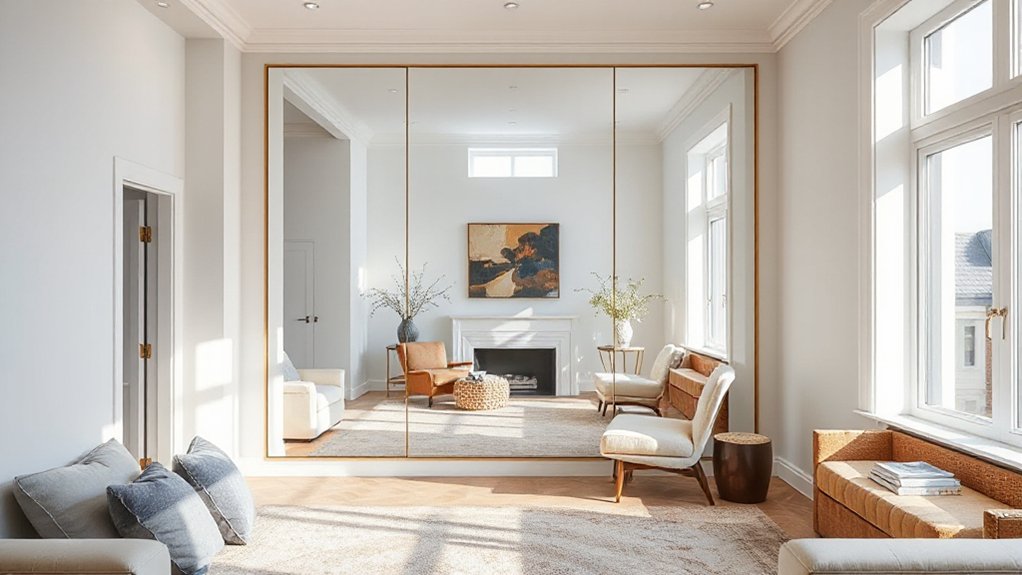
If you place mirrors without considering scale, you’ll create clutter that makes a room feel smaller. Watch for placement pitfalls, keep reflections balanced, and avoid oversized frames that overpower the space.
Getting proportions, lighting reflections, and alignment right today sets the stage for a room that truly reads as larger.
Mirror Placement Pitfalls
Are you unwittingly shrinking a room with the wrong mirror choices? Avoid placement mistakes that backfire. Position mirrors to reflect open space, not a dark corner or bulky furniture. Keep height and angle balanced to double light without doubling clutter. Use mirrors as strategic anchors near windows, but not directly opposite heavy accents that break rhythm. Remember decorative frame options and mirror material choices to fit your style while preventing visual chaos.
- Place mirrors away from cramped hallways and cluttered surfaces
- Face natural light sources to amplify brightness without glare
- Avoid aligning mirrors edge-to-edge with furniture for a floating feel
- Pair with simple frames to keep lines clean and room airy
Scale and Proportion Missteps
Scale and proportion mistakes top the list when mirrors overwhelm a room. You’ll shrink spaces when scale imbalance or proportion mismatch isn’t addressed. Large, oversized mirrors can flatten corners and steal wall real estate, making ceilings feel lower and traffic awkward.
Conversely, tiny mirrors spaced too densely create a busier surface that fragments the view, chopping long sightlines and reducing perceived depth. Aim for mirrors that visually hover near furniture scale and room width, not dominate it.
Consider one large focal mirror or a trio of appropriately sized panels that echo existing shapes. Keep frame weight in check with the room’s mood; heavy frames on light walls amplify clutter.
Test reflections from seating and entry points to preserve openness rather than compress it.
Lighting and Reflection Errors
Lighting can make or break how big a room feels, and the wrong mirror choices amplify shadows and glare rather than open up space. To avoid this, mind how light travels and where reflections land. Poorly placed mirrors create hot spots, echo harsh edges, or double clutter visually.
- Color coordination: pair mirror tones with room hues to minimize distracting reflections.
- Material contrasts: avoid shiny frames with busy walls; opt for matte or subtle edges to soften glare.
- Placement play: position mirrors to reflect ambient light, not direct lamps or windows.
- Scale sensitivity: choose proportionate frames that complement furniture, preventing crowded feels.
These tweaks keep reflections in harmony with the room, boosting perceived depth without adding chaos.
Quick, Step-by-Step Mirror Setup Checklist for a Room Makeover
To quickly refresh a room, follow this step-by-step mirror setup checklist and keep sight lines clean: measure wall space, decide on mirror size, choose frame style to match your decor, and plan placement for maximum light reflection.
Start with Decorative frames that echo your room’s vibe, then pick Mirror materials that suit humidity and cleaning needs. Mark eye-level height for practical viewing and avoid obstructions like furniture corners.
Align mirrors opposite windows to amplify natural light, but avoid direct glare. Test balance by placing a smaller piece near a focal seating area before committing to wall mounting.
Use level tools, anchor hardware, and dazzle-free lighting to enhance shine without clutter. Finish with a simple, cohesive arrangement that feels intentional rather than staged.
Frequently Asked Questions
How Do Mirrors Affect Perceived Ceiling Height in Tight Rooms?
Mirrors boost perceived ceiling height by creating an optical illusion of extended vertical space, enhancing spatial perception in tight rooms. You’ll notice a taller feel, as reflections draw the eye upward while keeping proportions practical, stylish, and trend-aware.
Can Multiple Small Mirrors Outperform a Single Large Mirror?
Can multiple small mirrors outperform a single large one? Yes, you leverage diverse Decor placement and Mirror shapes to bounce light from different angles, expanding depth. Place them strategically, avoid clutter, and keep a cohesive, trend-aware arrangement.
Do Frame Materials Influence Room Brightness or Only Style?
Yes, frame materials can influence brightness indirectly through reflectivity; choose light-colored, smooth frames. You’ll optimize mirror placement for maximum light bounce, and frame durability matters for long-term use.
Which Lighting Temperature Works Best With Mirrored Surfaces?
You’ll get the best lighting ambiance with a warm-to-neutral color temperature, around 2700–3500K, since mirrors reflect cozy tones. Aim for consistent lighting, avoid harsh whites, and balance fixtures to keep space bright without glare.
Are Mirrored Murals or Decals More Effective Than Glass Mirrors?
Mirrored murals can be as effective as glass mirrors, but reflective decals offer more flexibility and texture. Choose a Decorative wall that uses subtle, cohesive patterns to maximize light, depth, and practicality without overpowering the space.
Conclusion
Mirrors won’t just reflect light—they reflect possibility. When you choose shapes, placements, and framing with intention, small rooms feel expansive, airy, and cohesive. If you worry mirrors will clutter walls, remember: fewer, larger pieces beat a dozen tiny ones and keep lines clean. Embrace subtle textures and strategic lighting to amplify depth. Ready to try one bold mirror that changes everything? You’ll gain space, mood, and a sense of flow you can actually live in.