
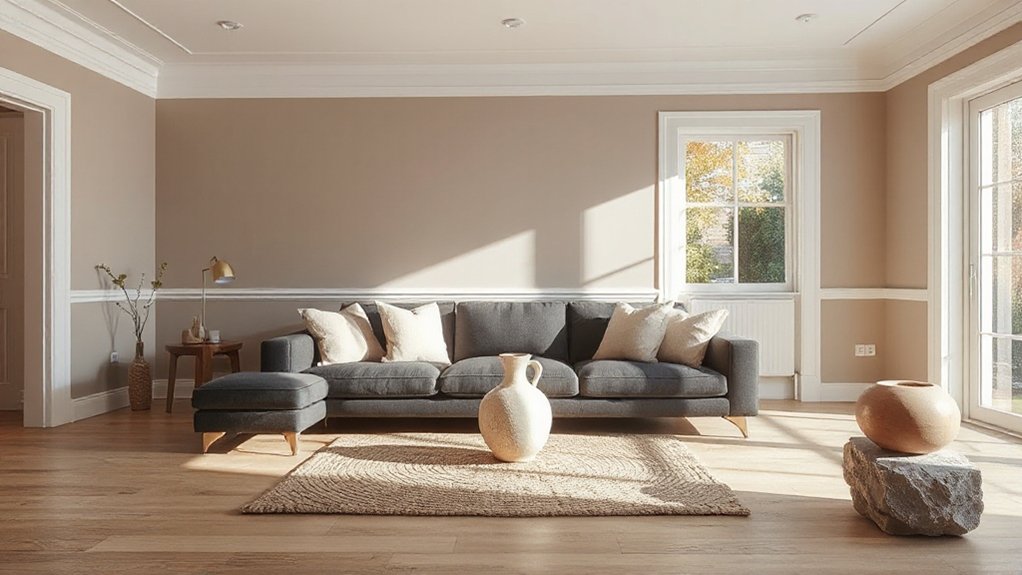
Neutral color palettes add value by delivering a versatile, timeless backdrop that appeals to buyers and appraisers, while visually expanding spaces through light and calm tones. Use warm or cool undertones to set the mood, layer lightness for depth, and pair matte or satin finishes for sophistication. Balance furniture, walls, and textiles to maintain cohesion, then add texture with natural materials and subtle accents. Budget-friendly upgrades and strategic lighting keep the look fresh and resale-ready—and there’s more to explore beyond this.
Why Neutrals Boost Home Value
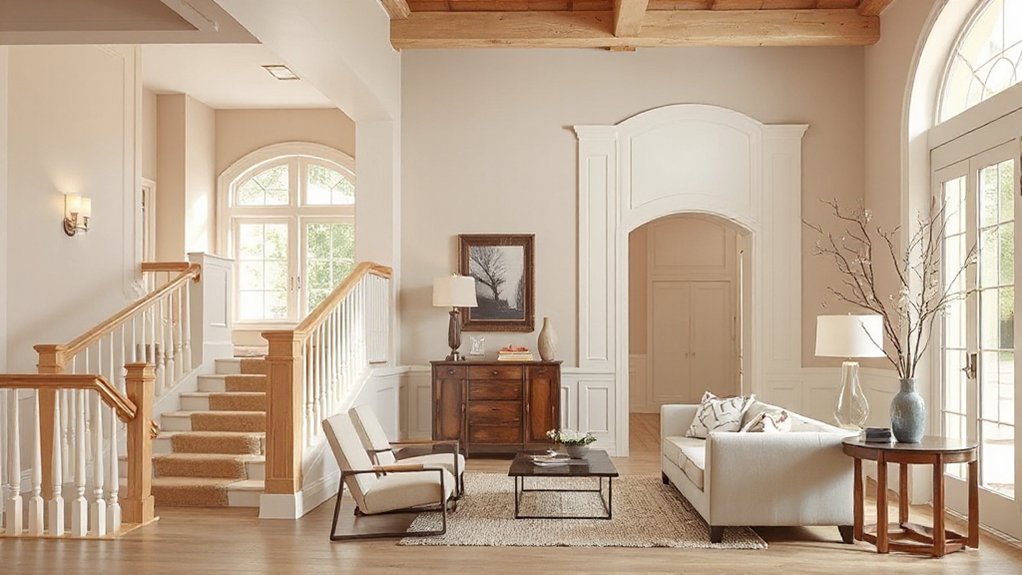
Neutral palettes appeal to a wide audience, which helps homes show better to buyers and appraisers alike. When you choose neutrals, you create a versatile backdrop that reduces subjective bias in assessments and comparisons.
The color psychology of these shades promotes calm, order, and perceived cleanliness, helping spaces feel more spacious and inviting. You’ll notice fewer personal distractions, so buyers imagine their own furniture and memories fitting in, boosting perceived value.
Neutral tones also enhance natural light, making rooms appear brighter and larger, a subtle but real price multiplier. The emotional impact is consistency: a cohesive palette signals care, quality, and longevity.
In short, neutrals streamline evaluations and appeal, supporting quicker offers and potentially higher appraisal outcomes.
Build a Versatile Neutral Base With Undertones and Light
To build a versatile neutral base, start with an undertone you actually notice in natural light. Then test how it shifts across rooms and furnishings.
Consider how lightness levels affect depth, and layer subtle hues to keep the palette cohesive without crowding the space.
Use the Undertone Selection Guide to pair colors that share warmth or coolness, and apply Lightness and Layering Effects to keep balance across surfaces.
Undertone Selection Guide
Choosing the right undertones turns a versatile neutral into a true foundation. You’ll harmonize walls, trim, and furnishings by selecting undertones that complement your space’s natural light. Start with warm versus cool baselines, then test subtle shifts in a small swatch before committing.
Consider how Color psychology informs mood: warm tones cozy a room, cool tones create calm, and balanced neutrals provide versatility for evolving décor. When evaluating undertones, look beyond hue name to undertone strength, saturation, and how it reads at different times of day.
Pick a paint finish that supports your goals—matte for soft texture, eggshell for low sheen, or satin for durability. Remember, the right undertone anchors, guides color choices, and elevates overall harmony.
Lightness and Layering Effects
Lightness levels and layering create depth without weight, giving your neutral base room to breathe. You’ll build versatility by pairing light tones with subtle undertones, then reinforcing depth through controlled progression.
Begin with a broad, pale canvas and test undertones in different lighting to observe color psychology responses—warmth, calm, or brightness shifts.
Apply paint in stages: base coat first, then midtones for dimension, and finally accents to sharpen edges and establish rhythm. Consider varying sheen modestly to enhance perception of lightness without muddying color.
Use strategic contrasts—soft whites with barely tinted beiges—to amplify architectural features and furniture silhouettes. Maintain consistency in undertones across rooms to preserve cohesion.
Paint application decisions, from roller to brush, should support seamless progression, creating a timeless, breathable neutral base.
Living-Room Neutrals: Furniture, Walls, and Textiles
You’ll balance furniture weight and texture with wall tones that support the room’s mood. Consider how wall color interacts with fabric and wood, shaping visual rhythm and coherence.
We’ll explore subtle threads that tie furniture, walls, and textiles into a unified neutral narrative.
Furniture Weight and Texture
In selecting living-room neutrals, balance weight and texture to create a cohesive yet inviting space; heavier furniture anchors the room while lighter textiles keep it breathable. You’ll achieve textural contrast by pairing dense woods or upholstered sofas with softer lighter linen drapes or cotton cushions, creating visual depth without overwhelming the palette.
Consider furniture weight distribution: place substantial pieces on anchors, and offset with slimmer accents to prevent a heavy, boxed look. Texture should progress from broad to fine as you move around the room, guiding the eye and enhancing comfort.
Limit shiny surfaces that can reflect too much light; opt for matte finishes that absorb and soften. This approach preserves calm, while subtle tactile shifts elevate sophistication.
Wall Color Synergy Threads
Ever wonder how wall color threads through living-room neutrals to unify furniture and textiles? You balance shades to create coherence, not matching, so each piece breathes.
Begin with wall tones that echo upholstery and rugs, then pull in textiles with subtle color lift. Consider color psychology: cooler walls calm seating areas; warmer walls energize gathering corners.
Use a dominant wall shade and pick furniture and textiles in complementary or analogous hues to reinforce mood without crowding the eye. Cultural symbolism can guide accents—earthy walls suggest grounded, timeless vibes, while refined neutrals convey modern sophistication.
Keep the palette restrained, allowing texture and form to speak. This synergy makes rooms feel intentional, expansive, and comfortable, enhancing value through thoughtful, cohesive composition.
Timeless Neutral Kitchen and Bath Palettes
In kitchens, these neutrals pair with natural materials—stone, timber, brass—to create a calm, inviting backdrop for daily routines.
For baths, a restrained palette enhances tranquility and perceived cleanliness, while allowing subtle contrast through textures and fixtures.
Accent wall ideas can introduce personality without disrupting harmony: choose a soft, slightly deeper shade or a matte tile feature that remains cohesive with the overall tone.
Consider color psychology when selecting undertones: warmth invites comfort; cool neutrals promote focus and clarity.
This approach sustains style, resale value, and timeless appeal.
Add Texture and Contrast Without Color Overload
Texture and contrast can elevate a neutral palette without tipping into color overload. You can achieve this with selective textural contrasts and deliberate material layering.
Pair smooth surfaces with tactile details—think a velvet chair against a linen sofa, or a lacquered cabinet beside a rough-hewn wood console. Introduce variation in sheen, from matte walls to a subtle gloss on architectural trim, to create depth without changing color.
Use natural fibers and artisanal finishes to add warmth, not brightness. Keep patterns restrained; a simple weave or ribbed fabric suffices.
Anchor spaces with a single, grounded element in a darker neutral, then repeat textures across rooms to create cohesion. The result feels sophisticated, calm, and richly dimensional.
Lighting Strategies That Elevate Neutral Schemes
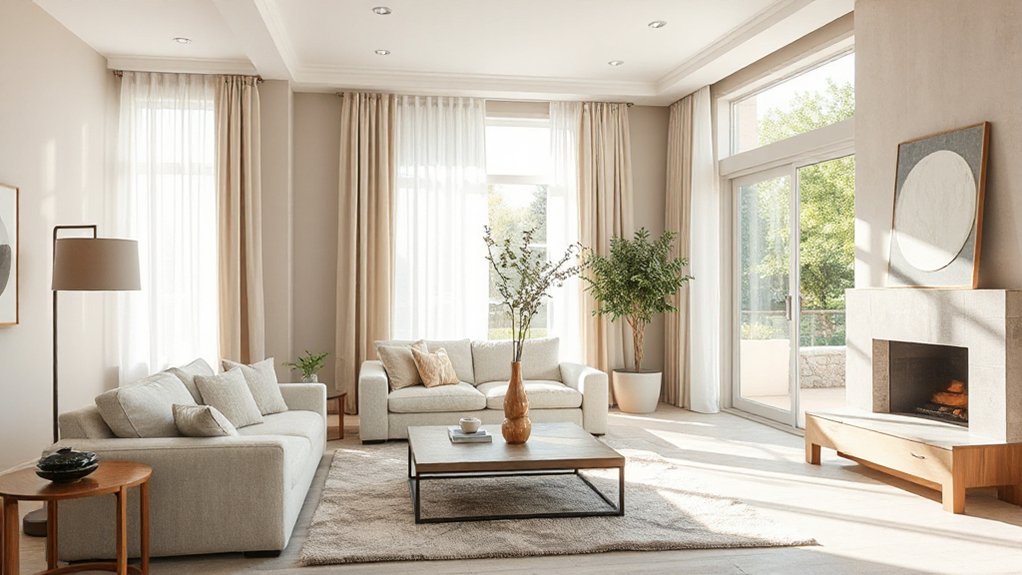
Lighting can elevate neutral schemes by adding depth, warmth, and focus without shifting the color palette. You’ll shape spaces with intentional illumination, emphasizing textures and architectural details. Use layered lighting to create subtle contrasts that read cohesive from day to night.
- Accent lighting focuses on key features—art, architectural curves, or materials—without overpowering the base neutrals, adding depth and a curated feel.
- Shadow play becomes a design tool when you position fixtures to carve light around edges, enhancing dimension and perceived tactile richness.
- Dimming, warm-toned fixtures unify mood across rooms, ensuring consistency while allowing you to adjust atmosphere for tasks, conversation, or relaxation.
Budget-Friendly Neutral Upgrades That Add Value
Even on a tight budget, you can boost your space’s value with thoughtful neutral upgrades that feel fresh and timeless. Start with eco-friendly finishes for walls and cabinets to reduce replacement costs while sustaining a modern look. Choose matte neutrals and warm undertones that hide wear and read timeless from curb appeal to living rooms.
Upgrade lighting with efficient LEDs in neutral shades to modernize without overhauling fixtures. Swap out hardware for streamlined, understated options in brushed nickel or black for an instant uplift.
Introduce artistic accent pieces—textured throws, sculptural vases, or framed monochrome art—to add personality without clutter. Prioritize quality over quantity; a few well-chosen pieces elevate spaces and reassure buyers.
Quick Fixes to Maintain Room Cohesion
To keep a space feeling cohesive, start with a unifying palette and consistent finishes across rooms. You’ll reinforce harmony by tying furniture, fabrics, and finishes to your chosen neutrals, then sprinkle deliberate accents to avoid sameness. Quick fixes keep momentum without a full redo.
1) Use accent accessories to echo a central hue across spaces, creating visual links between rooms.
2) Apply seasonal updates in small doses—pillows, throws, or art—so shifts feel intentional, not chaotic.
3) Maintain proportional repetition—repeat a single texture or tone in curtains, rugs, and cabinetry to anchor the look.
Frequently Asked Questions
How Do Neutrals Affect Resale Value in Small Spaces?
Yes, neutrals widen small spaces and boost resale; you’ll feel calmer, quicker. Use an accent wall for focal interest and guarantee color coordination across rooms to keep flow, scale, and buyer confidence.
Which Undertones Pair Best With Cool Neutrals?
Can you see how undertone harmony guides choice? Pair cool neutrals with warm accents to balance depth and brightness. You’ll maintain cohesion, while whites feel fresh and timeless. Use subtle warmth to elevate cool undertones, creating inviting contrast.
Can Textures Alone Boost Perceived Room Value?
Textures alone can boost perceived value, you’ll gain texture depth and visual warmth, creating richness that reads expensive. You’ll layer fabrics, surfaces, and finishes—carefully—so the room feels cohesive, inviting, and noticeably more valuable at a glance.
What’s the Ideal Ceiling Height Impact for Neutrals?
Ceiling height considerably shapes perception; higher ceilings amplify neutral impact, making spaces feel airy and valuable. If you raise ceiling height, the neutral palette reads more cohesive, expansive, and upscale, boosting rooms without increasing furniture cost.
How Often Should Neutral Schemes Be Refreshed to Stay Modern?
You should refresh neutral schemes every 2–3 years to stay modern. About 60% of homeowners report quicker appeal with timely updates. Consider color psychology and seasonal updates to keep spaces fresh, balanced, and visually engaging for guests.
Conclusion
Neutral schemes quietly boost value by feeling timeless and cohesive. You’ll keep options flexible with undertones and light, weaving texture and contrast without shouting color. Think durable surfaces, smart lighting, and layered textiles that breathe sophistication. Want a home that ages well and rents or sells faster? Maintain room cohesion with consistent neutrals across rooms, plus budget-friendly upgrades that feel premium. If you stay true to balance, your spaces will gain value—and a calm, lasting appeal.