
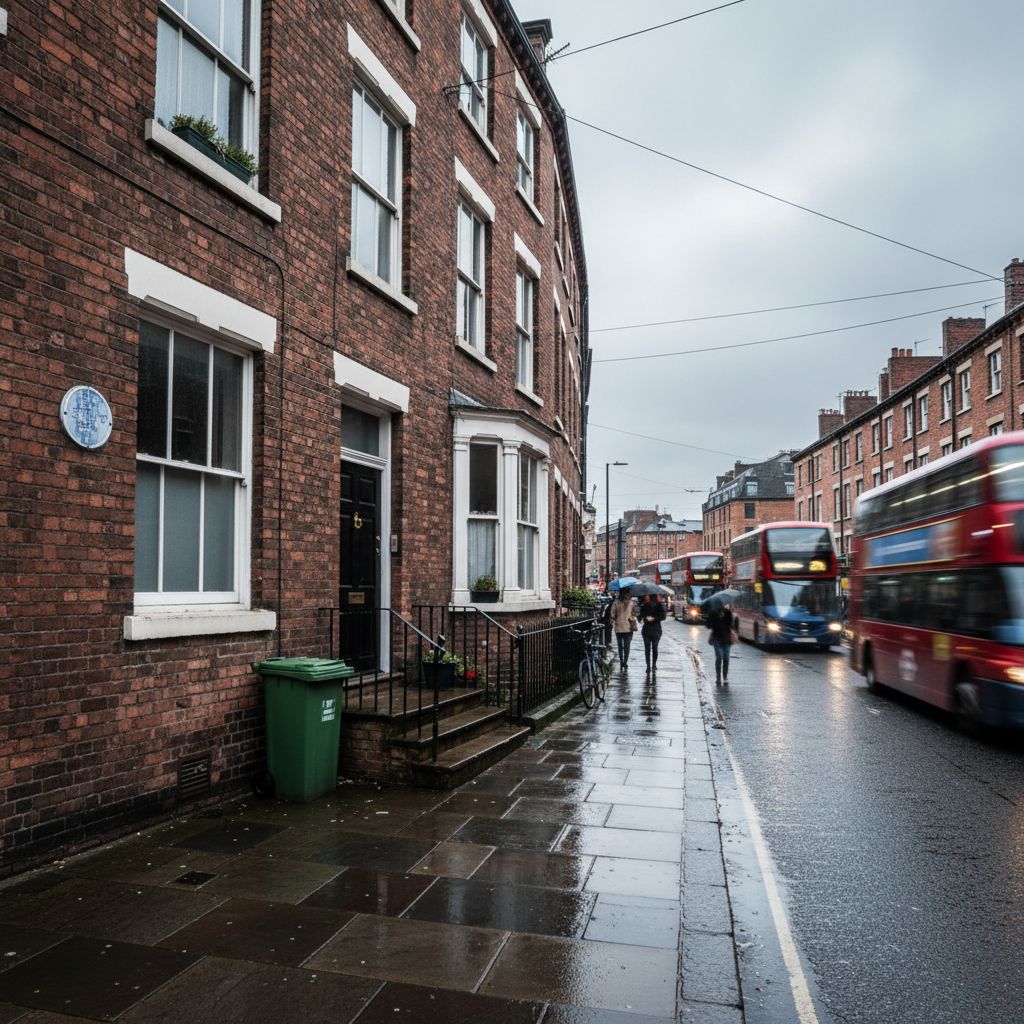
London is, by some distance, the most expensive rental market in the UK. Average rents across the capital hit record highs in 2024 and have remained elevated into 2026, driven by a persistent imbalance between rental supply and demand that shows little sign of resolving itself quickly. For renters — particularly those new to the city, those on modest incomes, or those simply trying to live within reasonable distance of work without spending two-thirds of their salary on rent — finding genuine value in the London market requires research, flexibility, and a willingness to look beyond the obvious.
The good news is that London’s rental market is far from uniform. The difference between the most and least expensive boroughs is dramatic — renting in Kensington and Chelsea costs, on average, more than three times what the same sized property costs in Barking and Dagenham. And crucially, affordability does not always mean sacrifice. Several of London’s most affordable rental boroughs offer strong transport links, improving amenities, and genuine community character that more expensive areas sometimes lack.
This guide covers the most affordable London boroughs to rent in 2026, with honest assessments of what you get for your money, what the trade-offs are, and which types of renter each borough suits best.
How London Rental Prices Work: What You Need to Know First
Before diving into individual boroughs, a few points of context that will help you use this guide effectively.
Rental prices vary significantly within boroughs. A borough average can mask enormous internal variation. Croydon, for example, contains both Purley — leafy, affluent, close to the Surrey commuter belt — and Thornton Heath, which offers some of the lowest rents in outer south London. The borough average is a starting point, not a destination.
Zone matters, but not as much as line. London’s fare zones are broadly correlated with distance from the centre, but the specific Tube or rail line serving an area matters as much as the zone number. A Zone 4 property on the fast Thameslink to City Thameslink (18 minutes) is a very different commuting proposition from a Zone 4 property requiring two changes on the Underground. Always test actual journey times before committing.
Rental prices move. The figures in this guide reflect the market as of early 2026. The London rental market has been particularly volatile over the past three years. Use these figures as relative benchmarks — the hierarchy of affordability is more stable than the absolute numbers.
Bills and council tax add meaningful cost. When comparing affordability between boroughs, factor in council tax. Rates vary significantly — some of London’s more affordable outer boroughs have relatively high council tax rates that partially offset the lower rent. Check the relevant local authority’s council tax schedule for the property band before signing.
Barking and Dagenham: London’s Most Affordable Rental Borough
Barking and Dagenham consistently records the lowest average rents of any London borough — a one-bedroom flat typically rents for £1,100–£1,350 per month, and a two-bedroom for £1,300–£1,600 per month, figures that are extraordinary by London standards. For context, the same property in inner east London would cost 60–80% more.
The borough sits in Zone 4 (Barking) and Zone 5 (Dagenham), served by the District line, the Overground, and c2c National Rail services into Fenchurch Street — one of the fastest City terminals in London, with journey times of around 20 minutes. The Elizabeth line stops at Barking, further improving connectivity to the City and Canary Wharf.
The honest trade-off is neighbourhood character. Barking and Dagenham lacks the café culture, independent restaurant scene, and street-level vibrancy of more expensive boroughs, and parts of the borough — particularly around Dagenham — feel distinctly suburban in character. However, the borough is a beneficiary of significant regeneration investment, particularly around the Barking Riverside development, which is bringing thousands of new homes, improved public realm, and new amenities to the riverside area.
Average rents (2026):
- One-bedroom flat: £1,100–£1,350 pcm
- Two-bedroom flat: £1,300–£1,600 pcm
- Three-bedroom house: £1,500–£1,900 pcm
Best suited to: Renters prioritising cost above all else, City and Canary Wharf workers seeking a short commute at a low price, families who need more space for their budget.
Bexley: Affordable Southeast London With a Suburban Feel
Bexley is one of the most consistently affordable rental boroughs in London, with average rents running 30–40% below the London average. A two-bedroom flat typically costs £1,300–£1,550 per month, and three-bedroom houses — genuinely spacious family accommodation — can be found for £1,500–£1,900 per month.
The borough is served by National Rail from stations including Bexleyheath, Welling, Sidcup, and Belvedere into London Bridge, Cannon Street, and Charing Cross, with journey times ranging from 25 to 45 minutes depending on the specific station and destination. There is no Tube provision, which is the primary reason values remain significantly lower than comparable boroughs with Underground access.
Bexley is notably green — Hall Place and Gardens, Danson Park, and the Thames foreshore at Erith offer genuine outdoor space — and the borough has relatively low crime rates compared with much of outer London. The high streets are functional rather than fashionable, and the overall character is solidly suburban. For renters who want space, safety, and manageable rents without requiring a vibrant urban scene on their doorstep, Bexley is genuinely underrated.
Average rents (2026):
- One-bedroom flat: £1,050–£1,300 pcm
- Two-bedroom flat: £1,300–£1,550 pcm
- Three-bedroom house: £1,500–£1,900 pcm
Best suited to: Families, renters working in the City or Canary Wharf via National Rail, those prioritising space and green space over urban amenity.
Croydon: South London’s Affordable Commuter Hub
Croydon is one of the most misunderstood boroughs in London. Its reputation — shaped largely by its 1960s and 1970s town centre architecture and a period of significant deprivation in parts — understates what it actually offers renters seeking value in south London in 2026.
The borough has some of the best transport connectivity of any outer London borough. Croydon town centre is served by Thameslink to London Bridge (17 minutes), Victoria (15 minutes), and City Thameslink, as well as the Overground and the Tramlink network, which connects efficiently to Wimbledon and several south London destinations. For renters who work in Victoria, the West End, or the City, the commute from central Croydon is faster and cheaper than from many inner south London boroughs at significantly higher rent.
Average rents for a one-bedroom flat in Croydon sit around £1,150–£1,400 per month, and two-bedroom properties around £1,400–£1,700. The variation within the borough is significant — South Croydon and Purley are substantially more expensive and characterful than the centre and north of the borough, but still offer good relative value. The town centre itself is in active regeneration, with substantial residential development underway.
Average rents (2026):
- One-bedroom flat: £1,150–£1,400 pcm
- Two-bedroom flat: £1,400–£1,700 pcm
- Three-bedroom house: £1,600–£2,000 pcm
Best suited to: Commuters to Victoria and the City, renters who want genuine space on a budget, those comfortable with a larger urban environment.
Havering: East London’s Quiet Value Proposition
Havering — covering Romford, Hornchurch, Upminster, and Rainham — sits at the eastern edge of Greater London and offers some of the most affordable rents in the city alongside surprisingly good transport connections. Upminster is the eastern terminus of the District line (Zone 6), and Romford is served by the Elizabeth line, providing fast access into the City and beyond.
Rents are low by London standards: a one-bedroom flat in Romford or Harold Wood typically costs £1,050–£1,300 per month, and a three-bedroom house £1,500–£1,900. The borough has a distinctly Essex character — particularly around Romford, which functions more as a large market town than a London suburb — and the lifestyle offer reflects that. For renters who grew up outside London, or who prioritise space and value over urban culture, Havering offers a genuinely liveable alternative to the pressures of inner-city renting.
The Elizabeth line has been transformative for the borough’s commuter appeal. Journey times from Harold Wood to Liverpool Street are around 25 minutes, making it competitive with many Zone 3 and 4 boroughs at significantly lower rent.
Average rents (2026):
- One-bedroom flat: £1,050–£1,300 pcm
- Two-bedroom flat: £1,250–£1,550 pcm
- Three-bedroom house: £1,500–£1,900 pcm
Best suited to: Families seeking space, Elizabeth line commuters, renters from Essex seeking an easy transition into Greater London, those who want a quieter pace of life.
Sutton: Affordable South London With Strong Schools
Sutton is often overlooked in conversations about affordable London boroughs, which is somewhat surprising given what it offers. Average rents are consistently among the lower third of London boroughs, the borough has some of the best state school provision in outer south London (including several well-regarded grammar schools), crime rates are low, and the residential streets — particularly in Cheam, Belmont, and Carshalton — are genuinely attractive.
Transport is the borough’s main weakness. There is no Tube provision; National Rail services from Sutton, Cheam, and Carshalton run to Victoria (25–35 minutes) and London Bridge, and the Tramlink connects through Wimbledon. Journey times are manageable rather than fast, and peak-hour services can be crowded. The trade-off is that this transport limitation is precisely what keeps rents lower than they might otherwise be.
A two-bedroom flat in Sutton typically rents for £1,350–£1,600 per month — meaningfully less than equivalent stock in Clapham, Brixton, or Crystal Palace, with a much quieter residential environment.
Average rents (2026):
- One-bedroom flat: £1,100–£1,350 pcm
- Two-bedroom flat: £1,350–£1,600 pcm
- Three-bedroom house: £1,600–£1,950 pcm
Best suited to: Families prioritising school quality, renters who work in Victoria or the West End, those seeking a quieter suburban lifestyle at affordable rents.
Lewisham: Southeast London’s Best Value With Regeneration Momentum
Lewisham occupies a distinctive position in the London rental market — it sits on the boundary between genuinely affordable and rapidly gentrifying, which means it currently offers both relative value and strong long-term momentum. Average rents are around 20–25% below the London average, but the borough contains some of London’s most energetically evolving neighbourhoods.
Deptford and New Cross — both within the borough — have attracted significant creative and cultural investment over the past decade. Honor Oak and Forest Hill are increasingly sought-after for their Victorian housing stock, independent food scenes, and green space. The DLR connects the northern part of the borough rapidly to Canary Wharf and the City, and National Rail from several stations provides access to London Bridge in 10–15 minutes.
A one-bedroom flat in Lewisham or New Cross typically costs £1,300–£1,550 per month, while Forest Hill and Honor Oak command a slight premium at £1,450–£1,700 for a two-bedroom. For renters who want urban character, improving amenity, and a plausible path to the social experience of inner south London at a lower price point, Lewisham is one of the most compelling options currently available.
Average rents (2026):
- One-bedroom flat: £1,300–£1,550 pcm
- Two-bedroom flat: £1,500–£1,800 pcm
- Three-bedroom house: £1,800–£2,200 pcm
Best suited to: Young professionals, creative sector workers, renters who want urban energy without inner London prices, Canary Wharf workers via the DLR.
Enfield: North London’s Affordable Outer Option
Enfield is the most affordable borough in north London by a clear margin, and it offers considerably more than its price point suggests. The borough stretches from Edmonton in the south — one of outer London’s more challenged areas economically — to Enfield Town and the semi-rural villages of Forty Hill and Bulls Cross in the north, offering significant variation in character and environment within a single borough.
Transport connections are solid: the Victoria line serves Seven Sisters on the borough boundary, the Overground runs through Edmonton Green, and National Rail from Enfield Town and Enfield Chase serves Liverpool Street and Moorgate in around 30–40 minutes. The A10 corridor is well-served by bus routes for those who work in north or central London.
Average rents for a two-bedroom flat in Enfield Town or Palmers Green sit around £1,350–£1,650 per month — competitive with Croydon and significantly below equivalent outer boroughs in north west London. Edmonton and Ponders End offer even lower rents at the entry level, though neighbourhood quality varies more noticeably.
Average rents (2026):
- One-bedroom flat: £1,150–£1,450 pcm
- Two-bedroom flat: £1,350–£1,650 pcm
- Three-bedroom house: £1,600–£2,000 pcm
Best suited to: Families, renters working in north or central London, those seeking more space at lower cost, anyone who values green space and access to the Lee Valley Regional Park.
Waltham Forest: The Affordable Zone 3 Outlier
Waltham Forest deserves a special mention because it represents one of the few remaining Zone 3 boroughs where rents have not yet fully caught up with the wider improvements the area has undergone. The borough was London Borough of Culture in 2019, a designation that catalysed significant investment in public realm and cultural infrastructure — and the benefits are visible throughout Walthamstow in particular.
Walthamstow Village is one of London’s more charming urban neighbourhoods, with a genuine independent food and drink scene centred on Orford Road and the Nag’s Head area. The market on Walthamstow High Street is one of Europe’s longest street markets. The Victoria line from Walthamstow Central provides a direct 20-minute service to Oxford Circus — commuting credentials that rival boroughs priced considerably higher.
A two-bedroom flat in Walthamstow currently rents for around £1,600–£1,950 per month — cheaper than Hackney or Islington for broadly equivalent transport access and an increasingly comparable lifestyle offer. The gap is narrowing, but for renters who want the energy of east London with marginally more breathing room in the budget, Waltham Forest remains a genuinely smart choice.
Average rents (2026):
- One-bedroom flat: £1,300–£1,600 pcm
- Two-bedroom flat: £1,600–£1,950 pcm
- Three-bedroom house: £1,900–£2,300 pcm
Best suited to: Young professionals, east London enthusiasts priced out of Hackney, Victoria line commuters, renters who value neighbourhood character alongside affordability.
Practical Tips for Renting Affordably in London
Finding an affordable rental in London requires more than just identifying a cheaper borough — it requires understanding how to navigate the market effectively.
Move fast. Affordable rental properties in London — particularly well-presented ones in good locations — are taken within days of listing, and often within hours. Have your documents ready (proof of income, references, ID) before you start viewing, so you can make a decision immediately if the right property comes up.
Look at less obvious streets. In every borough, there are streets and sub-areas that offer better value than the headline area. The road behind the popular high street, the less photogenic but equally well-connected station area, the part of the borough that hasn’t been featured in a Sunday supplement yet. Local knowledge and repeated walking of target areas pays dividends.
Consider house shares. In London’s rental market, a room in a shared house in an inner borough often costs less than a studio flat in an outer borough, with better transport and more social infrastructure. For younger renters particularly, the shared house model remains the most cost-effective way to live centrally.
Negotiate. London renters rarely negotiate, which means those who do have an advantage. A property that has been listed for more than two weeks, or that relisted after a previous tenant fell through, is a negotiating opportunity. A polite, direct offer — backed by evidence of your reliability as a tenant — is always worth making.
Factor in the full cost. Rent is not the only monthly outgoing. Council tax, utility bills, broadband, and transport costs all vary by location. A property that saves you £150 per month in rent but costs you £80 more in council tax and £60 more in transport is not actually cheaper — it’s about the same. Model the total monthly cost for any shortlisted property before making your decision.
London’s rental market is demanding, but it rewards renters who approach it systematically. The boroughs in this guide offer genuine value in 2026 — understanding why they’re affordable, and whether the trade-offs are acceptable for your circumstances, is the work that separates a smart rental decision from an expensive mistake.