
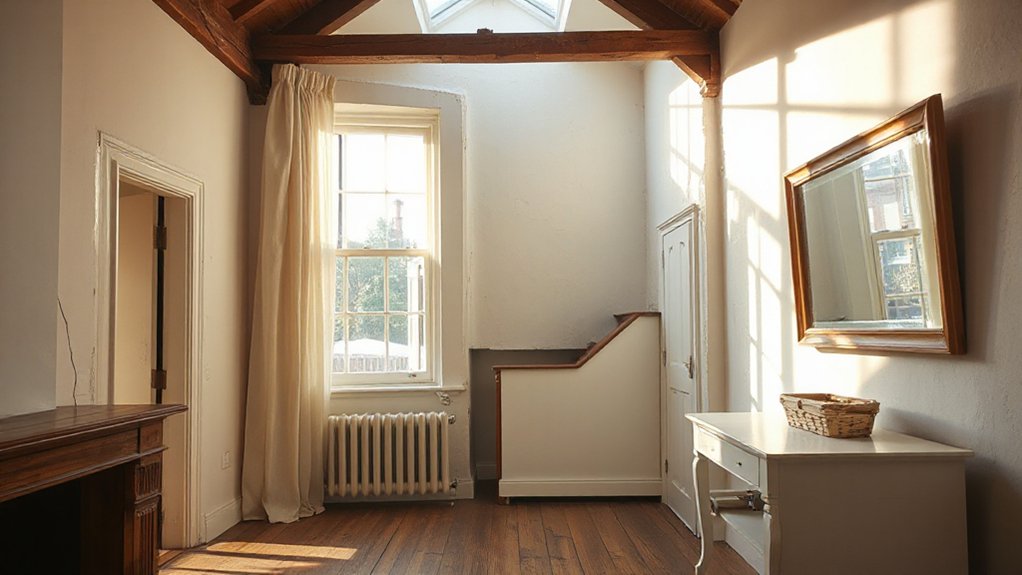
To improve natural light in older UK properties, start with an audit to map light sources and shadows from multiple angles, noting window orientation, obstructions, and wall finishes. Then tweak layouts to open sightlines and keep doors wide enough for beam penetration. Use reflective surfaces and well-placed mirrors to bounce daylight without glare, and upgrade windows with period-friendly, high-performance glazing. Seasonal shading and light-colored interiors boost brightness, while sustainable materials protect character—more tips await as you continue.
Audit Your Space to Map Light Sources and Shadows
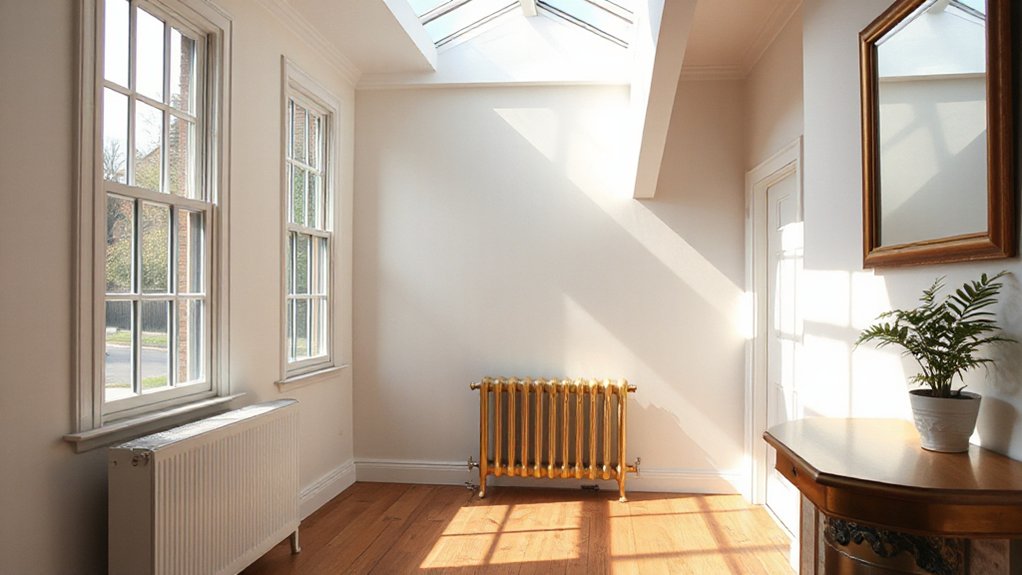
Begin by surveying each room from multiple vantage points at different times of day to map how light travels and where shadows form. You’ll record window orientations, sill heights, and obstructions that block or bounce daylight.
Note wall colors, finishes, and materials that reflect or absorb light, shaping each space’s brightness. Create a simple map showing window-to-ceiling relationships and dominant shadow zones across morning, noon, and late afternoon.
Identify sources of Artificial illumination you’ll need to layer thoughtfully, and flag potential Light pollution issues when exterior lights intrude or glare leaks indoors.
Use this audit to prioritize sustainable tweaks—solar tubes, reflective surfaces, and shading strategies—so you reclaim warmth without waste. Your thorough, practical catalog builds belonging through brighter, calmer rooms.
Choose Daylight-Friendly Paints for Period Interiors
To brighten period interiors without compromising their character, choose daylight-friendly paints that reflect light and enhance warmth. Start with light, neutral bases in matte or eggshell finishes that minimize glare while revealing texture in plaster and timber.
Opt for low-VOC formulations to protect air quality and reduce odors during renovations. Build your color palettes around soft whites, warm beiges, and pale greys that mimic natural daylight shifts across the day.
Introduce subtle undertones—cream, blush, or greige—to avoid dead zones near windows. Test swatches on large wall areas at different times to confirm how they read under varying light.
Finish with durable, washable paints in high-traffic zones. Color palettes and paint finishes should reinforce room rhythm, connection, and a sustainable, lived-in feel.
Layout Tweaks That Invite More Daylight
Small layout adjustments can release daylight without major renovations. You start by rethinking room flow: place key living spaces along the sunniest walls, and open sightlines to kitchens or dining rooms. Use partial partitions or low bookcases instead of full walls to keep air moving and daylight cascading across surfaces.
Consider widening doorways or removing unused hinges to reduce shadowed corners, enabling more beam penetration. Rooftop and attic access should stay clear, avoiding obstructive fixtures that trap light.
Garden landscaping can extend brightness from exterior to interior; position plants to frame windows without blocking them. Roofing modifications, like lighter-colored, reflective sheeting or flush skylight considerations, can minimize heat gain while inviting brighter angles.
Prioritize durable materials, easy maintenance, and a sense of shared, welcoming space.
Reflective Surfaces and Mirrors: Smart Placements
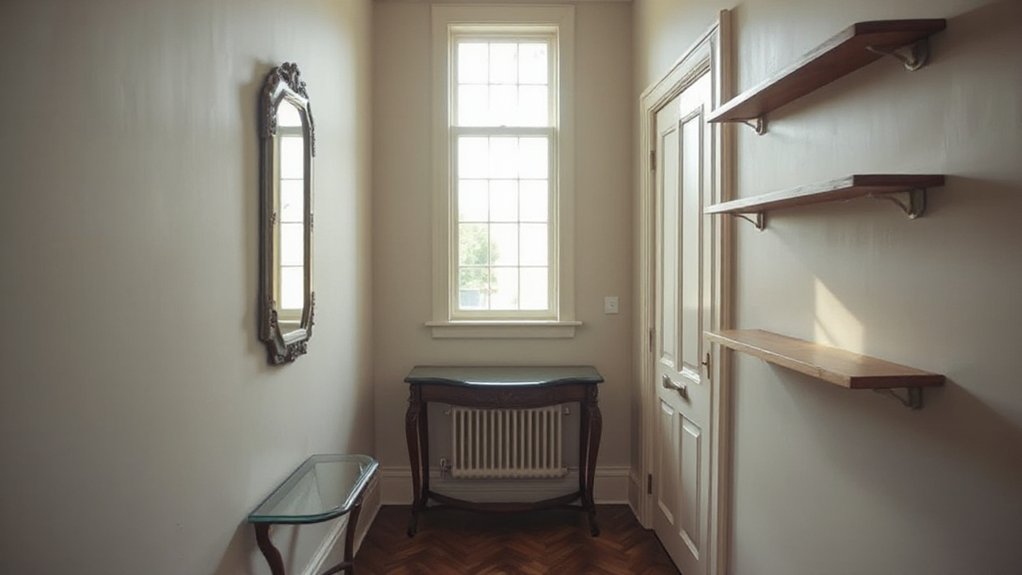
Placing mirrors where they catch and bounce natural light is key; start with eye-level angles that reflect daylight deeper into the room without creating glare.
Use surfaces with high reflectivity (at least 70–80%) and pair them with neutral, low-emission finishes to keep this sustainable and easy to maintain.
Consider patterns that distribute light evenly across walls and into darker corners, such as vertical mirrors opposite windows or multi-panel arrangements that avoid clutter.
Mirror Placement Patterns
Mirror placement matters because reflections can double the perceived light and brighten cramped rooms without structural work. You’ll maximize brightness by positioning mirrors opposite windows to bounce daylight deeper into the space, not facing clutter or doors that interrupt flow.
Use vertical mirrors to elongate low ceilings and horizontal forms to widen narrow walls, aligning with natural sightlines. Keep a deliberate rhythm: mirror groupings should relate to furniture arrangement, creating balanced focal points without crowding.
Place a mirror near art placement to reflect color and texture, reinforcing a cohesive, welcoming ambiance. Choose frames from sustainable materials and avoid glare by selecting diffused surfaces or placing mirrors at a slight angle.
This mindful pattern supports energy efficiency, comfort, and a sense of belonging in your home.
Surface Reflectivity Tips
To maximize daylight without adding clutter, choose high-reflectivity surfaces and smart placements that bounce light deeper into rooms. Start with surface finishes that emphasize brightness—glossy whites, pale neutrals, and lightly textured shards that don’t absorb glare.
Opt for reflectivity coatings on interior glass and mirrored panels to double daylight without extra lamps. Place mirrors opposite windows to extend the sun’s reach, but avoid aligned seams that create harsh hotspots.
In kitchens and hallways, use framed, unobtrusive reflective backsplashes and cabinet doors with durable, wipe-clean finishes. Consider sustainable materials like low-VOC paints and recycled-metal accents that maintain sheen over years.
Test reflections at different times of day, adjusting angles to preserve warm, inclusive ambience for every occupant.
Windows That Brighten Without Breaking Character
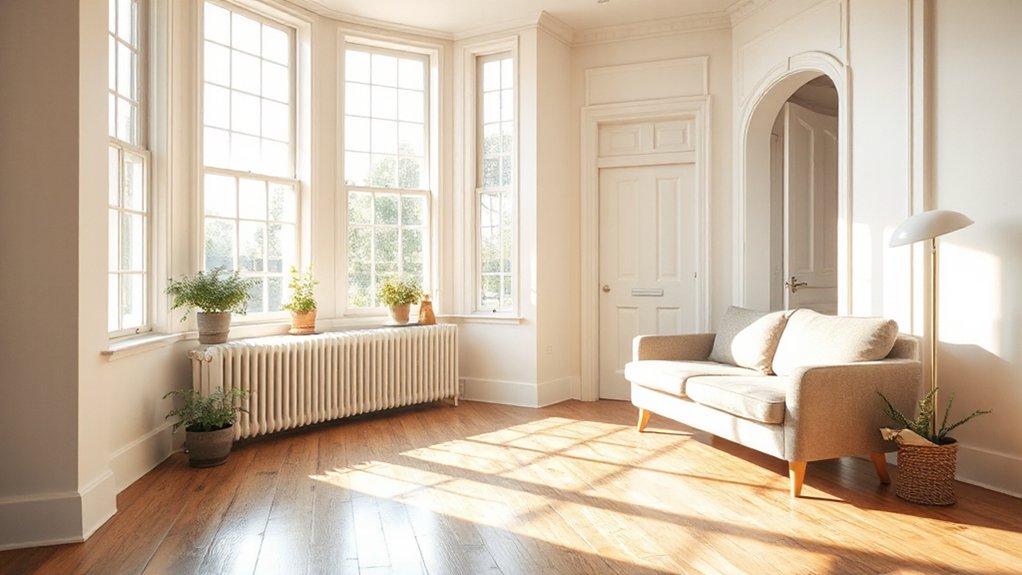
When upgrading or reconfiguring, choose options that preserve the property’s period look while maximizing daylight: slim-profile uPVC or timber frames with multi-part glazing, high-performance double or triple glazing, and discreet, low-profile sills.
You’ll target window style that speaks to era and place, not trends, while letting light flood rooms. Opt for glass treatments that manage glare and heat gain without dulling views—self-cleaning coatings, low-emissivity surfaces, and solar control where needed.
Consider casements, sashes, or improved dormer designs that maintain rhythm and proportion. Prioritize airtight seals and warm-edge spacers to reduce drafts and energy loss.
Choose hardware and bead details that blend with existing finishes. The result is brighter spaces, lower bills, and a confident sense of belonging to your home’s character.
Layer Lighting for Daytime and Dusk
Layer daylight, dusk, and reflective surfaces work together to balance brightness across the day. You’ll layer daylight with strategic fixtures, use warm dusk tones, and deploy light-bouncing surfaces to keep interiors legible without extra energy.
This approach keeps sustainability front and center while preserving character in older UK properties.
Layer Daylight Layers
Layer daylight is built from a practical mix of windows, blinds, and reflective surfaces that work together across daytime and dusk.
You optimize this system by prioritizing window placement that accepts morning and afternoon sun while minimizing heat gain.
Use light shelves and strategically angled blinds to shade glare without blocking ambient light, preserving Sunlight diffusion.
Choose reflective paints or plaster to bounce daylight deeper into rooms, reducing the need for artificial lighting.
For modestly sized spaces, pair low-profile curtains with sheer panels to soften harsh rays while preserving visibility.
Maintain glazing with clear, low-emissivity coatings to curb heat transfer.
This approach supports energy efficiency and a sense of belonging, inviting you to navigate cycles with confidence and sustainable calm, from bright mornings to quiet afternoons.
Shadow minimization.
Dusk Light Strategies
Dusk light requires a deliberate shift from daytime tactics: use warm, low-angle light to reduce artificial cooling needs while preserving visibility. You’ll time exterior lights to warm-toned LEDs, set between 2700–3000K, and aim for a welcoming glow that complements existing daylight.
Layer interior illumination with dimmable fixtures, prioritizing task lighting where you read or cook, and allow ambient glow to spill softly across walls. Use light-colored curtains or blinds that diffuse without blocking, letting evening shadows weave through rooms.
Choose lampshades and reflectors that bounce light toward ceilings, amplifying perceived space. Align with sustainable practices: energy-efficient sources, timers, and natural ventilation when possible.
This approach fosters Dusk ambiance and shared comfort, inviting you to belong as dusk settles.
Reflective Surface Tactics
Could you maximize daylight and dusk glow by using reflective surfaces that bounce light where you need it most? Start with strategic placement: mirror panels opposite windows amplify morning sun, while high-gloss furniture edges direct late-day brightness into corners.
Choose Reflective decor that matches room tones to avoid glare while boosting perceived space. Use surface coatings designed for low-VOC sustainability to guarantee indoor air quality remains a priority.
Consider light-colored, satin finishes on walls or a glass-tiled backsplash to scatter daylight upward and outward, widening the ambient glow.
Keep maintenance simple: wipe down weekly, avoid fingerprints, and recoat every few years to maintain reflectivity.
This approach fosters belonging by inviting shared, brighter spaces that feel welcoming and energetically efficient.
Budget-Friendly Window Upgrades for Historic Homes
For historic homes, budget-friendly window upgrades can dramatically boost natural light without compromising character. You’ll prioritize simple, reversible changes that respect history while improving efficiency.
Start with replacing heavy drapes and blackout linings with light, breathable fabrics and sheer shades that diffuse daylight without blocking it. Consider upgrading glazing in existing frames using low-emissivity panes or secondary glazing to cut heat loss while preserving Historic window styles and appearance.
Use exterior and interior sealant upgrades to reduce drafts around sash gaps. Choose sash lifts or rope-and-weight improvements that preserve traditional operation.
Opt for energy-efficient, low-VOC caulk and putty to extend lifespan. This approach supports architectural preservation, reduces energy use, and keeps you feeling rooted in your community.
Seasonal Strategies to Maximize Winter Light
To maximize winter light, start by prioritizing layout and timing: position seating and workspaces where they catch the strongest sun rays from south- or west-facing panes and set blinds to lift to the top of the window when the sun is low.
In this season, plan light around daily sun patterns and use reflective surfaces to bounce daylight deeper. Keep curtains light and breathable, swapping heavy fabrics for translucent linings that preserve warmth without dulling brightness.
Integrate artificial illumination as a supplement, choosing warm tones that mimic daylight and reduce contrast fatigue.
Employ seasonal shading that adapts: external screens or adjustable louvers at peak sun, interior baffles to avoid glare, and door passages that optimize heat retention while welcoming light.
This practical approach nurtures belonging through bright, efficient spaces.
When to Hire Experts and What to Ask
If you’ve tried DIY tweaks but still see inconsistent daylight or uneven warmth, it’s time to bring in professionals. Hire specialists when daylight gaps persist after targeted alterations, or when addressing structural concerns that affect light flow.
Look for practitioners with a track record in historical preservation and compatible materials, so your home’s character stays intact. Ask about project scope, timelines, and how they protect existing fabric while improving natural light.
Confirm a detailed assessment of original window openings, lintels, and plaster, and how alterations might impact thermal performance and energy use. Request references and private inspections of similar projects.
Make certain the team demonstrates clear cost breakdowns, risk management plans, and a commitment to sustainability, safety, and preserving your home’s sense of belonging.
Conclusion: Practical Checklist for Brighter Older UK Homes
Start with a clean interior layout that prioritizes sightlines and daylight flow, rearranging furniture and removing obstructions to maximize natural illumination.
Fine-tune window treatments to balance glare control with daylight transmission, using light fabrics, reflective shades, and layered coverings.
Finally, maximize exterior light by pruning overhanging branches, choosing high-reflectivity paint for facades, and evaluating unobstructed roof or wall-mounted solar options.
Interior Layout Adjustments
When planning interior changes in a period home, start by prioritizing flow and light. You’ll reconfigure spaces to maximise natural bursts, not clutter. Prioritise furniture arrangement that keeps sightlines open toward windows, avoiding obstructive bulk and deep alcoves.
Choose low-slung pieces near seating zones to preserve vertical light and avoid casting unwelcome shadows on walls. Use a coherent Colour scheme that reflects natural daylight—cool neutrals with warm accents—to amplify brightness without high contrast.
Keep door openings clear to improve circulation and encourage subtle cross-ventilation. Integrate multi-functional furniture to reduce clutter while maintaining flexibility for seasonal changes in lighting.
Plan storage that’s accessible yet discreet, so walls stay visually expansive and inviting, reinforcing a sense of belonging in your brighter, more breathable home.
Window Treatment Optimisation
Could you cut glare, boost daylight, and preserve period character all at once? You can achieve this with thoughtful window treatments that respect scale, proportion, and craftsmanship.
Choose curtain materials with light, airy drapes in breathable fabrics like linen blends, or sheer cottons that diffuse light without wall-to-wall opacity. Pair with discreet tracks and tracking that won’t intrude on mouldings or cornices, preserving architectural details.
For modern comfort, plan blinds installation that complements period hardware—timber slats or woven woods offer warmth while keeping lines clean.
Opt for soft shadows rather than bold contrasts; keep color palettes light, neutral, or warm whites to amplify daylight.
Prioritise sustainability: local sourcing, natural fibers, and low-VOC finishes. This approach creates a cohesive, inviting space that feels timeless and inclusive.
Exterior Light Maximisation
How can you maximise exterior light without compromising the character of a period home? Start with exterior landscaping that channels daylight: reflectors, pale gravel, and low-fruit trees keep shading minimal while preserving charm.
Prioritise south- and east-facing facets for wall-wash lighting from the outdoors, using clean-edged paths and light-coloured render to bounce brightness inward.
Consider window reveals and eaves that are slim enough to maintain proportion, yet designed for seasonal sun angles.
Integrate solar panel integration subtly on non-visible roof zones or discreet uprights, ensuring they don’t crowd historic silhouettes.
Choose durable, non-reflective coatings to reduce glare, and align shutters or screens for flexible daylight control.
Pair these measures with efficient glazing upgrades and mindful landscape pruning to sustain a welcoming, resourceful home.
Frequently Asked Questions
How Can I Measure Current Natural Light Levels Accurately at Home?
To measure current natural light accurately at home, use light meters and daylight sensors, read lux values, map daily ranges, and repeat under different conditions; log data, compare with standards, and adjust layouts for sustainable, inclusive lighting.
What Heritage Restrictions Affect Installing New Glazing or Skylights?
In your case, a historic house example shows heritage guidelines restrict altering elevations; you’ll need planning permissions before fitting glazing or skylights. Follow heritage guidelines, apply early, document benefits for sustainability, and secure approvals to belong within local conservation aims.
Are There Cost-Effective Lighting Plans That Don’T Alter Period Charm?
Yes, you can: choose cost-effective lighting plans that preserve period charm, using layered Lighting aesthetics and mood enhancement techniques. You’ll prioritize energy efficiency, sustainable fixtures, and smart controls, creating a cozy, belonging-minded atmosphere without intrusive alterations.
Can Interior Mirrors Really Increase Daylight Without Distortion?
Yes, interior mirrors can help if you optimize mirror placement and maximize light reflection. Position mirrors opposite windows, avoid distortion, and use glare-minimizing frames. This sustainable, practical setup fosters belonging while brightening spaces.
Which Season Offers Best Results for Light Renovations in the UK?
Seasonal sunlight shines best in spring, you’ll see clearer results. In practice, plan renovations when daylight levels are high, measure light using a light meter, adjust layouts accordingly, and prioritize sustainability for a welcoming, belonging-rich space.
Conclusion
You can brighten an older UK home without losing its character by auditing light sources, choosing daylight-friendly paints, and arranging furniture to invite reflections from mirrors and light-colored surfaces. A striking stat helps: homes with strategic interior light can cut artificial lighting needs by up to 40% in winter. Start with a practical checklist, then tweak layout, finishes, and window upgrades gradually. Prioritize sustainable choices, like low-VOC paints and energy-efficient glazing, to preserve charm and reduce consumption.