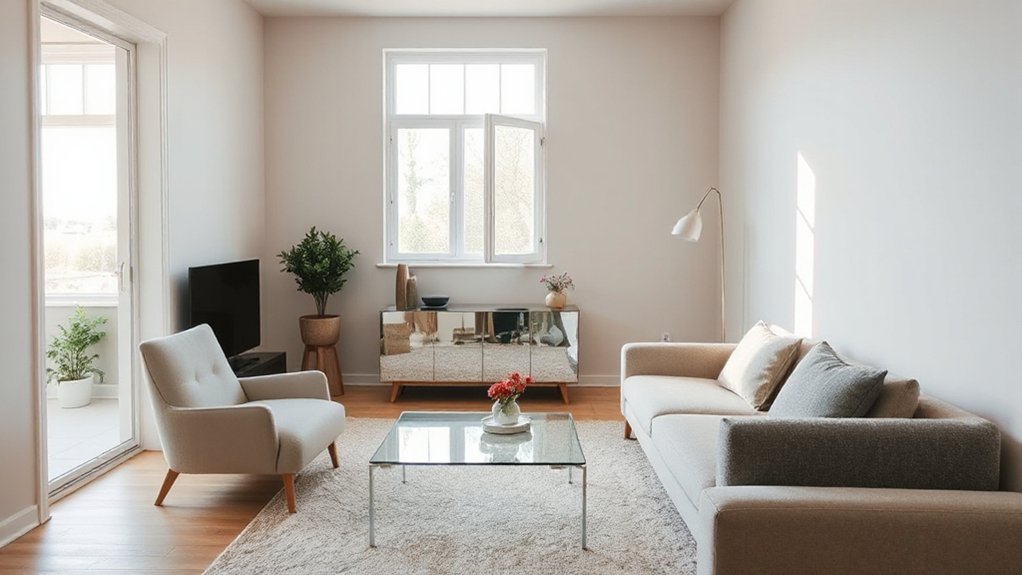
Like a whispered legend of open-plan apartments, you can reclaim space without a full redo. Start with a simple layout plan that keeps traffic clear, push heavy furniture to walls, and choose multi-functional pieces. Add light, neutral tones and layered lighting to brighten corners, then mirror strategically to extend sightlines. Keep clutter low and storage smart, and you’ll feel the difference sooner than you think—but there’s more to tune, adjust, and discover as you go.
Reclaim Floor Space With a Simple Layout Plan
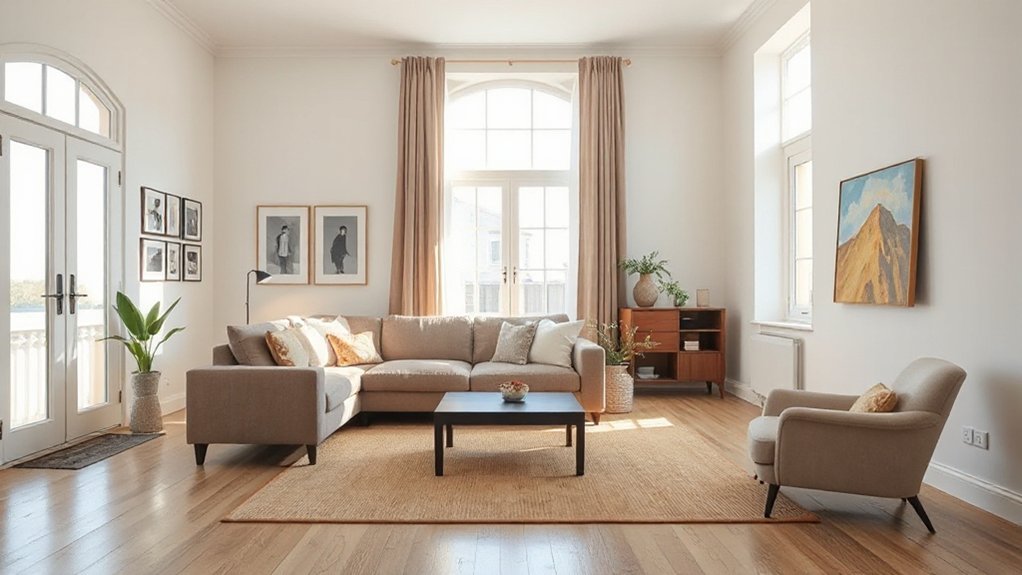
Start by mapping your space and prioritizing flow over clutter. You’ll sketch a simple floor layout that centers everyday use, not unused corners. Begin with clear zones: living, dining, and work, each sized to your real habits.
Push heavy furniture against walls to free central avenues, boosting movement and perceived space. Choose multifunctional pieces—sofa beds, nesting tables, or wall-mounted desks—that reduce underused surface area.
Measure door swings and window access to avoid bottlenecks; guarantee comfortable paths between zones. Embrace vertical storage and keep surfaces uncluttered to reinforce order.
For space optimization, place the primary seating to face a focal point, not a crowded wall. Revisit the map weekly, adjusting as routines evolve, and you’ll experience a calmer, more spacious flat with intentional flow.
Create Airiness Through Color and Lighting
Light colors open up spaces and make ceilings feel higher, so start with a pale palette and keep contrast minimal.
Use layered lighting—ambient, task, and accent—to sculpt depth without clutter.
Aim for bright spaces that feel calm and cohesive, guiding the eye with intentional color and light.
Light Colors, Bright Spaces
Could brighter colors and smarter lighting make your tiny space feel instantly larger? Yes, and you’ll notice the impact from day one.
Choose light, cool tones as your base—soft whites, pale blues, and warm neutrals—that reflect rather than absorb light.
Pair these with deliberate ambient lighting: diffuse ceiling fixtures, floor lamps, and under-cabinet glows that wash walls evenly without harsh shadows.
Color psychology suggests lighter hues lift perception of space and mood, while balanced lighting prevents dull corners.
Avoid heavy contrast; keep color transitions smooth across rooms to maintain flow.
Use mirrors or glossy surfaces sparingly to amplify light without clutter.
Plan a simple palette and steady lighting plan, then enjoy a brighter, more open feel with minimal effort.
Layered Lighting Effects
Layered lighting lets you carve airiness into a tiny space by combining color warmth with strategic illumination. You’ll pair ambient glow from diffuse sources with focused task lights, so every corner feels open, not boxed in.
Start by washing walls with soft, warm tones that reflect light upward and outward, avoiding harsh shadows. Layered illumination means using multiple, dimmable sources: a ceiling light for general brightness, table lamps for intimacy, and under-cabinet strips for depth.
Keep cords hidden and adjust brightness to suit activities, from morning prep to evening reading. This approach creates perception of height and space, while avoiding glare.
With layered illumination, you gain versatility, comfort, and a calm, expansive feel—without major renovations.
Use Mirrors to Visually Expand Your Space
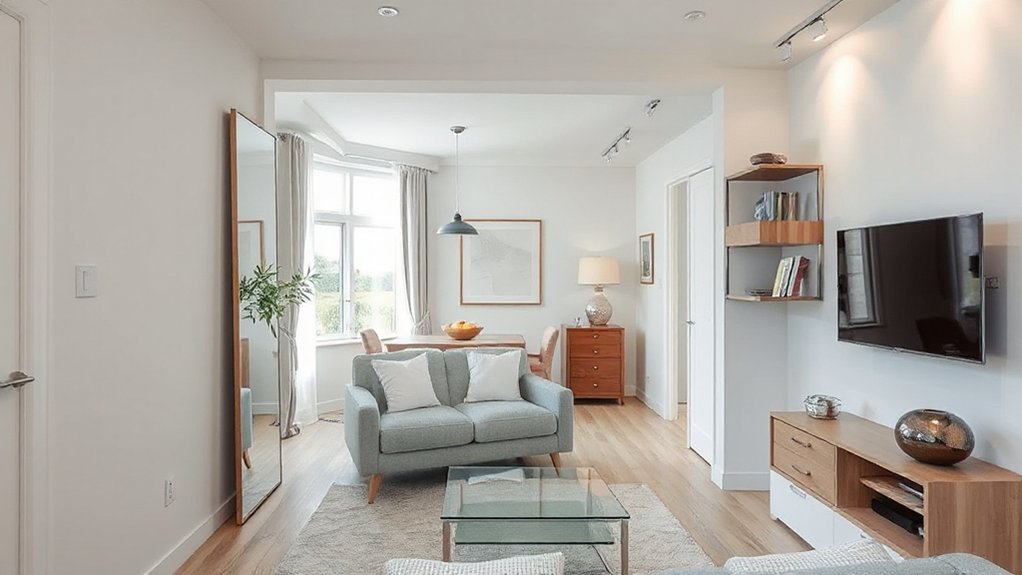
Place mirrors strategically to multiply light and space, choosing tall, unbroken surfaces that reflect both walls and artwork.
Use reflections to extend the view and brighten corners, but keep the setup balanced so the room feels bigger, not busy.
Consider how mirror placement, the way light bounces, and the overall layout work together to enhance perception of space.
Mirror Placement Strategy
Mirrors are your quickest shortcut to a more expansive feel, so start by placing them where they bounce natural light and open sightlines. Position large mirrors opposite windows to double daylight and create the illusion of depth, and avoid blocking entryways or pathways.
Lean toward symmetrical arrangements in living zones; mirror symmetry helps the eye travel smoothly, making walls recede. In tight hallways, a tall, slender mirror reflects movement and air, visually widening the corridor.
Use multiple reflective surfaces in seating areas to amplify glow without clutter. Consider placement at eye level for the most natural read, and keep frames minimal to prevent busyness.
Reflections For Perception
Reflections can trick the eye into feeling more space than you have; with careful mirror placement, you extend sightlines and brighten rooms in an instant. You’ll leverage optical illusions to reshape perception, not physically alter dimensions.
Position mirrors opposite windows to double natural light, or flank a doorway to visually extend corridors. Choose frames and sizes that align with your space’s proportions to avoid cluttering walls.
Focus on simplicity: one or two mirrors, clean edges, minimal framing. Keep reflective surfaces free of fingerprints for crisp reflections that sharpen depth.
Use mirrors to create a continuous feel across odds and ends—like a hallway runner or compact dining zone—so your brain interprets a larger footprint. Your visual perception becomes a tool, not a constraint, guiding everyday layout choices.
Room Light Amplification
Brighten your rooms without adding light fixtures by using mirrors to amplify what you already have. Position mirrors opposite windows to bounce natural sunlight around the room, expanding perceived space without enlarging walls.
Choose framed or oversized pieces that reflect key areas—say, a seating nook or a dining corner—to create a continuous flow of light. Layer mirrors at different heights for depth, but avoid clutter; one strong focal mirror often beats several small ones.
Clean surfaces regularly to preserve that crisp, ambient glow. Consider wall-to-wall or hallway mirrors to extend corridors visually, making *passages* feel longer.
Use reflective surfaces sparingly near bright lamps to maximize, not mute, illumination. This simple tactic heightens brightness and room perception with minimal effort.
Zone Your Space Without Breaking the Flow
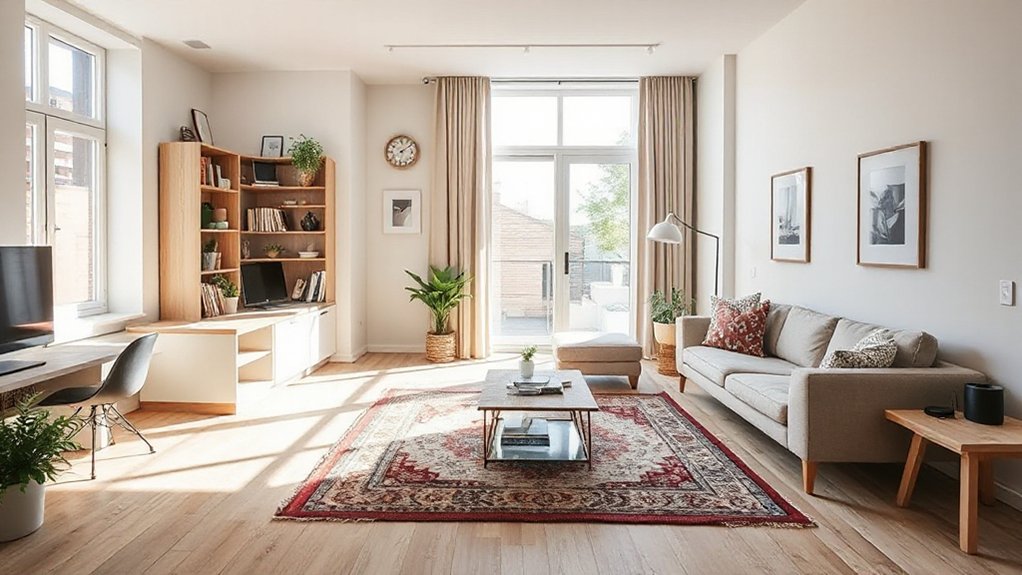
To zone your space without breaking the flow, start by treating zones as subtle shifts rather than rigid boxes. You draft clear purpose for each area, then let cues—color, texture, furniture placement—guide gradations.
Occasional zoning creates distinct corners without crowding a room, so use rugs or a wall art change to signal a change in function. Visual separation helps you define a dining nook or a reading corner while keeping sightlines open.
Keep edges soft: rounded furniture, low shelves, or a foldable screen that can vanish when not needed. Maintain consistent materials and a cohesive color palette to preserve continuity.
Remember: intention beats enclosure. Small shifts, deliberate contrasts, and balanced spacing make the space feel purposeful and expansive.
Choose Multi-Functional Furniture That Frees Up Room
Choose multi-functional furniture that frees up room by prioritizing pieces that do double duty and stay out of the way when you don’t need them. You’ll maximize every square foot by selecting items that serve more than one purpose, so you reduce clutter without sacrificing comfort.
Look for tables with hidden storage, sofas with built-in trays or pull-out desks, and beds with drawers or shelves beneath. Opt for wall-mounted, fold-away, or stackable options to keep traffic open and lines clean.
Prioritize versatility over novelty; adaptable pieces turn tight corners into usable zones. This approach creates visual calm, enhances flow, and makes rooms feel larger.
Embrace multifunctional furniture as space saving solutions you can live with every day.
Smart Storage Solutions for Clutter-Free Living
Smart storage is your guest list for clutter: it keeps everyday essentials tucked out of sight, so you feel calmer and more in control. You’ll design a system around function, not just looks, so every item has a home and every inch earns value.
Prioritize hidden compartments to tuck away seasonal gear, documents, and chargers, freeing surface space for daily tasks.
Use vertical storage to leverage wall height, mounting shelves, pegboards, and tall wardrobes to stretch the room visually.
Choose furniture with built-in organizers—ottomans, beds, and consoles that conceal clutter while remaining accessible.
Label zones clearly and rotate items by season or need, so you don’t waste time searching.
With disciplined organization, your compact flat gains breathing room and a calmer vibe.
Weekend Tweaks That Pay Off Fast
Weekend tweaks that pay off fast can build on your tidy, organized space without a big time commitment. You’ll start with quick decluttering: remove one set of items you don’t use weekly, then group essentials in visible bins.
Next, add wall art to create focal points without overhauling walls; choose a single statement piece or a small gallery that mirrors your color scheme. Introduce decorative accessories sparingly—one plant, a coordinating tray, and a decorative bowl—to add texture and depth.
Lighting matters: swap harsh bulbs for softer LEDs and place a lamp where it creates illusion of space. Finally, clear horizontal surfaces by designating a slim tray for keys and essentials.
These small, intentional shifts elevate perception of space and feel instantly calmer.
Frequently Asked Questions
How Can I Measure My Space Accurately for Scale?
You measure precisely by marking corners, measuring walls, and noting doorways, then sum lengths for scale. Use a tape, both diagonals, and verify against windows. Consider furniture placement and wall color choices to optimize perceived space.
Which Fabrics Resist Staining in Small Living Areas?
Stain resistant upholstery keeps your small space practical, and washable fabric options let you refresh fast. You’ll enjoy peace of mind, since stain resistant upholstery works on high-traffic furniture, while washable fabric options simplify cleaning without major effort.
Do Curtains or Blinds Affect Perceived Room Height?
You’ll notice window treatments can alter perceived height; blinds often heighten the ceiling visually, while curtains can lift a room when mounted high. Use scaling, and embrace visual illusions to make spaces feel taller and brighter.
How Often Should I Rotate Decor for Freshness?
You should rotate decor every 4–8 weeks to keep things fresh. Try changing a few pieces, swap color accents, and adjust lighting. Focus on decor color schemes and furniture placement strategies for a practical, aspirational update.
Can I Add Plants Without Crowding the Room?
Yes, you can add plants without crowding the room. Indoor greenery boosts mood and air quality while you space-optimize thoughtfully. Start with a few low-profile, versatile varieties, then group them into intentional micro-areas to maximize openness.
Conclusion
You’ll notice the lift when your space breathes: walls feel farther, light flows, and movement stays unblocked. Coincidentally, the tweaks you finish this weekend—rearranged furniture, a mirror here, a multi-use piece there—continue paying off in the weeks to come. Stay consistent: declutter, store smart, and layer lighting. When you wake in the morning, the room looks taller, calmer, yours. Little changes stack, and suddenly your small flat feels remarkably bigger—and entirely yours.