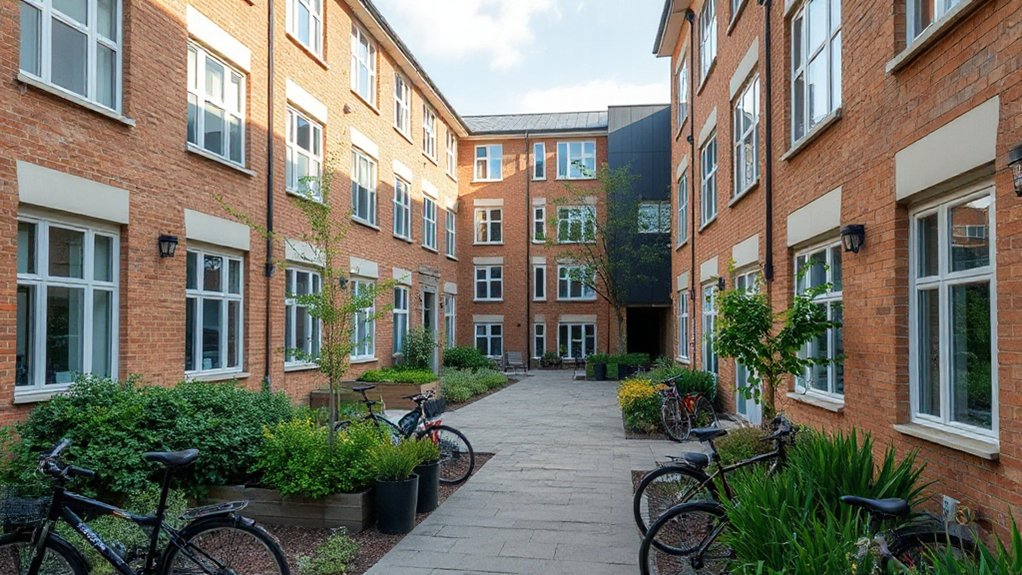
You’re aiming to boost rental value in UK university towns with upgrades that pay off fast. Modern interiors, durable finishes, and flexible layouts attract both students and professionals, while energy improvements cut bills and appeal to eco-conscious tenants. Add smart home tech and secure, bike-friendly features to lift occupancy. Data-driven planning keeps projects aligned with demand. Start with the fastest, highest-ROI upgrades, then map a sustainable, long-term strategy that leaves you with less vacancy and steadier income, but you’ll want to see what comes next.
How Upgrades Boost Rental Value Near University Cities (ROI You Can Expect)

Upgrades near UK university cities reliably push rental values higher by targeting what tenants value most: location prestige, updated interiors, and efficient layouts.
You’ll see ROI through higher rents, lower vacancy, and quicker leasing cycles when upgrades align with demand signals.
In data terms, contemporary interiors and smart space planning reduce maintenance calls and extend effective life cycles, boosting property management efficiency.
Tenant satisfaction rises as UI/UX of living spaces improves, leading to longer tenancies and steadier income streams.
Quantitatively, renovations that enhance thermal performance, quietness, and durable finishes tend to deliver above-average caps in value and rent growth.
Focus on scalable improvements, measure occupancy trends, and adjust pricing to reflect enhanced desirability without overspending.
Energy Upgrades That Cut Costs and Attract Tenants: A Practical Checklist
You’ll gain measurable value by prioritizing energy upgrades that slash operating costs while appealing to tenants who value comfort and efficiency. Begin with a targeted energy audit to identify high-return fixes across common areas, flats, and student lets.
Prioritize insulation improvements—think loft, cavity, and pipe insulation—to reduce heat loss during peak terms and lower utility bills for renters. Follow with wall and floor sealing where gaps exist.
Then, upgrade to high-efficiency boilers or heat pumps where feasible, aligning with building size and budget. Verify improvements via post-implementation monitoring, aiming for a minimum 15–20% reduction in energy use per unit.
Track ROI monthly, adjust pricing accordingly, and promote verified savings in marketing materials to attract efficiency-minded tenants.
Smart Home Tech Students Want: and Why Professionals Will Love It
Smart home tech is becoming a non-negotiable in UK university markets, where students prioritize reliability and ease of use.
Meanwhile, professionals value security, efficiency, and potential ROI.
You’ll see demand clustering around intuitive interfaces, rapid connectivity, and remote management, with uptime as a differentiator.
Data shows a 28% higher occupancy rate for properties featuring integrated smart systems versus baseline.
Virtual reality setups appeal to tech-forward tenants seeking immersive study environments and social experiences, while smart appliances reduce daily frictions and utility waste.
For professionals, end-to-end security protocols, encrypted data transfer, and energy dashboards translate into measurable ROI through lower insurance costs and sharper operating budgets.
Align upgrades with maintenance cycles and scalable platforms to maximize long-term value.
Flexible Layouts That Work for Students and Professionals
Flexible layouts that adapt to both study needs and living dynamics are essential in UK university markets, where space optimization drives higher occupancy and tenant satisfaction. You’ll see stronger demand for configurations that maximize usable square footage without sacrificing comfort.
Flexible furniture, like wall-mounted desks, modular seating, and foldaway beds, enables quick reconfiguration for study, collaboration, or downtime, boosting appeal across singles, sharers, and couple households.
Adaptable spaces support peak usage during exam periods while preserving livability during breaks, a factor tenants repeatedly cite in surveys.
In markets with tight supply, landlords who invest in modular dividers and removable storage report faster lettings and higher rents.
Prioritize repeatable layouts, robust hardware, and easy-to-clean finishes to sustain performance and long-term value.
Durable Finishes That Save Money and Time
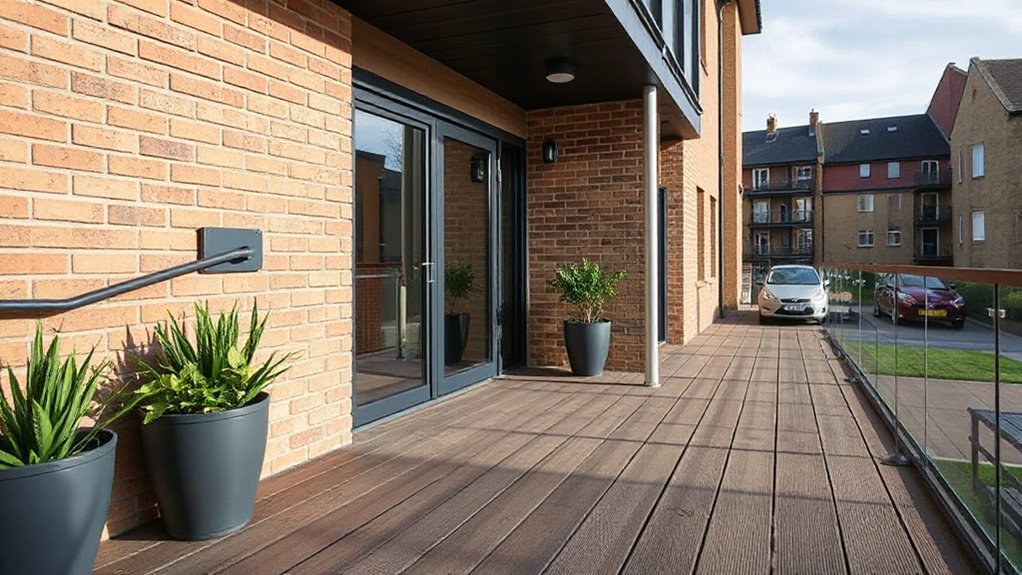
Durable finishes cut ongoing costs by resisting wear from high-traffic use and long tenancy cycles, which is critical in UK university towns where turnover is seasonal and maintenance budgets tighten. You’ll prioritize hard-wearing surface systems, like commercial-grade vinyl, porcelain tiles, and high-abrasion paints, to minimize recoats and disruptions.
Data shows lower maintenance cycles and longer intervals between refurbishments when these materials are selected early, improving cash flow. Pair durability with streamlined installation to shorten vacancy periods and reduce labor costs.
Integrate luxury furnishings and aesthetic enhancements in a way that preserves resilience without sacrificing appeal, using sealed woods, metal accents, and fade-resistant textiles. Track maintenance data by material, surface, and cleaning regimen to optimize lifecycle budgets and tenant satisfaction.
Location-Ready Features That Attract Tenants: Parking, Bike Storage, Secure Access
Parking solutions directly impact tenant demand, with visible space, pricing flexibility, and turnover implications driving occupancy metrics in university-city markets.
Secure access adds measured value through risk reduction, appealing to longer-term leases and maintenance cost containment, supported by theft and incident data.
Bike storage complements these benefits by boosting convenience scores and transit-oriented appeal in research-heavy campuses.
Parking Solutions Impact
Parking, bike storage, and secure access are pivotal in raising rental value in UK university cities because tenants increasingly choose locations that minimize commute friction and daily hassle.
Parking solutions impact occupancy and premium pricing by reducing spillover parking, improving access to campus, and lowering tenant turnover.
You should quantify demand signals: on-site spaces per unit, infection-free bike storage capacity, and preferred enforcement regimes.
Parking enforcement, when clear and fairly applied, deters unauthorized parking without creating resident resentment, supporting a steadier revenue stream.
Vehicle security features—perimeter lighting, monitored entry, and camera coverage—correlate with lower incident reports and higher lease stability.
Timely enforcement data, crime-rate proxies, and maintenance response times should guide capex decisions, ensuring you optimize space utilization, appeal, and long-term value.
Secure Access Benefits
Secure access is a core differentiator for rental value in UK university towns, because tenants prioritize reliability and convenience that minimize daily friction. In practice, secure access reduces parcel loss, guest disruption, and entry-time anxiety, driving higher occupancy consistency.
You should quantify benefits by tracking incident reports, response times, and tenant satisfaction scores linked to access events. Implement multi-factor or smart key systems to reduce single-point failures and support scalable occupancy growth.
Key management becomes a strategic cost center: compare upfront hardware, software subscriptions, and maintenance against annual savings from reduced lockouts and fewer security complaints.
Design access zones by function—residential, bike storage, and service corridors—to limit collateral risk. Prioritize audit trails, temporary codes, and mobile credentials to align with evolving tenant expectations and regulatory standards.
Budgeting and Prioritization: A Fastest-Payoff Upgrade Framework

To maximize rental value quickly, you’ll start with a Fastest Payoff Upgrades list, prioritizing options with the strongest short-term ROI and the least disruption to current operations.
Use a Budget Priority Matrix to rank initiatives by cost, impact, and time-to-value, ensuring you allocate funds where returns are most reliable.
This ROI-Driven Improvement Plan keeps your decisions market-aware and data-backed, so you can move fast without sacrificing long-term profitability.
Fastest Payoff Upgrades
When planning upgrades to lift rental value quickly, a fastest-payoff framework focuses on high-impact, low-cost improvements that tenants notice immediately. You should prioritize interventions with documented rental uplift per pound spent, avoiding over-investment in niche features.
Implement quick wins first, such as fresh paint in neutral tones, enhanced lighting, and improved door hardware, then evaluate market response using short-term rent data and occupancy signals.
Allocate a modest budget to durable, low-maintenance fixes that reduce ongoing costs, like energy-efficient fixtures and weather sealing.
Consider luxury furnishings selectively for staging show units or high-demand flats, ensuring cost-per-use aligns with nearby comps.
For curb appeal, invest in outdoor landscaping that yields visible, seasonal improvements without breaking budgets, reinforcing perceived value and attracting professional tenants.
Budget Priority Matrix
A Budget Priority Matrix translates the fastest-payoff upgrade framework into a structured, decision-centric tool you can use to allocate scarce funds efficiently. You map potential improvements by impact (rent uplift, vacancy reduction) against cost and implementation time.
In property management, quick wins—like smart lighting, sealant repairs, and enhanced room-by-room maintenance—often cluster in the top-right quadrant, delivering tangible value with modest budgets. Prioritize upgrades that bolster tenant retention, such as reliable heating, quiet-environment enhancements, and modernized common areas, since steadier occupancy lowers turnover costs.
Data inputs matter: track vacancy rates, average tenure, and maintenance response times to refine sequencing. Build a dashboard that updates forecasts as prices shift and occupancy changes, ensuring you pursue the highest net present value upgrades first while preserving capital for critical, longer-horizon needs.
ROI-Driven Improvement Plan
ROI-Driven Improvement Plan: prioritize upgrades by fastest payback while anchoring decisions to robust financial metrics. You’ll map projects to net present value, internal rate of return, and payback period, then rank by earliest, reliable cash inflows.
Start with low-cost, high-impact options—refreshing kitchens, improving heat efficiency, and enhancing broadband—to release rapid rent bumps and reduced vacancy risk.
Validate assumptions against Historical trends in student demand, occupancy rates, and local rental cycles to calibrate expectations.
Build a budget ladder that limits upfront capital dispersion while preserving runway for bigger upgrades if returns exceed thresholds.
Track Local regulations on safety, energy labeling, and planning permissions to avoid delays.
Regularly reassess with quarterly sola-vetted data to keep the plan aligned with market dynamics.
Frequently Asked Questions
How to Measure ROI for Renovations in UK Student-Heavy Areas?
To measure ROI, you track renovation costs against incremental rent and resale value. You should calculate net operating income, cap rate shifts, and property appreciation, adjusting for vacancies and market trends in student-heavy UK areas.
What Financing Options Suit University-City Upgrades Best?
Research shows 60% of student landlords use leverage; you should, too. For university-city upgrades, consider property taxes implications and reliable loan options, balancing cash flow with rate terms, repayment schedules, and potential rental yield improvements.
Do Energy Savings Vary by Tenancy Type and Semester?
Energy efficiency savings do vary by tenancy differences and semester; you’ll see higher reductions in longer tenancies and peak semesters. You should track consumption patterns, analyze unit-level data, and adjust targets based on tenancy types for accuracy.
How to Value Short-Let Vs Long-Term Rental Upgrades?
Savvy short-let superiority starts with smart, selective sourcing; structure value by shorter cycles and higher nightly rates. You weigh furnishing aesthetics and smart home technology, comparing cap rates, vacancy risk, and demand elasticity to value long-term versus short-term upgrades.
Which Local Regulations Affect Landlord Improvements Near Campuses?
Local planning rules and lease restrictions affect landlord improvements near campuses; you should verify zoning consent, permitted works, and alteration clauses, then assess planning authority timelines, neighbour consultations, and campus-specific policy shifts to minimize compliance risk and delays.
Conclusion
You’ve got the data, now act fast. Prioritize energy retrofits, durable finishes, and smart-home packages that appeal to both students and pros, then layer in flexible layouts and strong outdoor-access features. Data shows ROI climbs with efficient boilers, insulation, and secure access, while parking and bike storage reduce vacancies. Budget with a fastest-payoff framework, and track demand signals to refine plans. In short, upgrade smartly and you’ll ride the demand wave—profitably and with staying power.