
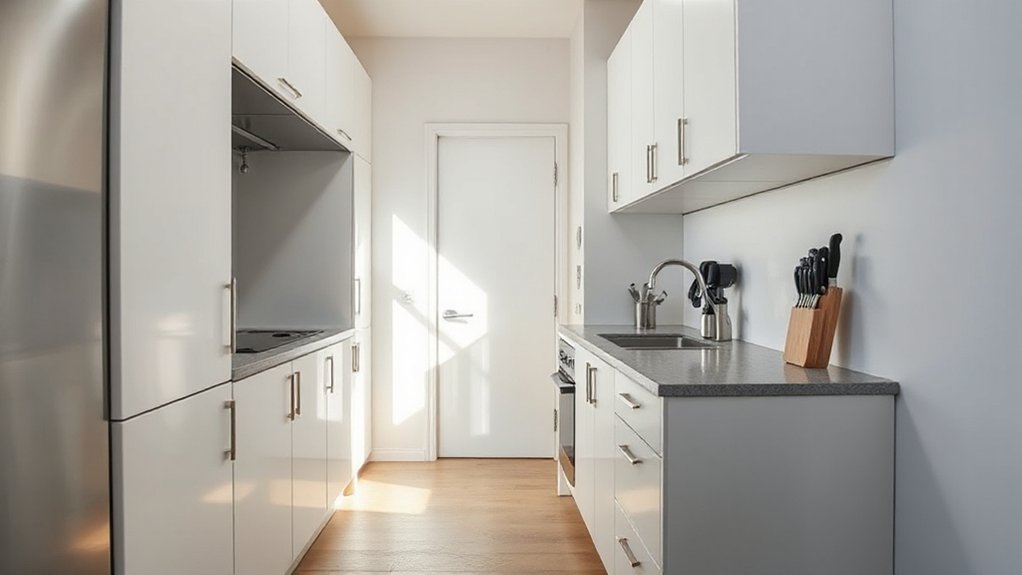
Did you know narrow kitchens can feel 20% larger with the right layout? In flats, you’ll want a design that boosts workflow without crowding the room. Consider linear, galley, or L-shaped setups that maximize counter space and storage while preserving sightlines. If you’re unsure which fits your space or how to zone for cooking, cleaning, and socializing, there’s a practical path ahead that could transform your compact kitchen—and it starts with the right arrangement.
How to Make a Small-Kitchen Layout Work in Flats
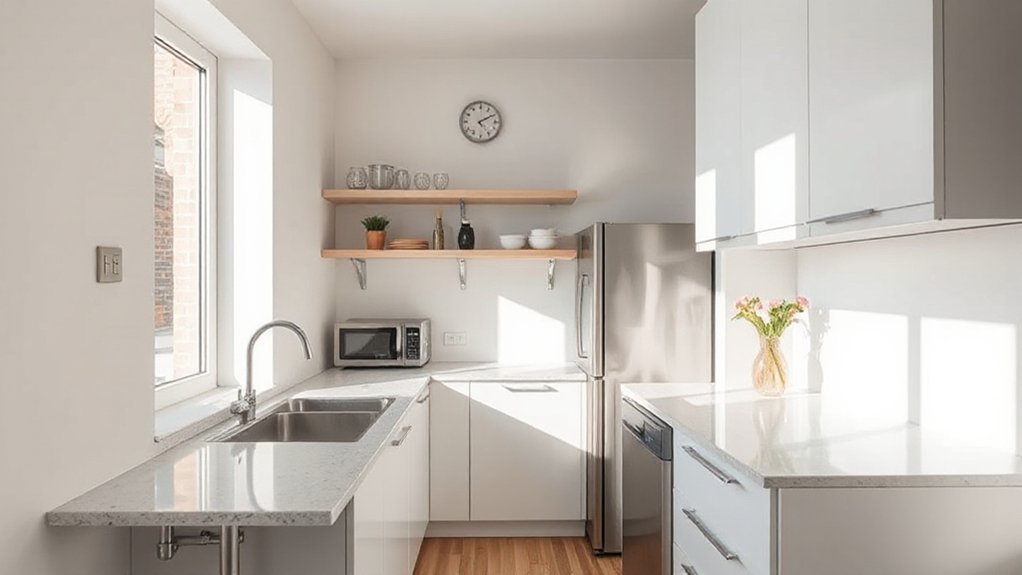
In a small flat, you can make a functional kitchen by prioritizing layout efficiencies and built-in storage. You optimize workflow by placing the prep zone near the sink and the cooking area within a single, linear run or a compact L-shape.
To save space, choose narrow, high cabinets and pull-out organizers that keep essentials accessible without crowding the counters. Maintain open sight lines with a minimal deck and integrated appliances to reduce visual clutter.
Color schemes should be light and cohesive to reflect light and enlarge the feel of the room. Appliance placement matters: tuck the refrigerator and dishwasher into the periphery, reserve the main wall for the stove, and guarantee outlets align with work zones for safer, cleaner use.
Galley and Corridor Designs That Maximize Tight Spaces
Maximize movement with an efficient galley flow that keeps work zones in clear, logical sequence.
In corridors, store smartly—think wall-mounted cabinets and shallow, pull-out options to reduce clutter while you keep essential tools within reach.
We’ll explore corridor storage tactics that free floor space and maintain a smooth, practical workflow.
Efficient Galley Flow
Efficient galley layouts use a single, streamlined path for cooking, cleaning, and prep, so you can move quickly from one task to the next. You’ll optimize flow by arranging work zones in sequence: prep, cook, and clean, with reach-efficient distances between them.
Keep counters uncluttered and use vertical storage to preserve counter space. Place the sink near the dishwasher and the oven near the prep zone to minimize travel.
Favor compact, wall-mounted appliances and integrated units to maintain a clean line. Prioritize appliance placement that reduces steps and prevents cross-traffic.
Choose lighting that highlights work surfaces and avoids shadows in key zones. Finish with kitchen decor that reinforces a cohesive, airy feel without adding bulk.
This approach delivers precision, efficiency, and a calm kitchen rhythm.
Corridor Storage Tactics
Corridor storage in tight galley and corridor designs hinges on smart planning and vertical efficiency. You’ll maximize every inch by stacking storage up the walls and choosing fixtures that pull from the wall, not the floor.
Use tall, slim cabinets and recessed shelving to keep walkways clear. Consider hooks, organizers, and magnetic strips for frequently used tools along the backsplash area, so you don’t waste floor space.
Decorative wall accents add personality without crowding storage, guiding the eye to organized lines rather than clutter. Choose a cohesive color scheme contrasts to visually expand the space—light walls with darker countertop edges emphasize depth and order.
Finally, integrate pull-out pantry modules and corner solutions to maintain accessibility and flow as you cook.
Choosing Between U- and L-Shaped Corners for Small Flats
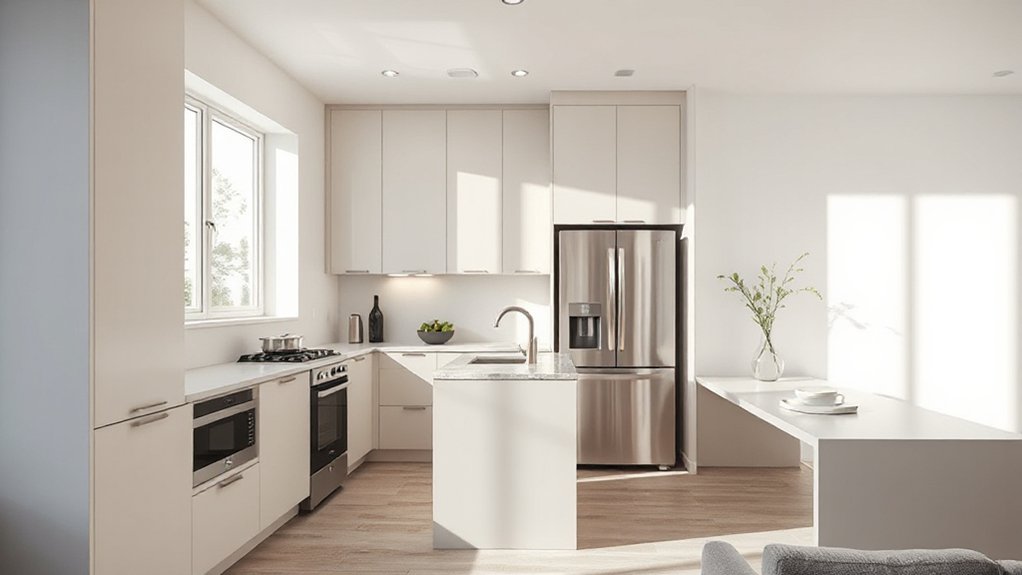
U-shaped corners boost efficiency with centralized prep and clear traffic flow, making the work triangle feel natural in tight spaces.
L-shaped layouts open up sightlines and dining options, giving you more living-area flexibility without crowding the prep zone.
Each choice trades some storage or counter depth for better movement, so weigh U for intensity of use against L for open, adaptable space.
U-Shaped Efficiency Pros
When you’re deciding between U- and L-shaped corners in small flats, the layout choice directly affects how you move, store, and cook. A U shaped kitchen gives you ample counter space, three work zones, and better appliance placement, boosting daily efficiency.
With tight footprints, prioritize clear zones: prep, cook, and cleanup should flow without backtracking. Use tall storage, rolling carts, and open shelves to maximize vertical space while keeping essentials within reach.
Efficiency tips include aligning the sink, stove, and fridge on a triangle, and choosing under-cabinet lighting for precise tasks. Aim for minimal corridor clutter and consider pocket doors to keep passageways open.
If you need frequent multi-tasking, a U shape often reduces trips and fatigue in compact layouts.
L-Shaped Space Benefits
L-shaped kitchens offer a flexible footprint that can fit awkward or narrow flats without sacrificing work zones. If you’re choosing between U- and L-shaped corners, an L layout usually maximizes corner storage and keeps traffic flow smooth.
You’ll gain distinct work zones: cooking, prep, and cleanup arranged along two walls, with a natural placeholder for a compact dining nook. Corner shelving makes the most of tight angles, so frequently used items stay within easy reach.
Consider your color schemes early; lighter tones can widen the space, while bold accents define zones without crowding. In small flats, L shapes reduce counter-overlap and improve cleaning access, boosting efficiency for daily routines.
Assess doorways, appliance placement, and ventilation to guarantee a comfortable, practical kitchen triangle.
Flavorful Small-Flat Tradeoffs
In small flats, choosing between U- and L-shaped kitchens isn’t just about looks—it’s about how you move, store, and cook. You’ll notice tradeoffs in prep flow, reach, and corner utility as you weigh footprint and function.
U-shaped layouts maximize counter space and storage, but can corridor-link clutter, making you pivot more than you’d like.
L-shaped corners feel open, improving light and traffic, yet risk narrower work zones and tighter appliance alignment.
Cultural influences shape what you prioritize—recipe-adjacent prep, versus display-ready dining nooks, dictating cabinet configurations and open shelving.
Material choices matter too: durable countertops resist stains, while corner units demand reliable hinges and smart organizers.
The right balance blends efficiency with personality, ensuring your small kitchen serves both everyday meals and moments of delight.
Footprint-Saving Storage and Appliances You Should Consider
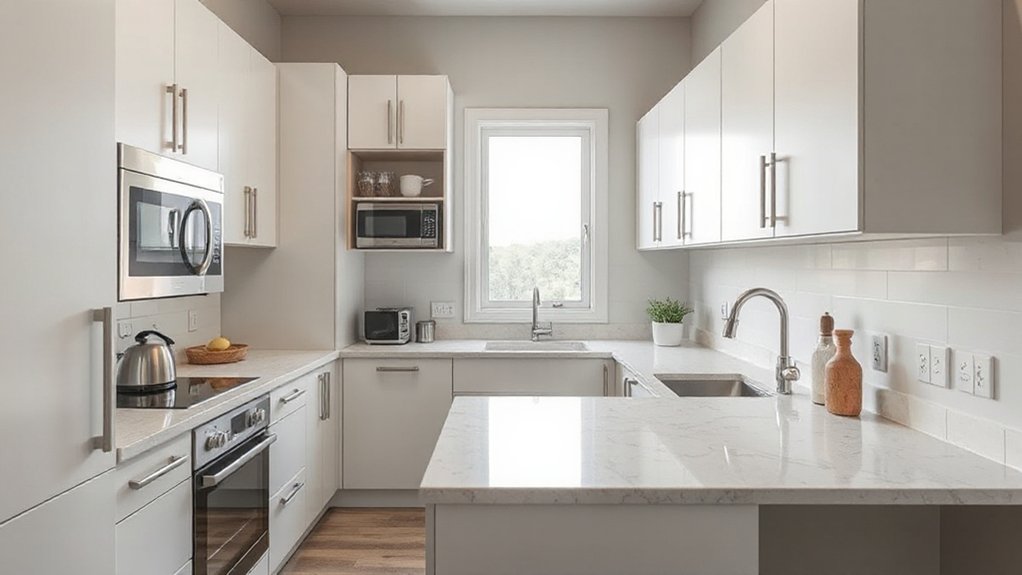
Compact, footprint-saving storage and appliances are essential in small flats. You’ll maximize every inch by choosing tall, slim cabinets and doors that disappear behind vertical panels.
Opt for pull-out organizers, labeled bins, and adjustable shelves to keep essentials accessible without clutter.
Select compact appliances that fit your workflow, like narrow dishwashers or under-cabinet microwave/steam combos, and place them where they minimize hand-traffic.
Prioritize appliance placement to create clear prep zones and easy cleanup paths.
In this space, decorative accents should be restrained yet functional: a single, reflective backsplash to enlarge the room, matte hardware that conceals fingerprints, and a cohesive color palette that makes storage blend in.
Keep surfaces clean and borders tight to preserve a calm, efficient kitchen atmosphere.
Zone Planning: Cooking, Cleaning, and Socializing in One Small Kitchen
With storage optimized, the next step is to map zones that support cooking, cleaning, and socializing without crowding flow. You’ll define a primary work triangle that keeps prep, cooking, and cleanup within arm’s reach, reducing backtracking. Position utensils, spices, and pans near the stove so you don’t chase items across the room.
Create a separate cleaning zone with a compact dishwasher or sink nearby, ensuring you’re never reaching across busy zones. For socializing, set a narrow, unobtrusive counter or bar that accommodates two without blocking pathways.
Use smart lighting to adapt brightness by task and time, so you see clearly during prep and relax during meals. Choose color schemes that visually open spaces—cool neutrals with lighter accents to enhance perceived depth and cohesion.
DIY Tweaks to Boost Light, Flow, and Accessibility
Smart tweaks can dramatically boost light, flow, and accessibility in a tight kitchen. You’ll maximize brightness by swapping heavy drapes for sheer curtains or roller shades, and adding a reflective backsplash.
Choose light, neutral color schemes to visually expand the space, then introduce accents with accessories to keep depth without crowding walls.
Prioritize open storage and modular organizers so every inch serves a purpose.
Improve flow by aligning appliances and work zones in a straight line or on a simple triangle, reducing steps.
Accessibility comes from lever handles, pull-out shelves, and adjustable-height surfaces.
For durability, favor material choices like quartz counters and moisture-resistant laminates.
Keep finishes cohesive, simple, and easy to wipe.
Choose durable, easy-care options that fit your budget and lifestyle.
Frequently Asked Questions
How Can I Optimize Natural Light in a Tiny Kitchen?
Increase natural light by prioritizing window placement and reflecting it with light colors. Position your work triangle near windows, use sheer curtains, and add mirrors or glass backsplashes to amplify daylight across the tiny kitchen.
What Are Budget-Friendly Space-Saving Hinge Options?
Yes—budget-friendly storage and space-saving hinges exist, and they’ll transform your cabinets. You’ll discover concealed or soft-close options that save space, reduce clutter, and stop doors from snagging. Try euro hinges or push-to-open for stealth efficiency.
Which Appliances Are Essential for Ultra-Small Layouts?
Essential appliances for ultra-small layouts include compact fridge, slim dishwasher, and combo microwave-oven. Prioritize efficient 24-inch ranges. Focus on appliance placement for workflow, and choose compact appliance choices that fit your counter and cabinet gaps.
How Can Acoustic Comfort Be Improved in Open Kitchens?
You hear hustle fade as you apply soundproofing techniques, muffling clatter into calm. Place acoustic panels strategically, beneath shelves and along shared walls, and adjust panel placement until conversations stay private and melodies stay clear.
What Color Schemes Aid Perceived Spaciousness in Flats?
You should use light, cool neutrals and whites to boost perceived space. Color psychology suggests airy tones, while Visual illusion tricks—ample reflections and consistent palettes—make rooms feel larger, brighter, and more organized for everyday life.
Conclusion
In a small flat, smart layout choices open big possibilities. Prioritize a linear, galley, or compact U/L combo that streamlines your workflow and front-load storage. Use vertical shelving, light tones, and compact appliances to increase perceived space. Plan zones for cooking, cleaning, and socializing without crowding. Keep pathways clear and integrate multi-tasking surfaces. With thoughtful tweaks, your kitchen can feel airy and efficient—like a well-oiled machine gliding through a tight space. Stay purposeful, stay flexible.