You might assume sealing gaps around doors and adding mass to shared walls will solve most noise issues; evidence shows that multi-point sealing, decoupling, and cavity insulation each address different transmission paths. You’ll benefit from combining these with strategic decoupling and vibration isolation, but results depend on the exact wall assemblies and fault paths. Curious how to prioritize steps for your home and what trade-offs to expect as you plan upgrades?
Soundproofing 101 for Semi‑Detached Homes
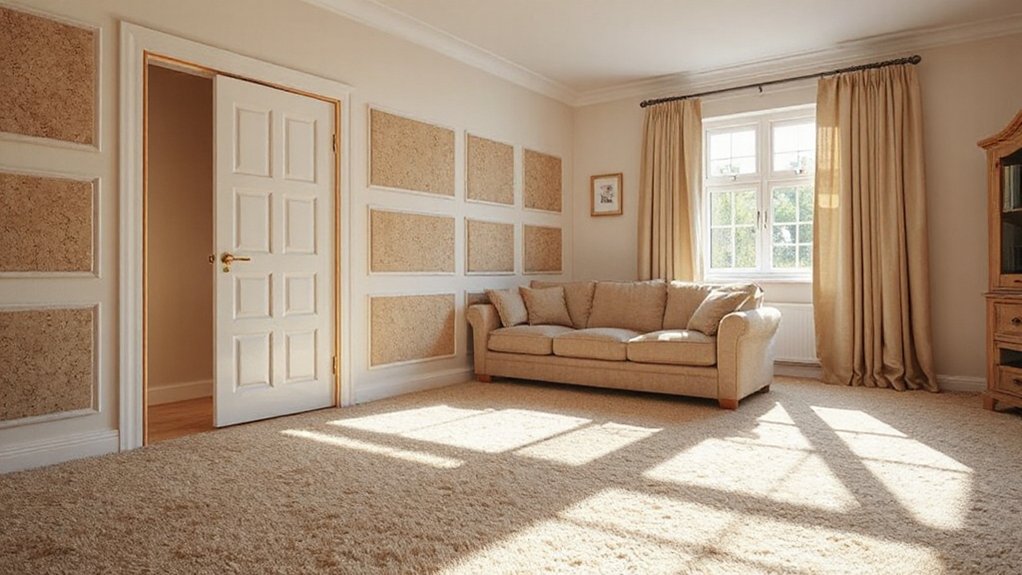
Soundproofing in semi-detached homes starts with a clear understanding of how sound travels through shared structures. You’ll learn core concepts before upgrading any wall, floor, or ceiling assembly. Acoustic terminology matters: transmission loss, mass–air–spring, and decoupling explain why noise bridges between units.
Common soundproofing myths—like simply adding drywall or sealing outlets—fall short unless you target the flanking paths and resonant frequencies. You assess path components, impedance, and leakage sites, then prioritize interventions with proven effect: stiffening or decoupling assemblies, increasing surface mass, and improving airtightness at junctions.
Use measured metrics, not vibes, to set goals for STC and IIC improvements. Practical choices rely on evidence: materials, installation quality, and addressing critical noise paths without overdesign.
Audit Your Home: Identify Noise Sources and Paths
Start by identifying every noise source in your home, including both intrusive sounds and transmission pathways.
Map how sound travels between rooms and through walls, floors, and ceilings to reveal which routes carry the most impact.
Prioritize problem areas based on frequency, amplitude, and potential for improvement to guide targeted elimination efforts.
Identify Noise Sources
Identifying noise sources is the first concrete step in reducing intrusion and disturbance. You should catalog frequent sounds, noting their timing, duration, and intensity, to distinguish between transient noise and persistent intrusion.
Start with your neighbor’s activities, HVAC cycles, plumbing vibrations, and footfall on shared surfaces, then consider exterior sources like traffic or construction. Use simple measurements, such as decibel readings, and compare them to baseline living-room levels to gauge impact.
Focus on sound transmission paths: airborne, structure-borne, and impact noise, and identify which path dominates each noise event. Document frequency and amplitude trends across days and rooms.
This audit informs targeted interventions, prioritizing sources with the greatest contribution to overall noise pollution, enabling precise, evidence-based mitigation planning.
Map Noise Paths
Map Noise Paths: begin by tracing how each observed sound travels from source to you, differentiating airborne, structure-borne, and impact routes. You map routes using a source-to-receiver flow, noting path elements such as walls, floors, ceilings, and gaps.
Assess airborne transmission by evaluating door seals, window frames, and ventilation openings, documenting avenues where sound wave transmission occurs through airborne paths.
For structure-borne routes, examine shared structural members, studs, and joists that transmit vibrations from adjacent rooms or external walls.
Consider impact noise from foot traffic, dropped objects, and appliance vibrations, identifying where these energy spikes couple into the building.
Record acoustic shadowing effects, where obstacles attenuate or reflect sound, shaping perceptual loudness and clarity.
Use findings to target practical, measurable reductions.
Prioritize Problem Areas
To prioritize problem areas, compile your audit findings into a ranked list by frequency, impact, and ease of mitigation. You’ll use measured observations, actual decibel patterns, and verified sources to distinguish persistent from intermittent noise.
Focus on entry points where paths converge, such as shared walls, floor/ceiling interfaces, and utility penetrations. Quantify each issue’s noise source, transmission path, and potential remedy, then score for urgency.
This helps you allocate effort efficiently, addressing high-impact paths first. Remain vigilant for soundproofing myths and common misconceptions that can misdirect fixes, like overreliance on cosmetic upgrades.
Document baseline conditions, track improvements, and reassess after implemented measures. A disciplined audit yields actionable targets, supports cost-effective upgrades, and reduces neighborly friction through transparent, evidence-based decisions.
Quick DIY Fixes to Quiet Noise Now
You can start with quick DIY soundproof fixes that reduce noise transmission right away, focusing on practical, evidence-based steps.
Seal gaps and cracks around doors, windows, and shared walls to minimize flanking paths, using weatherstripping and caulk where appropriate.
Apply temporary acoustic treatments like thick rugs, door sweeps, and portable panels to dampen reflections while you plan longer-term improvements.
Quick DIY Soundproof Fixes
Quick DIY soundproof fixes can considerably reduce everyday noise without major renovations. You’ll target common transmission paths with proven, quick actions that don’t require pro trades.
Start by adding mass to lightweight walls with affordable acoustic panels or dense boards; more mass lowers sound transfer by interrupting vibration.
Seal quick gaps around outlets, switches, and pipes with acoustic sealant to reduce flanking noise—this addresses noise pollution without structural work.
Improve door and window performance by weatherstripping and door sweeps to cut drafts and air-borne sound.
Use rugs or underlays on hard floors to dampen footfall; add a tuned ceiling absorber if your space permits.
Be mindful of soundproofing myths; quantify gains with simple tests to verify real reductions.
Seal Gaps And Cracks
Even after adding mass, small gaps around outlets, switches, and along door and window frames can let in air-borne and flanking noise. You can reduce noise quickly by sealing these paths with proven methods. Inspect outlets and switch plates, then install foam gaskets or low-velocity electrical box sealers to block flanking sound without overheating.
For doors, apply door sweeps at the bottom and high-quality door seals around the jamb to minimize air leakage. Assess window gaps; use weatherstripping or compression seals on sashes to reduce reverberant transmission.
Use silicone or acrylic caulk to seal cracks around trim, frames, and baseboards where movement creates gaps. Prioritize durable materials, and recheck seals after seasonal expansion to maintain consistent performance.
Remember door seals and window gaps are critical for immediate noise reduction.
Temporary Acoustic Treatments
Temporary acoustic treatments offer fast, low-cost noise relief while you plan longer-term solutions. You can deploy quick fixes to reduce transmitted noise without major reconstruction.
Use temporary barriers such as freestanding mass-loaded vinyl screens or plywood partitions to interrupt direct sound paths between rooms or neighboring spaces; position them to block low-frequency energy where possible.
Acoustic panels mounted on walls absorb mid-to-high frequencies, lowering reflections and reducing reverberant energy that compounds impact noise. Guarantee panels cover key reflective surfaces near the noise source and occupant zones for measurable gains.
Verify that fixtures and cables don’t create gaps under panels. These methods are non-permanent, reversible, and provide actionable reductions while you budget and implement permanent upgrades.
Budget-Friendly Upgrades for Walls, Floors, Ceilings
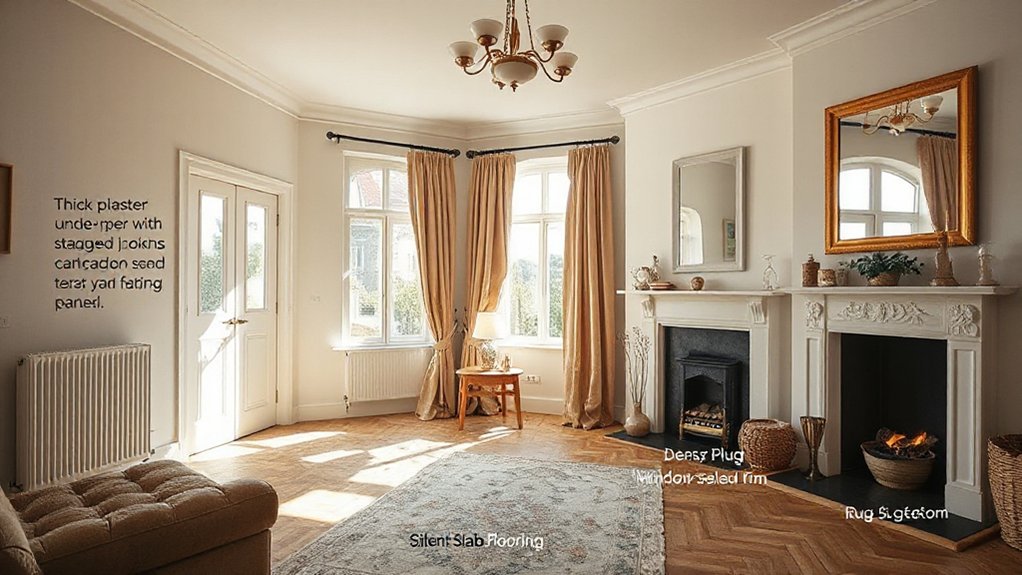
For budget-friendly upgrades to walls, floors, and ceilings, start with that targeted knockdown of sound pathways: identify where mass, damping, and isolation can be applied most effectively without breaking the bank. You’ll prioritize wall interfaces with mass-loaded options or resilient channels, then pair with tight connections to reduce flanking paths.
For floors, consider underlayment with acoustical mass and anti-vibration features, plus flooring mats where impact noise travels.
Ceilings benefit from decoupled assemblies or resilient mats to lower airborne leakage between rooms.
Implement wall insulation where cavities allow; use batt or blown options only where it won’t compress under fixtures.
Choose practical, proven materials with documented NRC or STC gains, measure expected dB reductions, and verify compatibility with existing structures before installation.
When to Hire Pros: Upgrades That Pay Off
Hiring pros makes sense when the cost of independent upgrades outpaces the benefits, or when safety, access, or structural limitations require professional-grade work. In these cases, you should pursue a professional consultation to quantify gains and risks, identify critical weak points, and validate design choices with acoustic modeling or intelligible test data.
Key upgrades with proven returns include isolating shared walls, decoupling structural paths, and addressing flanking noises at junctions. Evaluate whether mass-loaded vinyl, resilient channels, or acoustical caulk yield measurable reductions in transmitted noise within your budget, and consider schedule disruption and warranty implications.
Soundproofing investments that target air leakage, vibration transfer, and surface transmission typically deliver the fastest, most predictable outcomes. Choose contractors who provide transparent performance metrics and post-install verification.
Maintenance Habits to Sustain Silence
Maintenance habits are essential to sustain silence after you’ve upgraded soundproofing, because consistent care prevents performance degradation from leaks, dust, and wear. Daily checks should verify airtight seals around doors and windows, and periodic testing of outlets, vents, and plumbing penetrations for quiet integrity.
Implement a routine to vacuum or brush dust from gaps and edge caulking, preventing reduced isolation from particle buildup. Track changes in sound transmission and address loosened fasteners, misaligned panels, or degraded vibration mounts promptly.
When extending or repairing, use reputable noise reduction techniques to guide sealant choices and guarantee that joints remain continuous. Choose soundproofing materials with documented attenuation values, and replace damaged components before they become performance bottlenecks.
Document maintenance actions for ongoing performance validation.
Frequently Asked Questions
How Can I Measure Actual Sound Reduction in Decibels After Upgrades?
You measure actual sound reduction with calibrated SPL readings, comparing pre- and post-upgrade levels, targeting at least a 10–20 dB drop. Use interior insulation and window sealing to optimize results, and document A-weighted results for robust evidence.
Do Heavy Curtains Truly Block Airborne or Structure-Borne Noise Equally?
Curtains mostly block airborne noise, not structure-borne sound; you’ll notice better results with window treatments paired with floor insulation. Visualize dense fibers absorbing chatter, while you still feel vibrations through the floor, requiring added mass or decoupling.
Can Door Sweeps Alone Improve Soundproofing Without Other Changes?
Door sweeps alone can modestly improve door‑to‑frame sealing, but their effectiveness is limited; you’ll still suffer sound leaks. Rely on measured testing and debunk soundproofing myths, focusing on gaps, transmission paths, and door sweep effectiveness alongside additional fixes.
Are Acoustic Panels Effective on Brick or Plaster Walls?
Are acoustic panels effective on brick or plaster walls? Yes, but performance varies; wall insulation and ceiling treatments matter. You’ll gain partial sound reduction with panels, yet structural mass and air gaps still govern overall effectiveness in realistic conditions.
What Costs Unlock the Best Value per Decibel Reduction?
You maximize value when you target cost efficiency per dB by prioritizing mass-loaded vinyl and resilient channels, paired with dense insulation. Use noise monitoring to validate gains and adjust layers, ensuring predictable reductions and cost-effective performance over time.
Conclusion
You’ll see substantial soundproofing success by sealing seams, sharing shifting strategies, and stacking mass. Start with steadfast sealing, then add dense layers and decoupled details, driving down drywall drama. Start small, scale smart: sparse, targeted fixes; steady, sustainable upgrades; scheduled checks. Soundproof success hinges on thorough testing, precise placement, and professional precision when needed. Stay disciplined with diligent maintenance, document changes, and drive decisive decisions—deliberate, durable, and dramatically quieter outcomes.